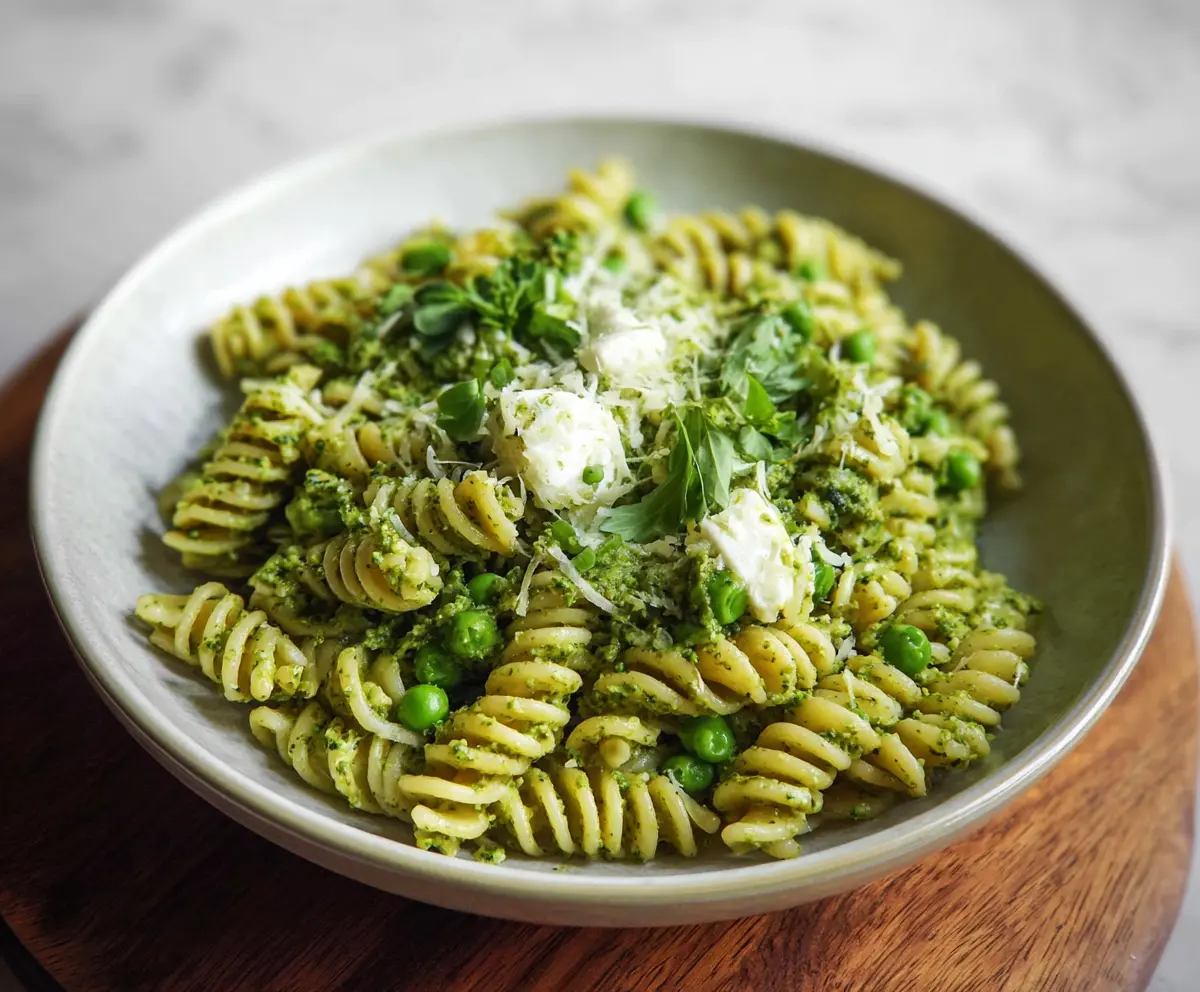
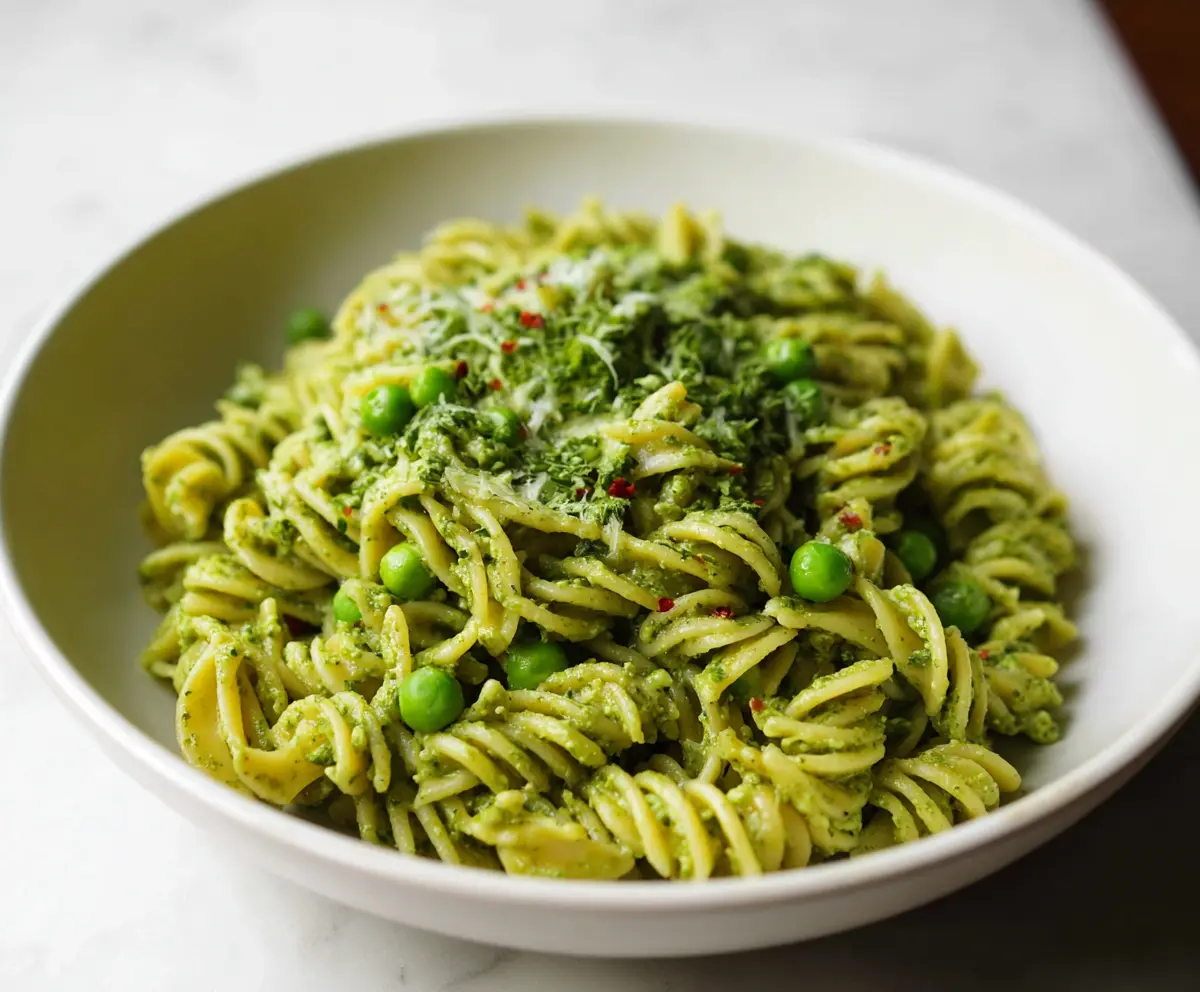
Spring Pea Pesto Pasta is a fresh and bright dish that’s perfect for celebrating the season. It features tender green peas blended into a vibrant pesto that clings lovingly to your favorite pasta. The flavors are light but packed with that fresh garden vibe, making each bite feel like a little springtime celebration.
I love making this pasta when I want something that feels special but still simple and quick to toss together. The peas add a touch of sweetness and a fun pop of color, which makes the dish feel cheerful and inviting. One little tip I have is to reserve a few whole peas to sprinkle on top for a bit of texture and a cute finishing touch.
This pasta pairs wonderfully with a squeeze of lemon and some freshly grated Parmesan. I usually serve it with a crisp green salad or some crusty bread to make a complete meal. Every time I make this, it reminds me of sunny days and cool breezes, making it one of those dishes that’s just as good for the soul as it is for the belly.
Key Ingredients & Substitutions
Peas: Fresh peas bring a sweet snap here, but frozen ones work just as well and save prep time. I like to keep a few peas whole for garnish—it adds color and texture to the dish.
Basil and parsley: Basil is the heart of the pesto’s flavor, while parsley adds freshness. You can swap parsley for mint or arugula for a different green twist.
Toasted nuts: Pine nuts give a classic flavor, but toasted walnuts or almonds make tasty and affordable alternatives. Just toast them lightly to boost their nutty aroma.
Parmesan cheese: It adds that perfect salty depth. For a vegetarian version, look for Parmesan without animal rennet or try nutritional yeast for a vegan option.
Olive oil: Use extra virgin for the best taste. It helps the pesto come together smooth and adds fruitiness to the sauce.
Cream cheese or ricotta: This is optional but adds lovely creaminess when dotted on top. You can also try dollops of Greek yogurt or vegan cream cheese if preferred.
How Do You Make Smooth, Well-Coated Pea Pesto Pasta?
Balancing the pesto consistency and coating pasta evenly can be a challenge. Here’s how I do it:
- Cook peas just right—tender but not mushy—to keep bright color and sweetness.
- Start pulsing all pesto ingredients in the food processor before adding olive oil slowly. This helps control texture.
- Use reserved pasta water to thin out pesto if it feels too thick. This also helps the sauce cling better to the pasta.
- Toss the pesto with hot pasta immediately, stirring gently but fully to coat every spiral with that green goodness.
- Add cream cheese or ricotta last, in small dollops, so it softens with the heat but stays distinct.
Following these steps makes your pasta creamy, fresh, and wonderfully sauced every time. It’s a great dish for quick weeknights or light weekend meals!
Equipment You’ll Need
- Large pot – I use it to boil pasta and peas, saving time and mess.
- Food processor – this makes blending the pesto quick and easy, giving you a smooth sauce.
- Chef’s knife and cutting board – handy for chopping herbs, garlic, and prepping ingredients.
- Measuring cups and spoons – for precise ingredient quantities and consistent results.
- Large mixing bowl – to toss the pasta with the pesto and combine everything evenly.
Flavor Variations & Add-Ins
- Swap basil for mint or arugula in the pesto for a different fresh flavor—great for variety.
- Mix in cooked shrimp or grilled chicken to add protein and make it more filling.
- Instead of Parmesan, try crumbled feta or goat cheese for tangy options.
- Add sautéed mushrooms or cherry tomatoes for more veggies and color on top.
Spring Pea Pesto Pasta Recipe
Ingredients You’ll Need:
For The Pasta and Pesto:
- 8 oz (225g) fusilli pasta (or your favorite pasta)
- 1 1/2 cups fresh or frozen peas (reserve a few for garnish)
- 1 cup fresh basil leaves, packed
- 1/4 cup fresh parsley leaves
- 1/4 cup toasted pine nuts or walnuts
- 1/2 cup freshly grated Parmesan cheese, plus extra for serving
- 2-3 cloves garlic
- 1/3 cup extra virgin olive oil, plus more as needed
- 1 tablespoon fresh lemon juice
- Salt and freshly ground black pepper, to taste
- 2-3 tablespoons cream cheese or ricotta (optional, for creaminess, placed on top)
- Fresh basil or parsley leaves, for garnish
How Much Time Will You Need?
This recipe takes about 20 minutes total. It involves boiling pasta and peas, making the vibrant pea pesto, and tossing everything together. It’s quick and perfect for a fresh, simple meal!
Step-by-Step Instructions:
1. Cook Pasta and Peas:
Fill a large pot with salted water and bring it to a boil. Add the pasta and cook according to the package directions until al dente. About 2 minutes before the pasta finishes, add the peas to the boiling water so they cook until tender (if fresh) or are heated through (if frozen). Drain pasta and peas, saving about 1/4 cup of the pasta cooking water for later.
2. Make the Pea Pesto:
While the pasta cooks, put the cooked peas (except the reserved few), basil, parsley, toasted nuts, garlic, Parmesan, lemon juice, salt, and pepper into a food processor. Pulse a few times to start breaking everything down.
With the processor running, slowly pour in the olive oil until the pesto is smooth but still a bit textured. If the pesto is too thick, add some reserved pasta water little by little to loosen it to your preferred consistency.
3. Toss and Serve:
In a large bowl, toss the hot pasta and peas with the pea pesto until everything is well coated. Taste and adjust the salt, pepper, or lemon juice if you want more brightness.
Serve the pasta in bowls, topping each with a few spoonfuls of cream cheese or ricotta if you like a creamy touch. Sprinkle extra Parmesan on top, garnish with fresh herb leaves and the reserved peas. Drizzle a little olive oil over everything for a lovely finish.
Enjoy this fresh, delicious Spring Pea Pesto Pasta warm for a perfect taste of spring!
Can I Use Frozen Peas for This Recipe?
Yes! Frozen peas work great and save time since they’re pre-cooked in most cases. Just add them to the boiling pasta water near the end to heat through before draining.
How Can I Make This Pasta Vegan?
Swap Parmesan for nutritional yeast or a vegan cheese alternative, and replace cream cheese or ricotta with a plant-based cream cheese or skip it altogether. The pesto will still be delicious and fresh!
Can I Make the Pesto Ahead of Time?
You sure can! Make the pesto up to two days ahead and store it in an airtight container in the fridge. When ready to serve, warm it slightly and add reserved pasta water to loosen before tossing with cooked pasta.
What’s the Best Way to Store Leftovers?
Keep leftovers in an airtight container in the fridge for up to 3 days. Reheat gently on the stove or microwave, adding a splash of water or olive oil to bring back the creamy texture.