Jammy cranberry sauce with a bright, clean tartness belongs on the table because it does something the canned version never quite manages: it holds its shape on the spoon, then softens into a glossy pool as soon as it hits warm food. The berries burst just enough to leave little pieces of fruit instead of turning into a smooth puree, and that texture makes every bite feel fresh and homemade.
The trick is starting with sugar and water together, then boiling them before the cranberries go in. That gives you a syrupy base that coats the berries as they cook instead of leaving them to simmer in plain water. The sauce also needs to cool completely before you judge the final texture. It looks loose when it leaves the stove, then thickens into that classic spoonable set as it chills.
Below, I’ve included the small timing details that keep the berries from going from popped to mushy, plus a few easy ways to adjust the sweetness or make it ahead.
I thought the sauce would be too thin with just water and sugar, but it thickened up beautifully once it cooled. The berries burst right on schedule and it had that perfect jammy texture for turkey sandwiches the next day.
Save this 3 Ingredient Cranberry Sauce for a glossy, jammy side that sets up beautifully as it chills.
The Reason It Thickens After the Stove, Not On It
Cranberry sauce can look deceptively loose right after cooking, and that’s where a lot of people stop too soon. The berries release pectin as they burst, but the real set happens during cooling, when the sugar syrup tightens and the fruit mixture settles into that glossy, spoonable texture. If it looks a little thin in the pan, that’s not a failure. It’s normal.
The bigger mistake is boiling it hard for too long. Once the cranberries have burst and the sauce has had about 10 minutes on a gentle simmer, keep going only until most of the berries have collapsed and the liquid looks slightly syrupy. Overcooking pushes it from bright and jammy into heavy and dull, and the sauce can start tasting flat.
What Each Ingredient Is Actually Doing in This Sauce
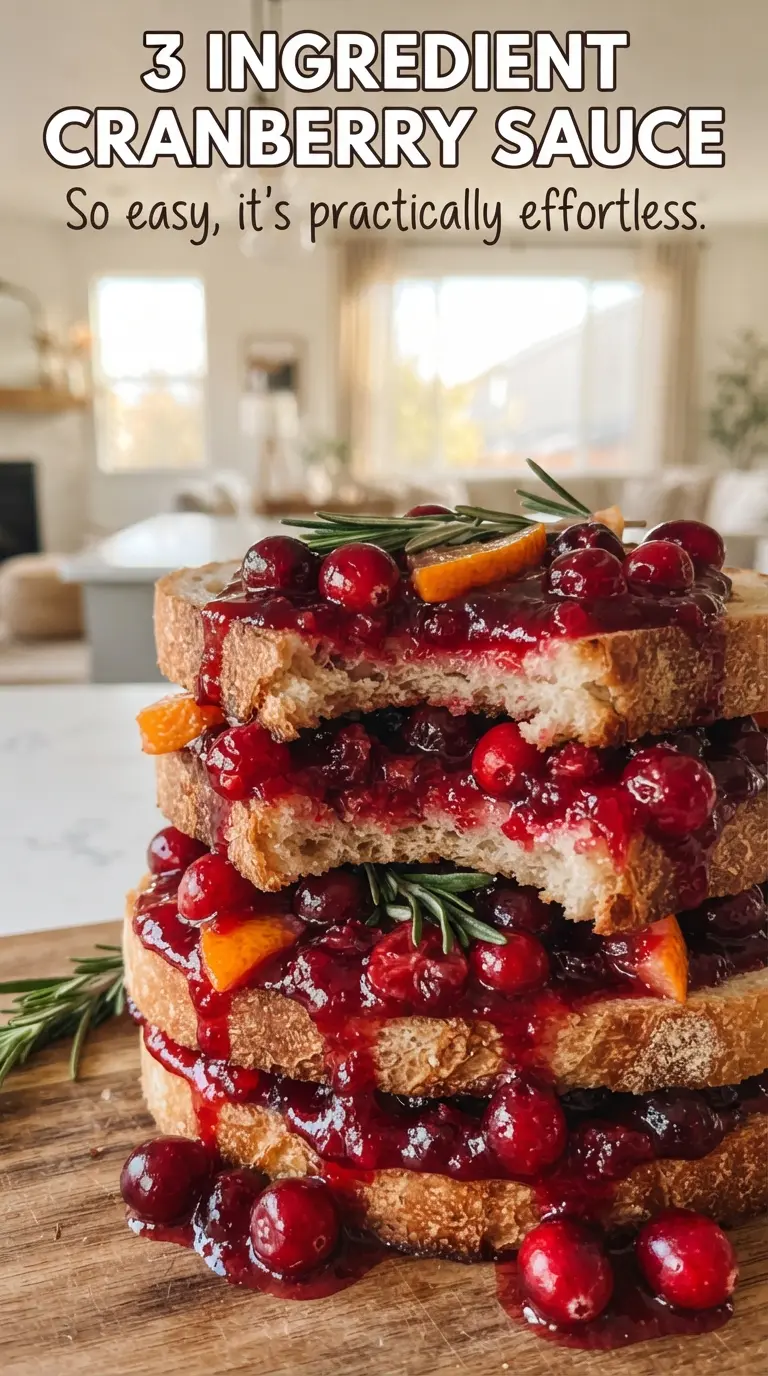
- Fresh cranberries — These bring the tart pop and the natural pectin that makes the sauce set. Frozen cranberries work too; add them straight from the freezer without thawing so they keep their shape better. If you use dried cranberries, you’ll get a completely different result because they don’t burst or thicken the sauce the same way.
- Granulated sugar — Sugar balances the sharp cranberry bite and helps the sauce turn glossy instead of watery. This isn’t the place for brown sugar if you want that clean, classic cranberry flavor; brown sugar adds a deeper molasses note and softens the color. If you want it a little less sweet, you can cut the sugar back slightly, but don’t reduce it too far or the sauce will taste harsh and thin.
- Water — Water dissolves the sugar into a syrup before the berries go in, which helps everything cook evenly. That step matters more than it sounds like it does. If you add the cranberries before the sugar dissolves, the sauce can take longer to thicken and the berries can break down unevenly.
Cooking the Berries Until They Burst, Not Disappear
Starting with the Syrup
Bring the water and sugar to a boil first and stir until the sugar disappears into the liquid. You want a clear syrup, not grainy liquid with sugar still clinging to the bottom of the pan. If the sugar isn’t fully dissolved before the cranberries go in, the sauce can cook unevenly and feel sandy at the end.
Letting the Cranberries Pop
Add the cranberries and bring the pot back to a boil, then lower the heat to a steady simmer. After a few minutes, the berries will start to split with soft pops, and the liquid will turn deep ruby red. Stir occasionally so the bottom berries don’t stick, but don’t mash them unless you want a much smoother sauce.
Stopping at Jammy, Not Mushy
Cook about 10 minutes, until most of the berries have burst and the mixture looks slightly thickened around the edges. If you keep simmering after that point, the flavor can get dull and the texture turns more jam-like than saucy. Pull it from the heat while it still looks a touch loose; that’s the cue that it will set properly as it cools.
Cooling for the Final Set
Transfer the sauce to a bowl and let it cool completely before chilling. The mixture firms up noticeably once it drops in temperature, so don’t judge it by how it looks straight from the burner. If you want the cleanest texture for serving, chill it at least a few hours, then stir once before spooning it into a dish.
How to Adapt This for Less Sugar, More Zest, or Make-Ahead Serving
Lower-Sugar Cranberry Sauce
You can reduce the sugar a bit if you like a sharper sauce, but don’t cut it aggressively. Sugar doesn’t just sweeten here; it helps the sauce set and rounds out the cranberries’ bite. Less sugar means a thinner, more tart sauce that works well with rich main dishes.
Orange Zest Version
Add a little finely grated orange zest after the cranberries have burst for a brighter finish. Zest gives the sauce a fresher top note without changing the texture, while orange juice adds more liquid and can make the set looser, so use zest first if you want to keep the same consistency.
Frozen Cranberries
Frozen cranberries work without any special adjustments. Add them straight to the pan and expect the sauce to take an extra minute or two to come back to a boil. Thawing first can make them soft and leaky, which gives you a less defined berry texture.
Storage and Reheating
- Refrigerator: Store covered for up to 1 week. It will thicken more as it sits.
- Freezer: Freezes well for up to 2 months. Cool completely, pack into a freezer-safe container, and leave a little room for expansion.
- Reheating: Cranberry sauce is best served cold or room temperature, but if you want it warm, heat it gently over low heat. High heat can loosen the set and make it look broken, so warm it just until it takes the chill off.
Answers to the Questions Worth Asking
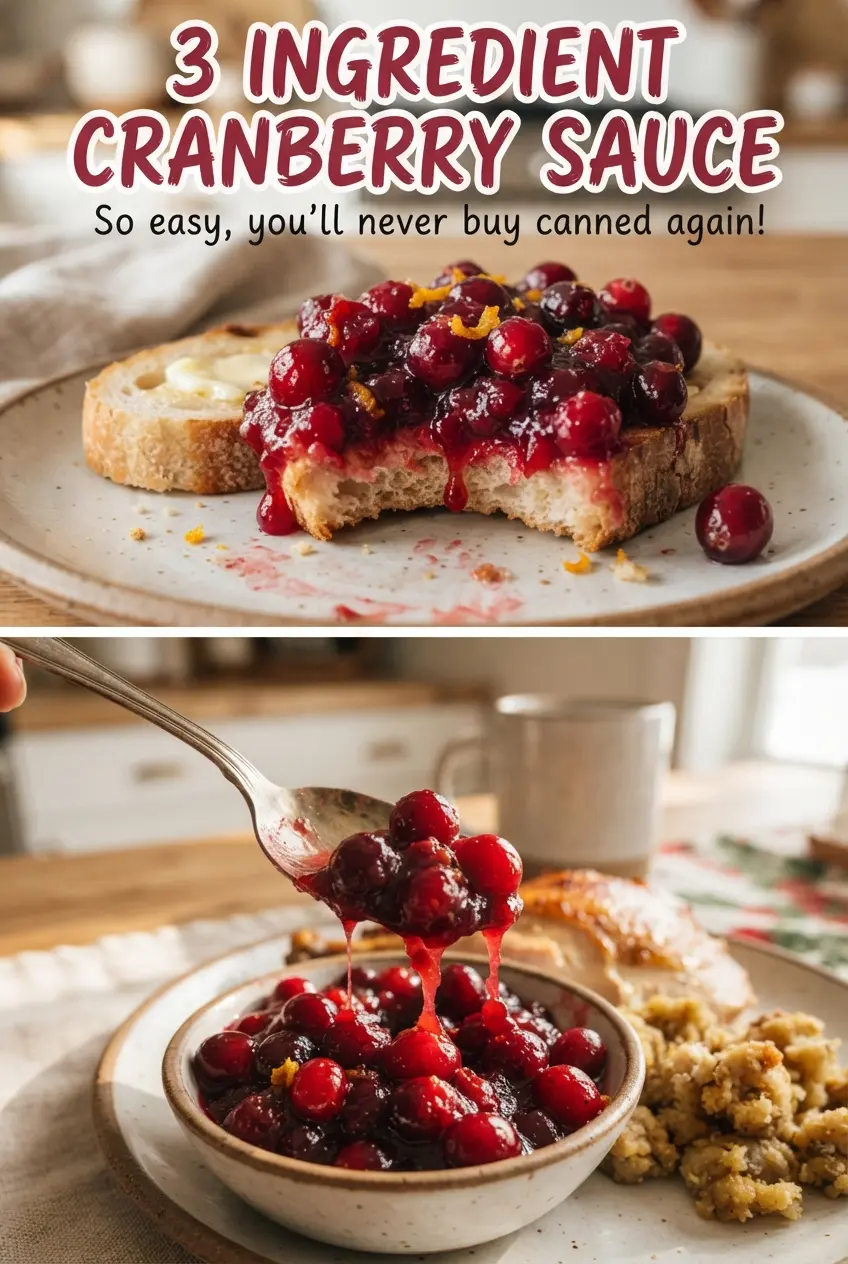
3 Ingredient Cranberry Sauce
Ingredients
Equipment
Method
- In a saucepan, bring the granulated sugar and water to a boil, stirring until the sugar dissolves.
- Add the fresh cranberries and return the mixture to a boil.
- Reduce the heat to a simmer and cook for 10 minutes, stirring occasionally, until the berries burst and the sauce thickens.
- Remove the saucepan from the heat and cool the cranberry sauce completely, letting it thicken as it cools.
- Chill until serving so the sauce sets to a spoonable, jammy texture.