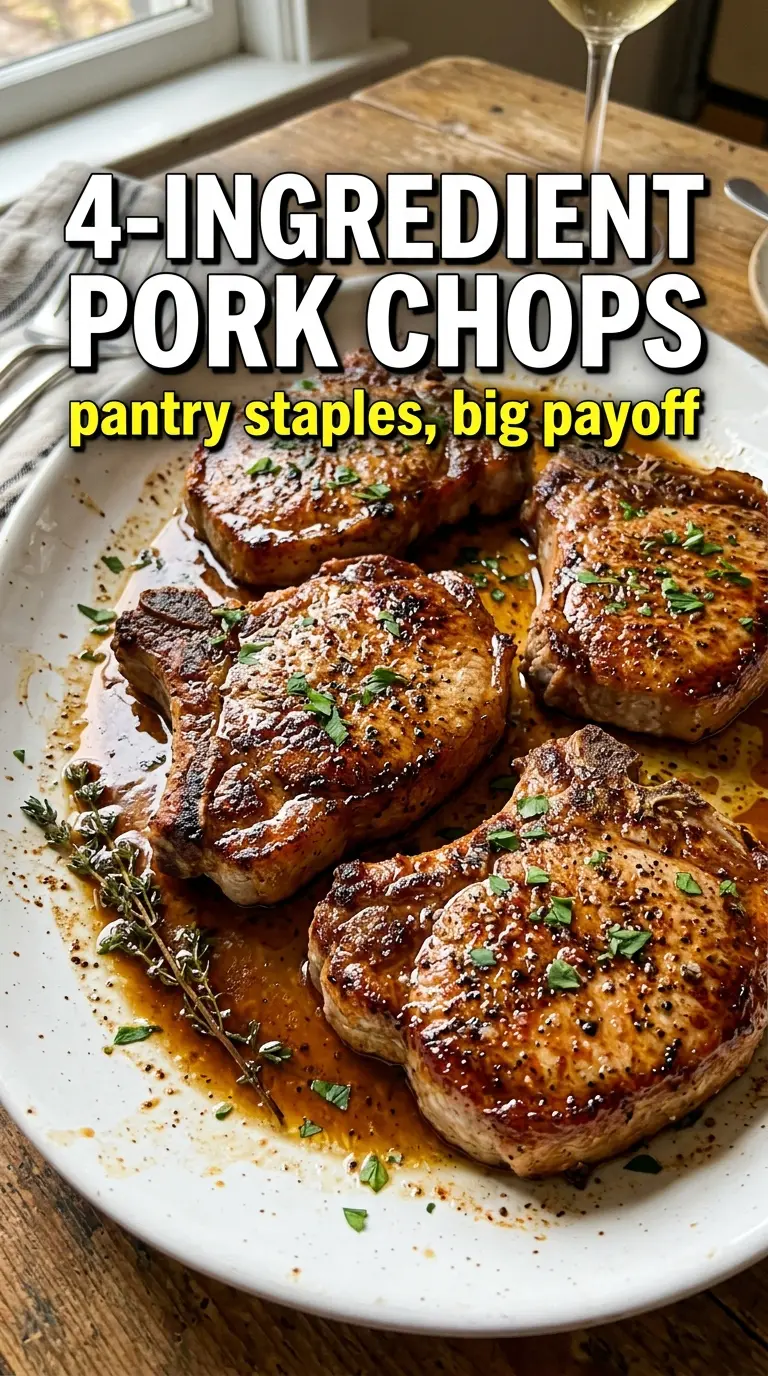
These oven pork chops come out with a sticky, bronzed glaze and juicy centers, and that’s exactly why they earn a place in the regular dinner rotation. The honey turns glossy and caramelized in the oven while the soy sauce brings the salt and depth that keep the whole dish from tasting flat. You get a pan of pork chops that look like you worked harder than you did, which is the sweet spot for a weeknight main.
The key is using bone-in chops that are about 1 inch thick. They hold onto moisture better than thin boneless chops, and they give the glaze enough time to color without drying out the meat. The garlic goes straight into the sauce instead of being cooked separately, so it perfumes the glaze as it bakes instead of burning in the pan.
Below, I’ll walk through the few places where this recipe can go sideways, plus the small adjustments that help if you want to stretch it with sides, swap the cut, or plan ahead for a second meal.
The glaze caramelized beautifully and the chops stayed juicy all the way through. I flipped and basted them halfway like you said, and even my picky eater asked for the same pork chops again the next night.
Love the shiny honey-soy glaze on these oven pork chops? Save this 4-ingredient dinner for the nights when you want something fast, simple, and caramelized.
The Part That Keeps the Glaze From Burning Before the Pork Is Done
Honey is the ingredient most likely to fool you here. It browns fast, and if you start with chops that are too thin or a too-hot oven rack, the glaze can darken before the pork reaches temperature. Bone-in chops around 1 inch thick give you a buffer: enough time for the surface to caramelize without the meat turning dry and tight.
The other thing that matters is the mid-bake flip and rebaste. That second coat doesn’t just add more shine. It gives you a thicker, stickier finish because the first layer has already started setting by the time the chops go back in. If your glaze looks a little loose when it goes on, that’s fine. It tightens in the heat.
- Bone-in pork chops — The bone helps protect the meat from overcooking and gives you a juicier result than thin boneless chops. If boneless is all you have, shorten the bake time and start checking early, because they dry out faster.
- Honey — This is the caramelizing engine. Maple syrup can work in a pinch, but it won’t set quite as sticky, and the finish will be a little looser.
- Soy sauce — It gives the glaze salt, color, and depth. Low-sodium soy sauce works well if you’re sensitive to salt; just don’t skip the seasoning on the chops entirely.
- Garlic — Fresh minced garlic gives the glaze a sharp, savory edge. Garlic powder will work, but the flavor is flatter and less fresh.
What Each Ingredient Is Actually Doing in This Recipe
- Primary ingredient (the star) — Quality matters most. Choose the best you can find.
- Cooking medium (oil, butter, or broth) — This carries flavors and prevents dryness.
- Seasonings (salt, pepper, spices, herbs) — Layer flavors so nothing overpowers. Build depth gradually.
- Aromatics (garlic, onion, herbs) — Cook with fat to bloom flavors. Become the foundation.
- Supporting ingredients — Complement the main ingredient without overpowering it.
- Sauce or liquid (if applicable) — Brings flavors together. Balance richness with acid.
- Acid (lemon, vinegar, wine, or other) — Brightens and prevents flat-tasting results.
- Final finish (garnish, glaze, or sauce) — Prevents one-dimensional taste and adds visual appeal.
Building the Glaze in the Pan, Not Fighting It Later
Mixing the Honey-Soy Base
Stir the honey, soy sauce, and garlic until the honey loosens and everything looks evenly combined. It should cling to a spoon but still brush easily. If the honey is stubborn, warm it for a few seconds or stir longer; unmixed streaks bake unevenly and leave some bites salty while others taste mostly sweet.
Seasoning the Pork Chops
Salt and pepper go on both sides before the glaze. That base seasoning matters because the glaze alone won’t penetrate the meat the way dry seasoning does. Pat the chops dry first if they’re damp from the package; extra surface moisture keeps the glaze from sticking cleanly and can leave you with a pale, wet top instead of a lacquered finish.
Baking and Basting for Color
Brush the glaze over the chops generously and bake on a foil-lined sheet pan at 400°F. Halfway through, flip the chops and brush on more glaze so the top layer has time to caramelize instead of just pooling and burning. Pull them when the thickest part hits 145°F; if you wait for the chop to look deeply browned before checking temperature, you usually end up a little too far gone.
Resting Before the First Bite
Give the pork three minutes to rest before serving. That short pause keeps the juices where they belong instead of running onto the pan the second you cut in. The glaze will stay glossy, the meat will stay tender, and the chops will slice cleanly instead of shredding at the bone.
How to Change These Pork Chops Without Losing the Sticky Finish
Boneless pork chops
Boneless chops work, but they need less time in the oven and a closer eye. Start checking a few minutes early, because the thinner cut dries out faster and doesn’t have the same built-in protection from the bone. You’ll still get the glaze, just with a slightly leaner, less forgiving texture.
Gluten-free version
Use a gluten-free soy sauce or tamari and the rest of the recipe stays the same. The glaze still caramelizes well, and you won’t lose the salty backbone that makes the honey taste balanced.
Add a little heat
A pinch of red pepper flakes or a small squeeze of sriracha turns the glaze from sweet-savory to sweet-savory-spicy. Keep it restrained so the honey can still brown properly; too much extra liquid can make the coating thin and less glossy.
Storing leftovers
- Refrigerator: Store in an airtight container for up to 3 days. The glaze will thicken and lose a little shine, but the flavor holds up well.
- Freezer: Freeze cooled pork chops for up to 2 months. Wrap them well so the glaze doesn’t pick up freezer burn, and thaw overnight in the fridge before reheating.
- Reheating: Warm gently in a 300°F oven, covered loosely with foil, until heated through. High heat dries out pork fast and can make the honey glaze tough and sticky in the wrong way.
Questions I Get Asked About This Recipe

4-Ingredient Oven Pork Chops
Ingredients
Equipment
Method
- Preheat the oven to 400°F and line a sheet pan with foil for easy cleanup.
- Mix honey, soy sauce, and minced garlic until combined into a smooth, pourable glaze.
- Season the pork chops with salt and pepper on both sides so the flavor penetrates the meat.
- Brush the honey-soy mixture generously over each pork chop to coat the tops.
- Bake for 20 minutes, until the edges look beginning to caramelize and the glaze is shiny, then flip the pork chops.
- Bake 5–5 minutes more, basting with the remaining glaze each time, until the internal temperature reaches 145°F and the glaze is caramelized.
- Rest the pork chops for 3 minutes, letting juices redistribute before serving.
- Serve immediately with any extra caramelized glaze from the sheet pan.