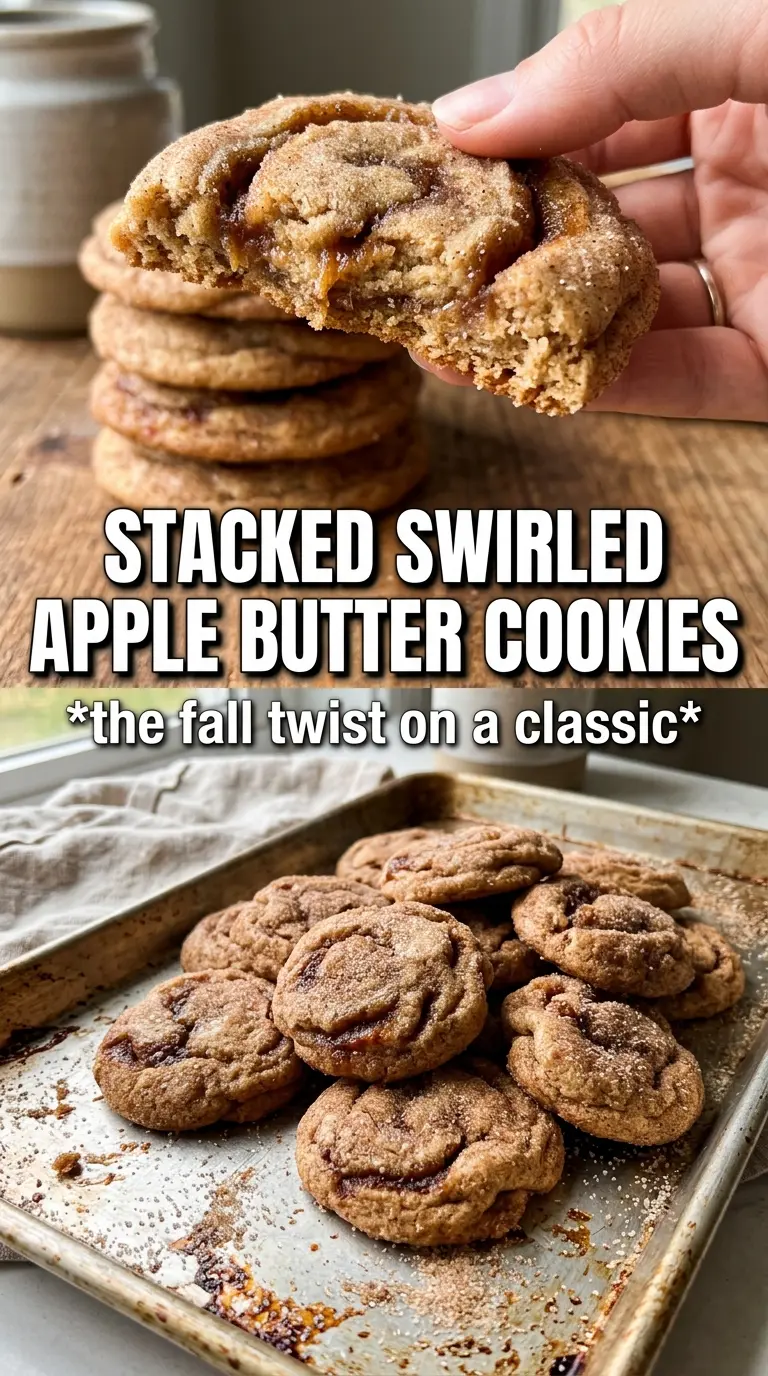
Apple Butter Snickerdoodles bake up soft in the center with crinkled tops, cinnamon-sugar edges, and that familiar snickerdoodle tang that keeps you reaching for another one. The apple butter doesn’t make them taste like apple pie; it adds a deeper, cooked-fruit note that settles right into the cookie and makes the whole batch feel a little more special than the usual version.
The dough is intentionally soft, which is what gives these cookies that plush, almost pillowy bite after baking. Cream of tartar keeps the snickerdoodle flavor honest and sharp, while the apple butter brings moisture and body without thinning the dough. The key is chilling only if needed, then baking just until the edges set so the centers stay tender instead of dry.
Below you’ll find the trick that keeps the coating bold, plus a few small swaps and storage notes if you want to make the batch ahead.
The cookies stayed soft for days, and the apple butter gave them this cozy caramel-apple depth without making them cakey. I chilled the dough for 30 minutes and the rolling sugar clung perfectly.
Save these Apple Butter Snickerdoodles for the softest cinnamon-sugar cookies with a little extra apple warmth in every bite.
The small detail that keeps these cookies soft instead of dry
Snickerdoodles get ruined when they’re baked like plain sugar cookies. The dough needs enough structure to hold the crinkly cinnamon shell, but it also needs just enough moisture to stay soft after cooling. Apple butter helps with that balance because it brings concentrated fruit moisture without adding chunks or excess liquid that would make the cookies spread too much.
The other thing that matters here is not overbaking the centers. These cookies should come out when the edges are set and the tops look cracked, even if the middle still looks a touch underdone. That last bit of carryover heat finishes the cookie on the pan, and it’s the difference between a soft, bendy cookie and one that turns dry by the next day.
- Cream of tartar — This is what gives snickerdoodles their classic gentle tang and helps the cookies bake with that characteristic crackled top. If you skip it, the flavor turns flatter and more like a basic cinnamon sugar cookie.
- Apple butter — Use a thick, smooth apple butter here. Loose or watery versions can make the dough spread more than you want, while a concentrated apple butter gives the cookies their warm, cooked-fruit depth.
- Softened butter — The butter needs to be soft enough to beat light and fluffy with the sugar. Melted butter makes the dough greasy and leads to flatter cookies.
- Apple pie spice in the coating — That little bit of spice in the rolling mixture is what makes the outside taste fuller than plain cinnamon sugar. You can use extra cinnamon if that’s what you have, but the apple pie spice adds a nice bass note.
What Each Ingredient Is Actually Doing in This Recipe
- Primary ingredient (the star) — Quality matters most. Choose the best you can find.
- Cooking medium (oil, butter, or broth) — This carries flavors and prevents dryness.
- Seasonings (salt, pepper, spices, herbs) — Layer flavors so nothing overpowers. Build depth gradually.
- Aromatics (garlic, onion, herbs) — Cook with fat to bloom flavors. Become the foundation.
- Supporting ingredients — Complement the main ingredient without overpowering it.
- Sauce or liquid (if applicable) — Brings flavors together. Balance richness with acid.
- Acid (lemon, vinegar, wine, or other) — Brightens and prevents flat-tasting results.
- Final finish (garnish, glaze, or sauce) — Prevents one-dimensional taste and adds visual appeal.
Building the dough so the coating bakes into crinkles, not crust
Whisking the dry ingredients first
Start by whisking the flour, cream of tartar, baking soda, cinnamon, nutmeg, and salt together until the color looks even. That keeps the leavening from clumping in one spot, which matters because snickerdoodles depend on an even rise to get those familiar cracks. If the dry ingredients aren’t blended well, you can end up with bitter little pockets of baking soda or uneven spread.
Beating the butter and sugar until it turns pale
Beat the softened butter and granulated sugar until the mixture looks fluffy and lighter in color. This step traps air, which helps the cookies bake up with some lift instead of collapsing into a dense disk. Once the eggs, apple butter, and vanilla go in, scrape the bowl and mix only until combined so you don’t knock out all that air.
Bringing the dough together without overworking it
Add the flour mixture and fold it in just until no dry streaks remain. The dough will be soft, and that’s normal; it should hold together without feeling stiff. If it’s sticky enough that you can’t scoop it cleanly, chill it for 30 minutes rather than adding extra flour, which would make the cookies dry and heavy.
Rolling, coating, and baking to the right finish
Mix the rolling sugar in a shallow bowl, then scoop the dough into 1 1/2 tablespoon portions and roll each one generously. You want a thick, visible coat on every ball because that layer melts and sets into the wrinkled crust. Bake just until the edges are set and the centers still look soft; if they start to take on a deep brown color, you’ve gone too far. Let them sit on the baking sheet for 5 minutes before moving them so the centers can firm up without drying out.
How to adapt these cookies when you’re missing one key thing
Make them dairy-free
Use a plant-based butter block in place of the unsalted butter. Choose one that behaves like real butter when softened, not a tub spread, or the dough can get too soft and the cookies may lose their shape. The flavor stays close to the original, though the texture may be a touch less rich.
Swap in homemade apple butter
Homemade apple butter works beautifully as long as it’s thick and cooked down well. If it’s loose, simmer it briefly first and cool it before using so the dough doesn’t spread too much. A thicker apple butter gives you deeper fruit flavor and better structure.
Make the cookies a little more spiced
If you want the apple butter to read more clearly, add another 1/4 teaspoon of cinnamon to the dough and a pinch more apple pie spice to the rolling mixture. That pushes the spice aroma forward without changing the texture. Too much extra spice can crowd out the soft, buttery cookie flavor, so keep the adjustment modest.
Storage and Reheating
- Refrigerator: Store in an airtight container for up to 5 days. They stay soft, though the cinnamon-sugar coating will soften a little over time.
- Freezer: Freeze baked cookies for up to 2 months, or freeze dough balls after rolling in sugar. Bake frozen dough balls straight from the freezer, adding 1 to 2 minutes.
- Reheating: Warm baked cookies at room temperature or for a few seconds in the microwave. Don’t heat them too long or the centers dry out and the sugar coating gets sticky instead of crisp.
Questions I Get Asked About This Recipe
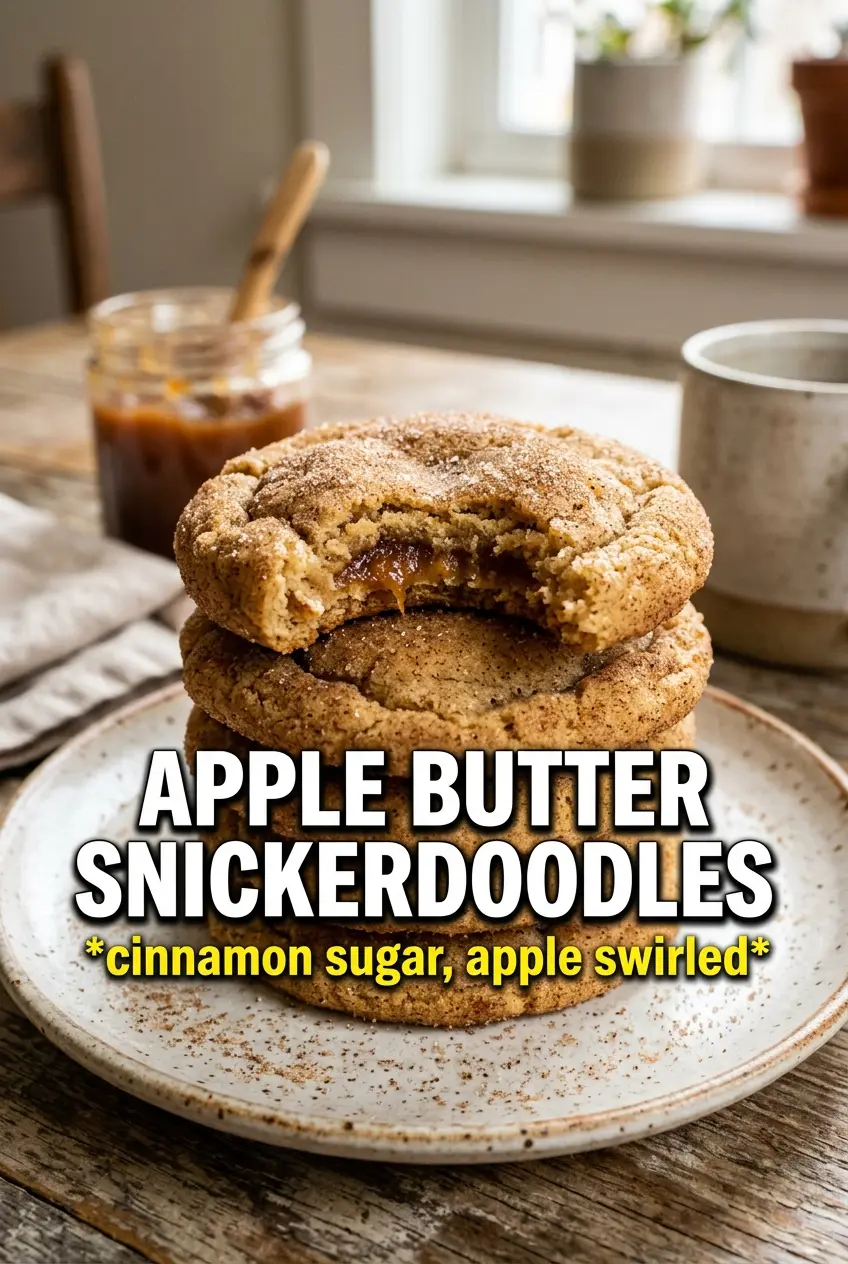
Apple Butter Snickerdoodles
Ingredients
Equipment
Method
- Preheat the oven to 375F and line baking sheets with parchment as a ready surface for baking.
- Whisk together all-purpose flour, cream of tartar, baking soda, cinnamon, nutmeg, and salt until the spices are evenly dispersed.
- Beat unsalted butter (softened) and granulated sugar until very light and fluffy, then add eggs, apple butter, and vanilla extract and mix until smooth.
- Fold in the flour mixture until just combined; the dough should be soft.
- Refrigerate the dough for 30 minutes if it feels very sticky, then proceed once it’s easier to scoop.
- Mix the rolling spices in a shallow bowl: sugar, cinnamon, and apple pie spice.
- Scoop dough into 1-1/2 tablespoon balls, then roll generously in the cinnamon spice sugar to coat the surface.
- Bake for 10-12 minutes at 375F until the cookies are crinkled and the edges are just set.
- Cool on the pan for 5 minutes so the centers finish firming as they cool.