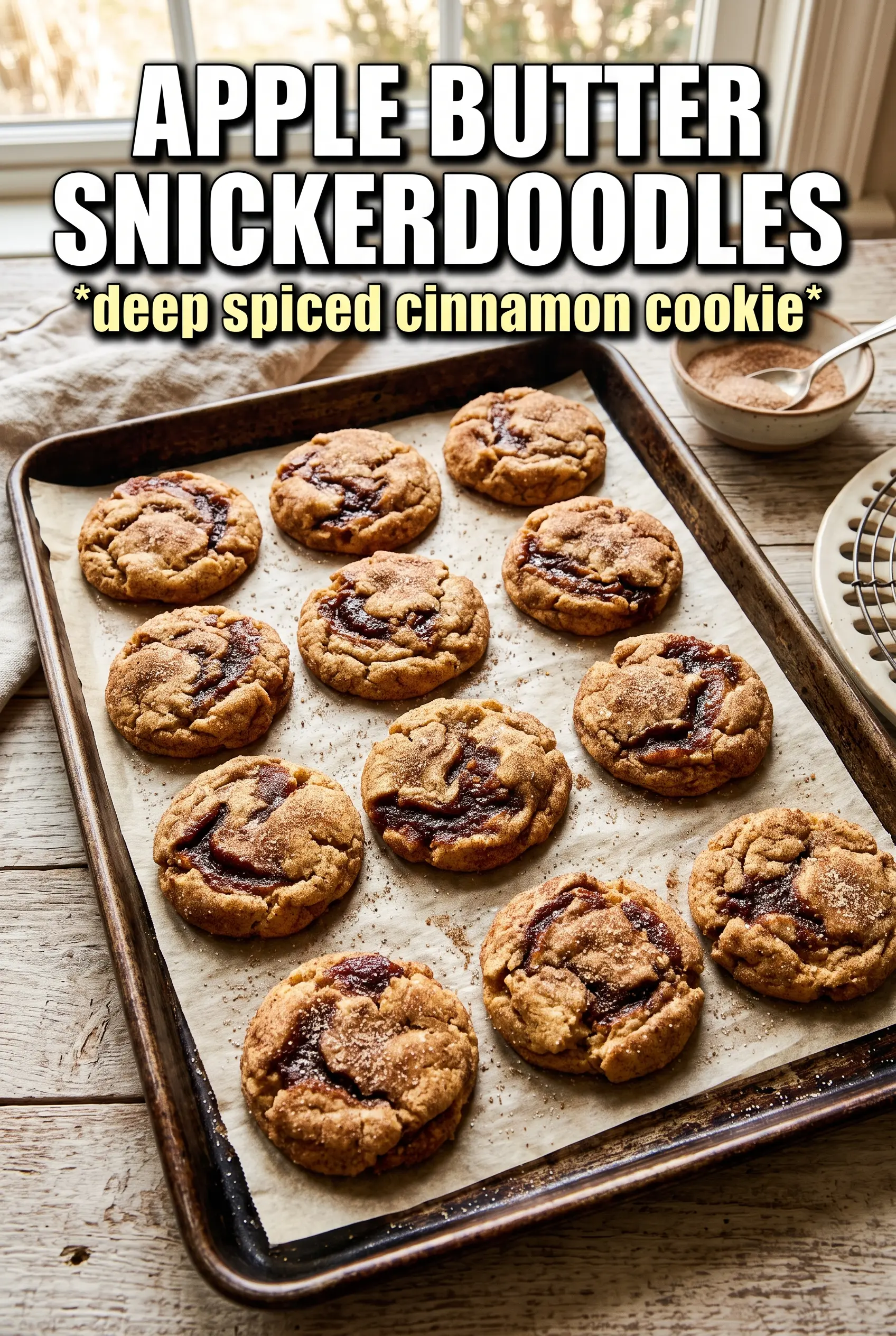
Apple butter snickerdoodles bake up with soft, crinkled centers, buttery edges, and that familiar cinnamon-sugar shell that cracks just enough when you bite in. The apple butter doesn’t make them taste like a spiced applesauce cookie; it deepens the flavor and keeps the middle tender for days. That little bit of fruit keeps the classic snickerdoodle comfort, but gives it a warmer, richer finish that stands out from the usual version.
The dough is built like a proper snickerdoodle, with cream of tartar for that signature tang and baking soda for lift. Apple butter brings moisture and concentrated apple flavor without adding extra liquid that would make the cookies spread too much. A short chill helps the dough firm up if it feels sticky, which matters because these cookies bake best when the balls hold their shape long enough to puff and crack on the oven sheet.
Below, I’ve added the one texture cue I watch for every time, plus a few swaps that keep the cookies soft, spiced, and easy to work with.
The centers stayed soft for days and the cinnamon-sugar crust cracked beautifully. I chilled the dough for 30 minutes and they baked up thick instead of spreading flat.
Save these apple butter snickerdoodles for when you want soft centers, crackly cinnamon-sugar tops, and a little extra apple flavor in every bite.
The Secret to Keeping the Centers Soft While the Edges Set
The biggest mistake with snickerdoodles is baking them until they look finished in the oven. These should come out when the edges are just set and the centers still look a little underdone. That last bit of carryover heat finishes the middle on the pan, which is how you get a cookie that stays soft instead of turning dry and cakey.
Apple butter adds moisture, but it also adds weight, so this dough needs enough structure to hold onto that tender texture. Cream of tartar gives the cookie its classic snickerdoodle tang and helps the crumb stay delicate. If the dough feels sticky after mixing, the chill time is what saves it from spreading into thin, sugary pancakes.
- Butter — Use softened, not melted, butter. You want it light and fluffy when beaten with the sugar, because that gives the dough the air it needs.
- Apple butter — This is the flavor anchor. A thick, concentrated apple butter works better than loose applesauce because it adds flavor without flooding the dough with extra moisture.
- Cream of tartar — Don’t swap this out if you want a true snickerdoodle texture. It’s what gives the cookie that classic tang and soft, slightly chewy bite.
- Rolling sugar — The cinnamon-sugar coating needs to be generous. A light dusting disappears in the oven; a full coating gives you that crackly, craggy outside.
Building the Dough So It Bakes Thick Instead of Flat
Start by whisking the dry ingredients together well so the cinnamon and leavening distribute evenly. That keeps the spice balanced and prevents little pockets of baking soda from showing up in one bite. Cream the butter and sugar until the mixture looks pale and fluffy; if you rush this, the cookies will be denser and less crinkled.
Creaming the Butter and Sugar
Beat the softened butter and granulated sugar until it turns noticeably lighter in color and looks airy around the edges. That’s the moment you want, not just when the butter and sugar are mixed together. If the butter is too warm, the dough will spread more in the oven, so stop as soon as it loses its greasy look.
Adding the Apple Butter Without Breaking the Texture
Beat in the eggs, apple butter, and vanilla after the butter mixture is fluffy. The dough may look a little loose at this stage, and that’s normal. Once the flour goes in, mix only until the streaks disappear; overmixing tightens the dough and takes away the soft, tender crumb you want.
Chilling Only If the Dough Needs It
If the dough feels sticky enough that it won’t scoop cleanly, chill it for 30 minutes. That short rest firms up the butter and makes the balls easier to roll in the cinnamon sugar. If the dough already feels scoopable, don’t force a long chill or the cookies can lose some of their rise.
What Each Ingredient Is Actually Doing in These Cookies
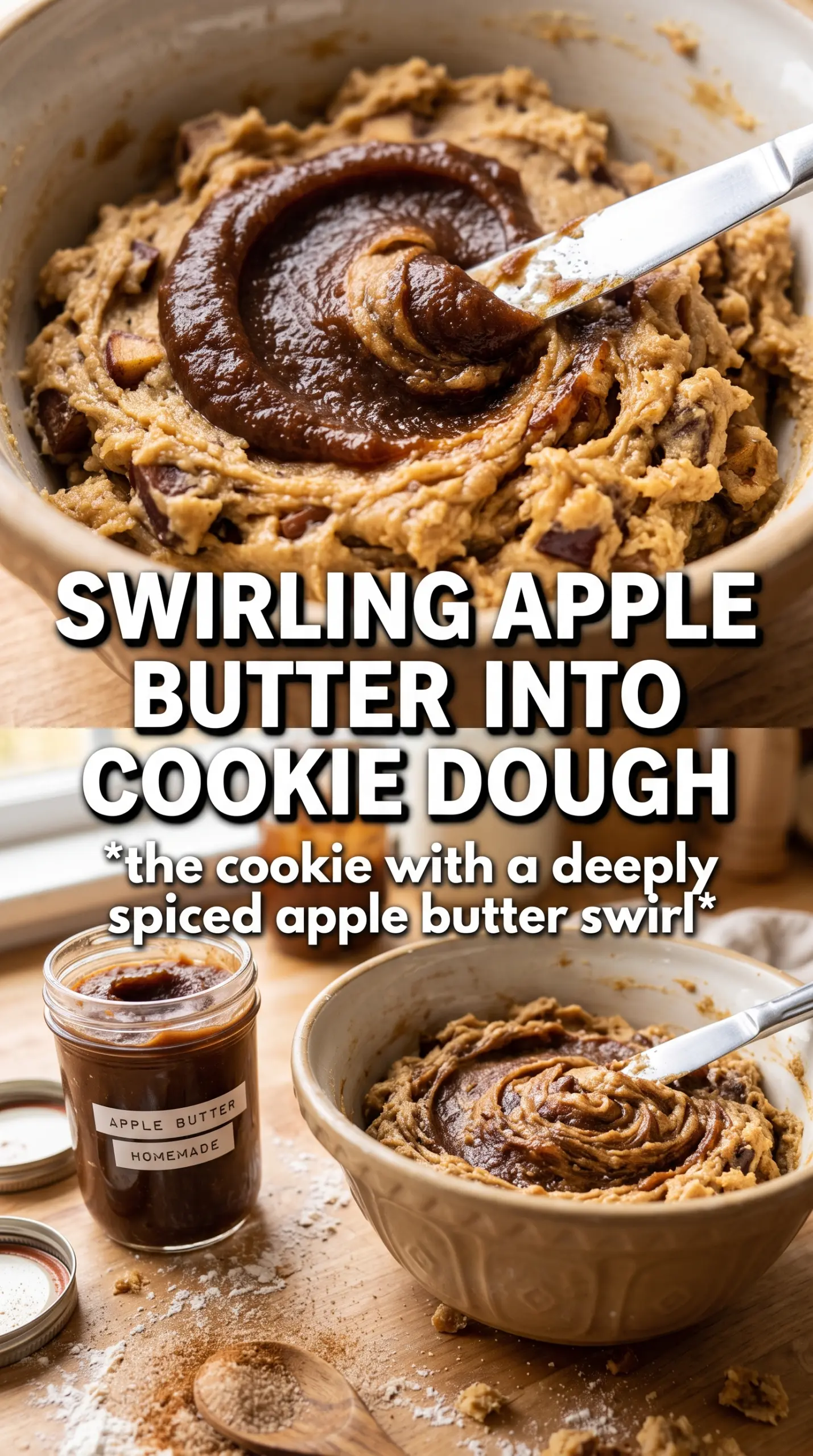
- All-purpose flour — This gives the cookies enough structure to hold the apple butter without turning cakey. Spoon and level it if you can; packed flour makes the dough dry and the cookies thick in the wrong way.
- Apple butter — Thick apple butter matters here. A thinner spread will make the dough looser and the cookies spread more, so use one with a dense, spoonable texture.
- Eggs — They bind the dough and help the centers stay plush. Room-temperature eggs blend more smoothly into the butter mixture, which helps the dough come together without breaking.
- Nutmeg and cinnamon — These deepen the apple butter flavor without making the cookies taste like pie filling. The spice amount is modest for a reason; the cinnamon-sugar coating supplies most of the outside flavor.
- Vanilla — It rounds out the apple and spice notes. Don’t skip it unless you have to.
- Rolling mixture — The cinnamon, sugar, and apple pie spice create the crisp outer shell. If you want more crunch, roll the dough balls a second time before baking.
Rolling, Baking, and Catching the Cookies at the Right Moment
Coating the Dough Balls Generously
Mix the rolling sugar and spices in a shallow bowl, then roll each scoop until it’s fully coated. You want a thick, even layer; that coating is what gives the finished cookies their crackly surface. If the dough feels too soft to handle, chill it a few minutes before rolling so the sugar clings instead of melting into the dough.
Baking Until the Edges Just Set
Space the dough balls on parchment-lined baking sheets so they have room to spread. Bake at 375°F for 10 to 12 minutes, and watch for the edges to look set while the centers still puff and look slightly soft. If you wait until the whole cookie looks firm, you’ve gone too far and the texture will dry out as it cools.
Cooling on the Pan Before Moving Them
Let the cookies sit on the baking sheet for 5 minutes before transferring them. They finish setting during that time, and moving them too soon can make the centers slump or tear. After that short rest, they should lift cleanly and keep their soft middle.
How to Adjust These Cookies Without Losing the Snickerdoodle Texture
Gluten-Free Version
Use a good 1:1 gluten-free flour blend that includes xanthan gum. The cookies will still bake up soft, but they may spread a touch less and taste best when cooled completely so the crumb sets.
Extra-Spiced Apple Butter Cookies
Add another 1/2 teaspoon cinnamon to the dough if you want a stronger spice note. That makes the apple butter flavor read warmer and deeper, but it won’t change the texture.
Dairy-Free Swaps
Use a firm dairy-free butter stick instead of regular butter. Spreadable tub-style substitutes can make the dough too soft and the cookies may flatten, so choose one that behaves like real butter when creamed.
Make-Ahead Dough
Scoop the dough balls first, then chill them on a tray or freeze them for later baking. That keeps the dough easy to handle and gives you a better round shape than refrigerating one large bowl of dough.
Storage and Reheating
- Refrigerator: Store in an airtight container for up to 5 days. The cinnamon-sugar coating softens a little, but the centers stay tender.
- Freezer: Freeze baked cookies for up to 2 months, or freeze portioned dough balls and bake from frozen with 1 to 2 extra minutes.
- Reheating: Warm a cookie in the microwave for about 8 to 10 seconds if you want the center soft again. Longer than that will make the edges tough instead of just cozy.
Questions I Get Asked About This Recipe
Apple Butter Snickerdoodles
Ingredients
Equipment
Method
- Preheat the oven to 375F and line baking sheets with parchment.
- Whisk together all-purpose flour, cream of tartar, baking soda, cinnamon, nutmeg, and salt.
- Beat the softened unsalted butter and granulated sugar until very light and fluffy.
- Add the eggs, apple butter, and vanilla extract, and beat until smooth.
- Fold in the flour mixture until just combined, stopping as soon as no dry streaks remain.
- Refrigerate the dough for 30 minutes if it feels sticky.
- Mix the rolling sugar, cinnamon, and apple pie spice in a shallow bowl.
- Scoop dough into 1-1/2 tablespoon balls, then roll generously in the cinnamon sugar.
- Place the coated balls on prepared baking sheets with space between them.
- Bake for 10-12 minutes at 375F until crinkled and the edges are just set.
- Cool on the pan for 5 minutes so the centers firm up as they cool.