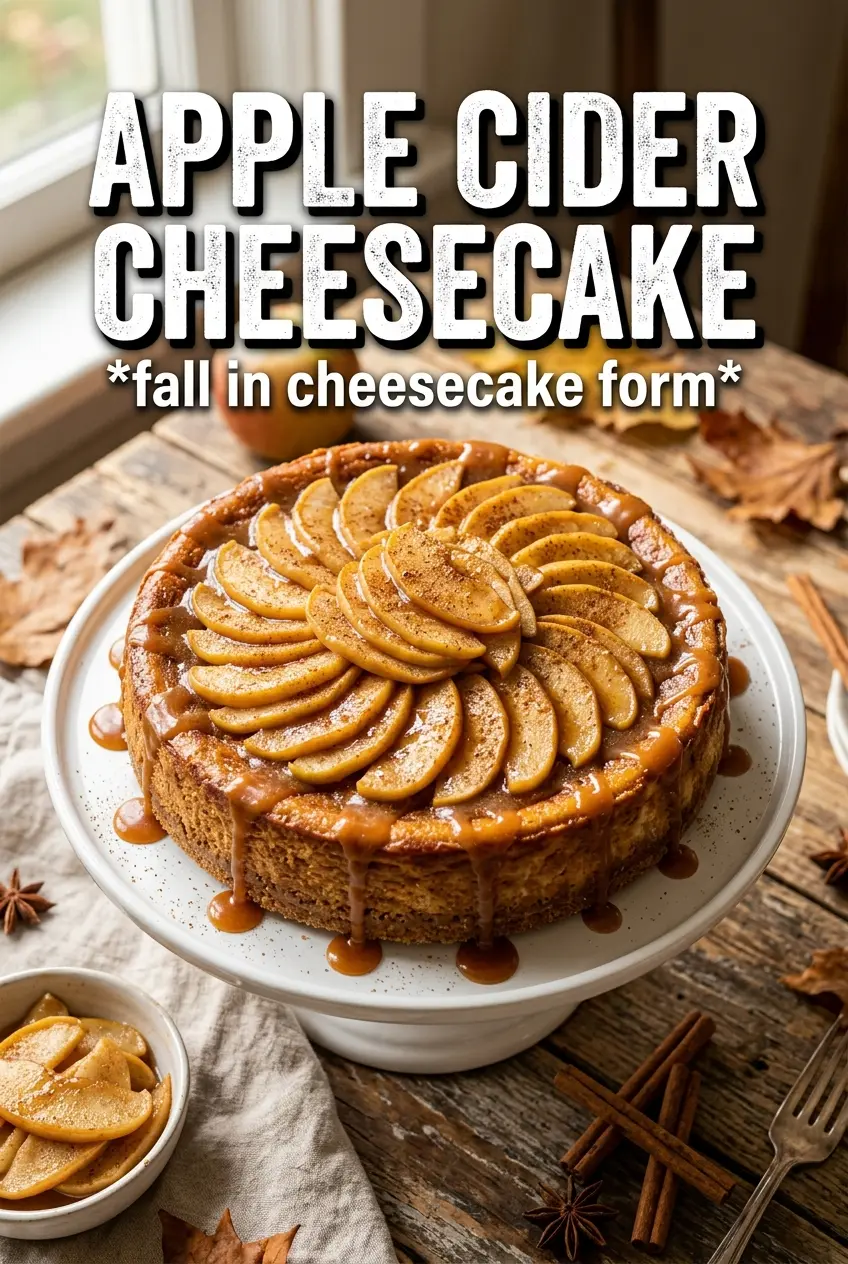
Pale, silky cheesecake and a crisp graham cracker crust are already a strong pairing, but the apple cider gives this one a sharper, more interesting finish. The filling tastes like classic cheesecake first, then the cider and warm spices come through at the end, which keeps each bite from feeling heavy. A drizzle of cider syrup on top pulls everything together and gives the slices a glossy finish that looks as good as it tastes.
The key is reducing the cider before it goes into the batter. That step concentrates the apple flavor without adding extra liquid, which helps the cheesecake bake up smooth instead of loose. I also like baking this one in a water bath because it keeps the edges from overbaking before the center sets. That gentle heat is what gives you clean slices and a filling that stays creamy after chilling.
Below, I’ve included the details that matter most: how to avoid a grainy batter, why the cider reduction changes the texture, and what to do if you want to make the dessert a day ahead. Once you’ve made it this way, it’s hard to go back.
The cider reduction made the filling taste brighter, and the cheesecake came out with that smooth center and no cracks after chilling overnight.
Pin this apple cider cheesecake for a creamy dessert with spiced cider drizzle and a crisp graham cracker crust.
The Trick to Keeping the Filling Creamy, Not Grainy
Most cheesecake problems start before the pan ever goes into the oven. Cold cream cheese leaves tiny lumps that never fully disappear, and overmixing the batter after the eggs go in traps extra air that can crack the surface later. For this recipe, the batter should look smooth and thick before the eggs are added, then turn glossy and cohesive once everything is combined.
The cider reduction matters for more than flavor. It brings the apple note into the filling without watering down the batter, and that helps the cheesecake set cleanly. If the reduction is still warm when you add it, it can soften the cream cheese too much, so cool it before mixing.
- Softened cream cheese — This has to be truly soft all the way through. If the center is still cool, you’ll get specks in the batter no matter how long you beat it.
- Reduced apple cider — Fresh cider is worth using here because the flavor concentrates into something deep and apple-forward. Don’t skip the reduction or the cheesecake will taste flatter and bake up looser.
- Sour cream — This gives the filling a gentle tang and a softer set. Plain Greek yogurt can work in a pinch, but the result is a little sharper and less plush.
What Each Ingredient Is Actually Doing in This Cheesecake

- Graham cracker crumbs — They give you that familiar buttery base that stays crisp under the filling. If you want a firmer crust, pulse the crumbs finer and pack them down hard in the pan.
- Brown sugar — This adds a deeper, caramel-like sweetness that works better than plain white sugar here. The molasses note makes the apple cider taste rounder.
- Cinnamon and nutmeg — These are support players, not the main event. Used lightly, they warm up the cider without pushing the cheesecake into pumpkin-pie territory.
- Eggs — They set the structure. Add them one at a time and stop mixing as soon as they disappear, because extra beating is what builds cracks into the top.
- Water bath — This isn’t decorative. It gives the cheesecake steady, gentle heat so the edges don’t overbake while the center is still catching up.
Building the Cheesecake So the Center Sets Cleanly
Pressing the Crust
Mix the crust ingredients until every crumb looks moistened, then press them firmly into the bottom of a 9-inch springform pan. The crust should feel compact, not sandy, because a loose crust will crumble when you slice the cheesecake. Bake it just long enough to smell toasted at the edges. That little head start keeps it from going soggy under the filling.
Reducing the Cider
Simmer the cider until it’s syrupy and reduced to about half its original volume, then let it cool before it touches the batter. You’re looking for a slightly thickened liquid that coats the spoon, not a sticky caramel. If you add it too hot, it can soften the cream cheese and make the batter greasy. Cool cider also blends more evenly.
Mixing the Filling
Beat the cream cheese and brown sugar until the mixture looks smooth and satiny with no visible lumps along the bowl. Add the reduced cider, then the eggs one at a time, followed by the sour cream, spices, and vanilla. Stop the mixer as soon as the batter looks unified. If you keep whipping after the eggs go in, you’ll fold too much air into the filling and the cheesecake may puff, then collapse.
Baking and Chilling
Pour the batter over the crust and bake until the center still has a slight wobble when you nudge the pan. The edges should look set, but the middle should move like set gelatin, not liquid. Let the cheesecake cool completely before it goes into the fridge, or condensation will form on the surface and dull the top. The long chill is what gives you those clean, bakery-style slices.
Three Ways to Adjust the Apple Cider Cheesecake Without Losing the Texture
Gluten-Free Crust Swap
Use gluten-free graham-style crumbs or finely crushed gluten-free cookies in the same amount. The texture stays crisp if you still press it firmly and bake it first, though the flavor will lean a little more buttery or cookie-like depending on what you use.
Dairy-Free Version
Use dairy-free cream cheese and a thick unsweetened dairy-free sour cream alternative. The filling will be a little softer and the flavor slightly tangier, so chill it overnight for the best slice. This works best if the brand you choose is already designed for baking.
Extra-Spiced Topping
Add a pinch of cloves or allspice to the cider syrup if you want a warmer finish. Keep it light, though, because the filling already has cinnamon and nutmeg; too much spice starts to cover the apple instead of sharpening it.
Storage and Reheating
- Refrigerator: Store covered for up to 5 days. The crust softens a little after day one, but the cheesecake itself stays creamy.
- Freezer: Freezes well without the cider topping. Wrap slices tightly and freeze for up to 2 months, then thaw in the fridge overnight before serving.
- Reheating: This cheesecake is best served cold or barely cool. Let frozen slices thaw fully; warming it in the microwave turns the filling soft and can make the crust go soggy.
Answers to the Questions Worth Asking
Apple Cider Cheesecake
Ingredients
Equipment
Method
- Preheat the oven to 325°F and grease a 9-inch springform pan. Combine graham cracker crumbs, sugar, cinnamon, and melted butter, then press into the pan to form an even crust.
- In a small saucepan over medium heat, reduce 1/2 cup apple cider until syrupy, about 8-12 minutes, stirring occasionally. Cool completely before adding it to the cheesecake batter.
- Beat the softened cream cheese and packed brown sugar until completely smooth, scraping the sides as needed. Mix in the cooled reduced cider until smooth.
- Add eggs one at a time, mixing on low after each addition just until incorporated. Stir in sour cream, cinnamon, nutmeg, and vanilla until the batter is uniform.
- Pour the batter over the crust in the springform pan. Bake in a water bath at 325°F for 55-60 minutes, until the center is just set with a slight wobble.
- Cool the cheesecake at room temperature until fully cool, about 1 hour. Refrigerate for 6 hours or overnight to fully chill and set.
- In the same small saucepan, simmer 1 cup apple cider with 2 tablespoons brown sugar and 1/4 teaspoon cinnamon over medium heat until syrupy, about 10-15 minutes. Let it cool slightly so it drizzles thickly.
- Slice the chilled cheesecake and drizzle the apple cider syrup over each serving. Serve straight from the fridge for the cleanest slices.