Apple cider cookies bake up soft in the center with lightly crisp edges and that warm bakery smell of cinnamon, ginger, and brown sugar. The cider doesn’t just add flavor here; when it’s reduced first, it brings a deeper apple note that hangs onto the dough instead of disappearing in the oven. Finished with a cinnamon-sugar roll, the cookies come out with a delicate crinkle and a tender bite that stays soft for days.
The part that makes this version work is the reduced cider. Raw cider adds too much liquid and too little punch, but cooked down until syrupy, it concentrates the apple flavor and blends smoothly into the butter mixture. I also like the mix of brown sugar and granulated sugar because it gives the cookies a little chew without making them heavy. The spice blend is balanced on purpose — enough to taste like apple cider doughnuts, but not so much that it buries the fruit.
Below, I’ve included the small details that keep these cookies soft instead of cakey, plus a few easy variations if you want to lean more heavily into spice, make them dairy-free, or store them for later.
The cider flavor came through beautifully, and rolling the dough in cinnamon sugar gave the outside that little sparkly crust. Mine stayed soft the next day, which never happens with my cookie recipes.
Save these apple cider cookies for the next time you want soft centers, cinnamon sugar edges, and real apple flavor in every bite.
The Cider Reduction Is What Keeps These Cookies from Tasting Flat
Most apple cookies taste more like spice cookies with a little apple in the background. That happens when the cider goes in straight from the bottle. Reducing it first changes the whole cookie: the liquid evaporates, the flavor deepens, and the dough gets a concentrated apple note without turning loose or sticky.
The other important piece is timing. Let the reduced cider cool completely before it goes into the butter and sugar. Hot cider softens the butter too much, and then the dough spreads before the edges have a chance to set. If your cookies bake up thin, that’s usually the reason. Cold, thick cider gives you a dough that scoops cleanly and bakes into soft rounds with a little crinkle on top.
What Each Ingredient Is Actually Doing in These Apple Cider Cookies
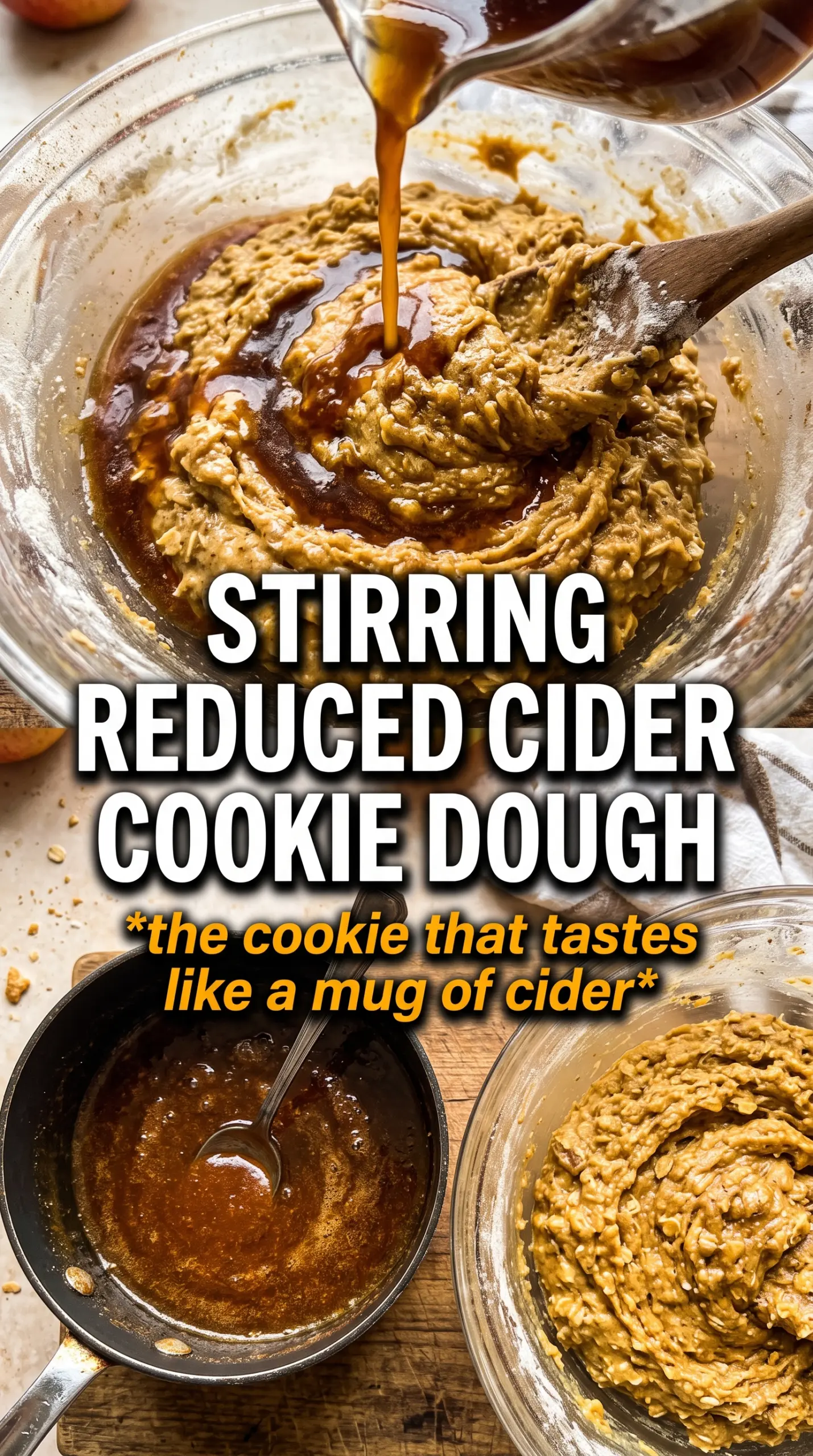
- Reduced apple cider — This is the flavor anchor. Reducing it to half the original volume concentrates the apple taste and keeps the dough from getting wet. Don’t skip the cooling step, because warm cider will loosen the butter and make the cookies spread.
- Brown sugar — This gives the cookies their soft chew and a deeper caramel note that plays well with the cider. Light brown sugar works fine, though dark brown sugar will push the flavor a little richer and heavier.
- Butter — Softened butter beats up with the sugars to trap air, which helps the cookies bake tender instead of dense. If the butter is greasy or melted, the dough won’t hold its shape well. You want it soft enough to press, not shiny.
- The spice blend — Cinnamon, ginger, nutmeg, and allspice build that classic apple-cider-doughnut flavor. You can reduce the ginger slightly if you want a gentler cookie, but don’t leave the spices out and expect the cider to carry the whole flavor by itself.
- Cinnamon sugar coating — This gives the exterior a thin, crisp finish and keeps the tops from looking plain. Roll the dough generously so the coating actually shows after baking.
How to Mix the Dough So the Cookies Stay Soft, Not Puffy
Reduce the cider first and let it cool completely
Set the cider over medium heat and cook it until it looks slightly syrupy and measures about half the original amount. You’ll notice the bubbles get smaller and the smell turns deeper and more apple-forward. Pull it off the heat as soon as it starts to feel sticky; if you reduce it too far, the flavor can turn sharp instead of round. Let it cool all the way before mixing, or the butter will soften too much.
Build the butter base until it looks light
Beat the butter with both sugars until the mixture looks paler and fluffy around the edges of the bowl. That step matters because it gives the cookies lift without making them cakey. Add the egg, vanilla, and cooled cider after the butter mixture is aerated, not before. If the mixture looks slightly curdled after the cider goes in, that’s normal and it smooths out once the flour is added.
Stop mixing as soon as the flour disappears
Stir in the dry ingredients just until no streaks of flour remain. Overmixing here makes the cookies tougher and can make the centers bake up bready. Scoop the dough while it’s still soft, then roll it in the cinnamon sugar so the coating sticks well. Bake until the edges are set and the centers still look slightly underdone; they finish setting on the pan.
Make Them More Like Apple Cider Doughnuts
Add a little extra cinnamon to the coating and bake the cookies until the edges are just golden. You’ll get a slightly drier, more bakery-style exterior that tastes closer to a cider doughnut, but the centers will still stay soft.
Dairy-Free Version
Use a plant-based butter stick in place of the unsalted butter. The cookies will still spread and brown properly as long as you use a baking-style stick, not a tub spread. The flavor stays close, though the finish can be a little less rich.
Gluten-Free Swap
Use a 1:1 gluten-free baking flour that already contains xanthan gum. The dough may be a touch softer, so chill it for 20 minutes if it feels too sticky to scoop. The cookies will still bake tender, but they’ll be a little more delicate when warm.
How to Store the Cookies
- Refrigerator: Store in an airtight container for up to 5 days. They stay soft, though the cinnamon sugar coating will soften a bit over time.
- Freezer: These freeze well. Freeze baked cookies in a single layer, then transfer to a freezer bag for up to 2 months.
- Reheating: Warm a cookie in the microwave for 8 to 10 seconds or in a 300F oven for a few minutes. Long reheating dries them out, so stop as soon as they smell warm and buttery again.
Questions I Get Asked About This Recipe

Apple Cider Cookies
Ingredients
Equipment
Method
- Simmer apple cider in a small saucepan over medium heat until syrupy, then cool completely.
- Confirm the reduction is thick enough to coat the back of a spoon before cooling.
- Preheat the oven to 350F and line baking sheets with parchment.
- Whisk together all-purpose flour, baking soda, cinnamon, ginger, nutmeg, allspice, and salt until evenly combined.
- Beat softened butter and both sugars until light and fluffy.
- Add the egg, vanilla extract, and the reduced apple cider, then beat until smooth.
- Stir in the flour mixture until just combined, stopping as soon as no dry streaks remain.
- Scoop dough into 1-1/2 tablespoon balls and roll them in cinnamon sugar.
- Place the coated balls on the prepared baking sheets with space between them.
- Bake at 350F for 10-12 minutes, until the edges are set and the tops look lightly set with a slight crinkle.
- Cool on the pan for 5 minutes before transferring, so the cookies finish setting without breaking.