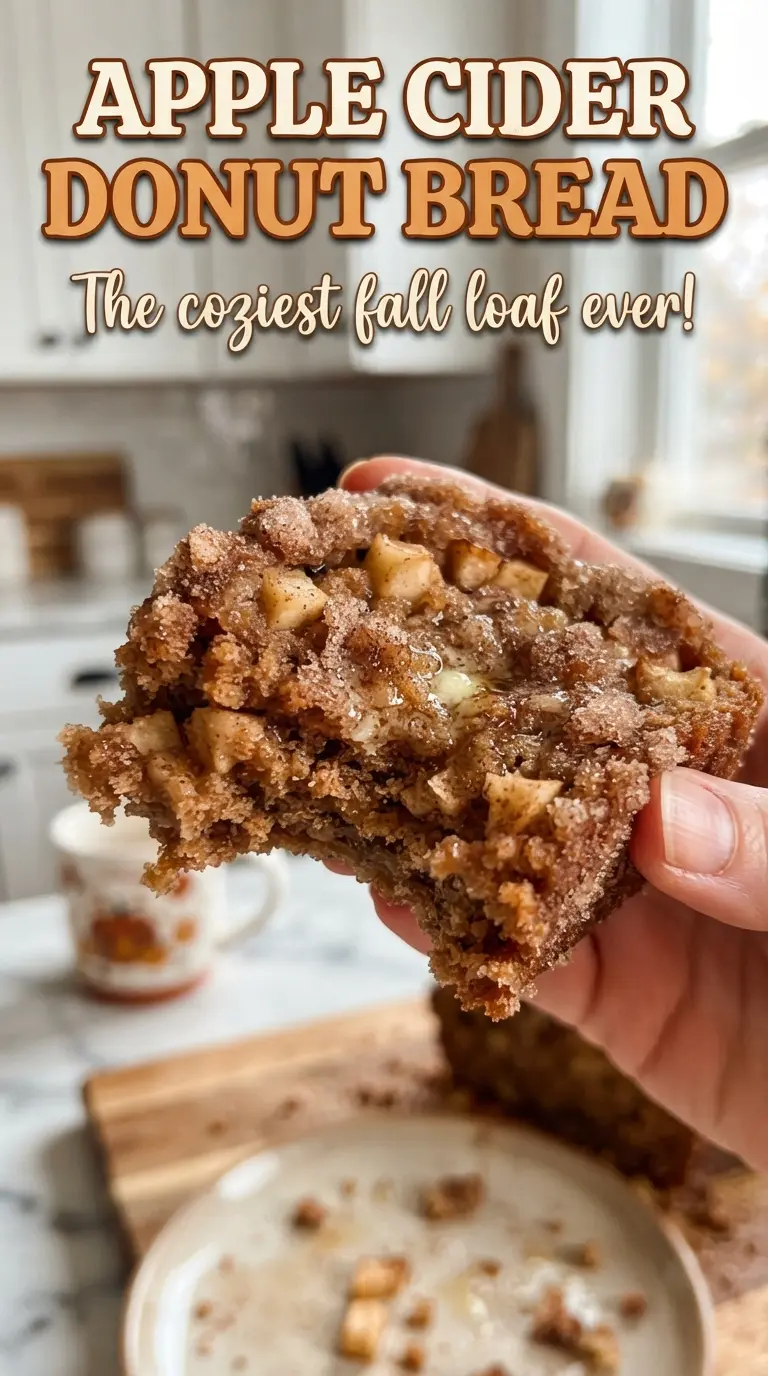
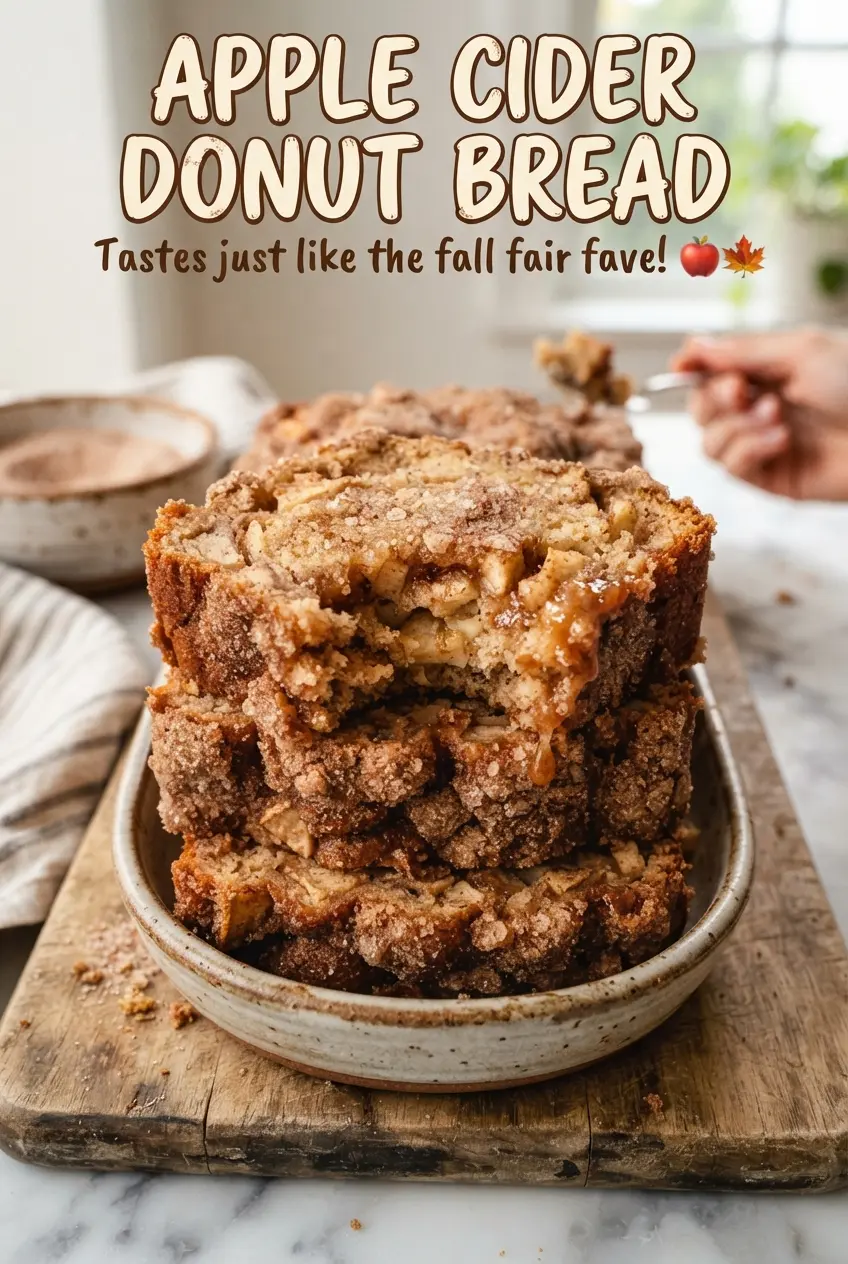
Apple cider donut bread brings the same cozy bakery-style flavor as the classic doughnut, but in a loaf that slices cleanly and stays tender for days. The crumb is soft and fragrant with cinnamon and nutmeg, and that thick cinnamon-sugar coating gives every slice the crackly finish people remember from fall cider mills. It’s the kind of loaf that disappears fast because it works for breakfast, snack time, or dessert without needing any extra fuss.
The part that makes this version stand out is the reduced apple cider. Simmering the cider first concentrates the apple flavor and keeps the loaf from tasting flat or overly sweet. Sour cream adds moisture and a little tang, which keeps the crumb plush instead of dense, and the melted-butter finish helps the cinnamon sugar stick in that classic donut-shop way. Brush it on while the loaf is still warm so the coating clings instead of sliding off.
Below, you’ll find the exact cue for when the cider is reduced enough, why the topping works best in two steps, and a few smart swaps if you need to adjust for what’s in your kitchen.
The cider flavor came through in every slice, and the cinnamon sugar crust was still crackly the next morning. I brushed on the butter while it was warm like you said, and it stuck perfectly.
Apple Cider Donut Bread has that crackly cinnamon sugar crust and tender spiced crumb worth keeping on hand for breakfast or snacking.
The Cider Reduction Is What Keeps This Loaf From Tasting Flat
Most apple cider loaves lean too sweet because they pour in straight cider and hope the flavor survives the bake. It usually doesn’t. Reducing the cider first is what gives this bread a real apple backbone, and it also keeps the batter from getting too loose, which helps the loaf rise evenly instead of collapsing in the center.
The other thing that matters here is timing. The reduced cider has to cool before it goes into the batter, or it can soften the butter too much and make the mixture look curdled. That doesn’t always ruin the loaf, but it can make the texture heavier. You want a thick, fragrant cider syrup that still pours, not a watery liquid.
- Reduced apple cider — This is the flavor engine. If you skip the reduction, the loaf tastes more like spiced quick bread than donut shop cider bread.
- Sour cream — It adds moisture and a gentle tang that balances the sugar. Plain Greek yogurt works in a pinch, but the crumb will be a little tighter.
- Brown sugar — The molasses note deepens the spice. Light or dark brown sugar both work; dark brown sugar gives a slightly richer finish.
- Butter for the topping — Don’t swap in oil here. Melted butter gives the cinnamon sugar something to grab, and it’s what creates that donut-like crust.
What Each Ingredient Is Actually Doing in This Loaf
- All-purpose flour — This gives the loaf enough structure to slice cleanly after it cools. Bread flour isn’t needed and can make the crumb chewy instead of tender.
- Baking powder and baking soda — The two leaveners work together: baking powder gives lift, and baking soda reacts with the sour cream and brown sugar for a softer crumb and better browning.
- Cinnamon and nutmeg — These carry the donut-shop flavor. Nutmeg is easy to overdo, so keep it measured; too much turns the loaf sharp instead of warm.
- Eggs — They bind the batter and help the loaf set into a sliceable texture. Room-temperature eggs blend more smoothly, which helps the batter stay even.
- Vanilla — It rounds out the cider and spice. Don’t leave it out unless you have to; even a small amount makes the loaf taste fuller.
Building the Batter So the Crumb Stays Tender
Reduce the cider first
Simmer the cider until it drops to about half a cup and looks slightly syrupy. The color deepens and the aroma gets stronger as the water cooks off. If it still tastes thin and sharp, it needs more time. Pull it off the heat before it gets too thick, because it will continue to concentrate as it cools.
Cream the butter and sugar until it turns fluffy
Beat the softened butter and brown sugar until the mixture lightens in color and looks a little airy. That step traps tiny pockets of air that help the loaf rise with a softer texture. If the butter is too cold, the mixture stays gritty; if it’s melted, you lose that structure completely. Room temperature butter should dent when pressed, not look greasy.
Fold the dry ingredients in at the end
Once the wet ingredients are mixed, add the flour mixture and stop as soon as no dry streaks remain. Overmixing builds gluten and turns quick bread tough, especially after it bakes a full loaf-pan’s worth of time. A few small lumps are fine. Spread the batter into the pan and level it gently so it bakes evenly in the center.
Finish while the loaf is warm
Bake until a toothpick comes out clean or with just a few moist crumbs. Let the loaf cool for about 10 minutes, then brush it with melted butter and press on the cinnamon sugar. If you wait until it’s fully cool, the topping won’t stick as well. If you rush it and brush on too soon, the sugar can melt into the crust instead of staying crunchy.
How to Adapt Apple Cider Donut Bread Without Losing the Good Part
Dairy-Free Version
Use a plant-based butter for both the loaf and the topping, and swap the sour cream for an unsweetened dairy-free yogurt. The texture stays close, though the finished loaf will taste a little less rich and the crust may brown a touch faster.
Gluten-Free Flour Blend
A 1:1 gluten-free baking blend works best here. The loaf will be a little more delicate and may need a few extra minutes in the oven, but the reduced cider and sour cream keep it from turning dry.
Extra Cinnamon Sugar Crust
If you want a thicker topping, double the cinnamon sugar and brush the loaf with butter in two light passes instead of one heavy one. That gives the coating more to cling to and builds a crunchier finish without soaking the crust.
Storage and Reheating
- Refrigerator: Store covered for up to 5 days. The crust softens a bit in the fridge, but the loaf stays moist.
- Freezer: Freeze slices or the whole loaf tightly wrapped for up to 2 months. Skip the cinnamon sugar topping before freezing if you can, then add it after reheating for the best texture.
- Reheating: Warm slices in a 300°F oven or toaster oven for a few minutes. The common mistake is microwaving too long, which turns the crumb rubbery and melts the sugar crust completely.
Answers to the Questions Worth Asking
Apple Cider Donut Bread
Ingredients
Equipment
Method
- Simmer the apple cider for 15-20 minutes, stirring occasionally, until reduced to 1/2 cup, then cool. You should see the volume noticeably shrink and the cider look syrupy.
- Preheat the oven to 350F, then grease and line a 9x5-inch loaf pan. A lightly greased pan will help the loaf release cleanly.
- Whisk the all-purpose flour, baking powder, baking soda, salt, ground cinnamon, and nutmeg until evenly combined. The mixture should look uniform in color with no visible spice clumps.
- Beat the softened butter and packed brown sugar until fluffy. The mixture should lighten in color and look airy.
- Beat in the eggs, one at a time, until smooth. The batter will turn glossy and more cohesive.
- Beat in the sour cream and vanilla extract until fully incorporated. The batter should look creamy with no streaks.
- Beat in the reduced, cooled apple cider. The batter will loosen slightly and become evenly spiced.
- Fold in the dry ingredients just until combined, then spread the batter into the pan. Stop mixing as soon as no dry flour remains.
- Bake at 350F for 50-55 minutes, until a toothpick comes out clean. The loaf will be golden and spring back slightly when pressed.
- Cool the loaf for 10 minutes. It should be warm enough to absorb topping but not steaming hot.
- Brush the warm loaf all over with the melted butter. Coat the surface thoroughly so the topping sticks.
- Press the cinnamon sugar topping onto the buttered loaf. The crust should form a thick, even layer.