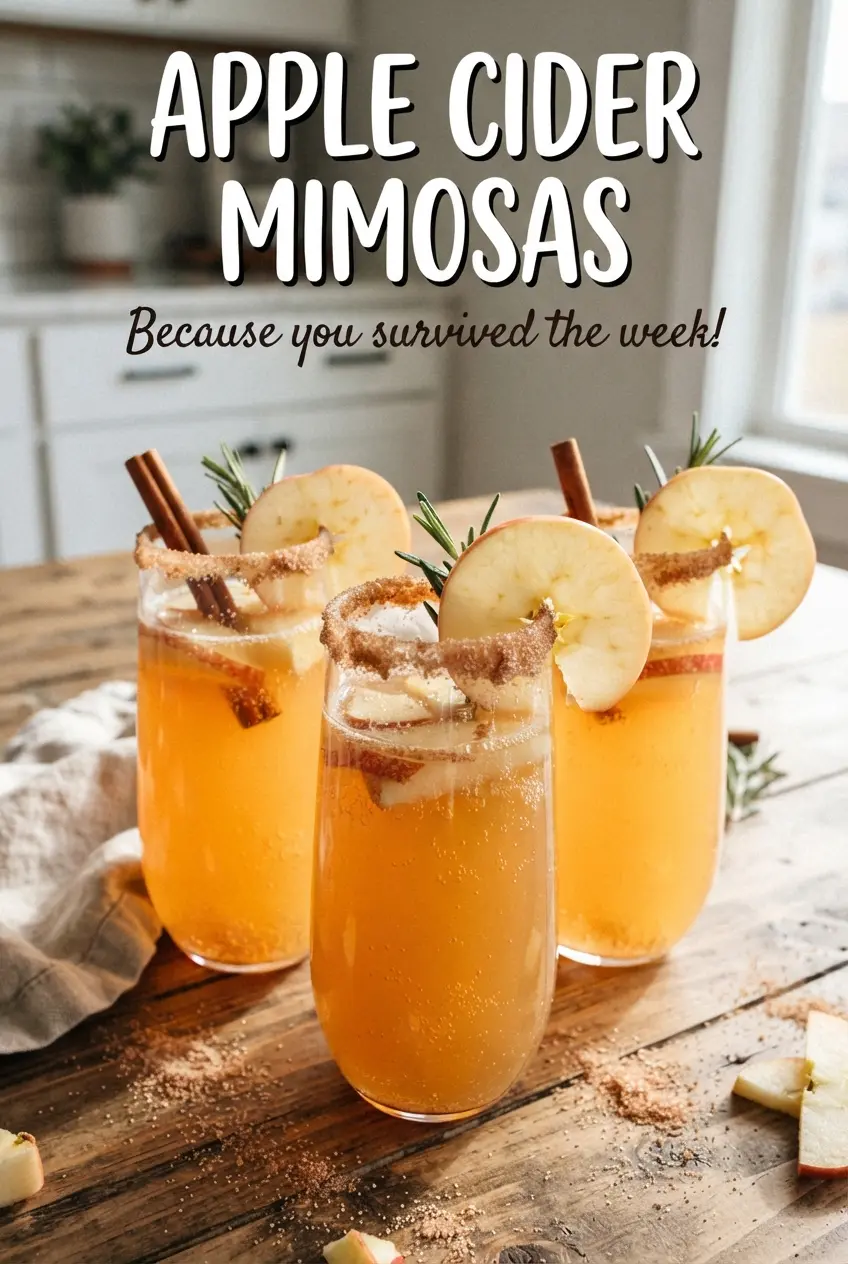
Apple cider mimosas land right in that sweet spot between festive and easy. The cider brings a round, crisp apple flavor, the bubbles keep everything light, and the cinnamon sugar rim gives each sip a little sparkle before the glass even hits your lips. They look elegant on a tray, but they take almost no effort, which is exactly why they keep showing up for brunch, showers, and holiday mornings.
The version that works best starts with chilled cider and cold sparkling wine. Warm liquids flatten fast, and a mimosa needs that lively lift. The cinnamon sugar rim isn’t just for looks either; it adds enough spice to keep the drink from tasting one-note. Thin apple slices finish the glass without weighing it down, and they hold up better than thick wedges or bulky garnishes.
Below, you’ll find the small details that make these feel polished instead of tossed together, plus a few easy ways to adjust the sweetness and presentation depending on the crowd.
The cinnamon sugar rim made these taste like an apple cider donut in a glass, and the bubbles stayed crisp even after I served a whole tray of them.
Save these apple cider mimosas for brunches and holiday toasts when you want a cinnamon-rimmed glass that feels special with almost no effort.
The Part That Keeps These Mimosas Bright Instead of Flat
The biggest mistake with apple cider mimosas is pouring from bottles that have lost their chill. Cold cider and cold sparkling wine keep the drink sharp and lively; once either ingredient warms up, the bubbles fade and the drink turns soft and dull. That matters even more here because cider brings natural sweetness, so you need the sparkle to balance it.
The other detail that changes everything is the ratio. One-third cider and two-thirds champagne or prosecco keeps the drink light enough for brunch, while still letting the apple flavor come through. Go heavier on the cider and the drink starts reading like punch. Go too heavy on the sparkling wine and the cider gets lost.
- Chilled apple cider — Use a good-tasting, cloudy cider if you can. Clear apple juice works in a pinch, but it tastes thinner and less autumn-apple than real cider.
- Champagne or prosecco — Prosecco usually gives you a softer, fruitier result and costs less, which makes it the better everyday choice. Champagne brings a drier finish if you want the drink less sweet.
- Cinnamon sugar — Fine granulated sugar clings best to the rim. Coarse sugar looks pretty but falls off more easily.
- Thin apple slices — Slice them right before serving so they stay crisp and don’t brown before the flutes hit the table.
Building the Rim and Pouring Without Losing the Bubbles
Mix the Rim First
Stir the sugar and cinnamon together on a small plate until the color looks even. If the cinnamon stays clumpy, the rim will taste patchy instead of balanced. Wet the rim with cider rather than water; it keeps the flavor consistent from the first sip to the last. Dip gently and twist once so the sugar clings in a neat band instead of dropping into the glass.
Pour the Cider Before the Sparkling Wine
Add the cider first, filling each flute about one third full. That gives you space for the champagne to lift through the glass without foaming over. Pour the sparkling wine slowly down the side of the flute, not straight into the center, so you keep the fizz instead of beating it out. If the glasses start to bubble too aggressively, pause for a few seconds before topping off the next round.
Finish With a Clean Garnish
Drop in one thin apple slice and a cinnamon stick right before serving. Thick apple wedges can tip the glass or sink awkwardly, and a cinnamon stick that’s too short disappears into the drink. Serve immediately while the bubbles are lively and the rim is still dry enough to hold its shape.
How to Adapt These for Different Crowds and Different Sweetness Levels
Make It Drier and More Brunch-Friendly
Use brut champagne instead of prosecco and keep the cider-to-sparkling ratio exactly the same. The drink will taste sharper, less sugary, and a little more polished. This is the version to pour when you want the cider to read as crisp fruit, not dessert.
Use Sparkling Cider for a Zero-Proof Version
Swap the champagne for chilled sparkling cider and keep the cinnamon sugar rim exactly as written. You’ll lose the dry, wine-like finish, but you’ll keep the festive bubbles and the apple-on-apple flavor that makes the drink work. It’s a good move for baby showers or mixed-age gatherings.
Make a Larger Batch Without Going Flat
Mix the cider and cinnamon sugar rim ahead of time, but don’t combine the cider with the sparkling wine until the moment you’re ready to pour. If you need to serve a crowd, line up the flutes, rim them first, then top them in small rounds instead of making one giant pitcher. That keeps every glass fizzy instead of leaving the last few guests with flat mimosa.
Storage and Make-Ahead Timing
- Refrigerator: The cider can be chilled up to 3 days ahead, and the cinnamon sugar can sit covered at room temperature for a week.
- Freezer: Don’t freeze the finished mimosas. The carbonation gets wrecked and the texture turns muddy.
- Reheating: Not applicable here. For the best result, keep both liquids cold and assemble right before serving so the bubbles stay active.
Questions I Get Asked About This Recipe
Apple Cider Mimosas
Ingredients
Method
- Mix sugar and ground cinnamon on a small plate.
- Wet the rims of the champagne flutes with apple cider, then dip each rim into the cinnamon sugar and set aside to dry for a minute.
- Fill each flute one third full with chilled apple cider.
- Top each flute with chilled champagne or prosecco.
- Garnish each drink with a thin apple slice and a cinnamon stick, then serve.