Soft apple cinnamon cookies bake up tender in the center with lightly crisp edges, little flecks of apple in every bite, and just enough spice to keep them from tasting flat. The cinnamon sugar coating gives the outside a delicate crunch, and the vanilla glaze ties everything together without turning them into a full-on frosted cookie.
What makes these work is the balance of moisture and structure. Applesauce keeps the dough soft, but the diced fresh apple adds real texture and that fresh apple flavor you’d miss if you used applesauce alone. Chilling the dough matters here, too. The dough starts out sticky, and that rest gives the flour time to hydrate so the cookies hold their shape instead of spreading into thin, pale rounds.
Below, I’ve included the small details that matter most: how finely to dice the apples, why the cookies should come off the oven when the centers still look a little underdone, and the easiest way to keep the glaze from sliding off instead of setting on top.
The cookies stayed soft for days, and the diced apples gave them a fresh little bite instead of turning them cakey. I chilled the dough like you said and they baked up thick with those cinnamon sugar edges.
These apple cinnamon cookies stay soft, thick, and glazed with that cozy cinnamon sugar finish.
The Secret to Keeping These Cookies Soft Instead of Puffy and Dry
The biggest mistake with apple cookies is treating them like a standard drop cookie. Applesauce and fresh apple both add a lot of moisture, which is great for tenderness but easy to overdo if the dough isn’t chilled. If you skip that rest, the cookies spread faster, the centers go cakey, and the apple pieces can leak enough liquid to throw off the texture.
These cookies work because the flour has time to absorb the moisture before baking. That means the dough scoops cleaner, the cookies keep a thicker edge, and the centers stay soft without collapsing. Bake them until the edges are just set and the tops look slightly matte. If they look fully done in the oven, they’ve gone too far.
- Applesauce — This is what keeps the crumb tender and soft. Unsweetened applesauce is best, but sweetened will work in a pinch if you reduce the sugar slightly.
- Fresh apples — Peel and dice them small so they disappear into the dough instead of creating wet pockets. Granny Smith adds tartness and structure, while Honeycrisp or Fuji gives a sweeter cookie.
- Brown sugar — This brings moisture and a deeper caramel note that plain white sugar can’t match. Don’t swap it all out unless you want a drier, flatter cookie.
- Chilling the dough — This isn’t optional here. It keeps the cookies thick and helps the cinnamon sugar coating stick instead of dissolving into the dough.
What Each Ingredient Is Doing in the Bowl
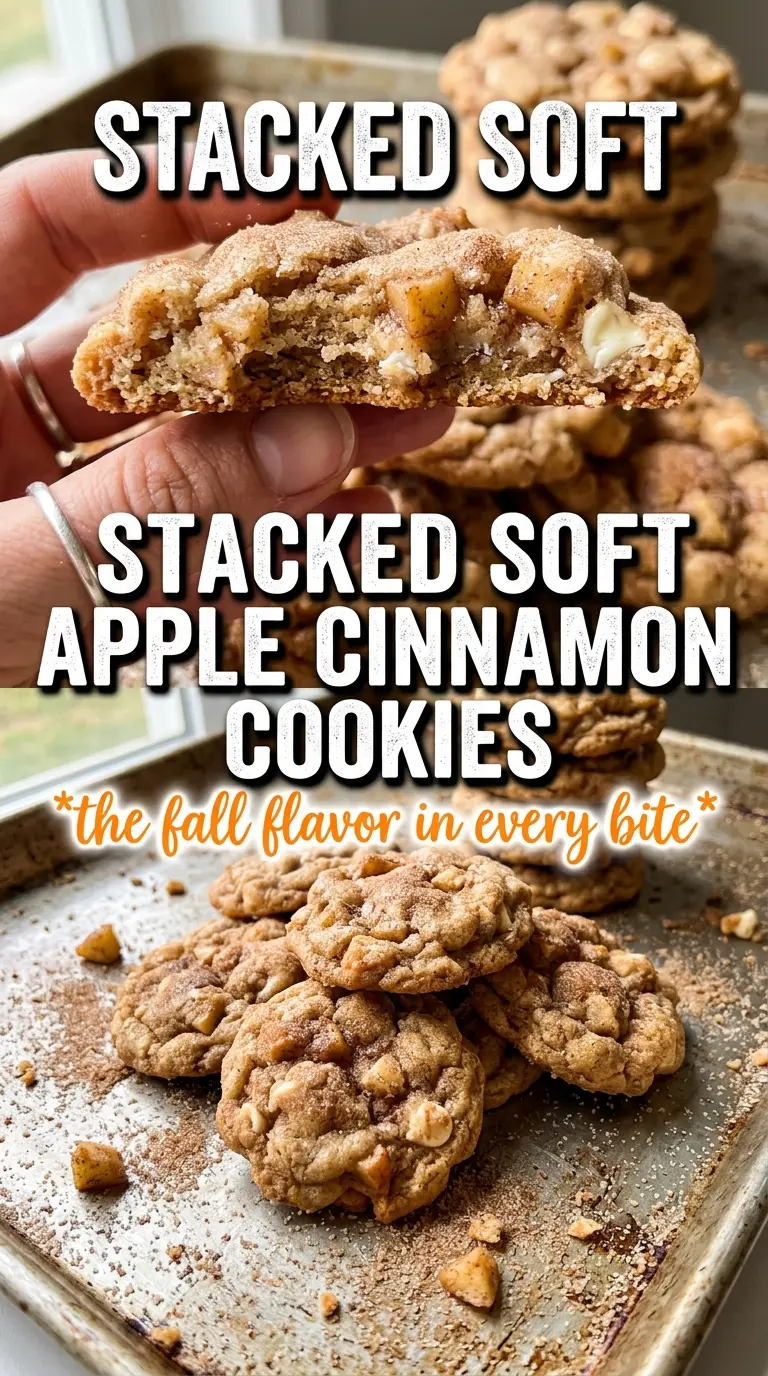
- All-purpose flour — Gives the cookies enough structure to hold the apples without turning heavy. Don’t try to use cake flour here; these cookies already have plenty of softness.
- Baking soda and baking powder — The soda helps with spread and browning, while the powder gives a little lift. Both matter because the dough is dense with fruit.
- Cinnamon and nutmeg — Cinnamon leads, and nutmeg adds warmth in the background. Freshly grated nutmeg is great, but the jarred kind still works well here.
- Butter and sugars — Butter gives flavor, brown sugar adds chew, and granulated sugar helps the cookies set with edges that aren’t greasy. Beat them until fluffy so the dough traps enough air for a lighter bite.
- Vanilla glaze — This is a finish, not a thick frosting. Add just enough milk to make it drizzly, because a stiff glaze sits heavy and hides the apple spice underneath.
How to Build the Dough So the Apples Stay Tender and the Cookies Don’t Spread
Mix the dry ingredients first
Whisk the flour, leaveners, cinnamon, nutmeg, and salt together before they ever touch the wet ingredients. That keeps the spice even throughout the dough and prevents pockets of baking soda, which can leave a bitter bite. If you see streaks of flour later, keep folding gently until they disappear, but stop as soon as the dough looks combined.
Beat the butter and sugars until fluffy
The butter and sugars need a few good minutes together until the mixture turns lighter in color and looks a little airy. That step sets up the texture of the cookie more than most people realize. If the butter is too soft and starts looking greasy, chill the bowl for a few minutes before continuing, because melted-looking butter makes flat cookies.
Fold in the apples without bruising them
Stir the applesauce in with the eggs and vanilla, then fold the flour mixture in just until the streaks disappear. Add the diced apples last and work them through gently so they stay in small pieces instead of turning mushy. The dough will be sticky. That’s normal. If it feels loose enough to pour, it needs more chill time before scooping.
Roll, bake, and glaze at the right moment
Scoop 1 1/2-tablespoon portions and roll the tops in the cinnamon sugar so the edges bake up crackly and scented. Pull the cookies when the edges are set and the centers still look soft, then leave them on the pan to finish cooking from residual heat. Glaze only after they’re fully cool. Warm cookies melt the glaze into a thin sheen instead of leaving those neat drizzles on top.
Three Smart Ways to Adjust These Apple Cinnamon Cookies
Make them dairy-free
Swap the butter for a good plant-based butter stick with a similar fat content. The cookies will still spread and brown properly, though the flavor will be a little less rich, so the cinnamon and vanilla matter even more.
Skip the glaze for a less sweet cookie
Leave the glaze off and add an extra spoonful of cinnamon sugar on top right after baking. You’ll get a cleaner apple-spice cookie with a little crunch instead of a soft icing finish.
Use pears instead of apples
Firm pears can stand in for the diced apples if that’s what you have. They’re a little softer and sweeter, so the cookies taste gentler and more floral, but the dough method stays the same.
Freeze the dough for later
Scoop the dough first, then freeze the portions on a tray before storing them in a bag. Bake from frozen with an extra minute or two in the oven, and don’t thaw them first or they’ll get too soft and spread more.
Storage and Reheating
- Refrigerator: Store in an airtight container for up to 5 days. The glaze may soften a little, but the cookies stay tender.
- Freezer: Freeze baked cookies for up to 2 months, layered with parchment. You can also freeze the unbaked dough portions for fresh cookies later.
- Reheating: Let baked cookies sit at room temperature or warm them for 8 to 10 seconds in the microwave. Longer than that makes the apples turn soft and the glaze melt off.
Answers to the Questions Worth Asking
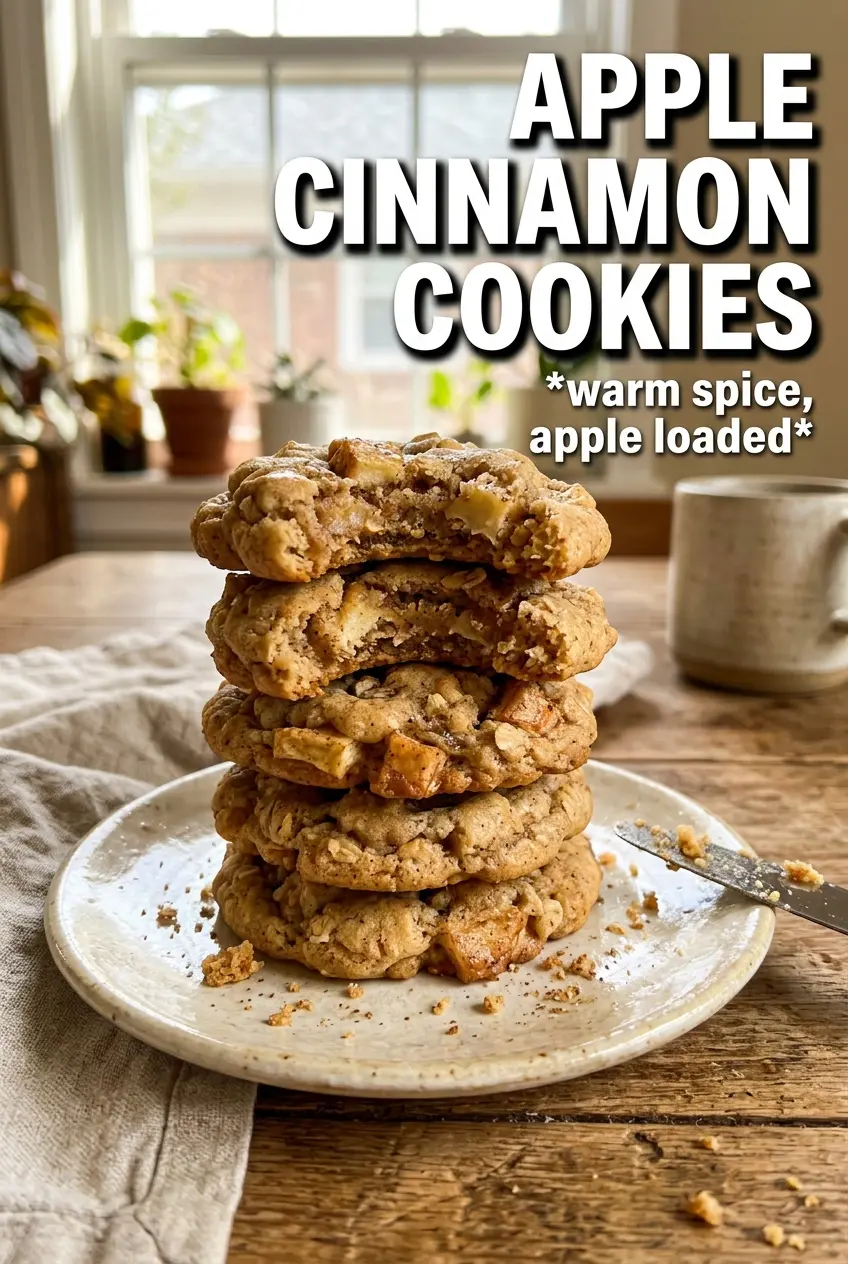
Apple Cinnamon Cookies
Ingredients
Equipment
Method
- Preheat the oven to 350F and line baking sheets with parchment for easy release.
- Whisk all-purpose flour, baking soda, baking powder, cinnamon, nutmeg, and salt until evenly combined, with no visible spice streaks.
- Beat softened unsalted butter with granulated sugar and brown sugar until fluffy and lighter in color.
- Add eggs and vanilla extract and beat until the mixture looks smooth and creamy.
- Mix in applesauce, then fold in the flour mixture until just combined and no dry pockets remain.
- Fold in the finely diced apples so they’re evenly distributed through the dough.
- Refrigerate the dough for 1 hour so it firms up enough to scoop, as it will be sticky right after mixing.
- Scoop 1-1/2 tablespoon portions and roll the tops in cinnamon sugar so each cookie gets a speckled, caramelized-looking crust.
- Bake at 350F for 10-12 minutes until the edges just set and the centers still look slightly soft.
- Cool cookies completely on the pan so they finish setting without breaking.
- Drizzle vanilla glaze over the cooled cookies in thin lines for a glossy, sweet finish.