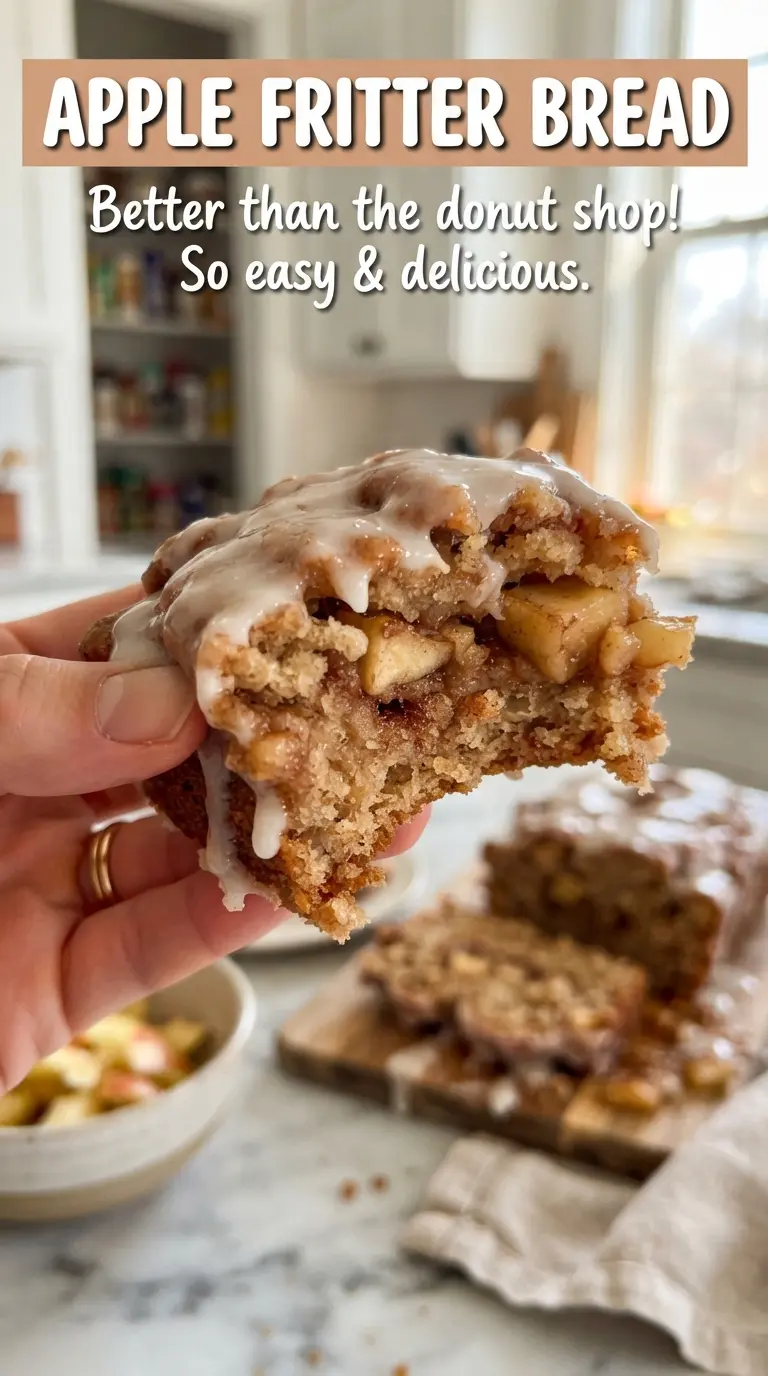
Apple fritter bread bakes up with a tender crumb, pockets of soft apple, and those sticky cinnamon-sugar ribbons that make every slice taste like the best part of a bakery fritter. The glaze sets just enough to drip slowly down the sides, which is exactly what you want when the loaf is still slightly warm and the top has that delicate crackle.
What makes this version work is the layering. Tossing some of the apples in cinnamon sugar keeps them from tasting flat, and alternating the batter with the spiced apples gives you those ribbons instead of one heavy apple layer sinking to the bottom. The batter itself stays simple and sturdy, which matters because juicy apples can weigh down a quick bread if the base is too loose.
Below, I’m walking through the part that matters most: how to get the swirl without overmixing it, how to keep the apples evenly distributed, and what to do if your loaf browns before the center is done.
The cinnamon sugar sank into the batter in the best way, and the loaf stayed moist for days without getting gummy. The glaze set up perfectly after about 15 minutes.
Love the cinnamon swirl and tender apple chunks in this apple fritter bread? Save it to Pinterest for the next time you want a bakery-style loaf with a thick vanilla glaze.
The Trick to Keeping Apple Fritter Bread from Turning Heavy
Quick breads fail in a pretty predictable way: the fruit settles, the center stays wet, and the top gets dark before the loaf has finished baking. Apple fritter bread avoids that by using a batter with enough structure to hold the apples, then building it in layers instead of dumping everything together. That layering gives you the fritter-like streaks without turning the loaf into a dense, soggy block.
The other thing that matters is the swirl. You want visible ribbons of cinnamon sugar, not a fully mixed batter. A few turns with a knife is enough. If you keep swirling until the batter looks marbled all the way through, the loaf loses those defined pockets and bakes up muddier in texture.
- Apples — Peel them and chop them into small pieces so they soften evenly and stay suspended in the loaf. Bigger chunks can create wet pockets and make slicing messy.
- Brown sugar and cinnamon — This is what gives you the fritter-style center. Tossing part of the apples in the mixture keeps the spice from disappearing into the batter.
- Butter — Softened butter whips with the sugar to trap air, which helps the loaf rise without feeling cakey. Melted butter won’t give you the same lift.
- Milk — Added alternately with the dry ingredients, it loosens the batter just enough to spread around the fruit without overworking the gluten.
Building the Loaf So the Swirl Stays Distinct
- Flour — All-purpose flour gives the loaf enough structure to hold the apples. A cake flour swap makes it too soft and can cause the center to collapse.
- Baking powder — This is the lift in the loaf. It needs to be fresh; old baking powder leaves the bread flat and tight.
- Powdered sugar — This makes the glaze smooth and pourable. Granulated sugar won’t dissolve the same way and will leave you with a gritty finish.
- Vanilla — A small amount in the batter and glaze rounds out the apple and cinnamon. If yours is very strong, use the full amount; if it’s mild, the loaf will still taste balanced.
Layering and Baking Without Losing the Swirl
Whipping the Base
Beat the softened butter and granulated sugar until the mixture looks pale and fluffy, not just blended. That step builds the structure the apples need to sit on. Add the eggs one at a time so the batter stays smooth, then stir in the vanilla. If the mixture looks slightly curdled after the eggs, it usually comes back together once the flour goes in.
Folding in the Dry Ingredients and Milk
Whisk the flour, baking powder, and salt together first so the leavening is evenly distributed. Add the dry ingredients and milk alternately, ending with the flour, and stop mixing as soon as the batter looks uniform. Overmixing makes the loaf tough and gives the apple pockets less lift.
Creating the Fritter Layers
Spread half the batter in the pan, then layer on half the apples and half the remaining cinnamon sugar. Repeat with the rest of the batter and fruit. Use a knife to make a few gentle figure-eight motions through the top layer, then stop. Too much swirling blends everything into one color and you lose the streaks that make this loaf look and taste like an apple fritter.
Knowing When It’s Done
Bake until a toothpick comes out clean or with just a few moist crumbs from the center, usually 50 to 55 minutes. If the top is browning too fast, tent it loosely with foil for the last 10 to 15 minutes. Letting the loaf cool for about 15 minutes before glazing keeps the icing from disappearing into the crumb.
Make It With Pears Instead of Apples
Firm pears work well if that’s what you have, but they release a little more moisture than apples. Keep the pieces small and bake until the center is fully set so the loaf doesn’t turn damp in the middle. The flavor is softer and more floral, which makes the cinnamon come through less sharply.
Dairy-Free Version
Use a plant-based butter that works for baking and swap in an unsweetened non-dairy milk. The loaf still rises and browns well, though the crumb will be a touch less rich. The glaze works with the same milk swap, and you can thin it slowly until it drizzles cleanly.
Gluten-Free Adjustment
Use a 1:1 gluten-free baking flour that already includes xanthan gum. The batter may look a little thicker, but that’s normal. Let the loaf cool completely before slicing so it has time to set, because gluten-free quick breads can crumble if you cut them warm.
Storage and Reheating
- Refrigerator: Store covered for up to 4 days. The crumb stays moist, though the glaze softens a bit.
- Freezer: Freeze the unglazed loaf or individual slices for up to 2 months, wrapped tightly and sealed well. Glaze after thawing for the best texture.
- Reheating: Warm slices in the microwave for 10 to 15 seconds or in a low oven until just heated through. Don’t overheat it, or the apples can turn mushy and the glaze will melt off completely.
Answers to the Questions Worth Asking
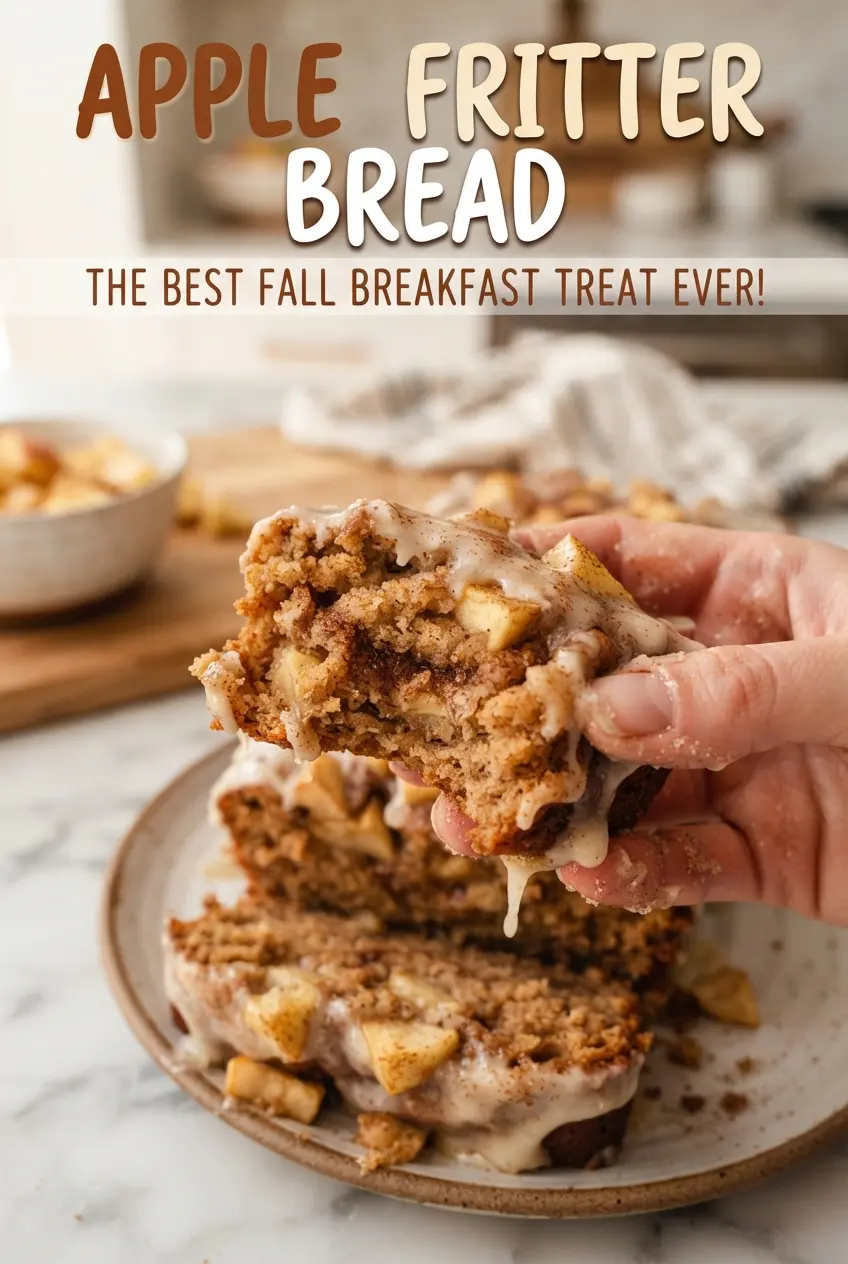
Apple Fritter Bread
Ingredients
Equipment
Method
- Preheat the oven to 350F. Grease and line a 9x5-inch loaf pan.
- Mix brown sugar and ground cinnamon in a bowl. Toss the apples with 2 tablespoons of the cinnamon sugar so they’re coated.
- Beat the softened butter and granulated sugar until fluffy. Beat in the eggs and vanilla extract until smooth.
- Whisk together all-purpose flour, baking powder, and salt in a separate bowl. Add the dry mixture to the batter alternately with milk, mixing just until combined.
- Spread half the batter into the prepared loaf pan. Top with half the apples and half of the remaining cinnamon sugar.
- Repeat the layers with the remaining batter, apples, and cinnamon sugar. Swirl gently with a knife to create a marbled cinnamon-brown sugar pattern.
- Bake for 50-55 minutes at 350F until a toothpick comes out clean. Keep an eye on the top so it doesn’t darken too quickly.
- Cool the loaf for 15 minutes. Whisk powdered sugar with 2-3 tablespoons of milk until smooth, then drizzle over the loaf.