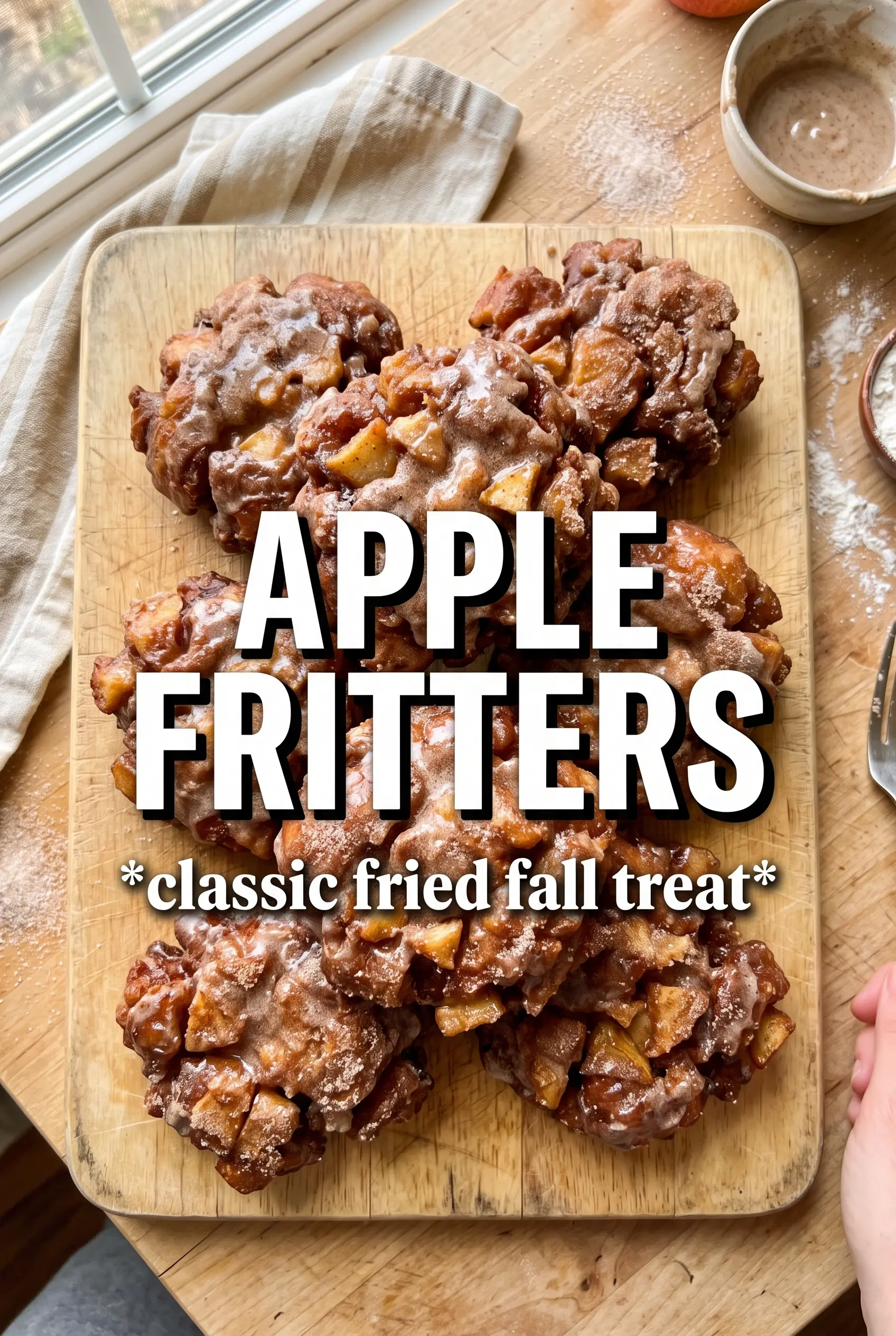
Apple fritters land in that sweet spot between doughnut and fritter: crisp edges, a tender middle, and little pockets of cinnamon-scented apple that stay juicy instead of dissolving into the batter. When they’re done right, the glaze softens on contact with the warm surface and you get that bakery-style finish without needing a deep fryer full of fuss.
The key is keeping the batter thick and the oil hot. Thin batter spreads too much and turns greasy; batter that barely comes together holds the apples in place and fries up with those irregular, craggy edges that make fritters worth eating in the first place. Finely diced apples matter here, too, because they cook through quickly and distribute evenly in every scoop.
Below, I’m walking through the part that matters most: how to get the oil temperature right, how to judge doneness by color instead of guessing, and how to glaze them so the finish stays glossy instead of melting into a puddle.
The fritters came out crisp on the outside and fluffy inside, and the glaze set just enough that they weren’t sticky to pick up. I used the apple pieces as written and every bite had actual apple instead of just spice.
Save these apple fritters for the morning you want crisp edges, warm cinnamon apples, and a thick vanilla glaze.
The Oil Temperature Is What Keeps These Fritters Light
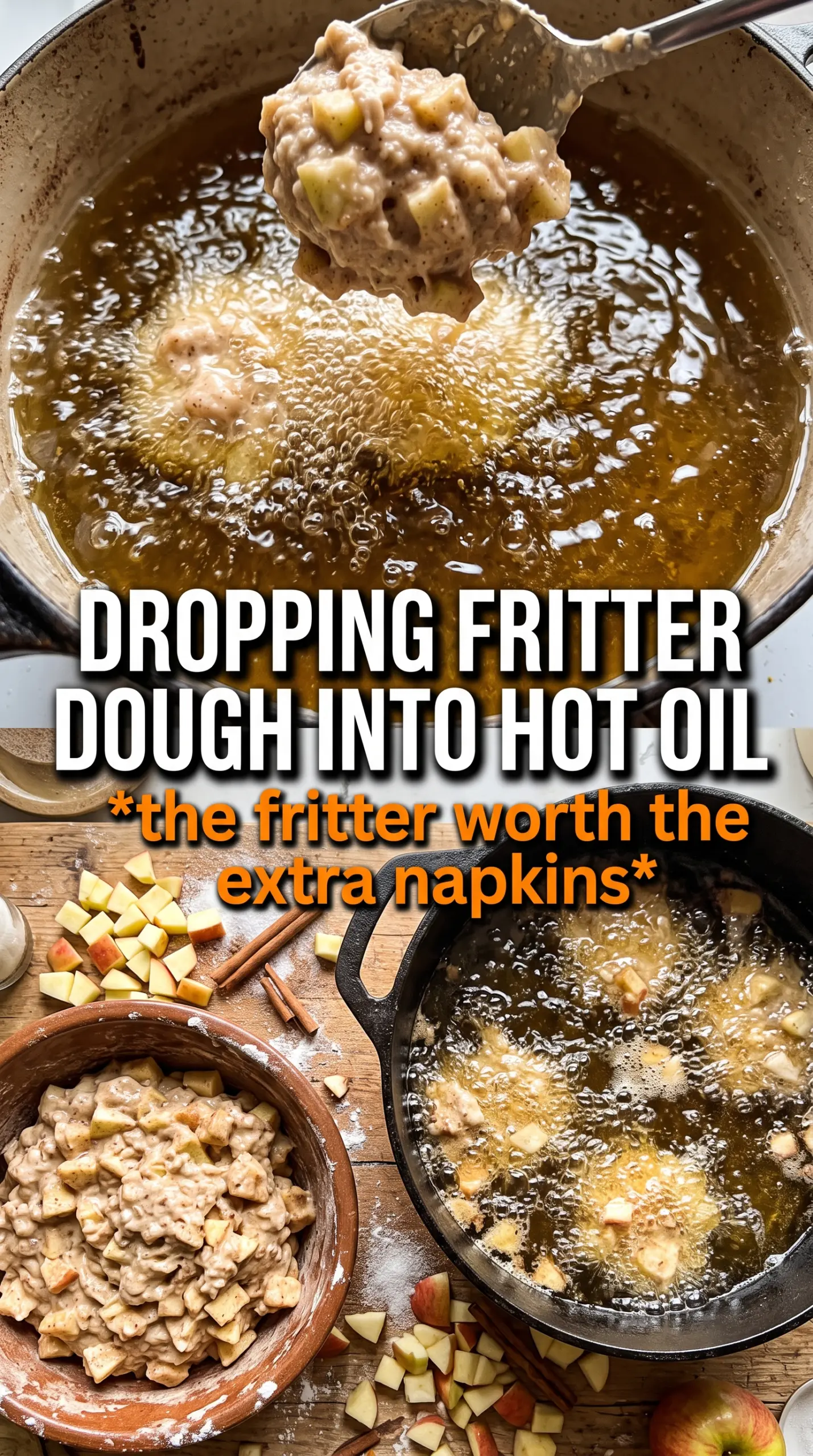
Apple fritters can go wrong fast if the oil is too cool. The batter sits there, drinks up grease, and turns heavy before the outside has a chance to set. At 375F, the exterior firms quickly, the apples heat through, and you get that deep golden crust without a greasy film on the plate.
There’s another trap here: overcrowding the pot. Too many fritters at once drops the temperature enough to change the texture of the whole batch. Fry in small rounds and give the oil a minute to come back up between batches. The fritters should bubble actively the moment they hit the oil, then settle into a steady fry.
- 375F oil — This is the number that keeps the centers tender while the crust forms quickly. If you don’t have a thermometer, test with a tiny drop of batter; it should sizzle right away and rise within seconds.
- Thick batter — A loose batter spreads into flat pancakes. This one should hold its shape in a spoon and need a little coaxing into the oil.
- Finely diced apples — Bigger pieces leave raw pockets and can tear the fritters apart. Small dice cook through at the same rate as the batter around them.
What Each Ingredient Is Actually Doing in These Fritters
- All-purpose flour — This gives the fritters enough structure to hold the apples without turning bready. Bread flour is too sturdy here and makes the texture tougher than it should be.
- Baking powder — This is the lift. It gives the fritters their lighter middle and helps the batter puff around the apple pieces.
- Cinnamon and nutmeg — Cinnamon carries the flavor, but nutmeg makes it taste like a proper fritter instead of spiced cake. Don’t skip the nutmeg unless you need to.
- Whole milk and eggs — Together they create a rich batter that fries up tender. Lower-fat milk works in a pinch, but the fritters won’t taste as full.
- Butter and vanilla — The butter adds a soft richness, and vanilla rounds out the glaze and batter. Melted butter needs to be cooled slightly so it doesn’t scramble the eggs.
- Apples — Use a firm baking apple if you can. Something that holds its shape, like Honeycrisp or Granny Smith, gives you distinct bites instead of mush.
Frying Them Fast, Glazing Them Warm
Mix the batter without overworking it
Whisk the dry ingredients first so the baking powder and spices are evenly distributed. Stir the wet ingredients together in a separate bowl, then fold them into the flour just until no dry streaks remain. A few small lumps are fine; overmixing tightens the batter and makes the fritters dense. Fold in the apples last so they stay intact and don’t break down in the bowl.
Drop, flatten, and fry in small batches
Scoop about 1/4 cup of batter per fritter and let it slide gently into the oil. A light flattening helps the centers cook through at the same pace as the edges. If the fritters brown before the middle is done, the oil is too hot; if they look pale and greasy, the oil is too cool. Turn them only once so the crust sets cleanly instead of getting patchy.
Glaze while they’re still warm
Whisk the glaze until smooth, then drizzle it over the fritters after they’ve drained for a minute or two. Warm fritters take the glaze beautifully, but if they’re piping hot, the glaze melts off instead of clinging. You want a thick, glossy coating that settles into the crags and leaves some golden edges visible.
Three Ways to Adjust These Apple Fritters Without Losing the Texture
Dairy-Free Version
Swap the milk for an unsweetened non-dairy milk and use a plant-based butter in both the batter and glaze. The fritters still fry up well, but the glaze will taste a little lighter and less rich than the original.
Gluten-Free Swap
Use a 1:1 gluten-free baking blend that includes xanthan gum. The batter may need a spoonful more milk to reach the same thick scoopable texture, and the fritters will be a little more delicate when you flip them.
Make Them Extra Apple-Forward
Add up to 1/2 cup more finely diced apples, but don’t push past that or the batter starts to fall apart in the oil. More apple gives you juicier bites and a softer center, though the fritters will need an extra minute or so in the oil.
Storage and Reheating
- Refrigerator: Store leftovers in an airtight container for up to 2 days. The glaze softens and the crust loses its crispness, which is normal for fried pastries.
- Freezer: Freeze the unglazed fritters on a baking sheet, then transfer to a freezer bag for up to 2 months. Glaze after reheating so the coating stays fresh.
- Reheating: Warm in a 350F oven for 8 to 10 minutes or until heated through. The biggest mistake is using the microwave, which turns the fritters rubbery and makes the glaze weep.
Answers to the Questions Worth Asking
Apple Fritters
Ingredients
Equipment
Method
- Whisk all-purpose flour, granulated sugar, baking powder, cinnamon, nutmeg, and salt until evenly combined.
- Whisk eggs, whole milk, melted butter, and vanilla extract until smooth.
- Fold the wet mixture into the dry ingredients until just combined.
- Fold in the finely diced apples until the batter is thick and no dry flour remains.
- Heat 2-3 inches of vegetable oil to 375F in a heavy pot or Dutch oven.
- Drop 1/4-cup portions of batter into the hot oil and gently flatten slightly.
- Fry for 2-3 minutes per side, turning once, until deeply golden.
- Remove fritters with a slotted spoon and drain on paper towels.
- Whisk powdered sugar, milk, and vanilla until smooth.
- Drizzle the glaze generously over the warm fritters so it sets with a glossy finish.