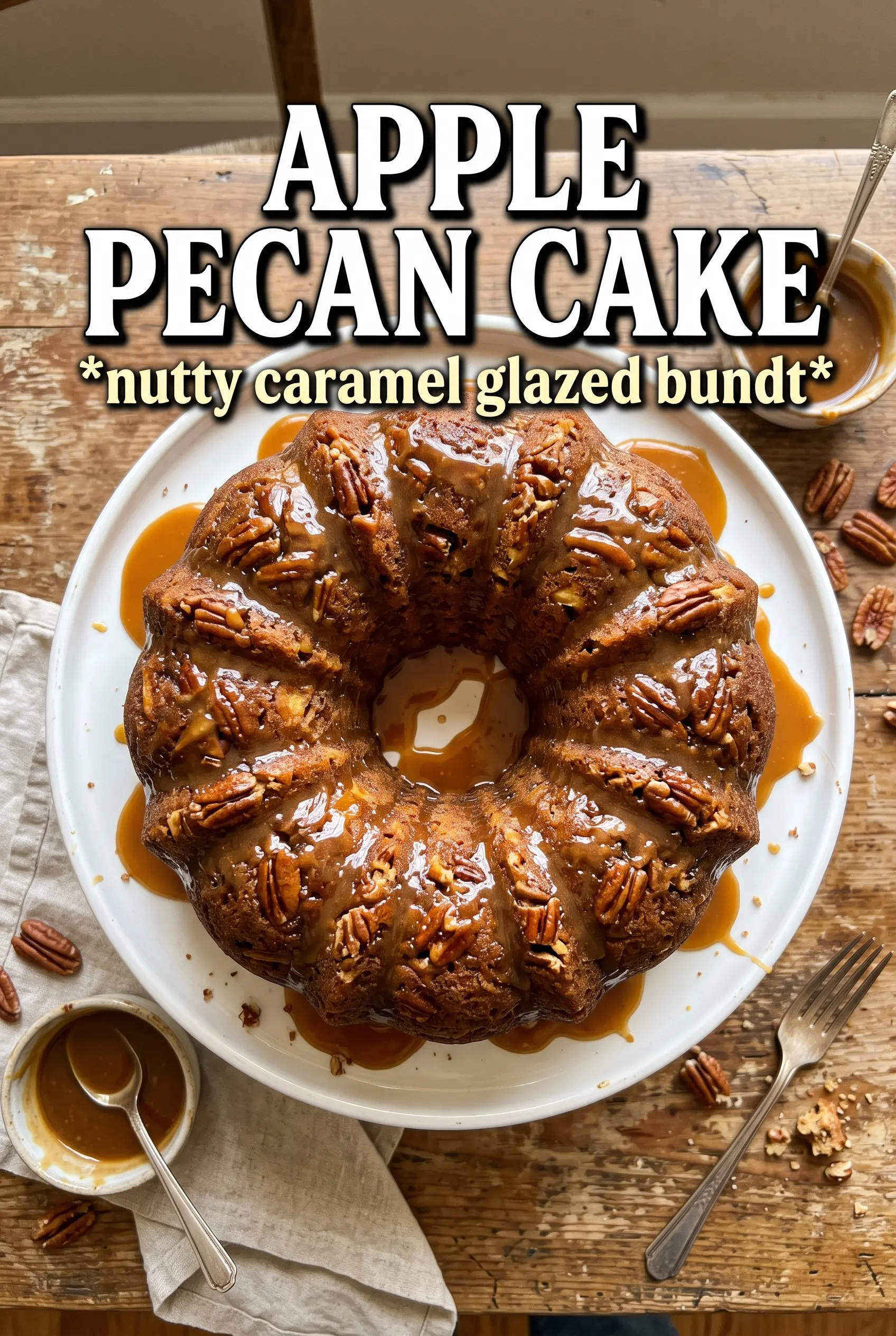
Apple pecan cake settles into that perfect middle ground between homey and special: a dense, tender crumb loaded with juicy apple pieces, toasted pecans in every bite, and a warm caramel glaze that runs down the ridges instead of sitting on top like frosting. It slices cleanly, stays moist for days, and has enough texture to feel substantial without turning heavy.
What makes this version work is the balance. The oil keeps the cake soft, the apples bring moisture without needing extra liquid, and the bundt pan gives you plenty of surface area for the batter to bake evenly. The glaze is cooked just long enough to thicken slightly, which matters because a thin glaze disappears into the cake and an overcooked one turns grainy fast.
Below you’ll find the trick to keeping the crumb tender, what kind of apples hold up best, and how to pour the glaze so it clings in all the right places.
The cake stayed incredibly moist and the caramel glaze soaked into the ridges just enough without making it soggy. I used tart apples and the pecans gave every slice a great crunch.
Save this apple pecan cake with caramel glaze for the kind of dessert that slices neatly and still tastes even better the next day.
The Trick to Keeping the Crumb Soft Instead of Gummy
Bundt cakes can turn dense in a hurry when the batter gets overmixed after the flour goes in. Once the dry ingredients hit the bowl, stir only until the streaks disappear. That keeps the gluten from tightening up and lets the cake stay tender even with all those apples and pecans folded through it.
The other thing that matters here is pan size and oven temperature. A 10-inch bundt pan gives the batter enough room to rise without spilling, and 325°F bakes the cake through before the edges dry out. If the top is browning too fast while the center still feels loose, the oven is running hot; lay a sheet of foil loosely over the top for the last 15 to 20 minutes.
What the Apples, Pecans, and Brown Sugar Are Each Doing Here
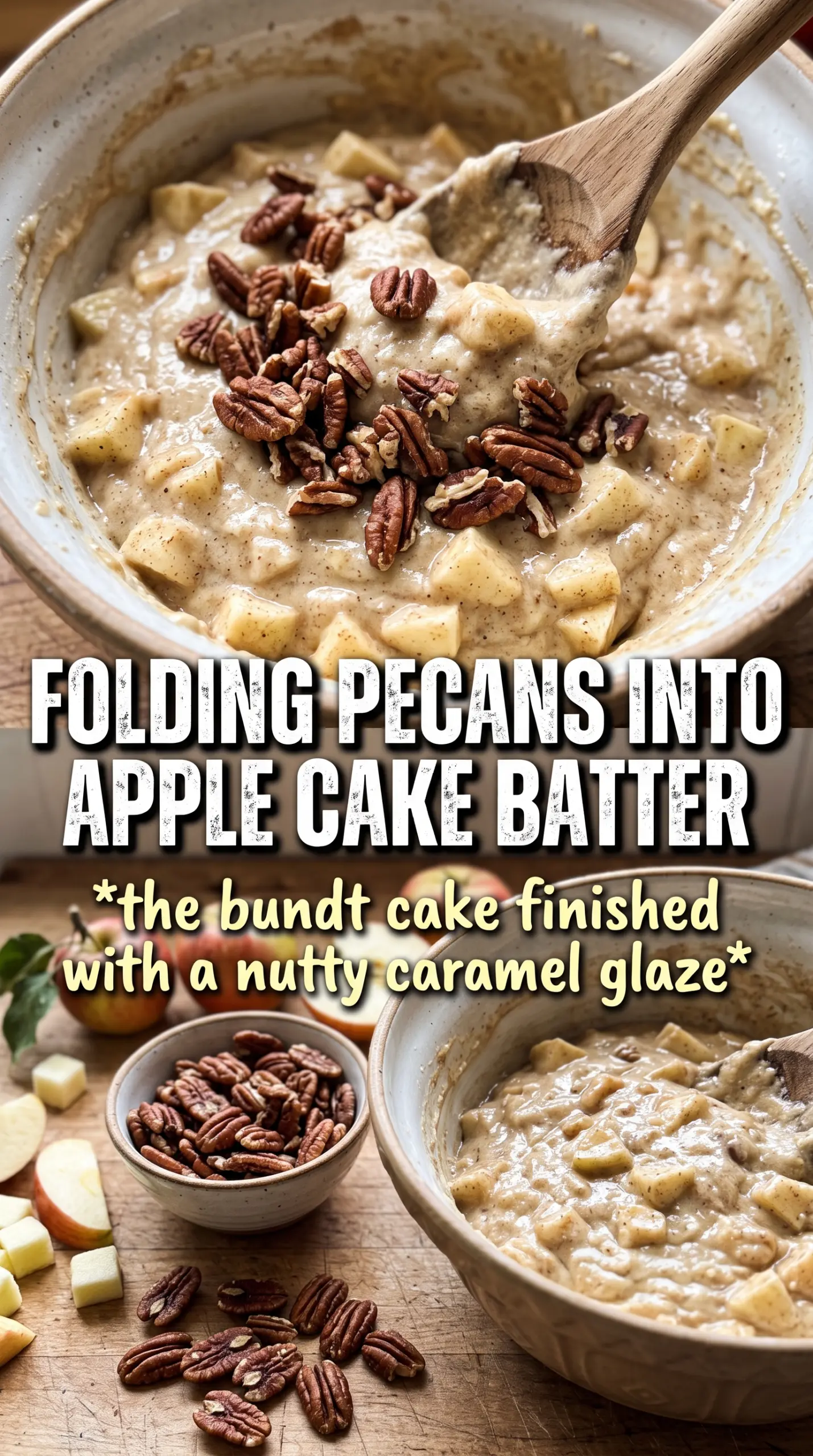
- Apples — Use firm apples that hold their shape as they bake. Softer apples can melt into the crumb and make the cake wet in patches. Granny Smith, Honeycrisp, or a mix of tart and sweet works well. Peel them so the texture stays smooth and the pieces bake evenly.
- Pecans — Roughly chopped pecans give you crunch without breaking the slice apart. Whole pecans are prettier in the batter but don’t distribute as well. Toasting them first deepens the flavor, but raw pecans still work if that’s what you have.
- Brown sugar — This is what gives the cake its warm, almost caramel-like depth and helps keep the crumb moist. The packed brown sugar in both the cake and glaze matters; loose measuring throws off the sweetness and texture. Light or dark brown sugar both work, but dark brown sugar gives a deeper molasses note.
- Vegetable oil — Oil keeps the cake soft even after it cools. Butter would add flavor, but it also sets firmer once chilled, which can make the crumb feel drier the next day. If you want to swap, use melted and cooled butter only if you don’t mind a slightly tighter texture.
Building the Batter and Glaze in the Right Order
Mix the Dry Ingredients First
Whisk the flour, baking soda, cinnamon, and salt together before anything else. That keeps the leavening and spice evenly dispersed, which matters in a dense bundt cake where pockets of baking soda can leave a bitter bite. You want the mixture uniform before it ever touches the wet ingredients.
Bring the Eggs, Sugar, and Oil Together
Beat the sugars, eggs, and oil until the mixture looks smooth and slightly thickened, then add the vanilla. It won’t become airy like a butter cake batter, and that’s fine. If it still looks separated after a minute of mixing, keep going until it comes together; the eggs need to be fully dispersed so the cake bakes evenly.
Fold in the Apples and Pecans Last
Add the flour mixture first and stop as soon as the dry streaks disappear, then fold in the apples and pecans. If you add the fruit earlier, the batter gets harder to stir and the flour can clump around the apples. The finished batter should be thick and studded, not pourable like a sheet cake batter.
Cook the Glaze Until It Lightly Coats a Spoon
Melt the butter and brown sugar over medium heat, then add the cream, vanilla, and salt and simmer for about 2 minutes. You’re looking for a glossy glaze that thickens slightly but still pours in a ribbon. If you cook it too long, it turns grainy as the sugar recrystallizes; if it’s too thin, it runs off the cake instead of setting into a shiny coating.
Cool Before You Glaze
Let the cake sit in the pan for 20 minutes, then invert it onto a rack and wait until it’s mostly cool before adding the glaze. A warm cake will absorb too much and lose that pretty finish down the sides. If the cake is still hot, the glaze slides off and leaves the top sticky instead of lacquered.
How to Adapt This Cake for Different Pans, Sweetness Levels, and Dietary Needs
Make It Gluten-Free
Use a 1:1 gluten-free baking flour that includes xanthan gum. The cake will be a little more delicate when warm, but it should still slice well once fully cooled. Don’t substitute almond flour here; it changes the structure too much and the bundt shape won’t hold cleanly.
Use Walnuts Instead of Pecans
Walnuts work if that’s what you have, but they bring a sharper, slightly more bitter edge than pecans. The texture is still good, especially if you chop them roughly and toast them first. If you want the cake to taste a little rounder and sweeter, pecans are the better fit.
Reduce the Sweetness
Cut the granulated sugar to 1 cup if you prefer a less sweet cake, but leave the brown sugar alone in the glaze. The glaze needs that molasses depth to taste like caramel instead of plain syrup. If you reduce both, the cake loses the contrast that makes each slice stand out.
Storage and Reheating
- Refrigerator: Store covered for up to 5 days. The crumb stays moist, and the glaze firms up a bit, which actually makes the slices neater.
- Freezer: Freeze individual slices wrapped tightly in plastic and foil for up to 2 months. Thaw overnight in the refrigerator; the glaze may lose a little shine, but the cake itself freezes well.
- Reheating: Warm a slice in the microwave for 10 to 15 seconds, just until the glaze softens. Too much heat makes the apples go mushy and the caramel turn sticky in an unpleasant way.