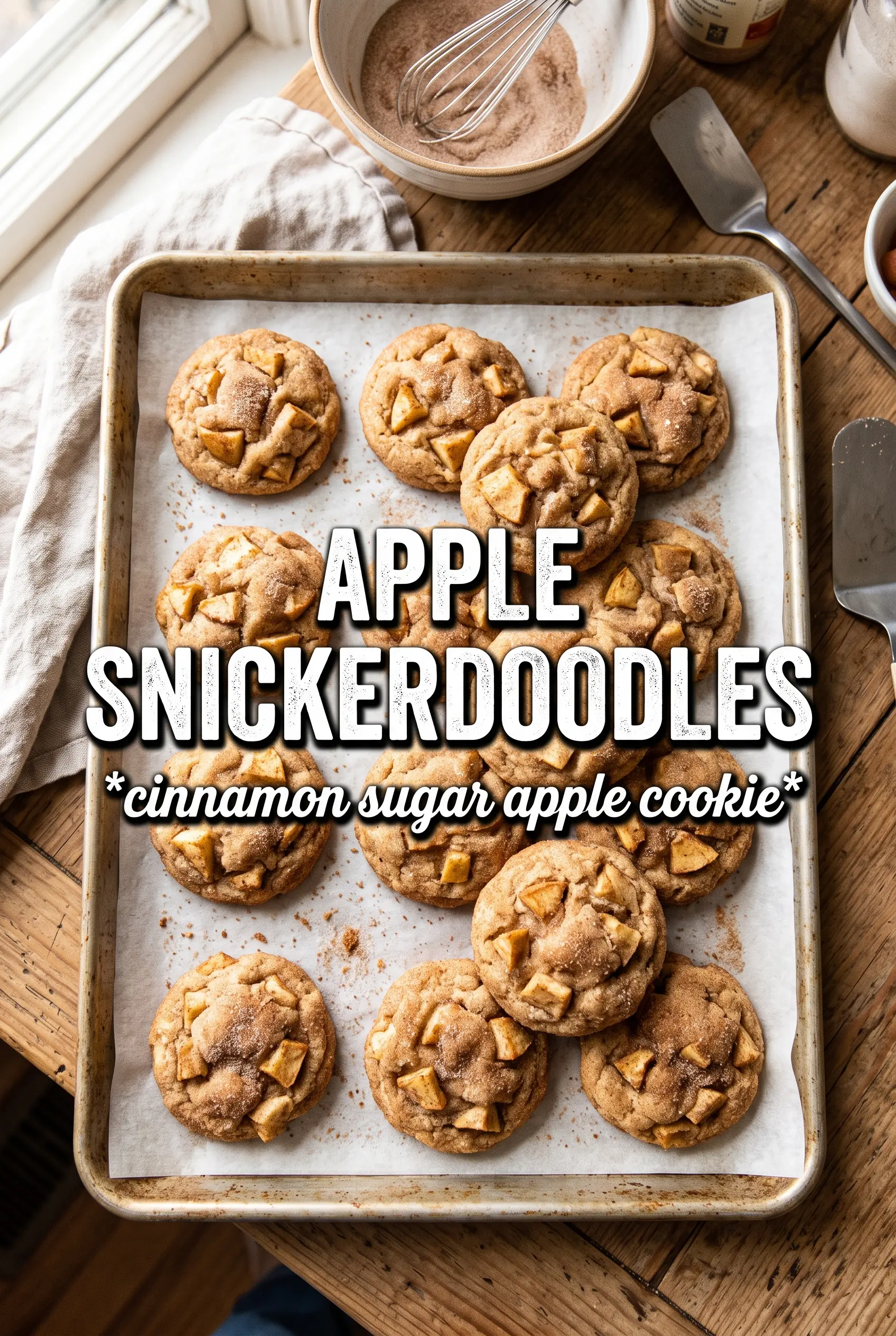
Apple snickerdoodles bake up with the kind of soft, crinkled centers that make people reach for a second cookie before they’ve finished the first. The edges set with a light golden finish, the middle stays tender, and the cinnamon-sugar coating gives every bite that classic snickerdoodle snap with a little apple warmth tucked inside. The dried apple pieces don’t make these cakey; they just add small pockets of chew that keep the cookies interesting from start to finish.
The trick is using finely chopped dried apples instead of fresh ones. Fresh apple brings in too much moisture and can turn the dough sticky or the cookies puffy in the wrong way. Dried apple pieces give you concentrated flavor without upsetting the texture, and the cream of tartar keeps the dough tasting like a true snickerdoodle instead of a plain cinnamon cookie. The result is balanced, soft, and sturdy enough to stack in a cookie tin.
Below, I’ve included the one detail that matters most for the crinkle, plus a few smart swaps if you want to adjust the apple flavor or make these gluten-free. The dough comes together fast, but a couple of small technique choices make the difference between a good cookie and one that bakes up just right.
The cookies stayed soft for days and the chopped dried apples gave just enough chew without making the dough wet. I loved that the cinnamon-sugar coating cracked a little on top as they cooled.
Save these apple snickerdoodles for the days when you want a soft cinnamon cookie with real apple chew in every bite.
The Crinkle Comes From the Dough, Not the Oven
Snickerdoodles only bake up with those signature cracks if the dough starts out properly aerated and the surface dries just enough from the sugar coating. That means the butter and sugar need a real beating until the mixture looks pale and fluffy. If you rush that part, the cookies can spread without developing the same textured top.
The other mistake is overbaking. These should come out when the edges are set and the centers still look a little soft. They finish on the pan, and that short rest is what gives you the crackly top without turning the middle dry.
- Cream of tartar — This is the ingredient that makes a snickerdoodle taste like a snickerdoodle. It adds that faint tang and works with the baking soda to help the cookies rise in a way that stays soft instead of cakey.
- Dried apple pieces — Fresh apple would leak moisture into the dough and throw off the bake. Finely chopped dried apple gives concentrated apple flavor and chewy little bits without softening the dough too much.
- Butter — Use softened, not melted, butter so it can trap air when beaten with the sugar. That air helps the cookies bake up with a lighter center and better crinkle.
- Apple pie spice in the rolling sugar — This is a small amount, but it sharpens the apple note and makes the outside taste warmer and more finished. If you don’t have it, add a pinch more cinnamon and a tiny pinch of nutmeg.
What Each Ingredient Is Actually Doing in This Recipe
- Primary ingredient (the star) — Quality matters most. Choose the best you can find.
- Cooking medium (oil, butter, or broth) — This carries flavors and prevents dryness.
- Seasonings (salt, pepper, spices, herbs) — Layer flavors so nothing overpowers. Build depth gradually.
- Aromatics (garlic, onion, herbs) — Cook with fat to bloom flavors. Become the foundation.
- Supporting ingredients — Complement the main ingredient without overpowering it.
- Sauce or liquid (if applicable) — Brings flavors together. Balance richness with acid.
- Acid (lemon, vinegar, wine, or other) — Brightens and prevents flat-tasting results.
- Final finish (garnish, glaze, or sauce) — Prevents one-dimensional taste and adds visual appeal.
Building the Dough So the Cookies Stay Soft
Beat the Butter Until It Looks Fluffy, Not Just Mixed
Start with softened butter and granulated sugar, then beat them until the mixture turns pale and looks almost whipped. This usually takes a few minutes longer than people think, but that extra time gives the cookies their lift. If the butter is too cold, it won’t aerate; if it’s melty, the dough will spread too fast in the oven.
Fold in the Apples at the End
Once the flour mixture is just combined, stir in the chopped dried apples by hand. That keeps the apples from getting crushed and prevents the dough from turning dense. Stop mixing as soon as the last streaks of flour disappear, because overmixing here can make the cookies tough instead of tender.
Bake Until the Centers Still Look Slightly Undone
Scoop the dough into balls, roll them well in the cinnamon sugar, and bake just until the edges are set. The centers should still look soft and a little underbaked when you pull the tray out. If you wait until they look fully done in the oven, they’ll end up dry after cooling. Let them sit on the baking sheet for three minutes so they can finish setting without losing that soft middle.
Three Ways to Adjust the Apple Snickerdoodles Without Losing the Texture
Make Them More Apple-Forward
Increase the dried apples to 1 1/4 cups and chop them fine so the dough still scoops cleanly. This gives you a stronger apple flavor and a little more chew, but don’t add more than that or the dough starts getting crowded and the cookies lose their soft, even texture.
Gluten-Free Version
Use a cup-for-cup gluten-free flour blend that already includes xanthan gum. The cookies should still spread and crinkle well, though the texture will be slightly more delicate once cooled. Don’t swap in almond flour here; it won’t behave like a direct replacement and the dough will spread unevenly.
Swap the Dried Apples for Raisins or Chopped Dates
Raisins give a sweeter, softer chew, while chopped dates make the cookies taste deeper and more caramel-like. Both work because they stay dry enough to mix into cookie dough without creating extra moisture, but neither tastes as clearly like apple, so the spice coating becomes more important.
Storage and Reheating
- Refrigerator: Store in an airtight container for up to 5 days. The cookies stay soft, though the sugar coating loses a little crunch by day two.
- Freezer: Freeze baked cookies for up to 2 months, or freeze the rolled dough balls and bake from frozen with 1 to 2 extra minutes.
- Reheating: Warm a cookie for 8 to 10 seconds in the microwave if you want the centers soft again. Don’t overheat them or the sugar coating turns sticky and the edges dry out fast.
Questions I Get Asked About This Recipe
Apple Snickerdoodles
Ingredients
Equipment
Method
- Preheat the oven to 375F and line sheet pans with parchment. Set up your baking station so the dough and scoops are ready to bake immediately.
- Whisk together flour, cream of tartar, baking soda, cinnamon, nutmeg, and salt in a mixing bowl. Whisk until the dry ingredients look evenly speckled.
- Beat the softened butter and granulated sugar until very light and fluffy. Look for a noticeably paler, thicker mixture.
- Add the eggs and vanilla extract and beat until combined. Stop as soon as the mixture looks smooth.
- Stir in the flour mixture until just combined. Fold in the chopped dried apples so they’re evenly distributed without overmixing.
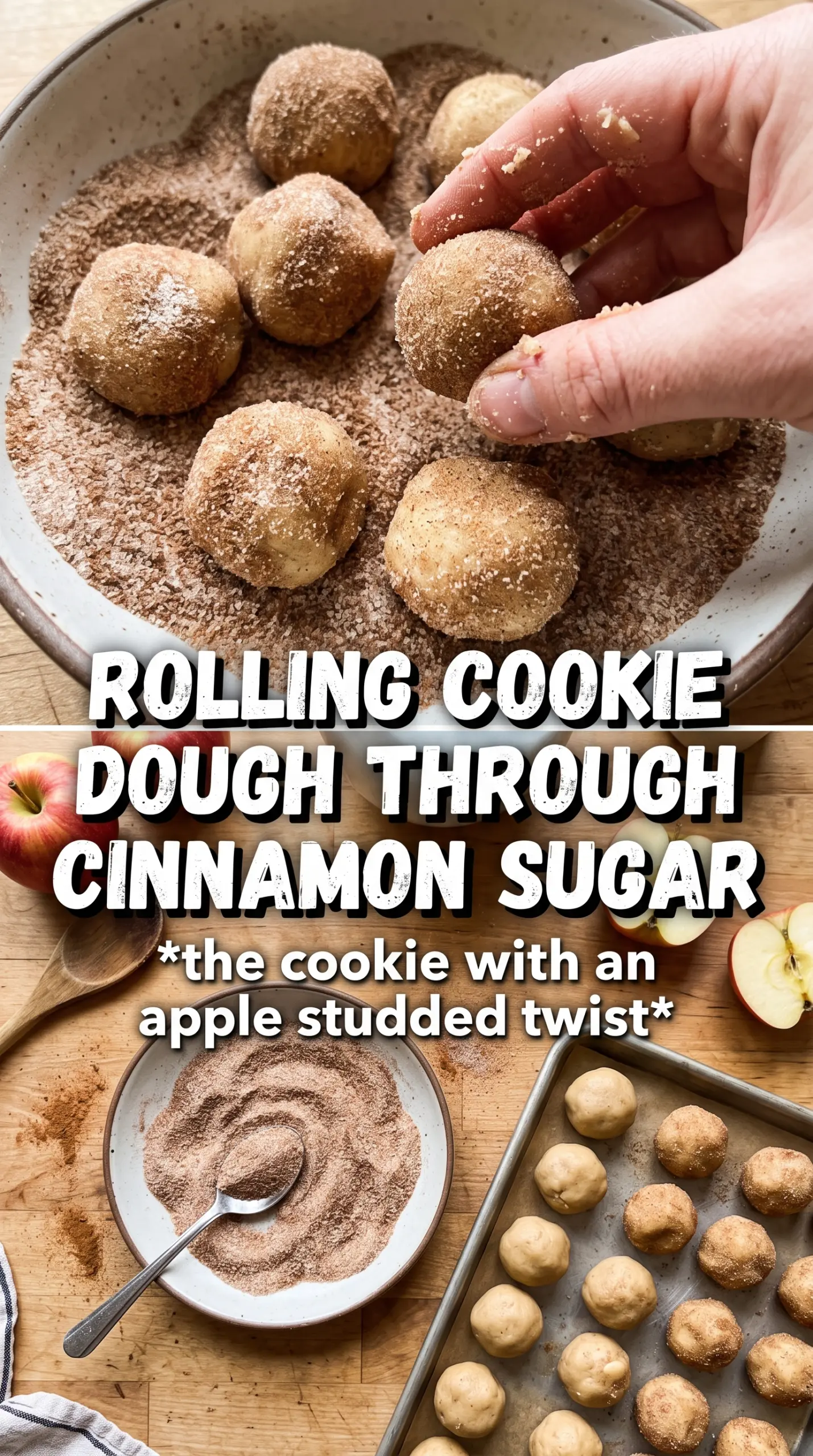
- Mix the rolling sugar, cinnamon, and apple pie spice in a shallow bowl. You should see an even cinnamon-speckled dry mix.
- Scoop the dough into 1-1/2 tablespoon balls and roll them in the cinnamon-sugar mixture. Roll until each ball is fully coated.
- Place the coated balls on the prepared sheet pans with spacing between cookies. Use a gentle press if needed so the coating adheres.
- Bake at 375F for 10-12 minutes, until the edges are set and the centers are still slightly soft. The tops should look set with a hint of shimmer.
- Cool on the pan for 3 minutes. Letting them sit briefly helps create the crinkled texture as they firm up.