Golden, flaky baked brie with jam tucked under the pastry is the kind of appetizer that disappears before the board even hits the table. The outside bakes up crisp and burnished, while the center turns soft and molten without leaking everywhere if you give it that short rest before serving. The sweet jam, toasted pecans, and hint of rosemary keep each bite balanced instead of heavy.
This version works because the pastry does the sealing work and the brie stays whole until the last moment. Rolling the puff pastry just enough to cover the cheese keeps it from baking too thick, and the egg wash gives you that deep, glossy finish. The jam stays inside the shell, which means you get a little burst of fruit in every slice instead of a puddle on the pan.
Below, I’ve included the small timing and handling details that make baked brie turn out cleanly, plus a few smart swaps if you only have a different jam or want to change the nuts.
The pastry came out crisp all the way around and the brie stayed nicely contained. I rested it for 10 minutes like you said, and it sliced instead of pouring everywhere.
Like this baked brie? Save it to Pinterest for the appetizer that brings flaky pastry, melted cheese, and jammy sweetness together fast.
The One Thing That Keeps Baked Brie From Bursting Through the Pastry
The biggest mistake with baked brie is treating it like a filled pastry instead of a sealed parcel. If the seams aren’t pressed firmly or the pastry is stretched too thin, the cheese finds the weak spot and escapes before the crust is set. Keeping the brie in the center, folding the dough snugly, and flipping it seam-side down gives the pastry a chance to fuse before the heat gets to the filling.
The other place people lose control is the oven. At 400F, the puff pastry needs enough heat to rise and brown before the brie turns into soup. If the top is pale and the cheese still feels firm, it needs a few more minutes. If the pastry is already dark but the center hasn’t softened, the brie was probably too cold or the wheel was oversized for the pastry.
What the Puff Pastry, Jam, and Egg Wash Are Each Doing Here
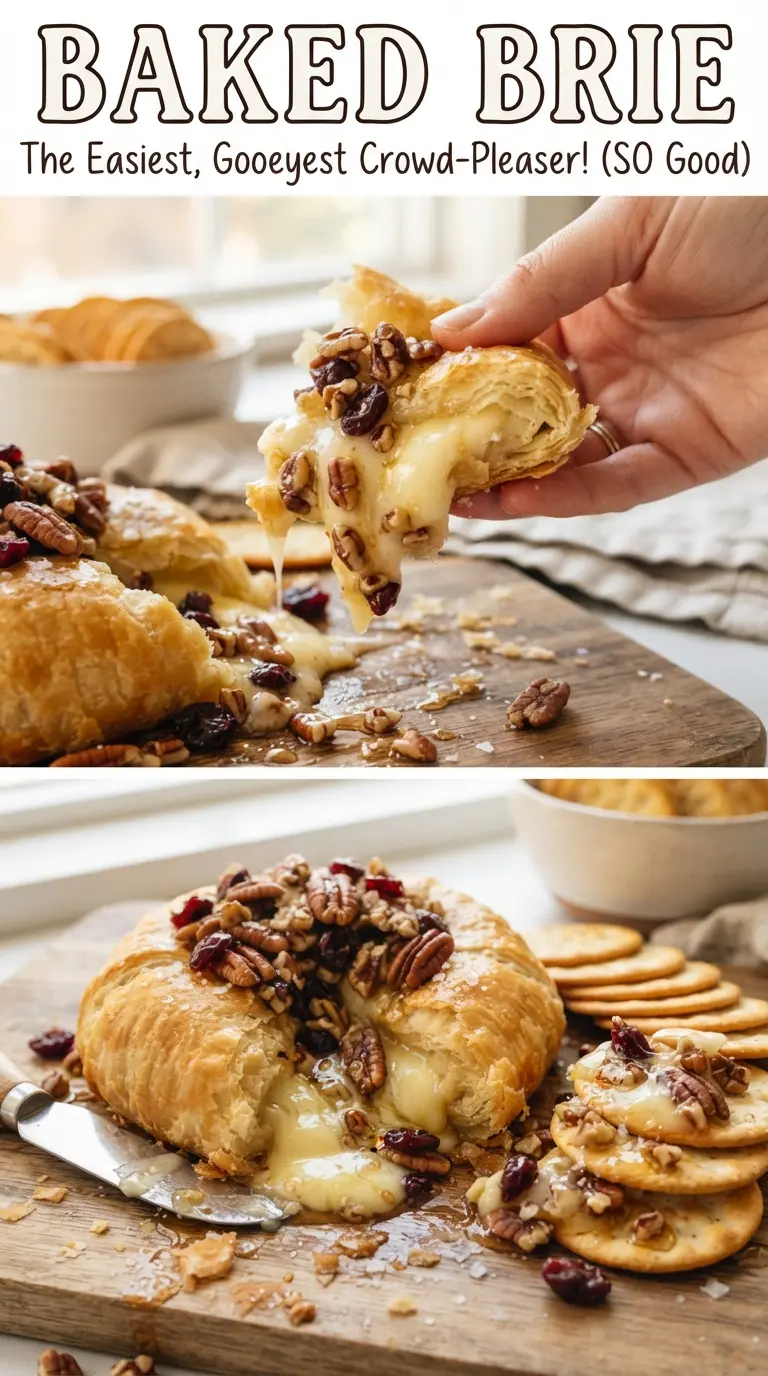
- Puff pastry — This is the structure and the texture payoff. Thaw it fully so it rolls without cracking, but keep it cool enough that the butter layers stay distinct. Warm pastry turns dense instead of airy.
- Brie — An 8-ounce wheel fits this amount of pastry neatly and melts at the right pace. A larger wheel can work, but it needs a little more bake time and a wider dough square. Leave the rind on; it helps the cheese hold its shape while it melts.
- Jam — Raspberry brings brightness, fig brings a deeper, more savory sweetness. Either works because the jam stays tucked inside and melts into the cheese. Thick jam is better than runny preserves, which can leak and make the pastry soggy.
- Pecans — They add crunch and keep the filling from tasting one-note. Chop them fine enough that they spread evenly; big pieces can tear the pastry when you fold it.
- Egg wash — This is what gives you that bakery-style color. One beaten egg with a little water is enough. Skip it only if you’re okay with a paler, drier-looking crust.
How to Wrap and Bake It So the Center Turns Molten, Not Messy
Warming the Oven and Pan First
Set the oven to 400F and line the baking sheet with parchment before you touch the pastry. That gives the dough a dry surface to bake on and keeps the bottom from sticking if any jam escapes. If the oven runs cool, the pastry can go limp before it browns, so give it a full preheat.
Building the Filling in the Middle
Place the brie in the center of the rolled pastry and spread the jam right over the top, then scatter on the pecans and brown sugar. Keep the filling centered so the pastry folds evenly from all sides. If the jam reaches the edges, it can glue the dough to the pan and make sealing harder.
Sealing the Parcel
Fold the pastry up and over the brie, trimming away excess only where it would bunch too thickly. Press the seams firmly so they actually stick; loose folds are the main reason the cheese leaks. Flip it seam-side down before brushing on the egg wash, and the weight of the wheel helps keep the seal shut while it bakes.
Baking Until Deep Gold
Bake until the pastry is a deep golden brown, not just lightly colored. That usually takes 22 to 25 minutes, and the top should look crisp with defined layers. If the pastry browns too fast, your oven is hot in the back, so rotate the pan once near the end.
Resting Before the First Cut
Let it sit for 10 minutes after baking. This is the difference between a clean slice and a cheese flood. The center stays molten, but the brief rest gives it enough body to hold together on a cracker or apple slice.
How to Adapt This for Different Jams, Diets, and Serving Styles
Fig Jam Instead of Raspberry
Fig jam gives the brie a deeper, less tart finish that feels a little more savory. It’s the best swap if you want the appetizer to lean earthy and rich instead of bright and fruity. Use the same amount, but keep an eye on it because thicker fig jam can brown a touch faster around the edges.
Nut-Free Baked Brie
Leave out the pecans and add a little extra jam if you want a smoother filling. You’ll lose the crunchy contrast, but the pastry still bakes up beautifully and the cheese stays the star. A few chopped dried cranberries on top can replace some of the texture without risking a nut allergy.
Gluten-Free Version
Use a gluten-free puff pastry if you can find one, and handle it gently because it often cracks more easily than regular dough. Chill it briefly if it gets sticky, and don’t stretch it too thin or the seams can split in the oven. The filling works the same way.
Make-Ahead Appetizer Timing
You can assemble the wrapped brie a few hours ahead and keep it covered in the refrigerator. Bake it straight from cold, adding a couple of extra minutes if needed. Don’t let it sit at room temperature too long before baking or the pastry softens and loses lift.
Storage and Reheating
- Refrigerator: Store leftovers covered for up to 3 days. The pastry softens a bit, but the flavor stays good.
- Freezer: I don’t recommend freezing baked brie. The cheese can turn grainy and the pastry loses its crisp layers after thawing.
- Reheating: Warm slices on a baking sheet in a 325F oven until the center loosens and the crust crisps back up, about 10 to 12 minutes. The microwave will melt the cheese, but it leaves the pastry soggy.
Questions I Get Asked About This Recipe
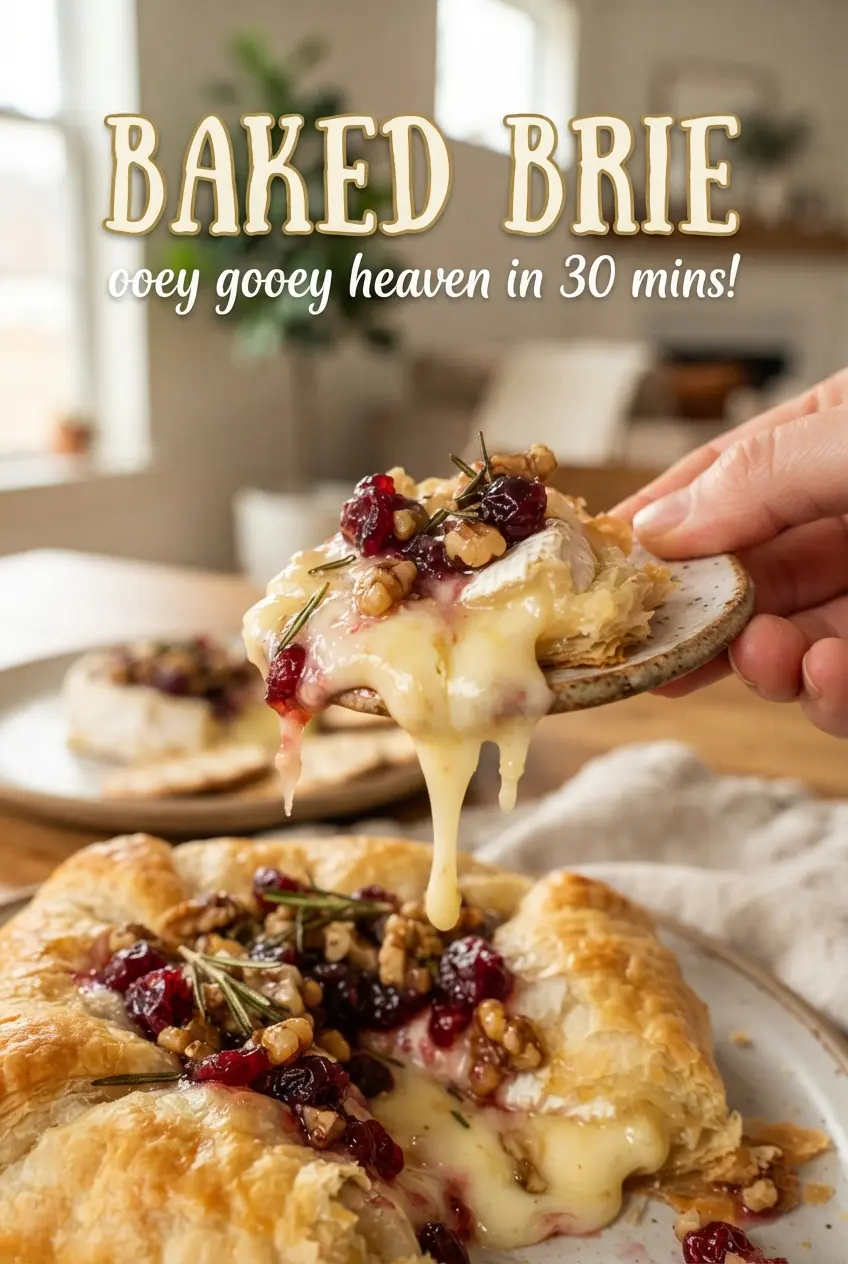
Baked Brie in Puff Pastry with Raspberry Jam
Ingredients
Equipment
Method
- Preheat the oven to 400°F and line a baking sheet with parchment. Keep it ready so the pastry goes into the oven as soon as it’s assembled.
- Roll the puff pastry slightly and place the brie in the center. Position it so there’s enough pastry to fold up around the cheese.
- Spread the jam over the brie, then sprinkle with pecans and brown sugar. Make an even layer so each bite has jam and nut crunch.
- Fold the pastry up over the brie, trimming excess and pressing seams to seal. Press firmly to prevent leaks while baking.
- Flip the pastry seam-side down onto the baking sheet and brush with the egg wash. Use a light, even coat for shine and browning.
- Bake at 400°F for 22–25 minutes until deep golden brown. Look for a puffed, blistered crust and steady browning.
- Rest for 10 minutes so the cheese sets slightly. Watch for fewer visible streams at the cut edge before garnishing.
- Garnish with rosemary and serve with crackers and apple slices. Cut and serve warm for the best molten center.