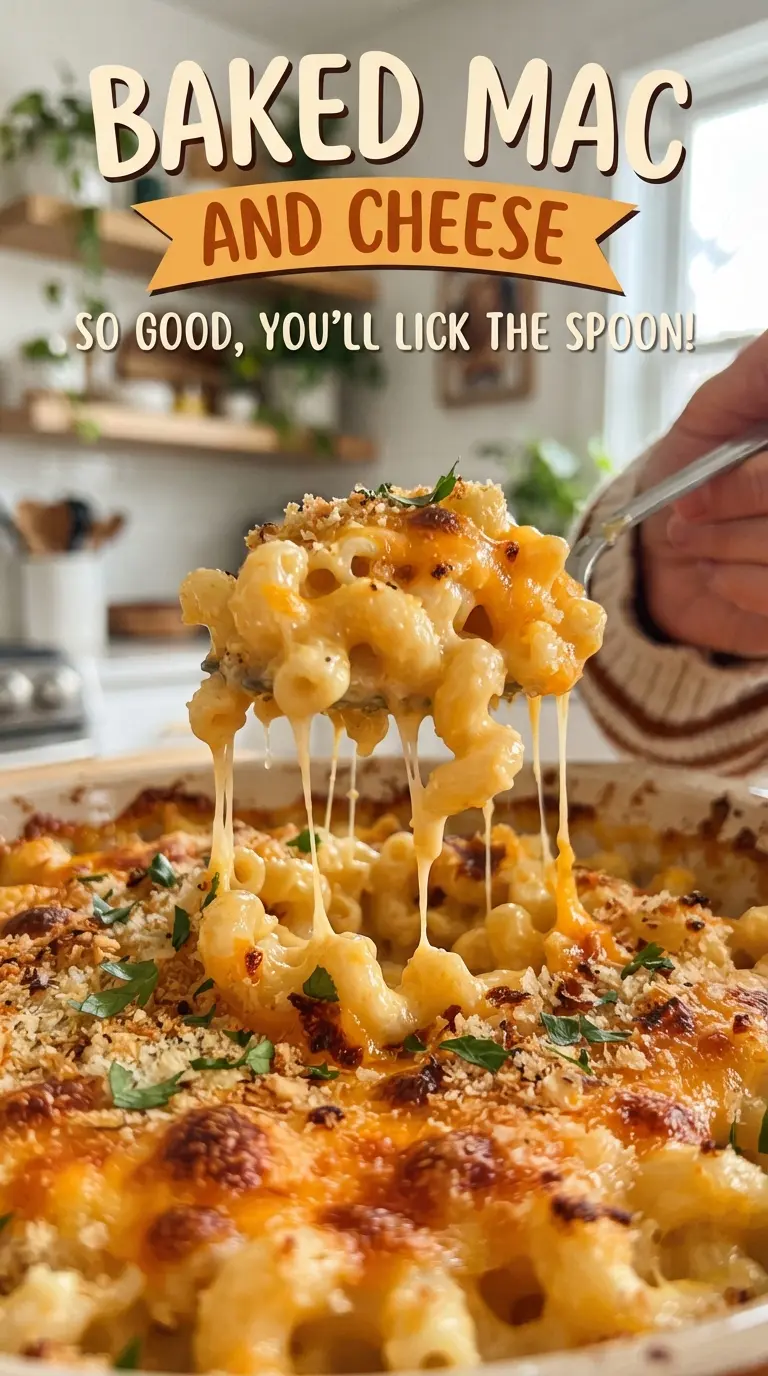
Baked mac and cheese earns its place on the table when the sauce clings to every noodle and the top bakes into a deep golden crust that cracks under a spoon. The best versions don’t turn grainy, greasy, or dry out in the oven. They stay creamy in the center, with just enough structure to slice into neat squares if you let them rest.
This version leans on a classic roux, whole milk, and evaporated milk for a sauce that thickens smoothly and holds up to baking. The evaporated milk adds body without making the sauce heavy, and the combination of sharp cheddar with Gruyere gives you both bold flavor and good melt. Cooking the pasta slightly underdone matters here, because it finishes in the oven instead of going mushy in the pan.
Below, I’ve included the one part that matters most for avoiding a broken sauce, plus the cheese swaps that still give you a creamy, stretchy finish. If baked mac and cheese has ever come out dry or oily for you, this version fixes the problem at the source.
The sauce stayed silky all the way through baking, and the top got that browned cheese crust without the middle drying out. I followed the rest time too, and it sliced up perfectly instead of running everywhere.
Save this baked mac and cheese for the nights when you want a creamy center, a browned cheese top, and that classic stretchy pull.
The Sauce Breaks When You Rush the Heat
The biggest mistake in baked mac and cheese is adding cheese to sauce that’s too hot. If the burner is cranked up when the cheddar goes in, the proteins tighten and the sauce turns grainy instead of smooth. This recipe avoids that by thickening the milk base first, then pulling it into a gentler heat before the cheese goes in.
The other quiet failure point is pasta that’s cooked all the way through before it goes into the oven. It keeps cooking under the cheese blanket, which is why soggy mac and cheese shows up at the table. Stop cooking the pasta about two minutes early so it can finish in the sauce and still hold its shape.
- Roux base — Butter and flour are what give the sauce its body. Cook the flour for a full minute so it loses that raw taste, but don’t let it brown unless you want a deeper, nuttier flavor.
- Evaporated milk — This helps the sauce stay creamy after baking. Whole milk alone works, but evaporated milk gives you a more stable sauce that’s less likely to split.
- Sharp cheddar — This is where the flavor lives. Pre-shredded cheese will melt, but freshly shredded cheddar melts smoother because it doesn’t carry the anti-caking coating.
- Gruyere or Colby jack — Gruyere adds nutty depth; Colby jack gives you a softer, milder melt. Either one helps round out the cheddar so the final dish tastes balanced instead of one-note.
Building a Creamy Sauce That Stays Smooth in the Oven
- Elbow macaroni — The curve and ridges trap sauce well. Any short pasta with a similar shape works, but elbows give you the most classic bite and hold up nicely under baking.
- Butter and flour — This is the foundation of the cheese sauce. There isn’t a real shortcut here if you want a baked casserole that slices cleanly and doesn’t leak oil.
- Dry mustard and smoked paprika — These don’t make the dish taste mustardy or smoky. They sharpen the cheese flavor and keep the sauce from tasting flat.
- Sharp cheddar + Gruyere or Colby jack — Cheddar gives you the familiar mac and cheese flavor, while Gruyere melts into a silkier finish. If you only have Colby jack, the dish will be milder but still creamy and satisfying.
The Part Where It All Comes Together
Starting the Roux
Melt the butter, whisk in the flour, and cook it for about a minute until it looks paste-like and smells a little nutty. That step keeps the sauce from tasting floury later. If the roux starts to brown fast, your heat is too high and the sauce will thicken unevenly.
Whisking in the Milk
Add the whole milk and evaporated milk slowly while whisking constantly so the mixture stays smooth. At first it will look thin and a little suspicious, then it will tighten after a few minutes at a simmer. Keep the heat at a gentle bubble, not a hard boil, or the bottom can scorch before the sauce thickens.
Melting in the Cheese
Take the pan off the heat before adding the cheese. Stir in the cheddar and Gruyere in handfuls until fully melted and glossy, then season with salt, pepper, mustard, and paprika. If the sauce looks oily, it means the heat was too high; letting it cool for a minute usually brings it back together.
Baking Until the Top Sets
Fold in the pasta, spread everything into the buttered baking dish, and top with the remaining cheese. Bake until the edges are bubbling and the top has browned in spots, not just melted. Let it rest for 10 minutes so the sauce settles back into the noodles instead of running all over the pan.
How to Adapt This for Different Tables and Leftovers
Make it gluten-free
Use your favorite gluten-free elbow pasta and swap the all-purpose flour for a 1:1 gluten-free flour blend. The sauce will still thicken, though it may set a little softer after baking, so give it the full rest time before serving.
Go extra sharp and smoky
Swap part of the Gruyere for smoked Gouda if you want a deeper, more savory finish. It changes the personality of the dish in a good way, but keep at least some sharp cheddar in the mix or the sauce can taste too mellow.
Make it ahead for a crowd
Assemble the dish up to the baking step, cover it tightly, and refrigerate it for up to 24 hours. Let it sit on the counter while the oven heats so the center isn’t ice-cold, then bake until the middle is hot and the top is browned. It may need a few extra minutes because it starts chilled.
Storage and Reheating
- Refrigerator: Store leftovers in an airtight container for up to 4 days. The sauce will firm up as it chills.
- Freezer: It freezes best before baking. Wrap the assembled dish tightly and freeze for up to 2 months, then thaw overnight in the refrigerator before baking.
- Reheating: Reheat covered in a 325F oven with a splash of milk stirred into the portion first. The common mistake is blasting it in the microwave until the cheese separates and the pasta dries out.
Questions I Get Asked About This Recipe

Baked Mac and Cheese
Ingredients
Equipment
Method
- Preheat oven to 350F, then butter a 9x13-inch baking dish for easy release and an even crust.
- Cook elbow macaroni 2 minutes less than package directions, then drain so it finishes tender while baking.
- Melt butter, whisk in all-purpose flour, and cook 1 minute to form a smooth roux without raw flour taste.
- Slowly whisk in whole milk and evaporated milk until smooth, then bring the mixture to a simmer to prevent lumps.
- Simmer 5-6 minutes until thickened, then season with salt, black pepper, dry mustard, and smoked paprika.
- Stir in 3 cups shredded sharp cheddar and 1 1/2 cups shredded Gruyere or Colby jack until melted and glossy.
- Fold the sauce into the drained pasta so every piece is coated and ready to bake.
- Pour the macaroni mixture into the buttered baking dish and spread evenly.
- Top with the remaining shredded sharp cheddar and remaining shredded Gruyere or Colby jack for a browned cheese layer.
- Bake 25-30 minutes at 350F until bubbly and golden, signaling the sauce has set.
- Rest 10 minutes before serving so the sauce thickens and the texture stays creamy rather than runny.