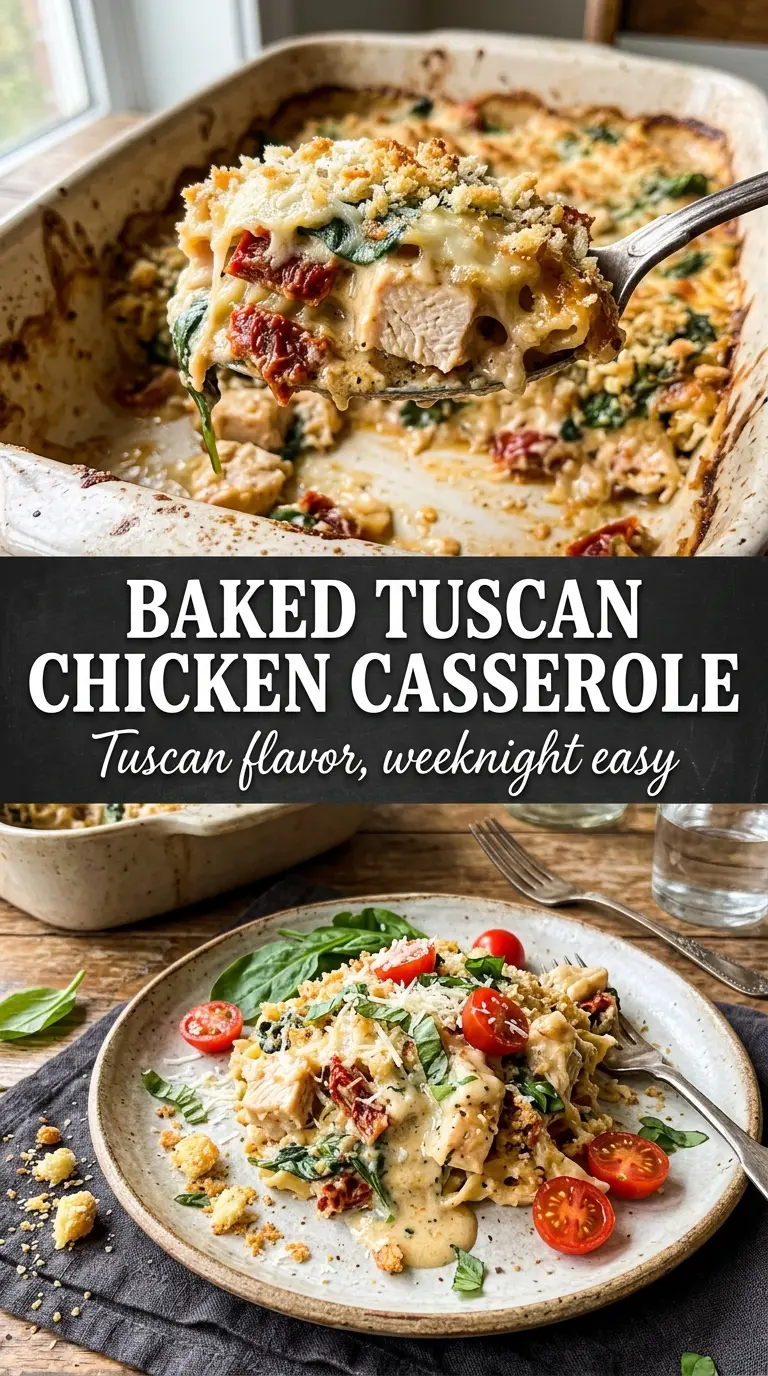
Baked Tuscan Chicken Casserole lands on the table with crisp chicken skin, a silky Parmesan cream sauce, and sun-dried tomatoes that bring just enough tang to keep every bite lively. It’s the kind of one-dish dinner that looks like it took far more effort than it did, especially when the sauce bubbles up around the chicken and the edges turn golden in the oven.
The trick is building the flavor in stages instead of dumping everything into the pan at once. Searing the thighs first gives the dish a deep, savory base and keeps the skin from turning rubbery. From there, the garlic and sun-dried tomatoes hit the hot pan long enough to bloom in the oil, and the broth loosens all those browned bits before the cream and Parmesan go in. That order matters. It keeps the sauce smooth and rich instead of greasy or grainy.
Below, I’ll walk you through the part that matters most: getting the skin browned before the casserole goes into the oven, keeping the cream sauce stable, and knowing exactly when the chicken is done without drying it out.
The chicken stayed juicy and the sauce thickened up into this silky, spoon-coating texture in the oven. I loved how the sun-dried tomatoes cut through the cream without making it heavy.
Save this Baked Tuscan Chicken Casserole for the nights when you want a golden, creamy one-pan dinner with almost no cleanup.
The Sear Is What Keeps This Casserole From Going Flat
The biggest mistake with a baked chicken casserole like this is skipping the stovetop browning and hoping the oven will do all the work. It won’t. Bone-in, skin-on thighs need direct heat first so the skin renders and crisps before the cream sauce goes in. That early sear also leaves browned bits in the pan, and those bits are what give the sauce depth instead of making it taste one-note.
The other point that matters is keeping the sauce at a simmer, not a hard boil, once the cream and Parmesan go in. Boiling can make the dairy separate or turn the sauce grainy, especially after the chicken releases some juices in the oven. You want the sauce to look loose when it goes into the oven because it thickens as it bakes and then tightens up again once the spinach is stirred in.
- Chicken thighs — Bone-in, skin-on thighs stay juicier than breasts here and give you the best pan drippings for the sauce. If you use boneless thighs, reduce the bake time and watch the internal temperature closely.
- Sun-dried tomatoes in oil — The oil-packed kind bring a deeper, softer tomato flavor and a little of that seasoned oil can help the sauce start with more body. If you only have dry-packed tomatoes, soak them in hot water first so they don’t stay leathery in the finished dish.
- Parmesan — Freshly grated Parmesan melts more smoothly than the shelf-stable stuff. Pre-shredded cheese can work in a pinch, but it’s more likely to leave the sauce slightly sandy.
- Heavy cream — This is what keeps the sauce stable in the oven. Half-and-half is thinner and more likely to split, so if you swap it in, keep the simmer gentle and expect a lighter sauce.
What Each Ingredient Is Actually Doing in This Recipe
- Primary ingredient (the star) — Quality matters most. Choose the best you can find.
- Cooking medium (oil, butter, or broth) — This carries flavors and prevents dryness.
- Seasonings (salt, pepper, spices, herbs) — Layer flavors so nothing overpowers. Build depth gradually.
- Aromatics (garlic, onion, herbs) — Cook with fat to bloom flavors. Become the foundation.
- Supporting ingredients — Complement the main ingredient without overpowering it.
- Sauce or liquid (if applicable) — Brings flavors together. Balance richness with acid.
- Acid (lemon, vinegar, wine, or other) — Brightens and prevents flat-tasting results.
- Final finish (garnish, glaze, or sauce) — Prevents one-dimensional taste and adds visual appeal.
Building the Sauce in the Same Pan as the Chicken
Getting the Skin Crisp First
Heat the oil until it shimmers, then lay the thighs in skin-side down and leave them alone until the skin is deeply golden and releases cleanly from the pan. If you try to move them too early, the skin will stick and tear, which means you lose the crisp layer that makes this casserole special. Flip them just long enough to sear the second side, then pull them out while you build the sauce.
Coaxing Flavor from Garlic and Tomatoes
Add the garlic and sliced sun-dried tomatoes to the same pan and stir them for about a minute, just until the garlic smells fragrant and not sharp. If the garlic starts to brown hard, lower the heat right away; burnt garlic will carry through the whole dish. The tomatoes should look glossy and softened, not dried out.
Turning the Pan Drippings into a Cream Sauce
Pour in the chicken broth and scrape the bottom of the pan until the browned bits dissolve into the liquid. That is the flavor base, so don’t leave it stuck to the skillet. Stir in the cream, Parmesan, Italian seasoning, and red pepper flakes over low heat, and keep the mixture at a gentle bubble until it looks slightly thickened. If it looks broken or oily, the heat was too high; pull the pan off the burner and whisk until it comes back together.
Baking Until the Chicken Is Just Done
Return the chicken skin-side up so the top stays above the sauce, then bake uncovered until the thighs reach 165°F in the thickest part. The sauce should be bubbling at the edges and look a little loose in the center when you take it out. It will settle as it rests, and that’s when the spinach can go in without overcooking.
Finishing with Spinach and Basil
Stir in the spinach at the very end and watch it wilt almost immediately in the heat of the sauce. If you add it earlier, it disappears and turns dull instead of staying bright and fresh. Finish with basil after the casserole comes out of the oven so the herbs stay fragrant and don’t fade.
How to Adjust This Casserole Without Losing the Creamy Finish
Dairy-Free Version with Coconut Cream
Swap the heavy cream for full-fat coconut cream and use a dairy-free Parmesan alternative. The sauce will be a little richer and slightly sweeter, so the sun-dried tomatoes and red pepper flakes matter even more for balance.
Using Chicken Breasts Instead of Thighs
Chicken breasts work, but they need a shorter oven time and a little more attention because they dry out faster than thighs. Sear them the same way, then start checking for doneness early and pull them as soon as they reach 165°F.
Making It Gluten-Free Without Changing the Method
This casserole is naturally gluten-free as written as long as your chicken broth and Parmesan are certified gluten-free. That makes it an easy option when you want a creamy baked dinner without any flour-thickened sauce.
Adding More Vegetables Without Watery Sauce
Mushrooms or baby kale can go in, but cook mushrooms first so they lose their moisture before the cream goes in. Extra vegetables add bulk and make the dish stretch further, but adding watery ones straight to the sauce can thin it out.
Storage and Reheating
- Refrigerator: Store leftovers in an airtight container for up to 4 days. The sauce thickens as it chills, and the chicken skin softens, which is normal.
- Freezer: This freezes, but the cream sauce may separate a little when thawed. Freeze in portions and thaw overnight in the fridge for the smoothest reheating.
- Reheating: Warm it covered in a 325°F oven until hot, adding a splash of broth if the sauce looks too tight. The common mistake is blasting it in the microwave, which can make the chicken dry and the sauce oily.
Answers to the Questions Worth Asking

Baked Tuscan Chicken Casserole
Ingredients
Equipment
Method
- Preheat oven to 400°F. Season the chicken thighs with salt, pepper, garlic powder, Italian seasoning, and smoked paprika.
- Heat olive oil in a large oven-safe skillet or braiser. Sear chicken skin-side down for 6-7 minutes until deeply golden.
- Flip the chicken and sear 3 more minutes. Remove to a plate and keep rendered drippings in the pan.
- Cook garlic and sun-dried tomatoes in the same pan for 1 minute. Stir to coat and lightly toast for fragrance.
- Pour in chicken broth and deglaze the pan. Stir and scrape up browned bits.
- Stir in heavy cream, Parmesan, Italian seasoning, and red pepper flakes. Simmer gently just until the sauce looks thick enough to coat a spoon.
- Return chicken skin-side up to the pan. Spoon sauce over and bake uncovered for 20-22 minutes at 400°F until the chicken reaches 165°F.
- Stir baby spinach into the hot sauce until wilted. Keep the casserole bubbling so the sauce thickens into a silky pool.
- Garnish with fresh basil and serve. Let it rest 2-3 minutes so the sauce sets slightly.