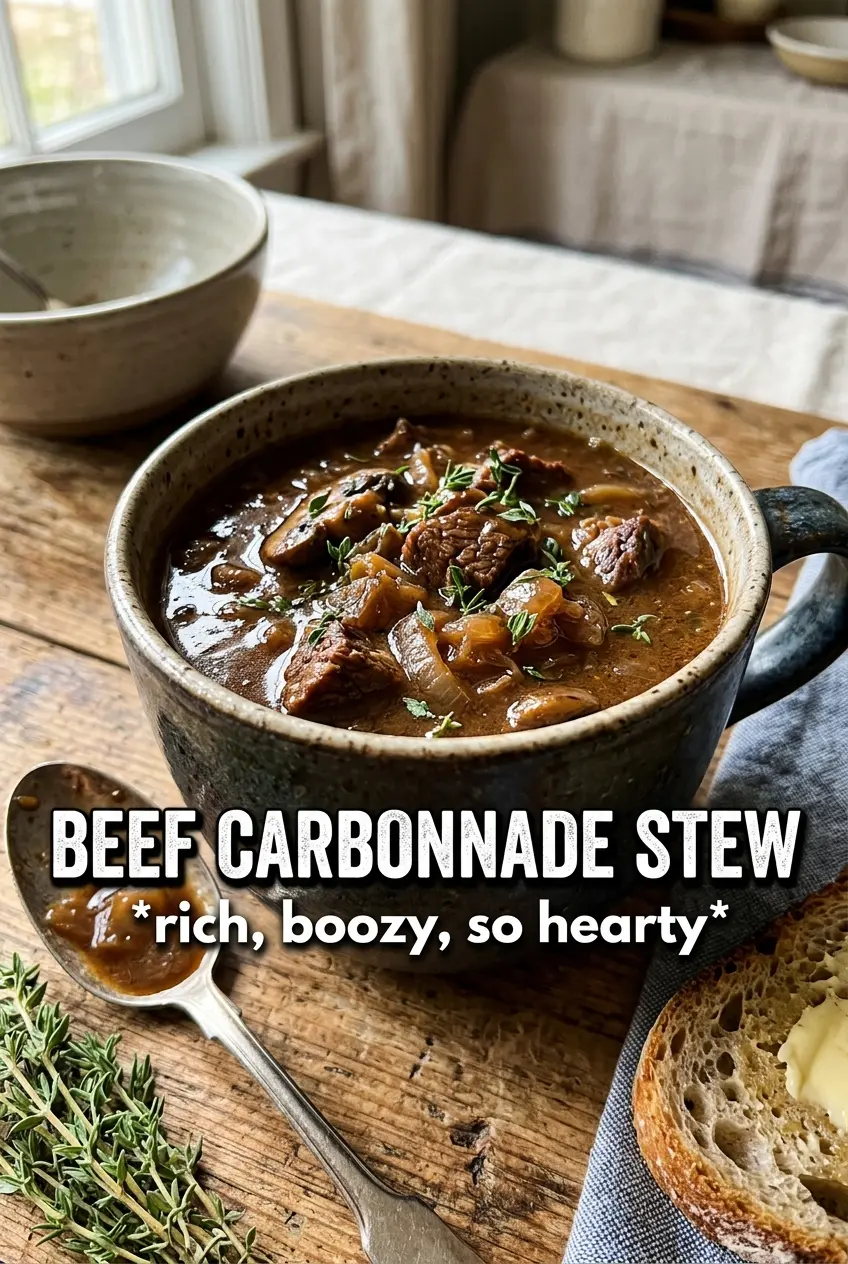
Beef carbonnade stew turns tough chuck into spoon-tender pieces of beef wrapped in a deep mahogany broth that tastes like onions, ale, and time. The onions melt down until they’re almost jammy, then the beer and broth pick up every browned bit from the pot and build a sauce with real depth instead of just heaviness. It’s the kind of stew that settles in and gets better with every minute on the stove.
What makes this version work is the layering. The beef gets a hard sear first, which gives the stew its backbone, and the onions cook long enough to lose their bite before anything liquid goes in. A little flour cooks with the garlic and onions so the broth thickens naturally, while Dijon, vinegar, and brown sugar keep the finished stew balanced instead of dull. Use a dark Belgian ale if you can; it brings a malty edge that stout also handles well.
Below, I’ve included the one timing detail that keeps the onions from rushing and the broth from turning flat, plus a few swaps that still keep the stew true to its Belgian roots.
The onions cooked down into the sweetest base and the broth thickened up beautifully after the long braise. I served it with crusty bread and my husband went back for seconds before I’d even sat down.
Save this Beef Carbonnade Stew for the night you want deep Belgian beer-braised beef, soft onions, and crusty bread in one pot.
The Sear and the Slow Onions: Why Carbonnade Tastes Deep Instead of Flat
Carbonnade only tastes right when the beef gets a real browning before anything else goes into the pot. If you crowd the pan or rush past that step, you end up with boiled meat and a broth that tastes thin, even after two hours. The sear creates the dark, savory base that makes this stew feel old-world and satisfying.
The onions matter just as much. They need time over medium heat to turn soft, golden, and sweet before the beer goes in. That’s what keeps the stew from tasting sharp or bitter. Once the beer hits the pot, scrape hard; those browned bits are the best part of the whole dish.
What Each Ingredient Is Actually Doing in This Stew

- Beef chuck — This is the right cut because it has enough connective tissue to turn tender during the long braise. Leaner stew meat cooks up dry before the sauce has time to develop.
- Dark Belgian ale or stout — This is where the stew gets its signature malty depth. A cheaper dark beer will still work, but avoid anything overly bitter or aggressively hoppy, because that sharpness won’t mellow much during cooking.
- Onions — Three large onions might look like a lot, but they cook down into the body of the stew. If they’re undercooked, the broth tastes harsh and the texture stays stringy instead of silky.
- Tomato paste, Dijon, vinegar, and brown sugar — These are the balance point. The tomato paste adds color and savoriness, the mustard adds a quiet tang, the vinegar brightens the richness, and the brown sugar softens the edges without making it sweet.
- Flour — A little flour cooked with the aromatics helps the broth thicken without turning pasty. Add it before the liquid so it loses its raw taste and blends into the stew instead of clumping.
Building the Braise Without Losing the Beef Texture
Brown the Beef in Batches
Season the beef with salt and pepper, then sear it in hot oil in batches until the cubes are deeply browned on more than one side. You want a dark crust, not just a gray exterior, because that color becomes the base flavor of the stew. If the pot is crowded, the beef steams and the juices collect in the pan, which slows browning and softens the final texture.
Cook the Onions Until They Turn Sweet
Once the beef is out, add the onions and cook them over medium heat for 20 to 25 minutes, stirring now and then, until they’re soft, golden, and almost spreadable. They should smell sweet, not raw. If they start sticking hard, lower the heat and keep going; rushing this stage leaves the stew sharp instead of rounded.
Build the Sauce in the Pot
Add the garlic and cook it for about a minute, just until fragrant, then whisk in the flour and let it cook for another minute. Pour in the beer and scrape the bottom of the pot until every browned bit comes loose. Stir in the broth, tomato paste, vinegar, brown sugar, Dijon, thyme, bay leaves, and the beef, then bring it up to a boil before dropping it to a gentle braise.
Braise Until the Beef Gives Without Falling Apart
Cover the pot and cook for about 2 hours, or until the beef is tender enough to cut with a spoon but still holds its shape. The liquid should stay at a lazy simmer, with only a few bubbles breaking at the edges. If it boils hard, the beef can tighten up before the collagen has time to melt.
Make It Gluten-Free Without Losing the Body
Swap the all-purpose flour for a gluten-free flour blend that’s meant for thickening, or use a small cornstarch slurry near the end. The stew will still taste right, but the texture will be a little lighter and less rustic than the flour-based version.
Use Stout for a Darker, Toastier Stew
Stout gives the stew a deeper roasted note and a slightly heavier finish than Belgian ale. It’s a good swap if you want a richer, more assertive broth, but keep the brown sugar and vinegar in place so the flavor doesn’t go flat or bitter.
Make It Alcohol-Free
Replace the beer with more beef broth plus a splash of apple cider vinegar and a teaspoon of molasses for depth. You won’t get the same malty edge, but the stew will still braise well and stay balanced.
Storage and Reheating
- Refrigerator: Keep in an airtight container for up to 4 days. The flavor gets even better overnight, and the sauce will thicken as it chills.
- Freezer: Freezes well for up to 3 months. Cool it completely first, then freeze in portions; the onions may soften a little more after thawing, but the stew holds up nicely.
- Reheating: Warm it slowly on the stove over low heat with a splash of broth or water if needed. Don’t blast it in the microwave on high, or the beef can go stringy and the sauce can separate around the edges.