Broccoli cauliflower soup turns silky, mellow, and deeply comforting when the vegetables are cooked until tender and then blended into a base that tastes richer than it has any right to. The broccoli brings color and a little earthiness, the cauliflower softens the edge, and sharp cheddar gives the whole pot a savory finish that keeps you going back for another spoonful. It’s the kind of soup that feels simple at first glance, then surprises you with how full and balanced it tastes.
The trick here is building the soup in layers instead of dumping everything in at once. Flour gets cooked briefly with the onion and garlic so the broth thickens without tasting raw, and the cream goes in after blending so it stays smooth. I also like a small amount of smoked paprika and nutmeg because they round out the vegetables without turning the soup into something that tastes like spice cabinet soup.
Below, you’ll find the timing that keeps the vegetables tender instead of dull, plus the one step that makes the cheese melt cleanly instead of clumping. If you’ve ever had broccoli soup come out grainy, this version should fix that.
The soup turned out velvety and the cheddar melted right in without turning stringy. I loved that the cauliflower kept it light but still thick enough to eat like a meal.
Save this broccoli cauliflower soup for nights when you want a creamy, cheesy bowl with tender vegetables and almost no cleanup.
The Part Most Broccoli Soup Gets Wrong: Keeping It Thick Without Turning Gluey
Broccoli and cauliflower both carry a lot of water, so the soup can drift thin fast if the base isn’t built with a little structure. Cooking the flour briefly with the onion and garlic gives the broth something to cling to, which means the finished soup feels creamy instead of watery even before the cream and cheese go in.
The other failure point is heat. If the soup boils hard after the dairy is added, the texture can turn grainy or split. Keep the simmer gentle, and pull the pot down to low before the cheddar goes in so it melts into the soup instead of clumping on the surface.
What Each Ingredient Is Actually Doing in the Pot

- Broccoli florets — These give the soup its familiar flavor and green color. Cut them small enough that they soften in the same window as the cauliflower, or you’ll end up with uneven texture after blending.
- Cauliflower florets — Cauliflower is what makes the soup feel plush without needing a huge amount of cream. You can swap in all broccoli if that’s what you have, but the soup will taste sharper and less mellow.
- Sharp cheddar — Sharp cheddar matters here because it stays bold after the cream and vegetables mellow everything out. Pre-shredded cheese works in a pinch, but freshly grated melts cleaner and gives you a smoother finish.
- Flour and butter — This is the little roux that thickens the broth and keeps the soup from feeling flat. Let it cook for a minute or two so it loses the raw flour taste before the liquid goes in.
- Smoked paprika and nutmeg — These don’t make the soup taste spiced; they make the vegetables taste deeper and more rounded. Nutmeg in particular should stay in the background, so keep it to the small amount listed.
- Heavy cream — Cream is added at the end for a soft, rich finish. Half-and-half will work, but the soup will be a little lighter and less silky.
Building the Soup in the Right Order
Softening the Onion First
Melt the butter in a large pot and cook the diced onion until it turns translucent and starts to lose its sharp edge, about four minutes. That first stage matters because raw onion can make the soup taste unfinished even after everything else is blended. Add the garlic only after the onion softens, then cook it just long enough to smell fragrant; if garlic browns, it turns bitter and the bitterness carries through the whole pot.
Making the Base Thicken Before the Broth Goes In
Stir the flour into the onion and garlic and cook it for a minute or two. It should look pasty and coat the vegetables, not dry and dusty. Then whisk in the broth gradually, which keeps the base smooth instead of lumpy. If you dump all the liquid in at once, the flour can clump at the bottom and leave you chasing it with the whisk.
Cooking the Vegetables Until They Blend Easily
Add the broccoli, cauliflower, garlic powder, and smoked paprika, then simmer until the vegetables are very tender, usually 15 to 18 minutes. You want the florets to give up no resistance when a spoon cuts through them. If they’re still firm, the blended soup will taste coarse and a little raw. A gentle simmer is enough; a hard boil can break the vegetables apart before they’ve softened evenly.
Blending and Finishing With Cheese
Blend the soup with an immersion blender until smooth or as smooth as you like, leaving a few small bits if you want more texture. Stir in the cream, then turn the heat to low before adding the cheddar and nutmeg. Cheese melts best when the pot is calm, not bubbling. Season with salt and pepper at the end, because the broth and cheddar already bring salt of their own.
Ways to Adjust This Soup Without Losing the Creamy Texture
Make it dairy-free
Swap the butter for olive oil or a plant-based butter, use unsweetened oat cream or cashew cream, and finish with a dairy-free cheddar-style shreds that melt well. The soup will still be creamy, but it won’t have the same tangy richness that sharp cheddar brings, so taste and season more carefully at the end.
Make it gluten-free
Replace the flour with a gluten-free all-purpose blend that includes xanthan gum, or thicken the soup with a small cornstarch slurry at the end. The flavor stays the same, but the texture will be a touch lighter if you skip the flour-based roux.
Use all broccoli or all cauliflower
All broccoli makes the soup greener and more assertive, while all cauliflower makes it milder and even smoother. If you go all broccoli, keep the cheddar sharp so the flavor doesn’t feel one-note.
Storage and Reheating
- Refrigerator: Store in an airtight container for up to 4 days. It thickens as it chills, so it may look a little denser the next day.
- Freezer: It freezes, but the cream can make the texture less silky after thawing. For the best result, freeze before adding the cream and cheddar, then finish them when you reheat.
- Reheating: Warm it slowly over low heat, stirring often. Don’t boil it, or the dairy can separate and the cheese can turn grainy.
Questions I Get Asked About This Recipe
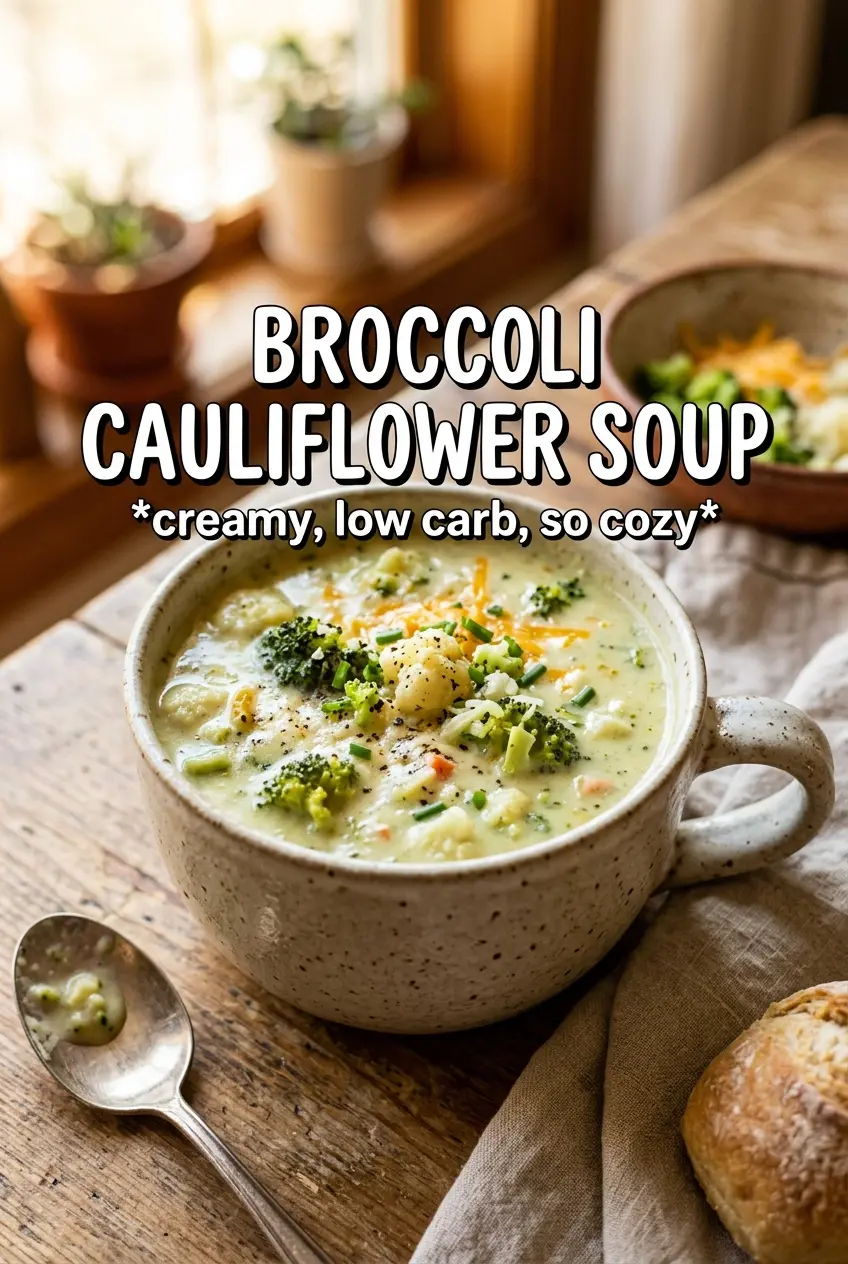
Broccoli Cauliflower Soup
Ingredients
Equipment
Method
- Melt butter in a large pot over medium heat. Sauté diced onion for 4 minutes until softened and fragrant.
- Add minced garlic and flour to the pot. Cook for 1-2 minutes, stirring, until the mixture looks slightly thicker and fragrant.
- Gradually whisk in the broth until smooth. Add broccoli florets, cauliflower florets, garlic powder, and smoked paprika.
- Bring the mixture to a simmer, then cook for 15-18 minutes until the vegetables are very tender. Look for florets that yield easily when pressed.
- Blend the soup with an immersion blender until smooth. Stop when the texture is creamy with no large chunks.
- Stir in the heavy cream. Keep blending/stirring just until fully combined.
- Reduce heat to low. Stir in shredded cheddar and nutmeg until the cheese is melted and the soup turns glossy and thickened.
- Season with salt and pepper to taste. Serve hot with extra cheddar and chives on top.