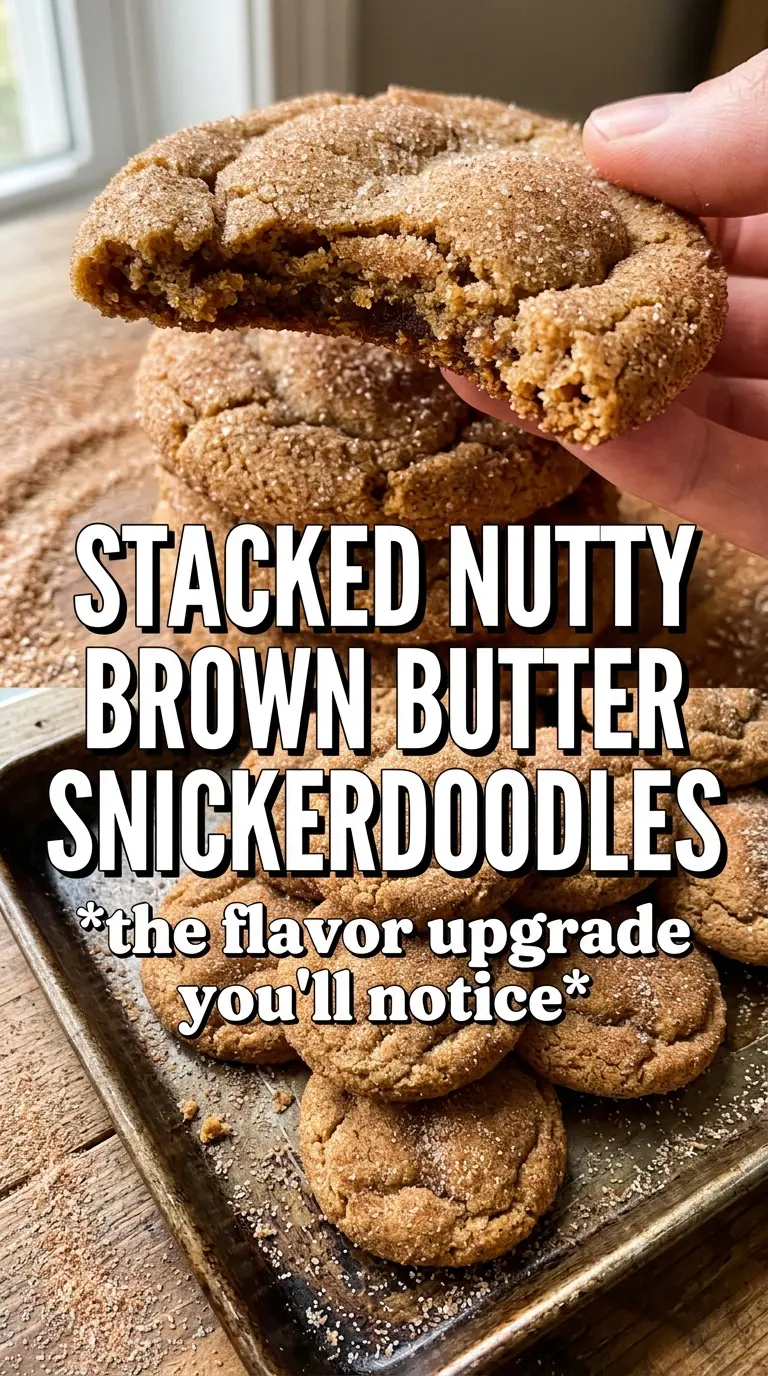
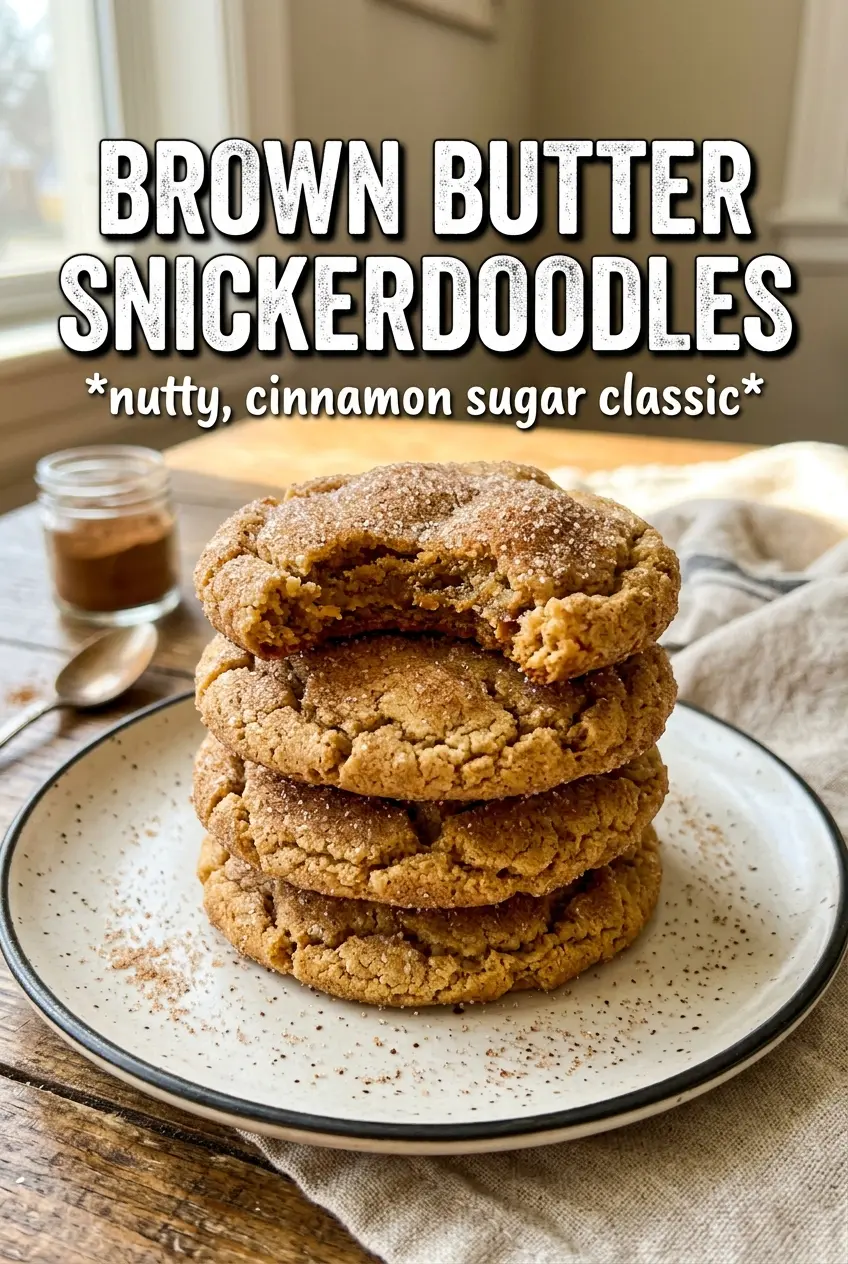
Brown butter snickerdoodles bake up with crisp, cinnamon-sugared edges, soft centers, and that warm nutty note that makes people pause after the first bite. The brown butter doesn’t just add flavor; it gives these cookies a deeper, almost caramel-like richness that plays beautifully with the tart cream of tartar and the classic snickerdoodle chew.
The trick is giving the browned butter time to solidify before mixing. If it’s even a little warm, the dough spreads too much and you lose that thick, crinkly cookie structure. I also like adding a small pinch of nutmeg to the rolling sugar because it rounds out the cinnamon without making the coating taste busy.
Below, I’ll walk through the part that matters most: getting the butter browned without crossing into bitter, and getting the cookies baked just long enough that the centers stay soft while the edges set.
The brown butter made these taste like the best version of a snickerdoodle I’ve ever had, and the centers stayed soft even the next day.
Save these brown butter snickerdoodles for the kind of cookie night where you want crisp cinnamon sugar, chewy centers, and a little extra depth from the browned butter.
The Reason These Cookies Stay Thick Instead of Spreading Out
Brown butter changes the whole behavior of the dough. It adds flavor, yes, but it also removes water, which means the dough needs a little structure from the flour and a proper chill on the butter before you bake. If you rush that step, the cookies bake up flatter and the cinnamon sugar coating melts instead of cracking into those pretty crinkled tops.
Cream of tartar is doing more than just checking a snickerdoodle box. It gives the cookies their signature tang and helps create the soft, slightly puffy texture people expect from this kind of cookie. Without it, you end up with a cinnamon sugar cookie, which is fine, but it won’t taste like a real snickerdoodle.
- Brown butter — This is the flavor engine. Brown it until it smells nutty and the milk solids turn amber, then let it cool and solidify completely before creaming. Soft, spreadable butter won’t give you the same texture.
- Cream of tartar — This gives the cookies their classic snickerdoodle tang and helps keep the crumb tender. There isn’t a true one-to-one substitute if you want the same result.
- All-purpose flour — Use the full amount and spoon it into the measuring cup rather than packing it down. Too much flour makes the dough dry; too little and the cookies spread too far.
- Eggs — Room temperature eggs blend into the butter more evenly, which matters when the butter has been browned and re-solidified. Cold eggs can make the mixture look curdled for longer than it should.
What Each Ingredient Is Actually Doing in This Recipe
- Primary ingredient (the star) — Quality matters most. Choose the best you can find.
- Cooking medium (oil, butter, or broth) — This carries flavors and prevents dryness.
- Seasonings (salt, pepper, spices, herbs) — Layer flavors so nothing overpowers. Build depth gradually.
- Aromatics (garlic, onion, herbs) — Cook with fat to bloom flavors. Become the foundation.
- Supporting ingredients — Complement the main ingredient without overpowering it.
- Sauce or liquid (if applicable) — Brings flavors together. Balance richness with acid.
- Acid (lemon, vinegar, wine, or other) — Brightens and prevents flat-tasting results.
- Final finish (garnish, glaze, or sauce) — Prevents one-dimensional taste and adds visual appeal.
Building the Dough So the Cookies Bake Up Crinkled
Brown the Butter, Then Let It Set
Cook the butter in a light-colored pan so you can see the color change from pale yellow to golden brown. The milk solids will sink, then turn speckled and fragrant, with a nutty smell that tells you it’s ready. Pull it off the heat the moment you see amber bits and pour it into a bowl so it doesn’t keep cooking in the hot pan. Once it’s refrigerated and solid, it should feel firm but scoopable, not greasy or melted.
Mix the Dry Ingredients First
Whisk the flour, cream of tartar, baking soda, cinnamon, and salt together before they go anywhere near the butter. That keeps the leavening and spice evenly distributed, which matters because you want each cookie to rise the same way and taste balanced all the way through. If you dump them in separately, you’ll get pockets of sharp cinnamon or uneven spreading.
Cream the Solid Butter Until It Turns Fluffy
Beat the solidified brown butter with the sugar until it lightens and looks a little fluffy around the edges. This step traps air, which helps the cookies bake up with those little cracks on top. Add the eggs and vanilla after the butter and sugar are smooth; if the mixture looks a bit separated at first, keep mixing and it will come together. Once the flour goes in, stop as soon as the dough is combined so the cookies stay tender.
Roll Generously and Bake Just Until Set
Use a 1 1/2 tablespoon scoop so the cookies bake evenly. Roll each dough ball generously in the cinnamon sugar mixture until it looks heavily coated; that outer layer is what gives you the signature crackled top. Bake just until the edges are set and the centers still look a touch soft. If you wait for the middle to look fully done in the oven, they’ll end up dry after cooling.
Make Them Extra Cinnamon Forward
Increase the cinnamon in the rolling sugar by another 1/2 teaspoon if you want a stronger spice note on the outside. The cookies still taste like brown butter snickerdoodles, but the cinnamon sugar crust will read louder from the first bite.
Gluten-Free Version
Swap in a 1:1 gluten-free baking flour with xanthan gum already included. The cookies will still be soft and chewy, though the centers may be a little more delicate, so let them cool on the pan before moving them.
Dairy-Free Adaptation
Use a high-quality plant butter that browns cleanly, or skip browning entirely if your substitute doesn’t brown well. You’ll lose some of the toasted nutty depth, but the cinnamon sugar coating and cream of tartar still carry the classic snickerdoodle character.
Storage and Reheating
- Refrigerator: Store baked cookies in an airtight container for up to 5 days. They stay soft, though the cinnamon sugar coating softens a bit after the first day.
- Freezer: Freeze baked cookies for up to 2 months, or freeze portioned dough balls rolled in cinnamon sugar and bake from frozen with 1 to 2 extra minutes.
- Reheating: Warm cookies in a 300F oven for 3 to 4 minutes to bring back the just-baked texture. The common mistake is microwaving them too long, which makes the centers tough instead of soft.
Questions I Get Asked About This Recipe
Brown Butter Snickerdoodles
Ingredients
Equipment
Method
- Brown the butter until it turns golden and smells nutty, then let it solidify in the pan. Refrigerate until firm, about 1 hour.
- Preheat the oven to 375F and line baking sheets with parchment. Keep the sheets ready so you can bake right after portioning.
- Whisk the flour, cream of tartar, baking soda, cinnamon, and salt in a bowl until evenly combined. Set aside.
- Beat the solidified brown butter and granulated sugar until creamy. Then beat in the eggs one at a time, followed by the vanilla extract.
- Fold the flour mixture into the wet ingredients until just combined with no dry streaks. Avoid overmixing so the cookies stay tender.
- Mix the rolling spices in a shallow bowl: cinnamon with granulated sugar and a pinch of nutmeg. Stir until the mixture looks uniform.
- Scoop dough into 1-1/2 tablespoon balls, then roll generously in the cinnamon sugar mixture. Press lightly so the coating adheres thickly.
- Bake for 10-12 minutes at 375F until crinkled and the edges are set. Watch for a deeply golden color and firm rims.
- Cool the cookies on the pan for 5 minutes. Transfer to a rack to finish cooling while the nutty brown butter flavor settles.