Brown stew chicken lands on the table with deep mahogany gravy, tender chicken that pulls cleanly from the bone, and sweet peppery edges that soak into every bite of rice. The best versions don’t taste flat or muddy. They taste layered: seasoned all the way through, caramelized in the pan, then simmered until the sauce turns glossy and clings to the chicken instead of pooling around it.
What makes this version work is the order. The chicken gets a proper marinade first, so the seasoning reaches past the surface, then the sugar is caramelized before the chicken goes in, which gives the stew its color and that deep, slightly smoky background note. After that, the vegetables go into the same pot, and the broth loosens up every browned bit stuck to the bottom. That’s the part that gives the gravy its backbone.
Below you’ll find the timing that matters most, the one place people usually rush and regret it, and a few smart swaps for heat level, seasoning, and make-ahead cooking.
The marinade gave the chicken great flavor all the way through, and the gravy turned rich and thick without needing any flour. I cooked it with the heat low at the end like you said, and the chicken stayed tender instead of drying out.
Pin this brown stew chicken for the nights when you want a deep, caramelized Jamaican gravy with tender chicken and rice.
The Part That Gives Brown Stew Chicken Its Color Without Making It Bitter
Brown stew chicken gets its signature color from two places: the caramelized sugar and the browned chicken. Skip either one and the gravy still tastes good, but it loses that deep, almost mahogany finish that makes the dish feel complete. The sugar needs to go golden, not dark mahogany-black, because once it crosses that line it turns bitter fast.
The other mistake is crowding the pan when the chicken goes in. If the pieces sit on top of each other, they steam and the surface never develops the roasted edges that make the stew taste layered. Give each piece a little space, let it sit long enough to grab color, then turn it. That first bit of browning is what keeps the finished gravy tasting rich instead of flat.
- Caramelized sugar — This is the base of the stew’s color and depth. Watch it closely; once it turns a warm amber, move fast and get the chicken in before it burns.
- Bone-in chicken thighs and drumsticks — Dark meat stays tender through the simmer and gives the gravy more body. Boneless chicken works in a pinch, but it won’t hold up as well or taste as full.
- Browning sauce — This adds color and a little extra roasted note in the marinade. If you don’t have it, you can still make the stew, but the sauce will be lighter and the flavor a touch less deep.
What Each Ingredient Is Actually Doing in the Pot
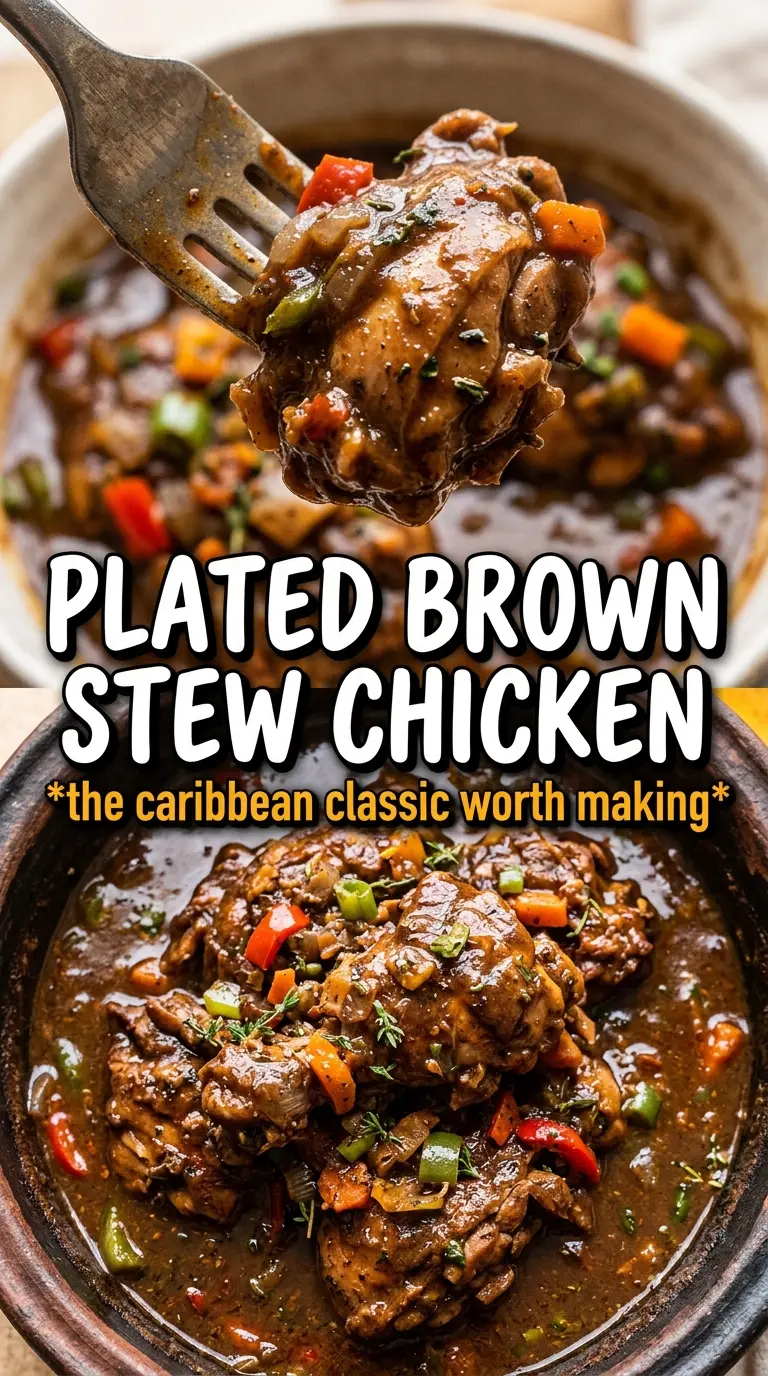
- Chicken thighs and drumsticks — The bones help flavor the gravy while the meat stays juicy during the simmer. If you swap in boneless pieces, cut the simmer time down so they don’t dry out.
- Brown sugar — This is for the pan, not the marinade. It gives the stew its color fast, but you have to watch it the whole time because a few extra seconds can push it from caramelized to burnt.
- Scotch bonnet or habanero — This brings heat with a fruity sharpness that belongs in Jamaican-style stew. Use a small amount if you want background heat instead of a hot stew.
- Thyme, all-purpose seasoning, garlic, and onion powder — These build the seasoning layer before anything hits the pan. Fresh thyme at the end gives a brighter finish, while dried thyme in the marinade carries the stew through the long cook.
- Bell peppers, onion, green onion, and garlic — These soften into the gravy and add sweetness. Slice them thin enough to cook down, but not so thin that they disappear completely.
- Chicken broth — This loosens the pan drippings into gravy and gives the stew enough liquid to braise the chicken. Water works in an emergency, but the sauce won’t have the same roundness.
Building the Gravy After the Chicken Is Browned
Let the Marinade Do the Quiet Work
Mix the chicken with the browning sauce, all-purpose seasoning, garlic powder, onion powder, dried thyme, salt, and pepper, then let it sit for at least 2 hours. Overnight is even better because the seasoning settles into the meat instead of just coating the outside. If you rush this step, the stew still tastes fine, but it won’t have that seasoned-through bite that makes the dish stand out.
Caramelize the Sugar Before Anything Else
Heat the oil, add the sugar, and let it melt until it turns a rich golden brown. The color happens fast, and the line between caramelized and burnt is thin, so stay right there and don’t walk away. As soon as it reaches that deep amber shade, add the chicken pieces and start browning them on all sides. If the sugar seizes or smokes heavily, the heat is too high and the pan is headed toward bitter.
Cook the Vegetables in the Leftover Flavor
Once the chicken is out, cook the onion, bell peppers, garlic, green onions, and scotch bonnet in the same pan. They should soften and pick up some of the dark color from the bottom of the pot without turning mushy. Scrape the browned bits loose as they cook; that’s the part that turns the broth into actual gravy. If the pan looks dry, a splash of broth helps release everything.
Simmer Until the Gravy Clings
Return the chicken to the pot, add the broth, and bring it to a boil before lowering the heat. Cover and simmer until the chicken is falling apart at the bone and the gravy has thickened enough to coat a spoon, usually 35 to 40 minutes. If the sauce is thin near the end, uncover the pot for the last few minutes so it reduces. If it gets too thick, loosen it with a little extra broth rather than letting it scorch.
How to Adjust Brown Stew Chicken Without Losing the Soul of It
Milder Heat for Sensitive Eaters
Leave out the scotch bonnet or habanero and the stew still has plenty of flavor from the thyme, browning sauce, and caramelized pan drippings. If you want just a little warmth without full heat, add the pepper whole and remove it before serving instead of mincing it into the sauce.
Gluten-Free Version
This recipe is naturally close to gluten-free, but check the labels on your browning sauce and all-purpose seasoning because some blends hide wheat. Once those are verified, the rest of the dish stays exactly the same.
Make It Ahead for Better Flavor
Brown stew chicken tastes even better the next day because the gravy settles and the spices bloom more fully. Cook it completely, cool it fast, and reheat gently so the chicken stays tender instead of tightening up.
Using Chicken Breast Instead
Chicken breast can work, but it needs a shorter simmer and a gentler hand. Add it later in the cooking process and pull it as soon as it turns opaque and tender, because breast meat dries out long before the gravy finishes reducing.
Storage and Reheating
- Refrigerator: Store in an airtight container for up to 4 days. The gravy thickens as it chills, which actually helps the flavor settle.
- Freezer: It freezes well for up to 2 months. Cool it completely first, then freeze the chicken and gravy together so the meat stays moist.
- Reheating: Reheat covered over low heat on the stove with a splash of broth or water. The common mistake is boiling it hard, which makes the chicken stringy and can break the gravy.
Answers to the Questions Worth Asking
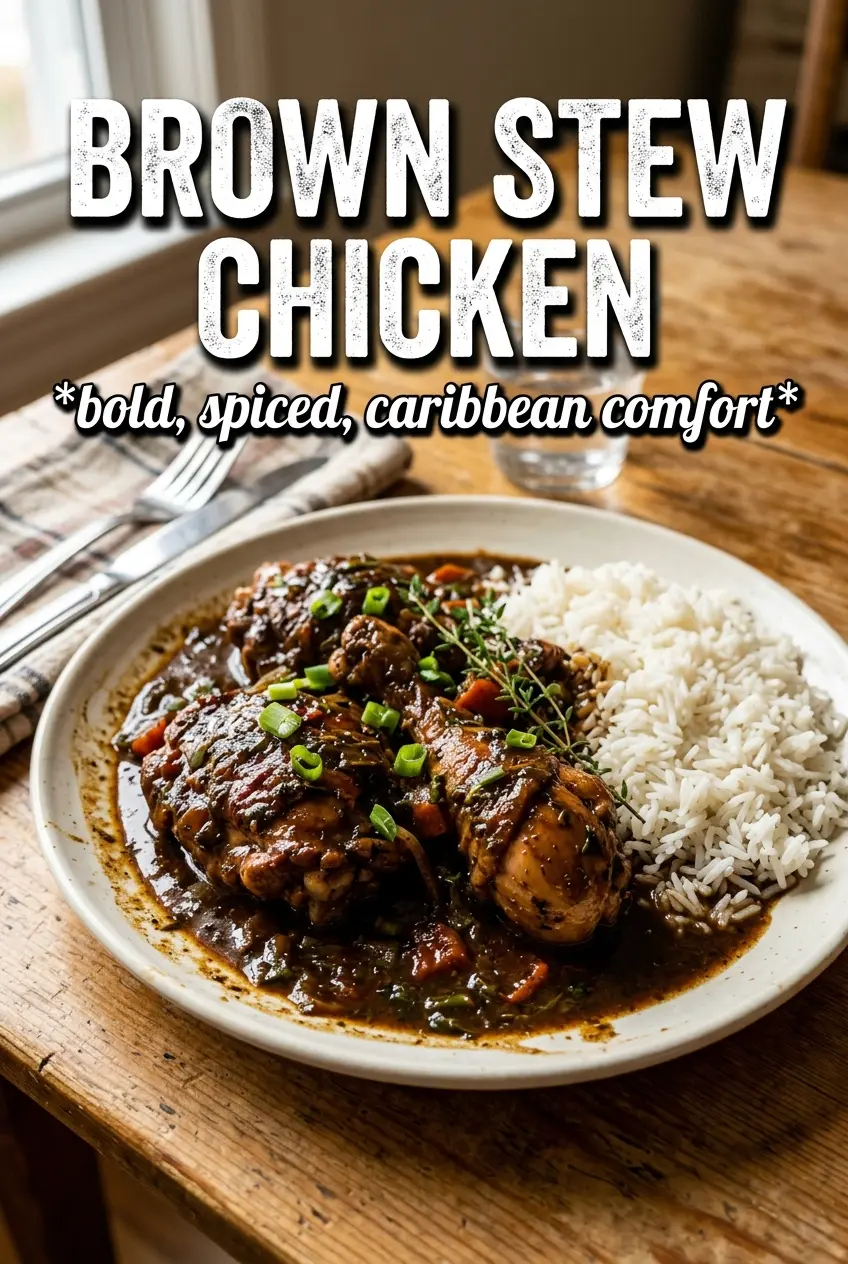
Brown Stew Chicken
Ingredients
Equipment
Method
- Combine browning sauce, all-purpose seasoning, garlic powder, onion powder, dried thyme, salt, and pepper, then rub over the chicken thighs and drumsticks. Cover and marinate for at least 2 hours or overnight, so the chicken is evenly seasoned.
- Heat vegetable oil in a large skillet or Dutch oven over medium heat, then add sugar and let it caramelize until golden brown. Keep an eye on it so the sugar turns amber without burning.
- Add the marinated chicken pieces and brown until deeply golden on all sides, about 6-8 minutes per batch if needed. Remove the chicken and keep the browned bits in the pan.
- Sauté onion, bell peppers, garlic, green onions, and scotch bonnet or habanero pepper for 4 minutes. Stir until softened and fragrant.
- Return the chicken to the Dutch oven, add chicken broth, and bring everything to a boil. Scrape up any caramelized bits for more flavorful gravy.
- Reduce heat to low, cover, and simmer for 35-40 minutes until the chicken is fall-apart tender and the gravy is thick. Uncover for the last few minutes if you want it thicker.
- Serve brown stew chicken with rice and garnish with fresh thyme. The thyme should look fresh and green against the deep mahogany gravy.