Sticky, glossy brown sugar ham glaze is the kind of finishing sauce that turns a good holiday ham into the centerpiece everyone keeps circling back to. It clings to the scored edges, drips into the cuts, and bakes into that burnished, caramelized coating that tastes sweet, tangy, and just a little spiced. The best part is that it takes only a few minutes on the stove, but it delivers the look and flavor of something much more involved.
This version works because it balances three jobs at once: sweetness from the brown sugar and honey, brightness from the vinegar and juice, and enough mustard and spice to keep the glaze from tasting flat. Butter gives it shine and a smoother finish, while the simmer time is just long enough to dissolve the sugar and thicken the mixture without turning it into candy. If you’ve ever had a glaze slide right off the ham, the fix is usually simple — it needs a little more reduction and repeated brushing during the final stretch of baking.
Below, I’ll show you how to judge the right thickness, how to keep the glaze glossy instead of grainy, and what to do if you want to swap the juice or make it ahead.
The glaze thickened up in just a few minutes and brushed on beautifully without running off the ham. The pineapple juice and Dijon gave it a great balance, and the edges caramelized instead of burning.
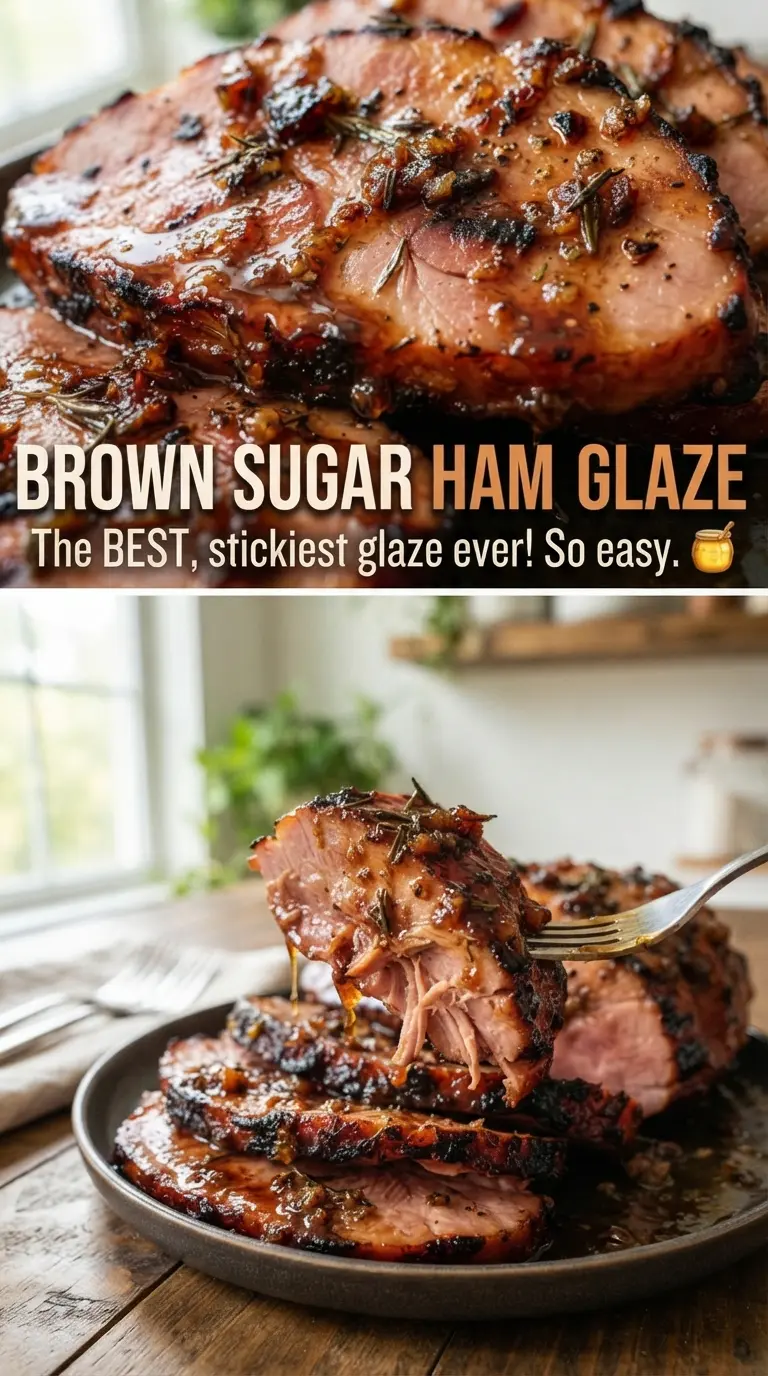
Brown Sugar Ham Glaze with its glossy finish and tangy-sweet caramelized edges is one to pin for the next ham dinner.
The Glaze That Stays on the Ham Instead of Sliding Off
A ham glaze fails when it’s too thin, too sugary, or added too early. If you brush on a watery mixture, it never has time to set; if you cook it down too far, it turns sticky in the pan and burns on the ham before the center is heated through. The sweet spot is a glaze that looks smooth and syrupy, coats the back of a spoon, and still moves easily with a brush.
The repeated brushing matters just as much as the simmer. Each layer has a chance to tack up in the oven, so the next coat builds shine instead of washing the previous one away. That’s what gives the ham those lacquered, glossy streaks instead of a thin sweet wash.
- Brown sugar — Packed brown sugar gives body and that deep molasses note. Light or dark both work; dark brown sugar tastes richer and a little more caramel-like.
- Honey — Honey helps the glaze cling and creates a smoother shine than sugar alone. Maple syrup can step in, but it tastes less classic and a little more woodsy.
- Pineapple or orange juice — The juice loosens the glaze and adds acid and fruit brightness. Pineapple gives a sharper tropical edge; orange is softer and a little rounder.
- Dijon mustard — This keeps the glaze from tasting one-note sweet. Yellow mustard works in a pinch, but Dijon brings more depth and a cleaner finish.
- Butter — Butter rounds out the edges and helps the glaze look glossy on the ham. Skip it if you need to, but the finish won’t be quite as rich.
What Each Ingredient Is Actually Doing in This Recipe
- Primary ingredient (the star) — Quality matters most. Choose the best you can find.
- Cooking medium (oil, butter, or broth) — This carries flavors and prevents dryness.
- Seasonings (salt, pepper, spices, herbs) — Layer flavors so nothing overpowers. Build depth gradually.
- Aromatics (garlic, onion, herbs) — Cook with fat to bloom flavors. Become the foundation.
- Supporting ingredients — Complement the main ingredient without overpowering it.
- Sauce or liquid (if applicable) — Brings flavors together. Balance richness with acid.
- Acid (lemon, vinegar, wine, or other) — Brightens and prevents flat-tasting results.
- Final finish (garnish, glaze, or sauce) — Prevents one-dimensional taste and adds visual appeal.
Building the Glaze So It Turns Glossy, Not Grainy
Start with a gentle simmer
Combine everything in a saucepan and warm it over medium heat, stirring until the sugar disappears. The mixture should look smooth before it boils; any gritty sugar left behind will stay gritty on the ham. Once it reaches a simmer, keep it there for 3 to 4 minutes until it thickens slightly and turns shiny.
Watch the thickness, not the clock
The glaze should coat a spoon in a thin amber layer and drip slowly, not pour like broth. If it gets too thick on the stove, it will set up fast in the oven and can burn on the surface before the ham is heated through. If that happens, stir in a spoonful of juice to loosen it back up.
Brush in layers during the last 30 minutes
Brush the glaze over a fully cooked ham during the final 30 minutes of baking, then repeat every 10 minutes. That timing matters because the glaze needs heat to caramelize, but not enough time to scorch. Use a generous hand on the cuts and edges so it settles into the scoring and builds that lacquered finish.
Finish with the pan drippings and leftover glaze
When the ham comes out, spoon the remaining warm glaze over the sliced meat at the table. The hot glaze will thin just enough to seep into the slices, which is where the flavor lands best. If it has cooled too much, warm it for a minute before serving so it pours cleanly.
How to Change the Glaze Without Losing the Ham Dinner Character
Orange-forward glaze
Use orange juice instead of pineapple for a softer citrus note and a slightly less sharp finish. It keeps the glaze bright, but the result tastes a little more classic and less tropical.
Dairy-free version
Skip the butter and add an extra teaspoon of honey if you want a little more shine. The glaze will still set well; it just won’t have the same round, silky finish.
Spicier glaze
Add a pinch of cayenne or a few cracks of black pepper if you want more bite against the sweetness. It won’t read as hot; it just keeps each slice from tasting heavy.
Make-ahead glaze
Cook the glaze a day ahead, cool it, and refrigerate it in a covered container. Rewarm it gently before brushing so it loosens again; if it sits too long on the stove, it can become too thick to spread evenly.
Storage and Reheating
- Refrigerator: Store leftover glaze for up to 1 week. It will thicken as it chills.
- Freezer: It freezes well for about 2 months in a sealed container. Thaw overnight in the refrigerator before reheating.
- Reheating: Warm it slowly over low heat or in short microwave bursts, stirring often. Don’t boil it again or it can turn sticky and overly reduced.
Questions I Get Asked About This Recipe
Brown Sugar Ham Glaze
Ingredients
Equipment
Method
- Combine brown sugar, honey, pineapple or orange juice, Dijon mustard, butter, apple cider vinegar, ground cinnamon, and ground cloves in a saucepan. Stir to mix so no dry sugar remains.
- Heat over medium heat until simmering, stirring frequently. Keep it at a steady simmer so the sugar can dissolve.
- Simmer for 3-4 minutes, stirring, until slightly thickened and glossy. Look for a smooth amber sheen that coats the spoon.
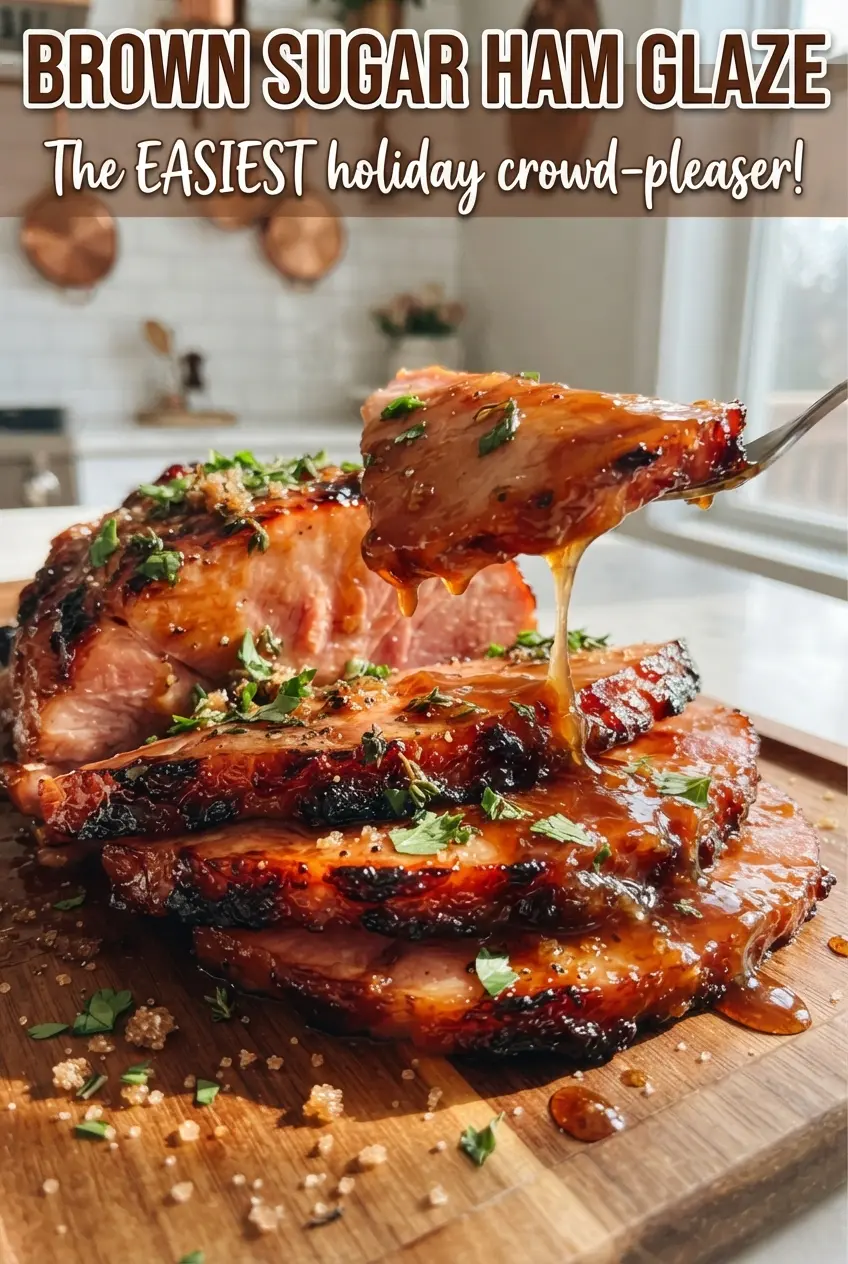
- Brush the warm glaze over a fully cooked ham during the last 30 minutes of baking. Apply it onto the scored diamond pattern so glossy drips show as it warms.
- Repeat basting every 10 minutes with more glaze. Let each layer set until it looks lacquered and lightly caramelized.
- Spoon the remaining warm glaze over sliced ham at the table. Serve so the glaze lightly pools on top of the slices.