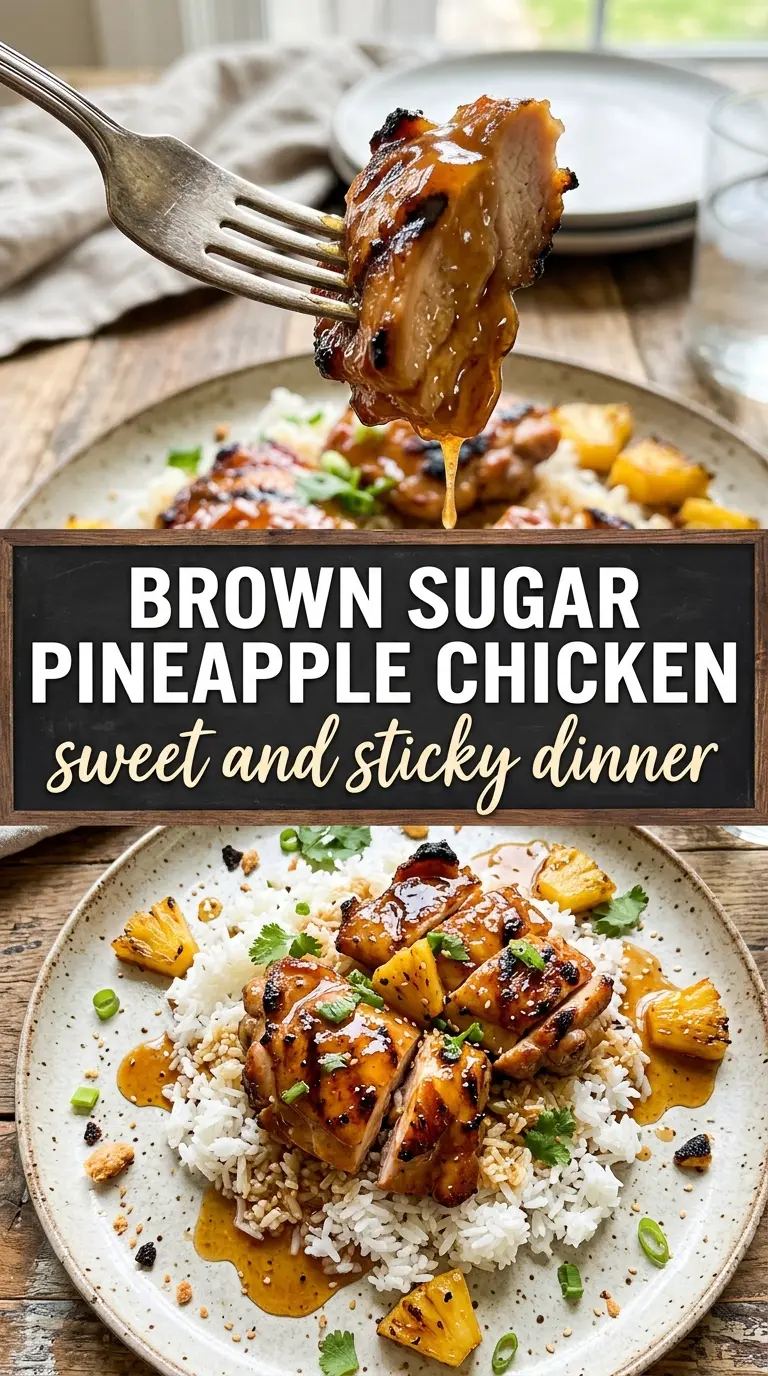
Sticky brown sugar pineapple chicken is the kind of skillet dinner that disappears fast because it lands right in that sweet-savory spot people keep going back for. The chicken stays juicy under a glossy glaze, and the pineapple chunks soften just enough to taste bright without turning mushy. Once the sauce reduces, it clings to the chicken instead of puddling in the pan, which is the difference between a decent weeknight dinner and one you’d actually make again.
This version works because the chicken gets a proper sear before the glaze goes in. That browning gives the sauce something savory to grab onto, and the pan drippings keep the flavor from tasting flat or one-note. The cornstarch slurry also goes in after the sauce is simmering, not before, so it thickens into a lacquer instead of turning gluey.
Below, I’ll walk through the part that matters most: how to get the glaze thick, shiny, and balanced before the chicken goes back into the pan. I’ve also included a few smart swaps for making it gluten-free, spicier, or a little lighter without losing the sticky finish.
The glaze thickened up exactly the way you described, and the pineapple stayed bright instead of getting lost. I served it over rice and my husband went back for seconds before I even sat down.
Save this sticky brown sugar pineapple chicken for the nights when you want a glossy skillet glaze and dinner on the table fast.
The Trick to a Glaze That Clings Instead of Running Thin
The biggest mistake with pineapple chicken is rushing the sauce before the pan has a chance to build flavor. If you add everything cold and call it done, you get a sweet liquid with chicken in it. That’s not the goal here. The chicken needs a hard sear first, and the glaze needs a brief simmer so the pineapple juice can reduce before the cornstarch tightens it into something glossy and spoon-coating.
Another place people get tripped up is the cornstarch slurry. If it goes into a sauce that isn’t at least gently bubbling, it can stay a little chalky and never fully thicken. If the sauce gets too thick too fast, add a splash of pineapple juice or water and stir until it loosens back to a sheen. You’re looking for a sauce that leaves a trail on the spoon and slowly drapes over the chicken, not one that sits in a gummy mound.
What Each Ingredient Is Actually Doing in This Skillet
- Chicken breasts — Boneless skinless breasts cook quickly and stay neat in the skillet, but they dry out if you overcook them. Pound them lightly to an even thickness if one side is much thicker than the other; that gives you a better sear and keeps the center from lagging behind.
- Pineapple juice — This is the backbone of the glaze, and bottled juice works fine here. Fresh juice can be used, but make sure it’s strained and not overly pulpy, or the sauce can turn murky instead of smooth.
- Brown sugar — It deepens the glaze and gives you that sticky, caramel-like finish. Packed light or dark brown sugar both work; dark brown sugar adds a deeper molasses note if you want the sauce a little richer.
- Soy sauce — It keeps the glaze from tasting sugary and gives the chicken a salty edge. For gluten-free cooking, use tamari or coconut aminos, but know that coconut aminos will taste a little sweeter and less sharp.
- Ketchup — It adds body, acidity, and that familiar glossy color. It doesn’t make the sauce taste like ketchup once it simmers; it just helps round out the pineapple and brown sugar.
- Cornstarch slurry — Mixing cornstarch with cold water first is what keeps the sauce smooth. Dumping dry cornstarch straight into hot liquid is how you get little lumps that never fully disappear.
- Pineapple chunks — They add texture and bursts of sweetness at the end. Canned pineapple chunks are fine and often better than underripe fresh fruit, since they’re softer and more consistent.
Getting the Sear, Simmer, and Finish in the Right Order
Seasoning and Searing the Chicken
Pat the chicken dry, then season it well with salt, pepper, garlic powder, and smoked paprika. The surface needs to be dry before it hits the oil or it’ll steam instead of browning. Cook it over medium-high heat until each side has a deep golden crust and the thickest part reaches 165°F. If the pan is crowded, the chicken will leak moisture and the glaze will start later with less flavor, so work in batches if needed.
Building the Pineapple Glaze
Use the same skillet after the chicken comes out. Those browned bits stuck to the bottom are part of the sauce, and they should stay there. Add the pineapple juice, brown sugar, soy sauce, ketchup, garlic, and ginger, then bring it to a simmer so everything blends and the liquid reduces slightly. If the heat is too high, the sugar can scorch before the sauce has time to thicken, so keep it at a steady simmer, not a hard boil.
Thickening to a Sticky Finish
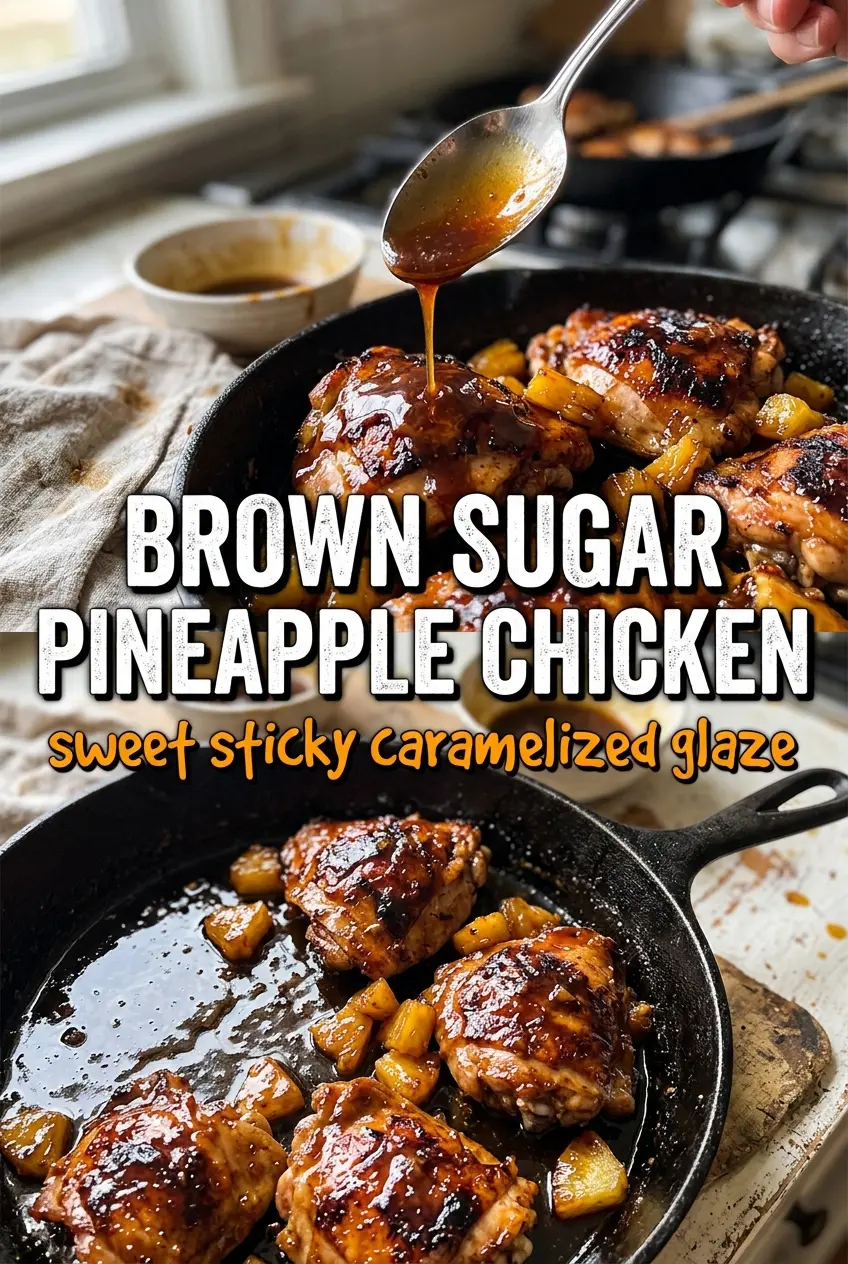
Stir in the cornstarch slurry and keep the sauce moving for 2 to 3 minutes. It should turn glossy and start coating the spoon in a thin layer. Once it looks like a light glaze, add the pineapple chunks and let them warm through. If the sauce looks split or cloudy, it usually means the slurry was added too fast or the heat was too aggressive; lower the heat and stir until it comes back together.
Coating the Chicken and Serving
Return the chicken to the skillet and turn it through the glaze until every piece is lacquered. Let it cook for a final 2 minutes so the sauce settles onto the meat and the chicken picks up the pineapple flavor. Finish with sesame seeds and sliced green onions, then serve it over steamed rice while the glaze is still glossy. If you wait too long, the sauce will tighten in the pan and lose that fresh sticky texture.
How to Adapt This Chicken Without Losing the Sticky Glaze
Make It Gluten-Free
Swap the soy sauce for tamari or a certified gluten-free soy sauce. Tamari keeps the same savory balance, so the glaze still tastes deep and rounded instead of just sweet. Coconut aminos can work too, but they’re sweeter, so the finished sauce will taste a little softer and less salty.
Use Chicken Thighs for More Forgiveness
Boneless skinless thighs stay juicier and are harder to overcook, which is helpful if you’re not watching the pan closely. They may need a few extra minutes to cook through, but the glaze clings just as well and the finished dish tastes richer.
Make It Spicier
Add a pinch of red pepper flakes or a squirt of sriracha to the glaze while it simmers. That heat cuts through the sugar and makes the pineapple taste brighter. Start small, since the sauce reduces and the spice builds as it thickens.
Make Ahead for Faster Dinner
You can mix the sauce ingredients ahead of time and keep them refrigerated for a day or two. Sear the chicken and finish the sauce fresh when you’re ready to eat, because the glaze tastes best when it’s just thickened and still glossy. Pre-cooked chicken can be reheated in the sauce, but it won’t have quite the same texture as cooking it fresh.
Storage and Reheating
- Refrigerator: Store leftovers in an airtight container for up to 4 days. The sauce will thicken in the fridge, so expect it to set up more firmly than it does in the pan.
- Freezer: This freezes well for up to 2 months, though the pineapple softens a bit after thawing. Freeze in portions with extra sauce so the chicken doesn’t dry out.
- Reheating: Reheat gently in a skillet over low heat with a splash of water or pineapple juice. Microwaving on high can make the chicken rubbery and the glaze sticky in the wrong way, so use short bursts and stir between them if that’s the only option.
Answers to the Questions Worth Asking
Brown Sugar Pineapple Chicken
Ingredients
Equipment
Method
- Season the chicken breasts with salt, black pepper, garlic powder, and smoked paprika, then rub to coat evenly and marinate for 20 minutes in the skillet or a covered container.
- Heat the olive oil in a large cast iron skillet over medium-high heat until shimmering.
- Place chicken in the hot skillet and sear for 5-6 minutes per side until golden and cooked through to 165°F, then remove to a plate.
- Whisk pineapple juice, packed brown sugar, soy sauce, ketchup, minced garlic, and grated ginger in the same pan and bring to a simmer over medium heat.
- Stir in the cornstarch slurry (cornstarch mixed with water) and cook for 2-3 minutes until the sauce thickens into a glossy glaze.
- Add pineapple chunks and simmer 30 seconds to warm and lightly caramelize them in the sauce.
- Return the chicken to the pan and turn to coat in the thick pineapple glaze.
- Cook for 2 more minutes over medium heat until the glaze clings and darkens slightly at the edges.
- Garnish with sesame seeds and sliced green onions, then serve immediately.