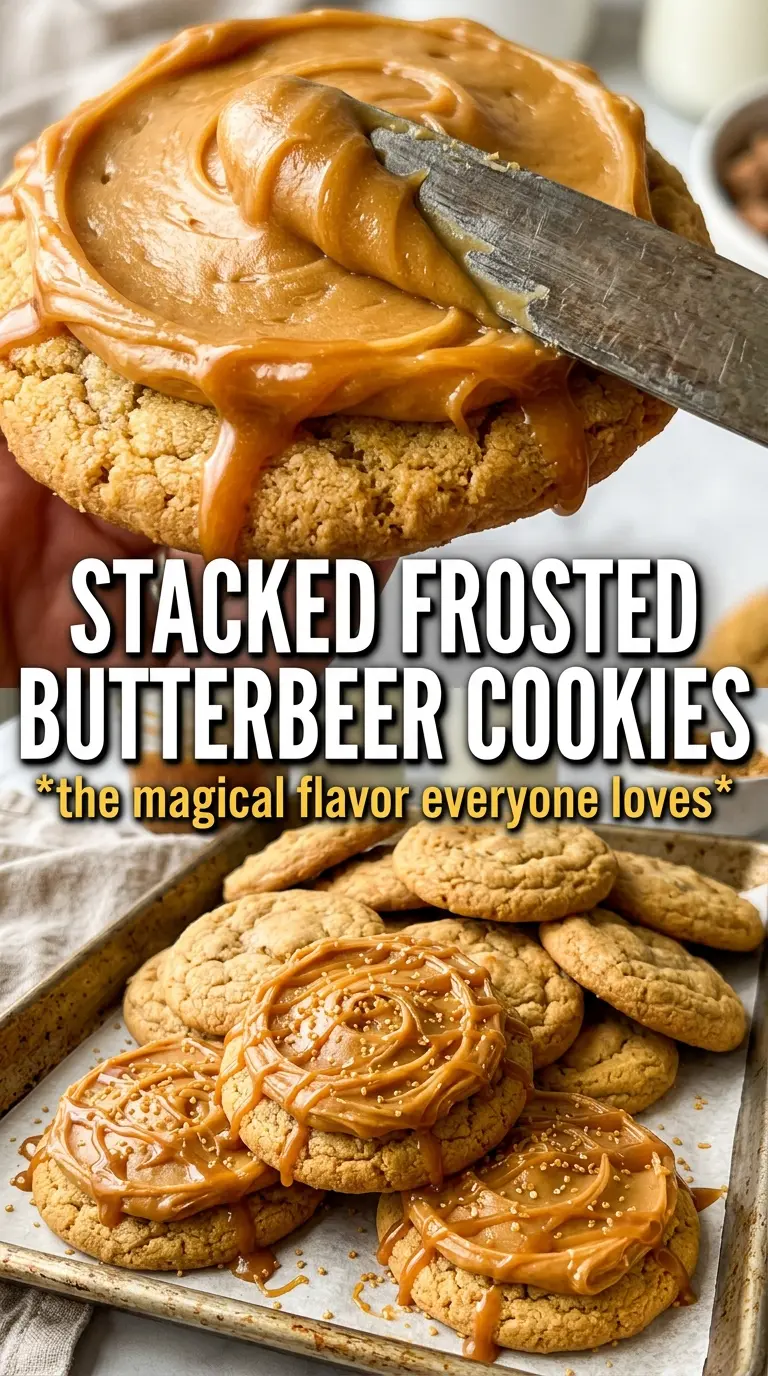
Butterbeer cookies bake up soft in the middle with lightly crisp edges, then get finished with a thick swirl of butterscotch frosting that turns them into the kind of cookie people reach for before they’ve even finished talking about the first one. The butterscotch chips melt just enough in the oven to leave little pockets of caramel-like sweetness, and the frosting adds that cool, creamy contrast that makes each bite feel bakery-worthy.
What makes this version work is balance. Butter extract gives the cookie that nostalgic, soda-fountain richness without making it taste flat, while the butterscotch extract carries the flavor all the way through the dough. The cookies stay tender because the dough is mixed just until the flour disappears, then baked only until the centers are set. That keeps them soft enough to hold the frosting without collapsing.
Below, I’ve included the little details that matter most here: how to keep the cookies from spreading too thin, how to get the frosting thick enough to pipe, and the small finishing touch that makes them look as special as they taste.
The cookies stayed soft for days, and the butterscotch frosting set up thick enough that it didn’t slide off when I stacked them. My kids kept sneaking the ones with the caramel drizzle first.
Save these butterbeer cookies for the days when you want soft butterscotch cookies with a thick frosting swirl and a caramel drizzle.
The Trick That Keeps These Cookies Soft Instead of Puffy and Dry
These cookies are all about balance in the oven. If the butter goes in too warm or the flour gets overmixed, they can bake up cakier than you want and lose that tender chew. The goal is a cookie that spreads just enough to look generous, then sets at the edges while staying soft in the center.
Brown sugar does most of the heavy lifting here because it holds moisture and deepens the butterscotch note. The granulated sugar helps the edges bake up with a little more definition. Baking soda gives the dough lift, but only if it’s fully whisked through the flour first; pockets of soda can leave a sharp, uneven taste.
- Butter at the right softness — It should press easily with a finger but still hold its shape. If it’s greasy or starting to melt, the cookies will spread too much before the centers set.
- Butterscotch extract — This is what makes the flavor read as butterbeer instead of just a brown sugar cookie. If you only have vanilla, the cookies will still work, but the flavor will be gentler and less distinct.
- Butterscotch chips — Fold them in at the very end so they stay in chunks instead of smearing into the dough. Mini chips can work, but the bigger chips give better little pockets of flavor.
What Each Ingredient Is Doing in the Cookie and the Frosting
- All-purpose flour — Gives the cookies enough structure to hold the frosting. Spoon and level it if you can; packed flour makes the dough dry and dense.
- Butter — In the cookies, it adds richness and helps with spread. In the frosting, it makes the cream cheese base pipeable and smoother.
- Brown sugar — This is where the soft texture comes from. It also deepens the caramel note that makes the cookies taste like butterscotch instead of plain vanilla.
- Butter extract — This gives the dough that nostalgic, buttery, almost candy-shop taste. Vanilla works in a pinch, but it won’t bring the same butterbeer vibe.
- Cream cheese — This keeps the frosting from becoming cloying. It also helps the frosting hold its shape better than a straight butter glaze would.
- Butterscotch sauce — Adds flavor and a little looseness to the frosting. If yours is very thin, use a touch less so the frosting stays thick enough to swirl.
Mix the Dough Just Enough, Then Stop
Whisk the dry ingredients first
Whisk the flour, baking soda, and salt together before they ever touch the butter. That first step keeps the baking soda from clumping, which matters more than people think because a hidden pocket of soda can leave a bitter bite. You want the mixture evenly combined and light, not compacted.
Cream the butter and sugars until fluffy
Beat the softened butter with both sugars until the mixture looks pale and a little airy. This is where the cookies get their lift and their tender texture, so don’t stop as soon as the ingredients look blended. If the butter is too cold, the mixture stays sandy; if it’s too soft, the dough turns greasy and spreads too fast.
Fold in the flour and chips without overworking the dough
Add the dry ingredients and mix only until the flour disappears, then fold in the butterscotch chips by hand if needed. Overmixing tightens the dough and gives you a tougher cookie. Scoop the dough into even 2-tablespoon rounds so they bake at the same rate and finish with soft centers.
Bake until the edges color and the centers still look soft
The cookies are done when the edges are lightly golden and the centers look just set, not fully dry. They’ll finish on the baking sheet as they cool. If you wait until they look firm in the oven, they’ll end up overbaked once they’re fully cool.
Cool completely before frosting
The frosting needs a cool cookie surface or it will slide right off. Even warm cookies can soften the cream cheese frosting and make the swirl lose its shape. Let them cool all the way to room temperature before piping, then finish with caramel and a butterscotch chip on top.
How to Make These Work for Different Kitchens and Schedules
Dairy-Free Version
Use a good dairy-free butter in both the cookies and frosting, and swap in a dairy-free cream cheese that holds its shape. The flavor will still be rich, but the frosting may be a little softer, so chill it briefly before piping.
Extra-Strong Butterscotch Flavor
If you want the butterscotch note to come through harder, use butterscotch extract in the dough and keep the vanilla in the frosting. Adding more extract to the frosting can make it taste sharp, so the cookie is the better place to push the flavor.
Make-Ahead and Storage
Storage and Reheating
- Refrigerator: Store frosted cookies in a single layer or with parchment between layers for up to 4 days. The frosting firms up in the fridge, so let the cookies sit at room temperature for 15 to 20 minutes before serving.
- Freezer: Freeze the unfrosted cookies for up to 2 months. Thaw at room temperature, then frost after they’ve softened; the cream cheese frosting doesn’t freeze as neatly once it’s piped.
- Reheating: These are best served at room temperature, not warm. If you want a just-baked feel, warm the unfrosted cookie for 5 to 8 seconds in the microwave, then frost after it cools for a minute so the swirl doesn’t melt.
Answers to the Questions Worth Asking

Butterbeer Cookies With Butterscotch Frosting
Ingredients
Equipment
Method
- Preheat oven to 375F and line baking sheets with parchment, keeping them ready for fast scooping.
- Whisk together all-purpose flour, baking soda, and salt until the dry mixture is uniform and evenly speckled.
- Beat unsalted butter and both sugars until fluffy, then beat in eggs, butter extract or vanilla extract, and butterscotch extract until smooth.
- Fold the flour mixture into the batter, then fold in butterscotch chips just until evenly distributed.
- Scoop dough into 2-tablespoon rounds and place on the lined sheets.
- Bake at 375F for 10-12 minutes until the edges look set and the tops turn lightly golden.
- Cool the cookies completely before frosting so the butterscotch swirl stays thick.
- Beat cream cheese and unsalted butter until smooth, then add butterscotch sauce, powdered sugar, and vanilla and beat until the frosting is thick and pipeable.
- Pipe a generous swirl of butterscotch frosting onto each cooled cookie.
- Drizzle caramel sauce over the frosted cookies and top with a butterscotch chip for a finished look.