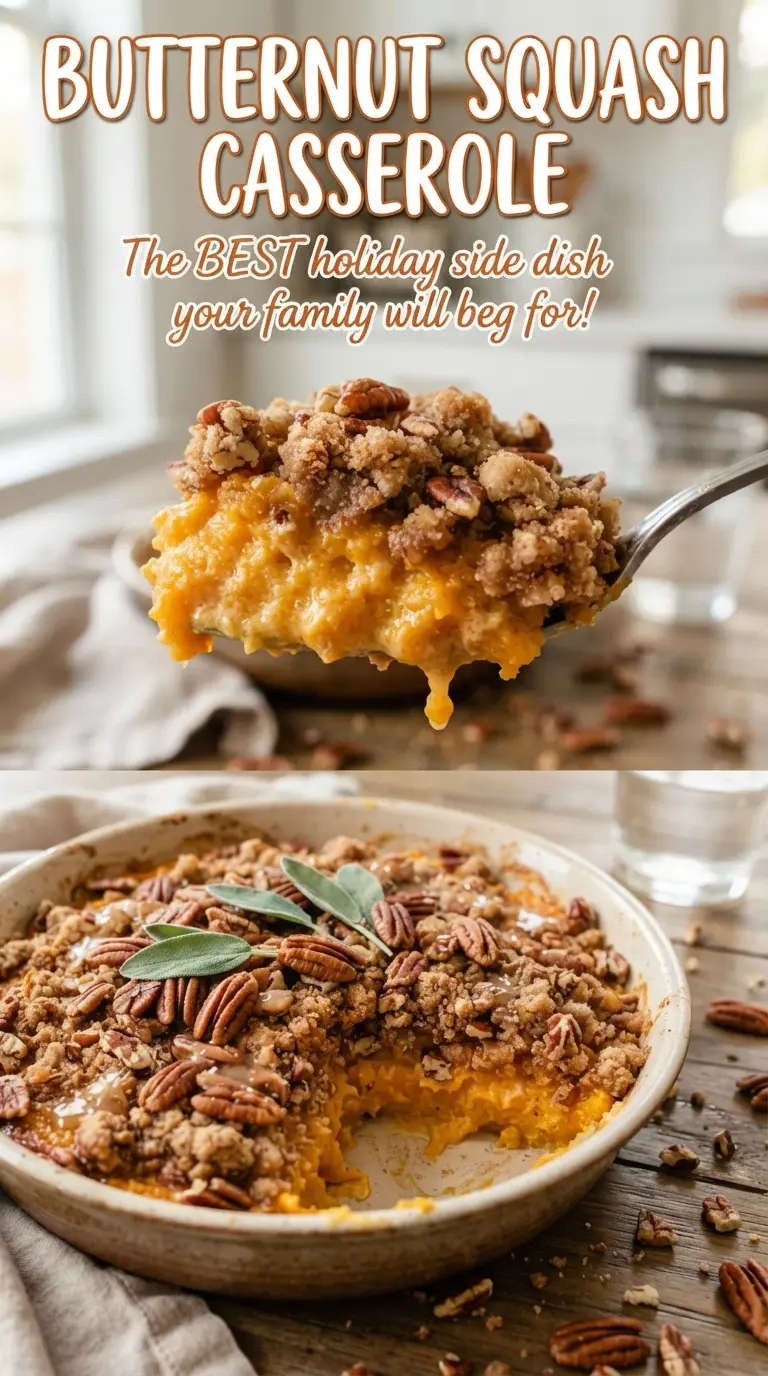
Butternut squash casserole bakes into a soft, creamy center with a buttery pecan topping that turns crisp and golden in the oven. The contrast is what makes it worth putting on repeat: the squash stays smooth and custardy underneath, while the streusel gives every bite a little crunch and caramelized sweetness. It lands somewhere between a classic holiday side and the kind of dish people quietly take seconds of before the main course even hits the table.
This version works because the squash is cooked until it’s fully tender and then drained well before mashing. That part matters. Extra water is the fastest way to end up with a loose, bland casserole that never sets up properly. The filling also gets a little structure from eggs and just enough flour in the topping to help it bake into crumbs instead of paste. Brown sugar and cinnamon bring warmth without turning the whole dish into dessert.
Below, I’ve added the little details that make this casserole behave the way it should: how to keep the filling smooth, why the topping stays crisp, and what to do if you want to prep it ahead.
The squash baked up silky and the pecan topping stayed crunchy even after sitting on the table for a while. I drained it like you suggested and the casserole held its shape instead of turning watery.
Love the creamy squash and crunchy pecan topping? Save this Butternut Squash Casserole for the next dinner when you want a warm Southern-style side that bakes up beautifully.
Why This Casserole Sets Up Instead of Turning Watery
Butternut squash holds a lot of moisture, and that’s the main reason casserole fillings go wrong. If the squash goes into the bowl wet from boiling, the eggs and sugar can’t do their job properly, and the finished dish ends up loose instead of spoonable. Draining well after boiling gives you a thicker mash that bakes into a clean sliceable scoop.
The other thing that helps here is the balance between custard and topping. Eggs give the base enough structure to set, but not so much that it becomes firm or eggy. The streusel also matters more than it looks: flour helps the butter and brown sugar form crumbs, and the pecans keep the top from collapsing into a soft layer as it bakes.
- Drain the squash thoroughly — Let it sit in the colander long enough for steam to escape. If you rush this, the casserole thins out in the oven.
- Mash while the squash is warm — Warm squash blends more smoothly with the butter and sugar, which gives you a creamier filling with less effort.
- Bake until the edges bubble — That bubbling edge is the sign the center has heated through and the filling has set enough to hold together.
What Each Ingredient Is Doing in the Bowl
- Butternut squash — This is the base of the casserole, and it needs to be fully tender before mashing. Fresh squash gives the best texture here; frozen squash can work, but it often carries more water and needs extra draining.
- Butter — Butter carries the brown sugar and cinnamon through the squash and gives the filling a richer mouthfeel. Melted butter is the right choice because it mixes in evenly without leaving little cold pockets.
- Brown sugar — This adds molasses depth instead of plain sweetness. You’ll use some in the filling and some in the topping, so the casserole tastes balanced all the way through.
- Eggs — These are the structure. They help the filling set into a soft custard as it bakes, which is why this casserole holds its shape better than a mash.
- Milk and vanilla — Milk loosens the mash just enough to keep it creamy, while vanilla rounds out the sweetness and makes the squash taste warmer and more dessert-like without crossing the line.
- Pecans — They bring the crunch. If you swap in walnuts, the topping will still work, but pecans have a softer, sweeter nuttiness that fits this casserole better.
- Flour — Just enough flour turns the topping into crumbs instead of a paste. Use all-purpose flour for the best crumble; almond flour won’t hold the same texture here.
Building the Filling and Topping So They Bake the Right Way
Cooking the Squash Until It Mashes Cleanly
Boil the cubed squash until it’s completely tender and a knife slides through without resistance. If the pieces still feel firm in the center, the filling will stay lumpy no matter how much you mash. Once it’s drained, let the steam escape for a minute or two so you’re not trapping extra moisture in the casserole.
Mixing the Filling Without Overworking It
Mash the squash with the butter, brown sugar, eggs, milk, vanilla, cinnamon, and salt until it looks smooth and even. A few tiny bits are fine, but you don’t want a whipped texture here. Overmixing won’t ruin it, but stopping once everything is blended keeps the casserole dense and creamy instead of airy.
Making the Pecan Streusel
Stir the flour, chopped pecans, remaining brown sugar, and remaining butter together until the mixture looks crumbly and damp, like coarse sand with a few larger clumps. If it turns pasty, the butter was too warm or there wasn’t enough flour worked in. Sprinkle it evenly over the squash so the topping browns across the whole dish instead of in patches.
Baking Until the Edges Bubble
Bake at 350°F until the topping is golden and the edges are actively bubbling. That bubbling is your cue that the middle has heated through and the eggs have set. If the top browns before the casserole finishes, lay a loose piece of foil over it and let the filling catch up.
Ways to Adjust This Without Losing the Texture
Make-Ahead for a Holiday Table
You can cook and mash the squash earlier in the day, then mix in the remaining filling ingredients right before baking. If you assemble the whole dish ahead of time, keep the topping separate until just before it goes in the oven so it stays crisp instead of sinking into the filling.
Dairy-Free Version
Use a plant-based butter and an unsweetened non-dairy milk with some body, like oat milk. The casserole will still bake up creamy, but the flavor will be a little less rich, so the vanilla and cinnamon become more important.
Gluten-Free Topping
Swap the all-purpose flour for a 1:1 gluten-free baking blend. The topping may be a little more delicate, but it still crisps nicely as long as you keep the butter fully melted and distribute the crumbs evenly.
Less Sweet, More Side-Dish
Cut the brown sugar in the filling a little if you want the squash to stay closer to savory. Don’t remove it completely, though; the sugar helps the texture and keeps the casserole from tasting flat.
Storage and Reheating
- Refrigerator: Store leftovers covered for up to 4 days. The topping softens a bit, but the casserole stays creamy.
- Freezer: It freezes well if you wrap it tightly after cooling. For the best texture, freeze without the topping and add a fresh streusel before baking.
- Reheating: Warm covered in a 325°F oven until heated through. Microwaving works for individual portions, but the topping won’t stay crisp, so the oven is the better choice.
Answers to the Questions Worth Asking
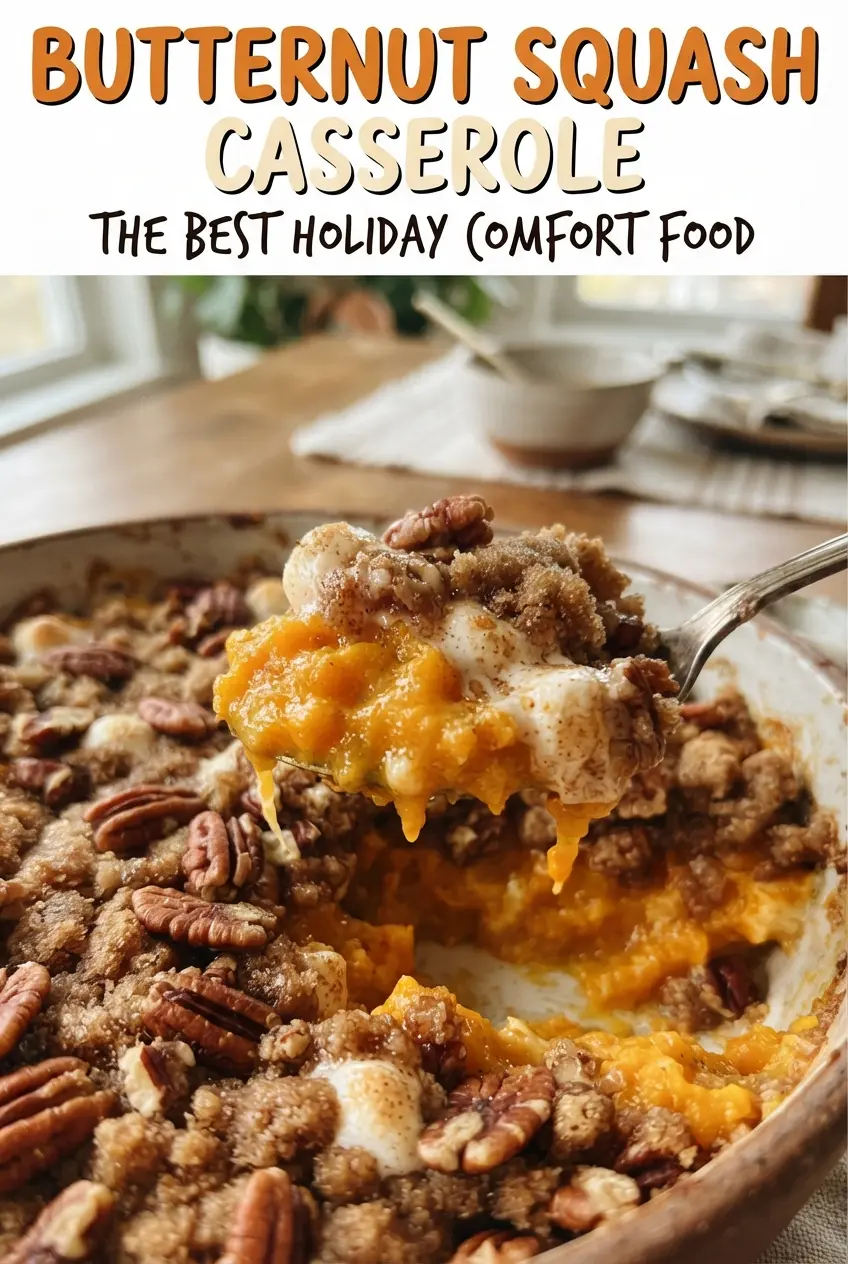
Butternut Squash Casserole
Ingredients
Equipment
Method
- Boil the cubed butternut squash in salted water for 15 minutes until very tender, then drain well.
- Preheat the oven to 350F and grease a 9x13-inch baking dish.
- Mash the hot squash with 1/4 cup butter, 1/4 cup brown sugar, eggs, milk, vanilla extract, ground cinnamon, and salt until smooth.
- Spread the smooth mashed squash mixture evenly into the greased baking dish.
- Mix the all-purpose flour, chopped pecans, remaining butter, and remaining brown sugar until you get a crumbly topping.
- Sprinkle the crumbly pecan topping over the squash in an even layer.
- Bake at 350F for 35 to 40 minutes until the topping is golden and the edges bubble.