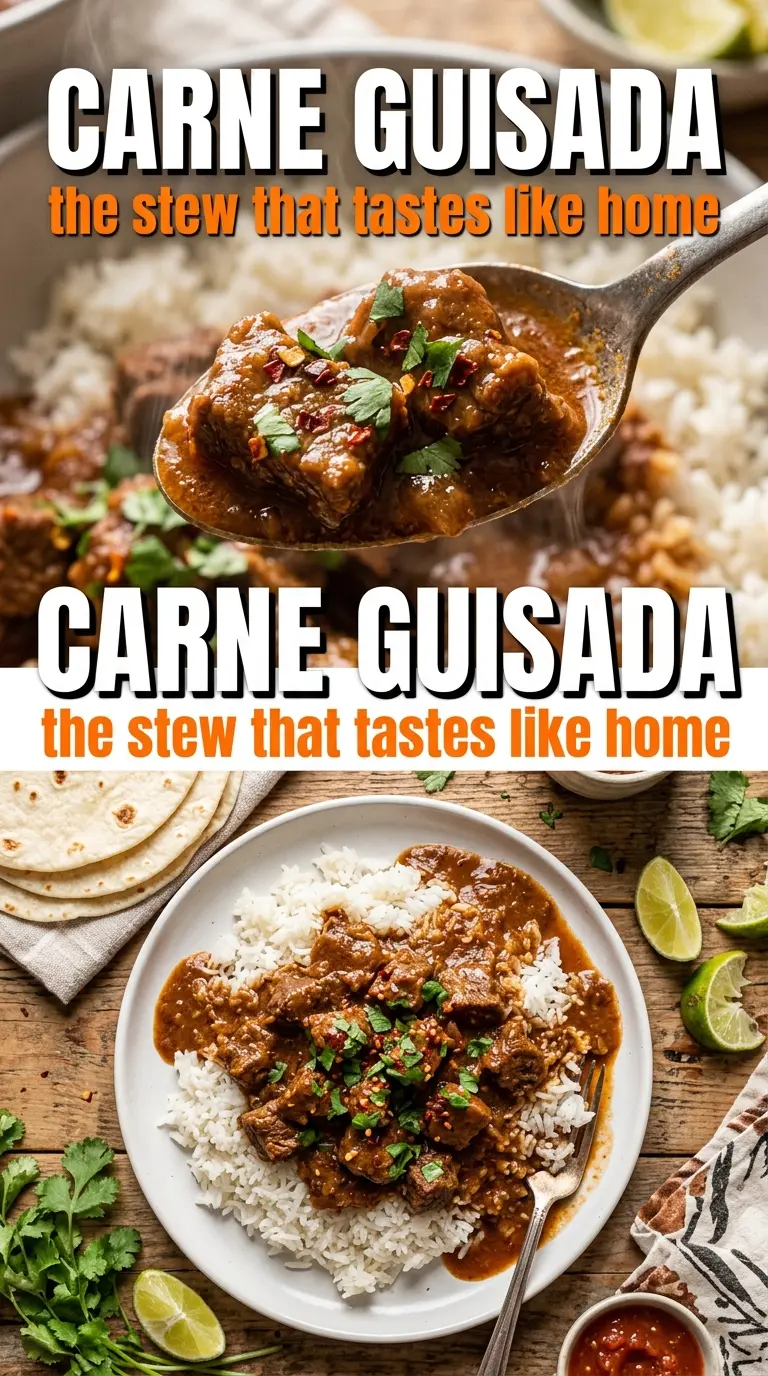
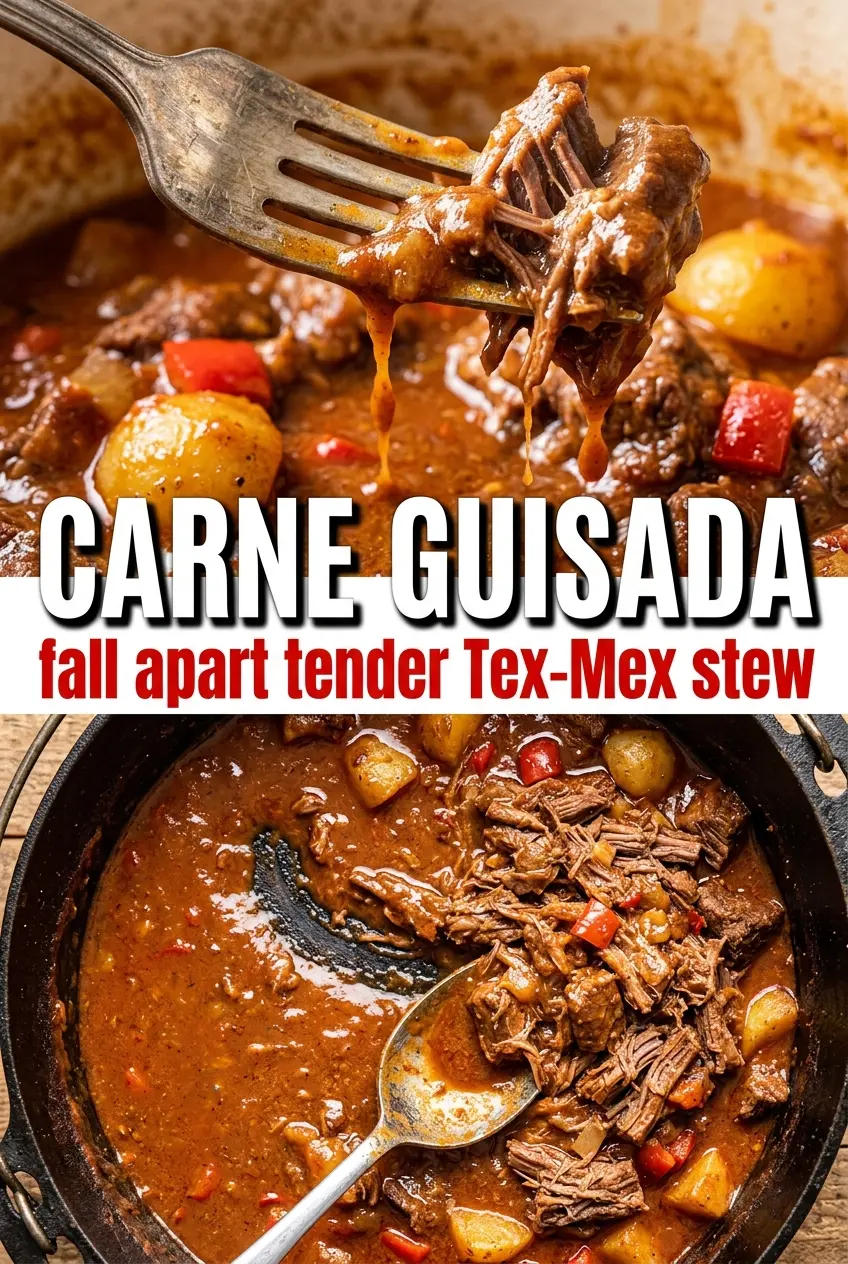
Carne guisada earns its place in the dinner rotation because the gravy turns dark, savory, and spoon-coating while the beef cooks down into soft, shred-at-the-fork chunks. The potatoes aren’t the star here, but they soak up the chile-spiced broth and turn every bite into something comforting and substantial. It’s the kind of dish that tastes like it took all day, even though the active work is mostly done in the first 20 minutes.
The key is building flavor in layers. Browning the beef in batches gives the gravy its deep base, and that flour stirred into the onions and peppers helps the liquid thicken into the right texture instead of staying thin and brothy. Keep the simmer low once everything goes back in; a hard boil tightens the meat and can make the gravy greasy instead of velvety.
Below you’ll find the exact cues I look for when the beef is ready, plus a few swaps that still keep the dish in carne guisada territory. If you’ve ever ended up with watery gravy or chewy stew meat, the notes here will help.
The gravy thickened up beautifully and the beef was tender after about 2 hours on low. I served it in flour tortillas with lime like you suggested, and my husband said it tasted just like the carne guisada he gets from his favorite taqueria.
Save this carne guisada for the nights when you want tender beef, rich gravy, and warm flour tortillas in one pot.
The Part Where the Gravy Stops Tasting Thin
The mistake most people make with carne guisada is treating the simmer like a shortcut instead of the actual engine of the recipe. The beef needs time for the connective tissue to soften, and the flour needs time to cook into the liquid so the gravy tastes rounded instead of raw. If you rush either part, you end up with meat that is still tough and a sauce that tastes dusty.
Browned bits matter here more than in a lot of stews. They dissolve into the broth and tomatoes and give the gravy its darker color and deeper flavor. If the bottom of the pot looks a little stuck after browning, that’s a good sign; those browned spots are what make the sauce taste like carne guisada instead of plain beef and vegetables.
- Beef chuck — Chuck has the fat and connective tissue that turn tender over a long, slow simmer. Leaner stew beef can work, but it dries out faster and doesn’t give you the same silky texture.
- Flour — This is what gives the gravy body. Let it cook for a full minute with the vegetables so the finished sauce doesn’t taste pasty.
- Diced tomatoes — They add acidity and help the gravy taste balanced, not heavy. Use canned diced tomatoes with their juice; draining them removes part of what makes the braise taste complete.
- Flour tortillas — Soft tortillas are the right way to serve this. Corn tortillas will work in a pinch, but they change the meal from the classic Tex-Mex style into something else.
What Each Ingredient Is Actually Doing in This Recipe
- Primary ingredient (the star) — Quality matters most. Choose the best you can find.
- Cooking medium (oil, butter, or broth) — This carries flavors and prevents dryness.
- Seasonings (salt, pepper, spices, herbs) — Layer flavors so nothing overpowers. Build depth gradually.
- Aromatics (garlic, onion, herbs) — Cook with fat to bloom flavors. Become the foundation.
- Supporting ingredients — Complement the main ingredient without overpowering it.
- Sauce or liquid (if applicable) — Brings flavors together. Balance richness with acid.
- Acid (lemon, vinegar, wine, or other) — Brightens and prevents flat-tasting results.
- Final finish (garnish, glaze, or sauce) — Prevents one-dimensional taste and adds visual appeal.
How to Build the Braise So the Beef Turns Tender
Season and Sear in Batches
Season the beef before it hits the pot so the surface tastes like more than plain meat. Brown it in batches over high heat until you get a deep brown crust on at least two sides, then pull it out and keep going. If you crowd the pot, the beef steams and you lose the fond that makes the gravy taste rich. The goal is color, not cooking it through.
Cook the Vegetables in the Beef Drippings
Onion and bell pepper should soften and pick up a little color from the pot, not just sit there and sweat. Stir in the garlic at the end so it stays fragrant instead of bitter. When you dust the flour over the vegetables, keep stirring for a full minute so it loses its raw taste and starts to smell slightly nutty.
Simmer Low and Let Time Do the Work
Once the broth, tomatoes, and beef go back in, bring the pot only to a gentle simmer. You want small bubbles breaking the surface, not a hard boil. Cover it and leave it alone until the beef gives easily when pressed with a spoon and the gravy coats the back of that spoon. If the liquid reduces too fast, lower the heat; if it’s still thin near the end, uncover for the last 15 minutes and let it tighten naturally.
Add Potatoes for a Heartier Bowl
Stir in peeled potato chunks during the last 35 to 40 minutes so they stay intact and absorb the gravy. Add them too early and they collapse before the beef is tender. This version turns the dish into a fuller one-pot meal without changing the flavor that makes carne guisada recognizable.
Make It Gluten-Free
Swap the flour for a cornstarch slurry at the end if you need the dish gluten-free. Mix 1 tablespoon cornstarch with 2 tablespoons cold water, stir it into the simmering pot, and cook for a few minutes until the gravy turns glossy and thick. The flavor stays the same, but the sauce will look a little more polished and less rustic.
Use a Different Cut When Chuck Isn’t Available
Beef shoulder or brisket can stand in for chuck if that’s what you have. Brisket takes a little longer to soften, while shoulder usually lands close to the same timing. Avoid very lean cuts; they dry out before the gravy has time to develop.
Storage and Reheating
- Refrigerator: Store for up to 4 days. The gravy thickens as it chills, which helps the flavor but makes the pot look tighter the next day.
- Freezer: It freezes well for up to 3 months. Cool it completely first, then pack it into airtight containers with a little room at the top for expansion.
- Reheating: Reheat gently on the stove over low heat with a splash of broth or water. A hard boil can make the beef stringy and push the gravy toward greasy.
Answers to the Questions Worth Asking
Carne Guisada
Ingredients
Equipment
Method
- Season the beef cubes generously with salt, black pepper, cumin, chili powder, and garlic powder. Set a heavy pot over high heat and let the oil get hot until it shimmers.
- Brown the beef in batches in the hot oil in the heavy pot over high heat—do not crowd—then remove and set aside. Brown on each side until darkly seared, about 3–5 minutes total per batch, and ensure the bottom stays sizzling.
- In the same pot, sauté the diced onion and green bell pepper for 5 minutes. Cook until softened and slightly translucent, adjusting heat so it stays at a steady sizzle.
- Add the minced garlic and cook 1 more minute. Stir constantly until fragrant but not browned, about 30–60 seconds, with visible golden edges.
- Sprinkle the flour over the vegetables and stir for 1 minute. Keep stirring until the flour smells toasted and forms a thick coating.
- Add the beef broth and diced tomatoes, scraping up the browned bits from the bottom of the pot. Stir until the gravy looks smooth and medium-brown, no dry flour streaks.
- Return the browned beef to the pot and add the oregano. Cover and simmer on low for 1.5–2 hours, until the beef is extremely tender and the gravy has thickened to a spoon-coating consistency.
- Ladle the carne guisada into warm bowls and serve with warm flour tortillas, fresh cilantro, and lime. The beef should look glossy in the dark gravy, with tortillas that steam when filled.