Golden seared chicken tucked into a silky spinach cream sauce is the kind of dinner that looks restaurant-level without asking for much from you at the stove. The chicken stays juicy, the sauce turns pale and glossy instead of heavy, and the spinach melts in just enough to give every bite a little freshness. Parmesan and a hit of lemon keep the whole dish from tasting flat, which is the difference between a decent cream sauce and one people keep spooning onto the last piece of bread.
What makes this version work is the order: hard sear first, then garlic for a brief bloom, then white wine to pull up the browned bits that carry the flavor. After that, the cream and broth simmer just long enough to thicken before the cheese goes in. That timing matters. If the heat is too high when the Parmesan lands, the sauce can turn grainy instead of smooth.
Below you’ll find the small details that matter most, including how to keep the sauce silky, what to swap if you need a dairy-free version, and the one reheating move that keeps the chicken from drying out.
The sauce thickened up beautifully and stayed silky even after I added the Parmesan. My husband said the chicken tasted like something from a nice Italian restaurant, and the lemon at the end made it taste bright instead of heavy.
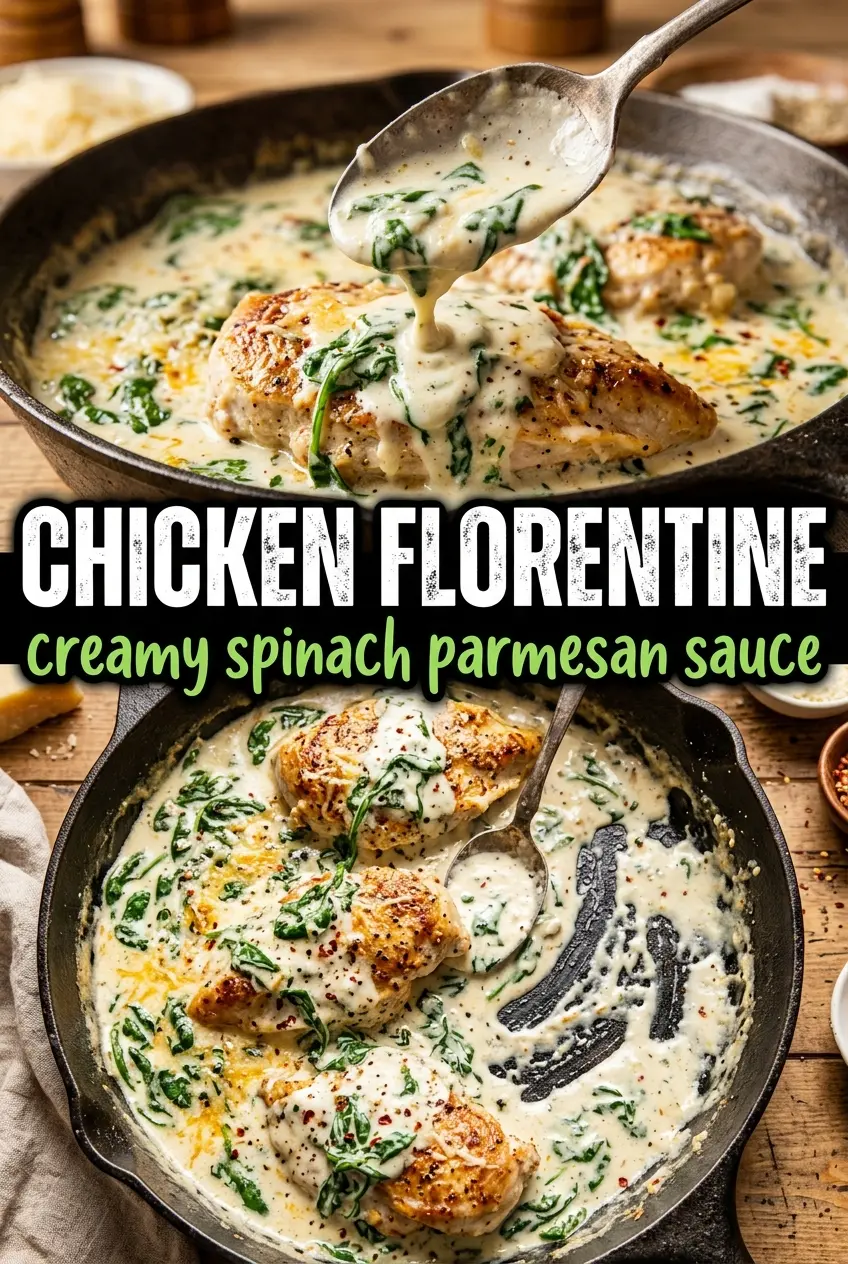
Save this Chicken Florentine for the nights when you want a silky white wine cream sauce with seared chicken and spinach in one skillet.
The Sear Is What Gives This Florentine Its Restaurant Finish
The biggest mistake with chicken Florentine is rushing the first stage and crowding the pan. If the chicken steams instead of searing, you lose the browned bits that give the sauce its depth. A proper sear gives you a crust that stays intact when the sauce goes over it, and it also seasons the pan in a way no shortcut can copy.
Keep the skillet hot enough that the chicken sizzles the second it hits the oil. If the pieces are thick on one end, press them lightly so they cook more evenly and don’t burn before the center is done. Pull the chicken when it reaches 165°F, then let it rest while you build the sauce in the same pan.
What Each Ingredient Is Actually Doing in the Sauce

- Chicken breasts — Boneless, skinless breasts give you a clean canvas for the sauce and cook fast enough for a weeknight. If yours are very thick, split them or pound them to an even thickness so the outside doesn’t overcook before the center reaches temperature.
- Dry white wine — This is what loosens the browned bits from the pan and gives the sauce a little edge so it doesn’t taste like straight cream. Use a wine you’d actually sip; a cheap cooking wine tastes flat here. If you don’t cook with wine, use extra chicken broth plus a small splash of lemon juice, though the sauce will be a little less layered.
- Heavy cream — This is what makes the sauce rich and stable. Half-and-half can work in a pinch, but it needs a gentler simmer and won’t thicken as luxuriously. Don’t boil it hard or it can separate before the Parmesan melts in.
- Parmesan — Freshly grated Parmesan melts into the sauce much more smoothly than the pre-shredded kind, which often has anti-caking agents. If you want the sauce velvety, grate it yourself. Add it off the highest heat so it blends instead of clumping.
- Baby spinach — Fresh baby spinach wilts fast and keeps the dish light. Mature spinach works too, but it should be chopped and cooked a little longer to soften the stems. Frozen spinach isn’t my first choice because it releases extra water and can thin the sauce.
- Lemon juice and zest — These are the quiet fix that keeps the cream sauce from tasting heavy. The zest gives you aroma; the juice adds brightness. Add both at the end so the flavor stays fresh instead of fading in the simmer.
Building the Sauce So It Stays Silky
Cooking the Chicken First
Season the chicken generously before it touches the pan. Salt, pepper, garlic powder, and Italian seasoning should cling to the surface, not disappear into a wet coating. Sear in olive oil over medium-high heat until the outside is deeply golden and the chicken releases easily from the pan. If it sticks, it needs another minute.
Turning Brown Bits Into Flavor
Once the chicken is out, add the garlic and stir just until fragrant, about 30 seconds. Then pour in the wine and scrape the pan bottom well; those browned bits dissolve into the sauce and give it the savory backbone it needs. Let the wine simmer long enough to lose the raw alcohol smell before the cream goes in.
Finishing the Cream Sauce
Add the cream and broth and let the sauce bubble gently until it lightly coats a spoon. If it boils hard, it can reduce too quickly or split once the cheese is added. Stir in Parmesan off a raging simmer, then add lemon juice, zest, and spinach. The spinach should collapse in a minute or two, and the sauce should look glossy, not oily.
Bringing the Chicken Back
Return the chicken to the skillet and spoon sauce over the top so it reheats without drying out. Let it warm through in the sauce for a minute or two, just until the center is hot. Finish with parsley and a little lemon. That last fresh note is what keeps the dish from feeling heavy on the plate.
How to Adapt Chicken Florentine Without Losing the Good Parts
Dairy-Free Version with Coconut Cream
Use unsweetened coconut cream instead of heavy cream and skip the Parmesan, then add a little extra lemon and a pinch of nutritional yeast if you want more savory depth. The sauce will be richer and slightly sweeter, so keep the lemon bright and the seasoning assertive.
Gluten-Free Serving Ideas
The recipe itself is naturally gluten-free as written, as long as your broth is certified gluten-free. Serve it over rice, mashed potatoes, or gluten-free pasta so the sauce has something to cling to.
Make It with Chicken Thighs
Boneless thighs give you a juicier, slightly richer version of the same dish. They need a few extra minutes in the pan, and the sauce will taste a little more savory because thighs bring more fat to the skillet.
Storage and Reheating
- Refrigerator: Store in an airtight container for up to 3 days. The sauce will thicken as it sits, which is normal.
- Freezer: It’s not the best freezer meal because cream sauces can separate after thawing. If you freeze it, expect a slightly grainier texture and thaw it overnight in the fridge.
- Reheating: Warm gently on the stove over low heat with a splash of broth or cream. Microwaving on high is the fastest way to overcook the chicken and break the sauce.
Answers to the Questions Worth Asking
Chicken Florentine
Ingredients
Equipment
Method
- Season chicken breasts generously on both sides with salt, pepper, garlic powder, and Italian seasoning; pat lightly so the coating sticks.
- Heat olive oil in a large skillet over medium-high heat until shimmering, then sear chicken for 5-6 minutes per side until golden and cooked through to 165°F; set aside.
- Cook minced garlic in the same pan for 30 seconds, stirring just until fragrant and pale golden.
- Deglaze with dry white wine and simmer for 2 minutes, scraping up the browned bits until the liquid looks slightly reduced.
- Add heavy cream and chicken broth, then simmer for 4-5 minutes until slightly thickened and silky.
- Stir in Parmesan, lemon juice, and lemon zest, mixing until the cheese melts and the sauce is smooth and bright with lemon flecks.
- Add baby spinach and stir until wilted and glossy, with the leaves fully darkened.
- Return chicken to the pan and spoon the sauce over each breast so they’re coated on top.
- Garnish with fresh parsley and lemon, then serve the chicken over pasta or rice with the spinach-flecked sauce pooling around it.