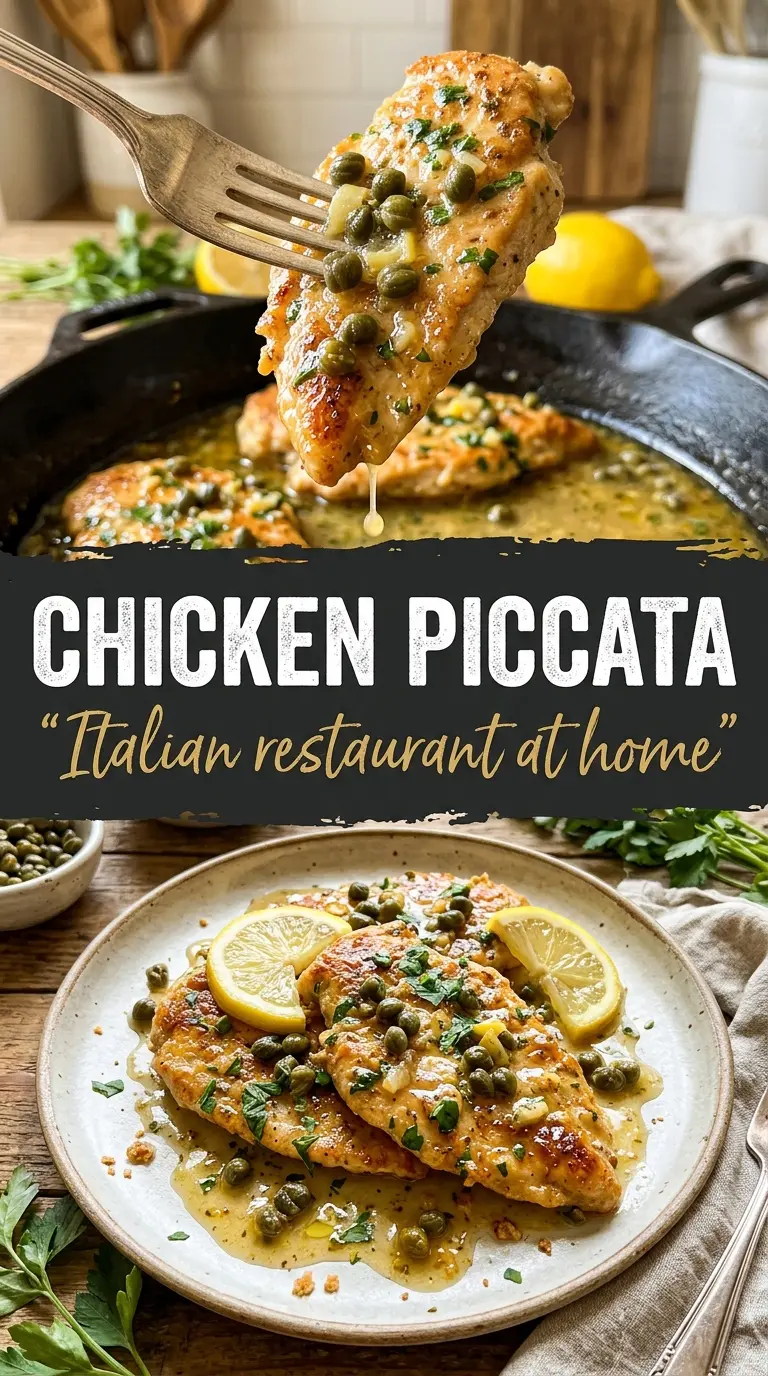
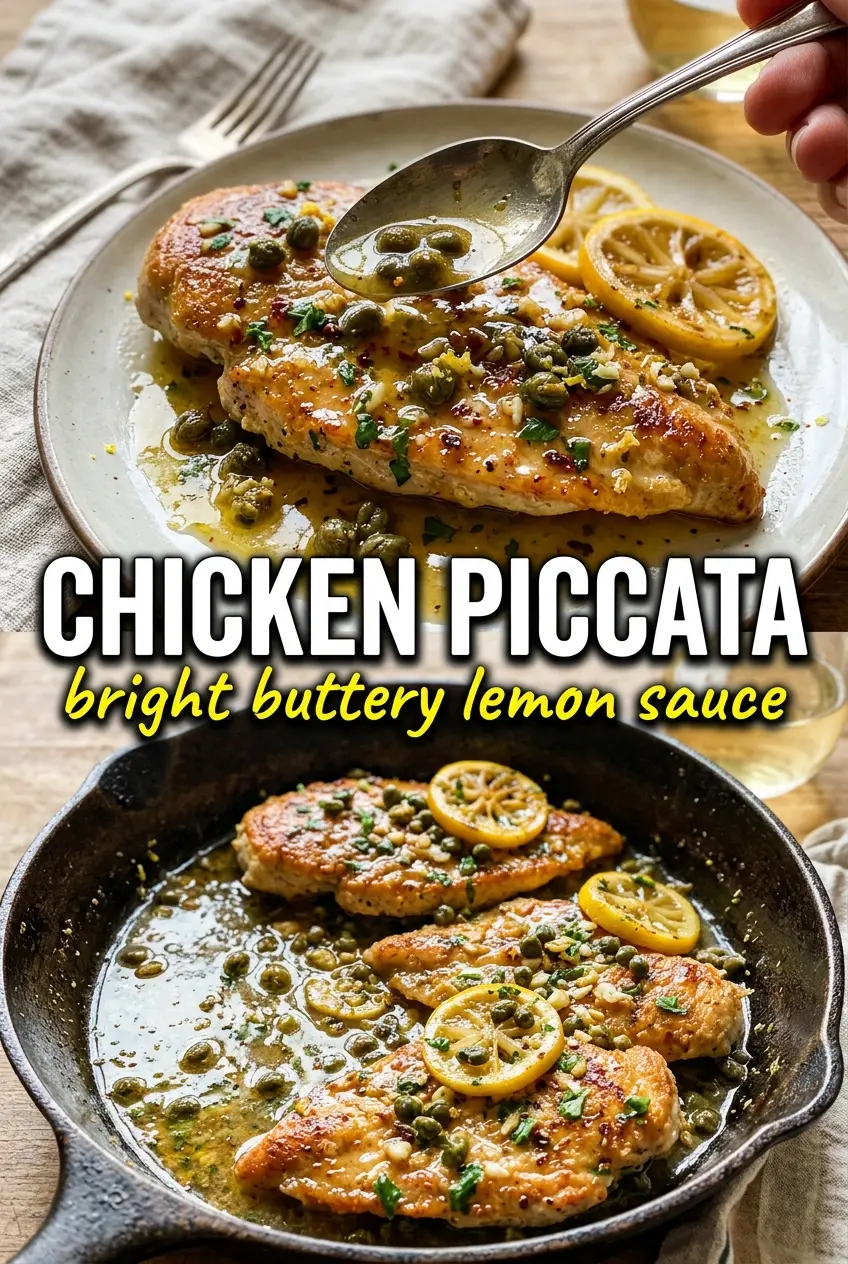
Chicken piccata lives on the kind of bright, glossy pan sauce that makes a simple chicken dinner feel finished and worth sitting down for. The cutlets stay thin and tender, the edges pick up a light golden crust, and the lemon-butter-caper sauce clings to every bite without turning heavy.
What makes this version work is the order of the pan work. The chicken gets a quick flour dredge for color and just enough body to help the sauce cling, then the fond in the skillet gets loosened with white wine before the broth and lemon go in. That means the sauce tastes built, not dumped together. A final swirl of cold butter off the heat gives it that silky finish without splitting.
Below, I’m walking through the parts that matter most: how to keep the cutlets juicy, how to get a sauce that tastes sharp but not harsh, and what to change if you need to skip the wine or make it gluten-free.
The sauce thickened into this glossy lemon-butter finish and the capers kept every bite interesting. I used cutlets like you said and the chicken stayed juicy instead of drying out.
Save this chicken piccata for the nights when you want a bright lemon-caper pan sauce that still feels fast enough for a weeknight.
The Reason the Sauce Stays Bright Instead of Breaking
The sauce in chicken piccata has a narrow window where it tastes silky, sharp, and balanced. If the heat stays too high after the lemon goes in, the sauce can turn harsh and the butter can separate. The fix is simple: let the wine and broth reduce first, then take the pan off the heat before swirling in the cold butter.
That last step matters more than people think. Cold butter melts into the liquid and helps it emulsify, which gives you that glossy finish that clings to the chicken instead of pooling like thin broth. The capers and lemon slices also need a few minutes in the sauce to soften and infuse before the chicken goes back in.
What Each Ingredient Is Actually Doing in This Pan
- Chicken breasts — Halving them into thin cutlets is what makes this dish cook quickly and stay tender. Thick chicken breasts take too long and the flour coating gets dark before the center cooks through.
- Flour — This is more than a coating. It helps the chicken brown evenly and gives the sauce just enough body to thicken lightly as it simmers.
- Dry white wine — Wine adds acidity and depth that broth alone can’t match. If you skip it, use extra chicken broth with a small splash of lemon juice, but the sauce will taste a little flatter.
- Capers — These bring the briny bite that makes piccata taste like piccata. Drain them well, but don’t rinse them unless they’re extremely salty, or you’ll wash away the seasoning you want.
- Cold butter — The final swirl off the heat gives the sauce its sheen. Soft or melted butter won’t help the same way, and if the pan is boiling, the sauce is more likely to split.
Getting the Chicken Browned Before the Sauce Takes Over
Cutlets and Dredging
Season the chicken well before it touches the flour. That seasoning has to happen early or the crust tastes flat. Coat the cutlets lightly, then shake off the excess so the flour stays thin; a heavy layer turns pasty instead of crisp.
Pan-Frying in Batches
Heat the oil and butter until the butter foams, then lay the chicken in without crowding the pan. If the pieces touch, they steam and lose that light crust. Cook until the bottoms are deep golden and the cutlets release easily from the skillet, then flip and finish the second side. Pull them out as soon as they’re cooked through; overcooked piccata goes dry fast.
Building the Sauce in the Same Skillet
After the chicken comes out, the pan should have browned bits stuck to the bottom. That’s the flavor base, so don’t scrub it away. Add the garlic just long enough to smell fragrant, then pour in the wine and scrape until the pan looks mostly clean. Once the broth, lemon, capers, and lemon slices go in, simmer until the liquid reduces by about a third and tastes bright but not sharp.
Finishing with Butter and Parsley
Take the skillet off the heat before adding the last butter. Swirl it in until the sauce turns glossy and slightly thicker, then return the chicken and spoon the sauce over the top. Parsley goes on at the end for color and a fresh note that cuts through the richness. If the sauce seems too thin, let it rest for a minute; it thickens a touch as it cools.
How to Adapt This When You Need a Different Path
Gluten-Free Chicken Piccata
Swap the all-purpose flour for a fine gluten-free flour blend or rice flour. Rice flour gives the chicken an especially crisp edge and still helps the sauce lightly thicken, but it browns a little faster, so watch the skillet closely.
No-Wine Version
Use extra chicken broth and add another teaspoon or two of lemon juice to replace the wine’s brightness. You’ll lose a little depth, but the sauce still lands in the right place if you let the broth reduce enough before finishing with butter.
Lighter Chicken Piccata
Use 2 tablespoons of butter in the pan instead of 4, then finish the sauce with just one tablespoon off the heat. The result is less rich but still glossy, with the lemon and capers standing out a little more.
Make It Ahead
Cook the chicken and sauce separately, then store them together once cooled. Reheat gently so the butter sauce doesn’t separate; a hard boil is the fastest way to turn it greasy.
Storage and Reheating
- Refrigerator: Store leftovers in an airtight container for up to 3 days. The chicken stays good, but the crust softens in the sauce.
- Freezer: It freezes, but the sauce can separate a little on thawing. If you freeze it, cool completely first and thaw overnight in the fridge.
- Reheating: Warm it slowly in a covered skillet over low heat with a splash of broth. High heat breaks the sauce and makes the chicken tough.
Questions I Get Asked About This Recipe
Chicken Piccata
Ingredients
Equipment
Method
- Season the chicken cutlets with salt and pepper and dredge lightly in flour, shaking off the excess.
- Lay the dredged cutlets on a plate so they’re ready to cook in batches.
- Heat the olive oil and 2 tablespoons butter in a large skillet over medium-high heat until shimmering.
- Cook the chicken in batches for 3-4 minutes per side, until golden and cooked through, then remove and set aside.
- Add the garlic and cook for 30 seconds, then pour in the white wine and scrape up the browned bits.
- Simmer for 2 minutes to reduce slightly.
- Add the chicken broth, lemon juice, capers, and lemon slices, then simmer for 4-5 minutes until the sauce reduces by a third.
- Remove from heat and swirl in the remaining 2 tablespoons cold butter until the sauce looks glossy.
- Return the chicken to the skillet and spoon the sauce over each cutlet.
- Garnish with chopped fresh parsley and serve immediately.