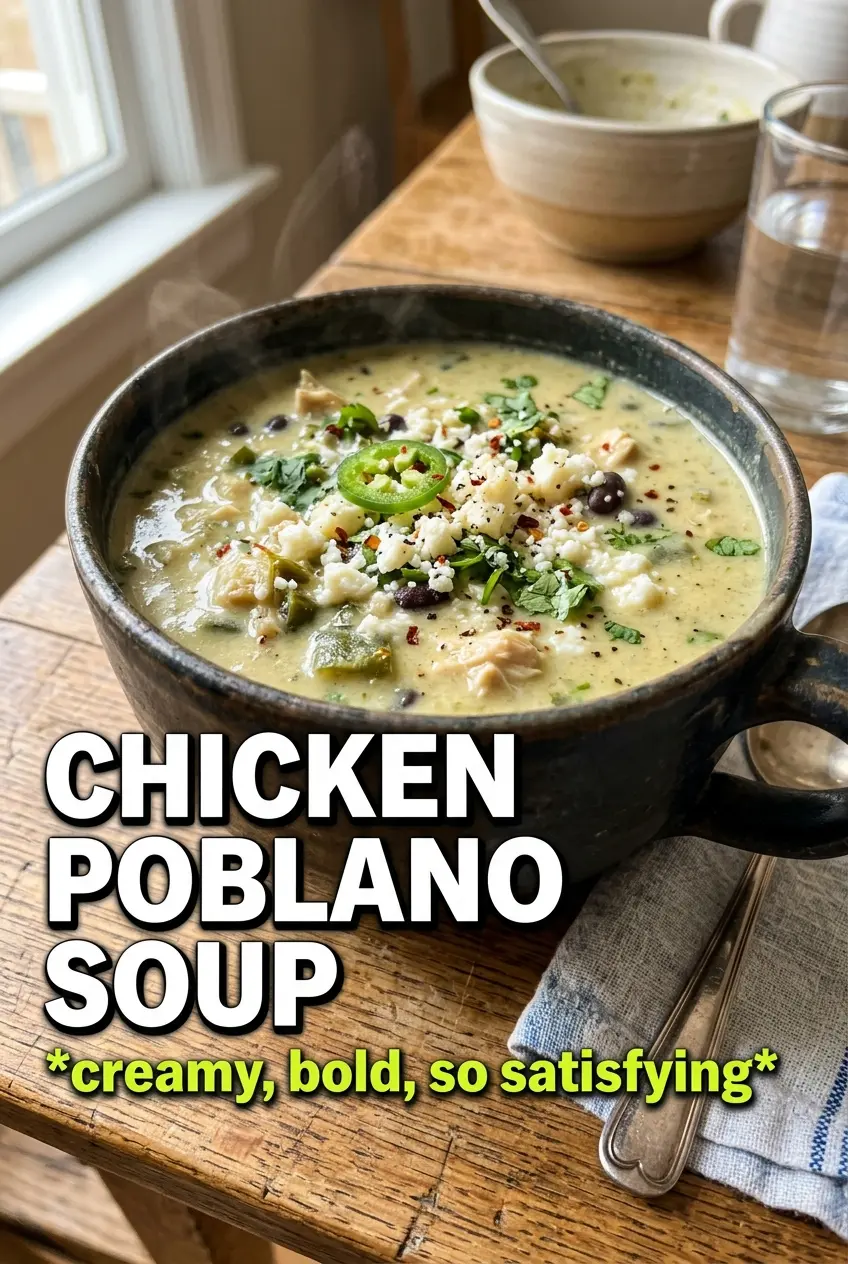
Smoky poblano peppers and shredded chicken turn this soup into a bowl that feels rich without getting heavy. The broth comes out silky and a little creamy, but it still has enough body to hold the corn, green onions, and little strips of roasted pepper in every spoonful. The lime at the end wakes everything up, which keeps the cream from tasting flat.
Roasting the poblanos first matters. That char gives the soup its deep, slightly smoky backbone, and blending only part of the soup gives you a thicker base without losing the texture of the chicken and corn. I also add the cream after the broth has had time to simmer, not at the start, so it stays smooth and doesn’t get scorched on the bottom of the pot.
Below, I’ll show you how to keep the poblano flavor balanced, when to blend for the best texture, and the swaps that still keep this soup tasting like the real thing.
The broth turned out silky and the roasted poblanos gave it just enough smoke without taking over. I loved that the soup stayed chunky after blending part of it, and the lime at the end made the whole pot taste brighter.
Save this Chicken Poblano Soup for the nights when you want a smoky, creamy bowl with roasted peppers and shredded chicken.
The Trick to Keeping Poblano Soup Smoky Instead of Flat
Roasted poblano soup can go dull fast if the pepper flavor gets buried under too much cream or too much broth. The fix is simple: use enough roasted poblanos to taste them, then blend only part of the soup so the base feels thick and the peppers still show up in the bowl. That’s what keeps the soup from tasting like generic chicken chowder with a little chili powder stirred in.
The other thing people miss is the lime. It doesn’t make the soup sour; it sharpens the roasted pepper flavor and keeps the cream from feeling heavy. Add it at the end, after the chicken has warmed through, because simmering citrus too long can flatten the brightness you want.
What Each Ingredient Is Doing in the Pot

- Poblano peppers — These are the whole point of the soup. Roasting them first adds smoke and sweetness, and peeling them keeps the texture from turning bitter or leathery.
- Chicken broth — A decent broth matters here because it carries the pepper flavor. Homemade or low-sodium store-bought both work; if you use a salty broth, hold back on the final salt until the end.
- Heavy cream — This gives the soup its silky finish. Half-and-half works in a pinch, but the broth will be thinner and less plush.
- Cumin, smoked paprika, and chili powder — These season the soup without taking it away from the poblanos. Smoked paprika is the bridge between the roasted peppers and the creamy base, so don’t skip it if you want that warm, smoky note.
- Lime juice — Fresh lime is the last bit of balance the soup needs. Bottled juice tastes harsh here and can dull the roasted flavor.
- Corn and shredded chicken — Corn adds sweetness and texture, while the chicken makes the soup feel complete. Rotisserie chicken works well if you want to save time, but shred it into bite-size pieces so it doesn’t sit in big dry chunks.
Building the Soup So the Cream Stays Smooth
Roast the Poblanos Until the Skin Blisters
Put the peppers under the broiler until the skins are blackened and blistered on most sides. Don’t rush this stage; the char is where the soup gets its smoky depth. Once they come out, cover them so they steam for a few minutes, which loosens the skin and makes peeling easier. If you skip that steam time, you’ll end up scraping stubborn bits of skin instead of clean pepper flesh.
Cook the Onion and Spices Before Anything Else
Melt the butter and cook the onion until it turns soft and translucent, not browned. Then add the garlic and spices and let them bloom for about two minutes, just until the kitchen smells warm and toasted. If the garlic starts to darken, the heat is too high and the soup will pick up a bitter edge. Pull the pan back for a moment if needed.
Simmer, Blend, Then Add the Cream
Add the broth, corn, and only half the poblanos first, then simmer until the flavors come together. Blend part of the soup, not all of it, so you get a creamy body with enough texture left behind to feel like soup, not puree. Stir in the cream after blending and keep the heat low. High heat after the cream goes in is the fastest way to make the soup look broken or grainy.
Finish with Chicken, Lime, and the Remaining Poblanos
Stir in the shredded chicken, the rest of the diced poblanos, and the lime juice, then let everything warm through for a few minutes. This is where the soup gets its final texture: tender chicken, little bites of pepper, and a bright finish at the end. Taste it now and season with salt and pepper. If it tastes flat, it usually needs a little more salt before it needs more spice.
Three Useful Ways to Work This Soup Around What You Have
Make it dairy-free
Swap the butter for olive oil and use full-fat coconut milk instead of cream. The soup will still be creamy, but the finish will lean a little sweeter and less neutral than heavy cream. If that bothers you, use an unsweetened plain oat cream if you can find one.
Use rotisserie chicken for a faster pot
Rotisserie chicken cuts the cook time without changing the soup’s structure. Add it at the end just long enough to heat through, since already-cooked chicken can turn stringy if it simmers hard. This is the easiest way to get dinner on the table in under an hour.
Make it a little thicker
Blend a larger portion of the soup if you want a thicker, more chowder-like bowl. You can also simmer it uncovered for a few extra minutes before adding the cream, which concentrates the broth without changing the flavor. Just don’t overblend after the chicken goes in, or the texture gets pasty.
Storage and Reheating
- Refrigerator: Store in an airtight container for up to 4 days. The soup thickens as it sits, so expect a slightly denser texture the next day.
- Freezer: It freezes, but the cream can separate a bit when thawed. If you want to freeze it, do so before adding the cream, then stir the cream in after reheating.
- Reheating: Warm it gently on the stove over low heat, stirring often. Don’t boil it hard or the cream can look grainy and the chicken can dry out.