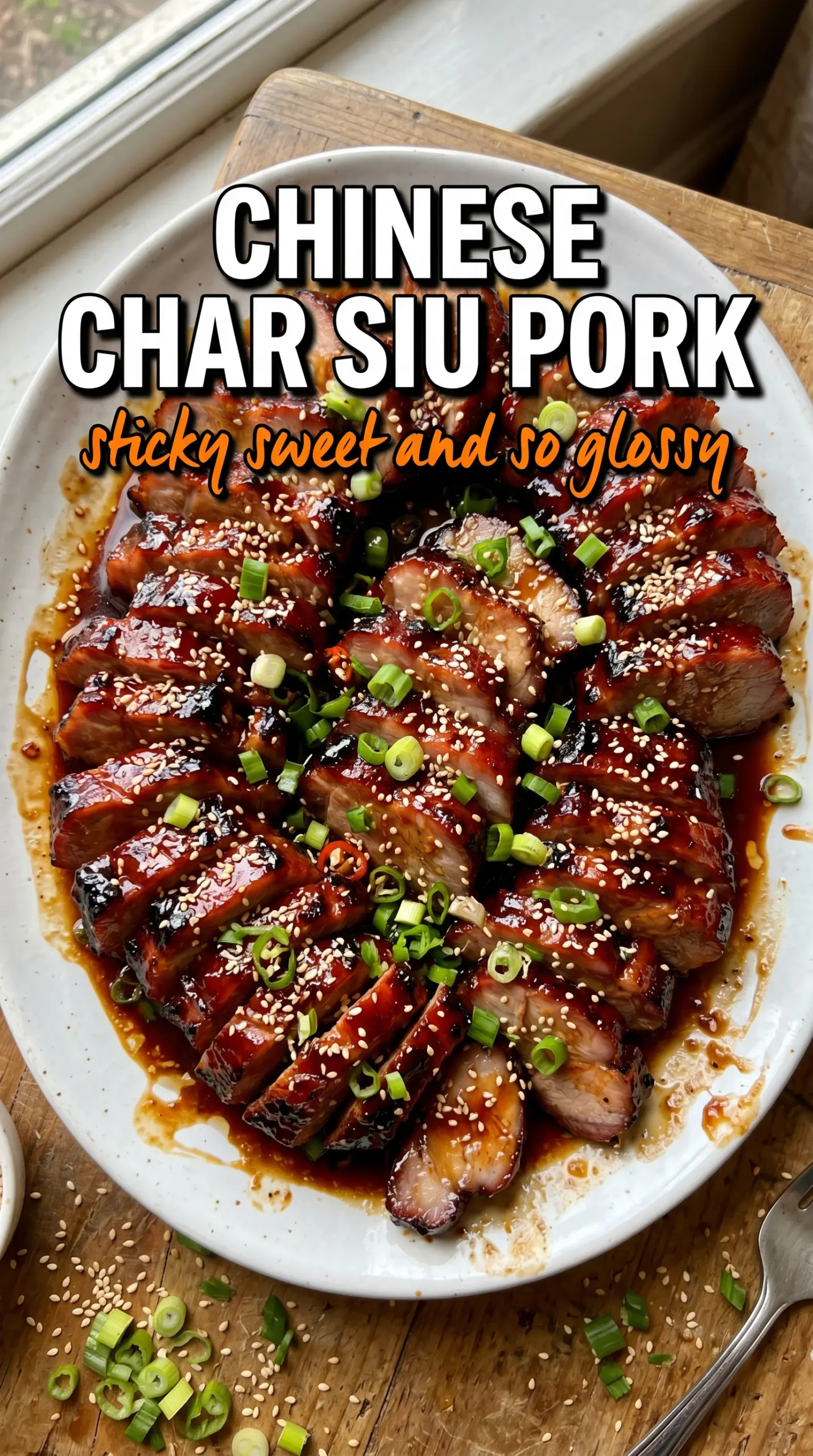
Char siu comes out best when the outside turns sticky and lacquered while the center stays juicy and tender. The sweet-salty glaze clings to every edge, and the broiler finish gives you that little bit of char that makes people keep picking at the slices before the platter even hits the table.
The trick is balancing sugar, honey, soy, and hoisin so the marinade tastes bold before it goes into the oven and still tastes balanced after it caramelizes. Pork shoulder gives you a richer, softer bite, while pork tenderloin cooks faster and slices neatly if you want something leaner. A short marinade will season the meat, but a longer rest gives the deep red color and the kind of flavor that reaches all the way through.
Below, I’ve included the details that matter most: which cut gives you the texture you want, how to keep the glaze from burning, and what to do if you want the classic takeout-style color without artificial dye.
The marinade made the pork taste like it came from a good Cantonese roast shop, and the edges caramelized without drying out. I used shoulder and the slices stayed tender even after reheating.
Save this char siu recipe for glossy, caramelized Chinese BBQ pork with a tender pink center.
The Glaze Has to Taste Strong Before It Hits the Oven
Char siu is one of those dishes that can look done before it actually is. The outside caramelizes fast because the marinade is packed with sugar, honey, and hoisin, so the real job is building enough flavor in the sauce to survive that heat without turning bitter. If the mixture tastes flat in the bowl, it will taste flatter once it has dried down on the pork.
That is why the balance of salty, sweet, and aromatic matters more here than a long ingredient list. The soy sauce and oyster sauce give depth, the hoisin brings body, and the five spice keeps the sweetness from tasting one-note. A little red coloring is optional, not essential, but it does give the finished pork that classic roast-shop look if that is what you want.
What Each Ingredient Is Actually Doing in This Recipe
- Primary ingredient (the star) — Quality matters most. Choose the best you can find.
- Cooking medium (oil, butter, or broth) — This carries flavors and prevents dryness.
- Seasonings (salt, pepper, spices, herbs) — Layer flavors so nothing overpowers. Build depth gradually.
- Aromatics (garlic, onion, herbs) — Cook with fat to bloom flavors. Become the foundation.
- Supporting ingredients — Complement the main ingredient without overpowering it.
- Sauce or liquid (if applicable) — Brings flavors together. Balance richness with acid.
- Acid (lemon, vinegar, wine, or other) — Brightens and prevents flat-tasting results.
- Final finish (garnish, glaze, or sauce) — Prevents one-dimensional taste and adds visual appeal.
What the Pork Cut Changes in the Final Bite
- Pork shoulder — This is the safer choice if you want juicy slices with a little richness. It holds onto moisture during roasting and stays tender even if the edges get dark. Trim off any thick exterior fat, but don’t chase every bit of marbling; that fat helps.
- Pork tenderloin — This cooks faster and slices neatly, which is handy if you want a leaner version. It can dry out if you push the roasting time too far, so watch the color instead of relying only on the clock.
- Hoisin sauce — This does more than sweeten. It gives the glaze body, shine, and that rounded savory note that keeps the pork from tasting like plain honey roast meat.
- Chinese rice wine or dry sherry — This adds aroma and helps loosen the marinade so it coats evenly. If you need a substitute, use dry vermouth or a splash of water plus a little extra soy sauce, but the flavor will be less layered.
Roasting the Pork Without Burning the Sugar
Building the Marinade
Whisk the marinade until the sugar dissolves and the mixture looks glossy rather than grainy. If the brown sugar stays clumped, it will stick to the pork unevenly and scorch in spots. The garlic should be finely minced so it perfumes the glaze instead of sitting in harsh little pockets on the surface. Coat the pork well and turn it a few times so every strip picks up the same amount of seasoning.
Letting the Pork Rest in the Glaze
Four hours is the minimum if you want the flavor to move beyond the surface. Overnight gives you a deeper, more even result and a slightly better red color. Keep the pork covered and cold, but don’t let it sit so long that the salt starts to change the texture into something ham-like; by the next day, you’re in the sweet spot. Turn the pork once or twice while it marinates if you can.
Roasting and Basting for Shine
Use a wire rack set over a foil-lined sheet so the pork roasts instead of stewing in its own marinade. The first roast sets the outside, then the flip and honey-brushed second roast build the lacquer. If the glaze starts to darken too quickly, lower the rack one level or tent the pork loosely with foil; sugar burns faster than meat finishes. The pork is ready when the edges are caramelized and the center still looks juicy, not dry and fibrous.
Finishing With a Quick Broil
The broiler is there for a final burst of color, not for cooking the meat through. Keep the tray close enough to brown the glaze, but stay nearby because the line between deep char and burned sugar is thin. Two to three minutes is usually enough. Let the pork rest before slicing so the juices settle and the glaze stays where it belongs.
Three Ways to Adjust the Recipe Without Losing the Char Siu Character
Dairy-Free and Naturally Gluten-Free
This recipe is already a good fit for both, as long as you use gluten-free soy sauce or tamari. Check the hoisin and oyster sauce labels too, since some brands hide wheat in the seasoning. The result stays rich and sticky without changing the cooking method at all.
Less Sweet, More Savory
Cut the honey back by a tablespoon and add a little more soy sauce if you want a deeper, saltier glaze. You will lose some shine and the finish will be a touch less lacquered, but the pork will still taste unmistakably like char siu instead of candied roast pork.
No Red Food Coloring
Leave it out completely if you prefer the natural color. The pork will still caramelize into a deep mahogany red-brown from the soy, hoisin, and honey. The flavor doesn’t change, only the classic roast-shop appearance does.
Storage and Reheating
- Refrigerator: Store sliced pork in an airtight container for up to 4 days. The glaze will firm up a bit, but the flavor deepens overnight.
- Freezer: It freezes well for up to 2 months. Wrap the slices tightly and freeze with a little extra sauce so the pork doesn’t dry out when thawed.
- Reheating: Warm it gently in a covered skillet over low heat with a spoonful of water or reserved glaze. High heat will dry the edges and make the sugar in the sauce harden.
Answers to the Questions Worth Asking
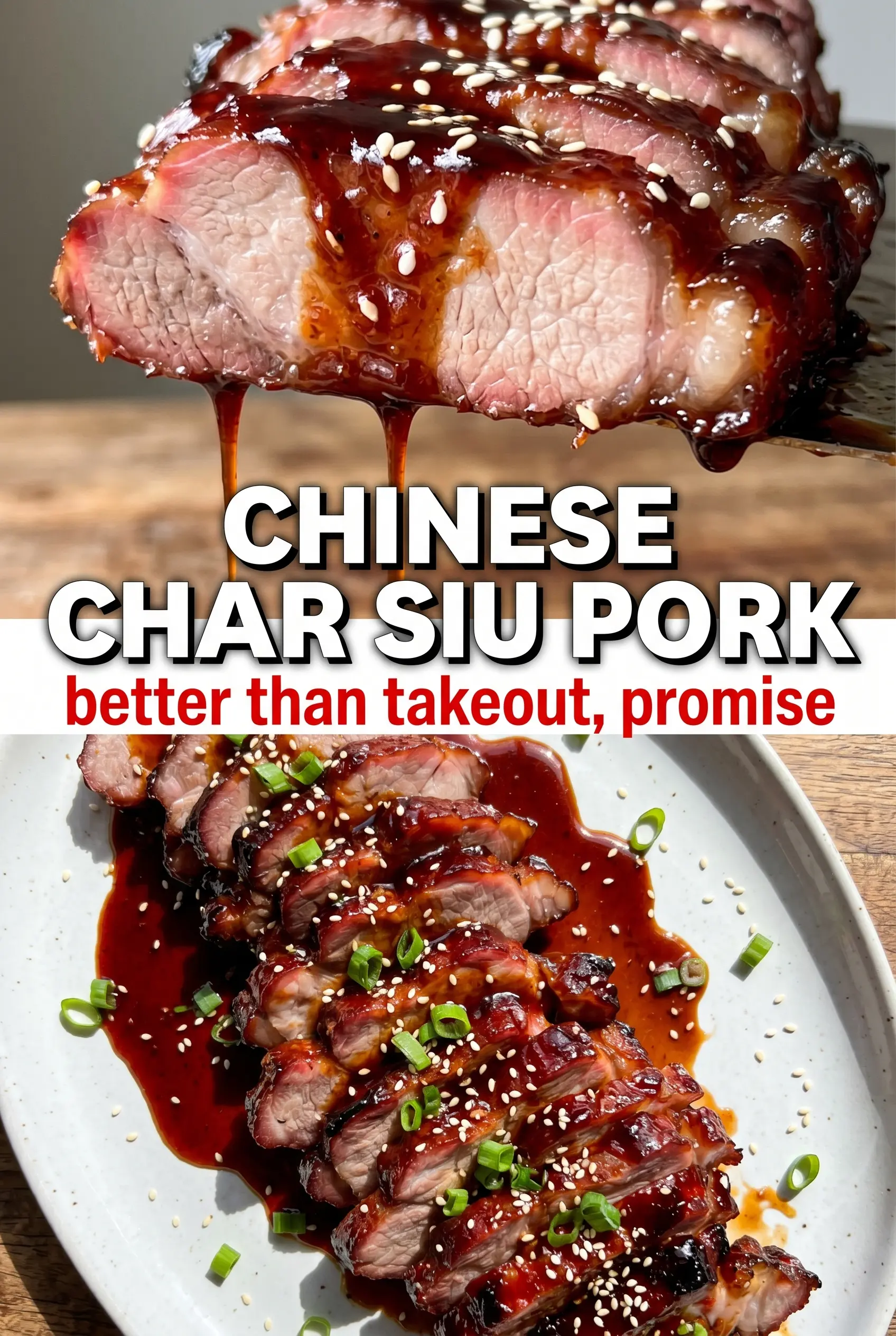
Chinese BBQ Pork (Char Siu)
Ingredients
Equipment
Method
- In a bowl, mix hoisin sauce, soy sauce, honey, Chinese rice wine or dry sherry, oyster sauce, brown sugar, sesame oil, five spice powder, red food coloring (optional), and minced garlic until smooth.
- Coat the pork strips thoroughly in the marinade, cover, and refrigerate for 4–8 hours or overnight.
- Preheat the oven to 425°F and place an oven rack in the upper third with a foil-lined baking sheet on the rack below to catch drips.
- Set a wire rack over the foil-lined baking sheet, place the marinated pork on the rack, and reserve the marinade.
- Roast the pork for 15 minutes to start caramelizing the surface.
- Flip the pork, then brush with the reserved marinade mixed with a spoonful of honey, and roast 12–15 more minutes until edges are caramelized.
- Broil for 2–3 minutes for deeper char while the glaze turns glossy mahogany-red.
- Slice the char siu and serve, letting the tender interior show through under the lacquered glaze.