Clear, savory broth, tender chicken, and slurpable noodles make Chinese chicken noodle soup the kind of bowl that disappears fast. The best versions taste light but still have depth, with ginger and garlic in the background, bok choy that stays green, and noodles that don’t turn mushy before you sit down to eat.
What makes this version work is timing. The chicken simmers just long enough to stay juicy, the noodles are cooked separately so they keep their texture, and the bok choy goes in at the end so it keeps a little bite. A splash of sesame oil and rice vinegar at the right moment keeps the broth from tasting flat.
Below, I’ve included the small details that matter most: how to keep the broth clear, when to season, and what to swap if you don’t have the exact noodles on hand. These are the things that keep this soup tasting like a proper bowl, not a watery shortcut.
The broth stayed clear and the noodles held up even after I ladled everything into bowls. The ginger and sesame oil came through beautifully, and the bok choy still had a little crunch.
Save this Chinese chicken noodle soup for the nights when you want clear broth, tender chicken, and noodles that stay springy in the bowl.
The Reason the Broth Stays Clear Instead of Clouding Up
Cloudy soup usually starts with a hard boil, not with the ingredients themselves. Once the broth is moving, keep it at a gentle simmer so the chicken cooks through without shredding into bits and the starch from the noodles never gets a chance to muddy the pot. Cooking the noodles separately matters here. If they go straight into the soup, they release starch, soak up too much broth, and turn the whole bowl heavy.
The other thing that keeps this soup clean-tasting is when you season it. Soy sauce and rice vinegar go in before the chicken, so the broth has time to taste balanced all the way through. White pepper goes on at the end because it loses some of its sharpness if it cooks too long.
What Each Ingredient Is Actually Doing in This Soup
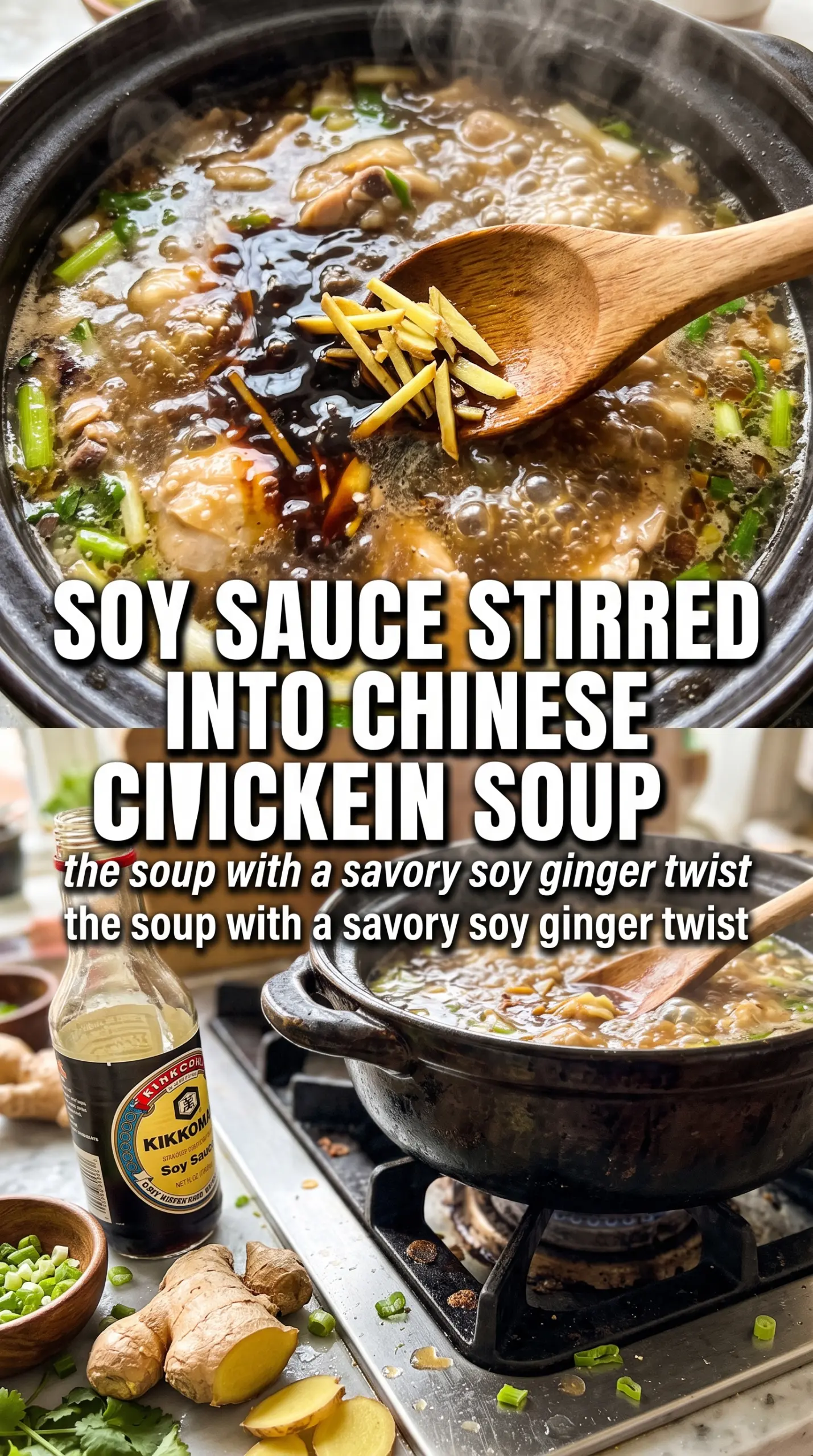
- Chicken breast — Thin slicing is what keeps it tender in a quick soup like this. Thick pieces need longer cooking, and by the time they’re done, the broth has usually lost the clean flavor you want. Chicken thighs work too if you prefer a richer bowl, but expect a slightly deeper, more opaque broth.
- Thin Chinese wheat noodles or rice noodles — These are light enough to match the broth without overwhelming it. Cook them separately and under no circumstances let them sit in the soup pot, or they’ll keep softening and drink up the broth as they stand.
- Ginger and garlic — These build the base in the pot, and fresh is worth using here. Powder won’t give you the same bright, savory heat. Grate the ginger finely so it melts into the broth instead of leaving stringy bits.
- Bok choy and shiitake mushrooms — Bok choy gives the soup freshness and a little crunch, while shiitakes bring an earthy note that makes the broth taste fuller. If you can’t find shiitakes, cremini mushrooms are the closest easy swap, though they’re a little milder.
- Sesame oil, soy sauce, and rice vinegar — This is the backbone of the broth’s flavor. Sesame oil should be fragrant, not old and bitter, and rice vinegar adds just enough lift to keep the soup from tasting one-note.
Building the Bowl Without Overcooking Anything
Wake Up the Broth First
Bring the broth to a simmer before you add the garlic and ginger, then let them cook long enough to scent the pot, about 5 minutes. You’re looking for a gentle bubble, not an aggressive boil. If the heat is too high, the garlic can turn harsh and the broth loses its clarity.
Cook the Chicken in the Liquid, Not the Panic
Add the sliced chicken and mushrooms and keep the soup at a steady simmer until the chicken is cooked through, about 10 to 12 minutes. Thin slices cook quickly, so watch for opaque centers and firm, springy texture. If the chicken shreds apart, the soup was boiling too hard or the slices were too thick.
Keep the Noodles Out of the Main Pot
Cook the noodles separately according to the package directions, then drain them and divide them into bowls. This is the step that saves the texture of the whole dish. Noodles left in the soup too long keep absorbing broth and go soft fast, especially with rice noodles.
Finish with the Greens and the Last Seasoning
Add the bok choy to the hot broth and cook just until wilted, about 3 minutes. Ladle the soup over the noodles, then season with white pepper and salt to taste. Finish with green onions, cilantro, and a drizzle of chili oil, which wakes up the bowl right at the end instead of getting buried in the pot.
How to Adapt This Bowl for Different Noodles, Proteins, and Diets
Make It Gluten-Free with Rice Noodles
Rice noodles keep this soup light and work well with the clear broth. Check that your soy sauce is gluten-free, or swap in tamari. Rice noodles soften fast, so add them to bowls right before serving instead of letting them sit in the pot.
Use Chicken Thighs for a Fuller Broth
Boneless thighs give you a slightly richer soup and stay forgiving if they simmer a minute too long. The broth will be a little deeper and less delicate, but still clean. Trim the fat well and slice them thin so they cook at the same pace as the breast version.
Skip the Chicken for a Vegetarian Version
Use a good vegetable broth and add extra mushrooms for body. A splash more soy sauce helps replace the savory depth you lose without chicken, and tofu works if you want protein. The flavor stays clean, but it needs a little more seasoning than the original.
Storage and Reheating
- Refrigerator: Store the broth, chicken, and vegetables separately from the noodles for up to 3 days. If everything sits together, the noodles turn soft and the broth thickens a bit from starch.
- Freezer: The broth, chicken, and mushrooms freeze well for up to 2 months. Freeze the noodles separately if possible, or cook fresh noodles when you reheat.
- Reheating: Warm the soup gently on the stove until hot, then add fresh or separately stored noodles at the end. Don’t boil it hard during reheating or the chicken can dry out and the greens lose their texture.
Answers to the Questions Worth Asking
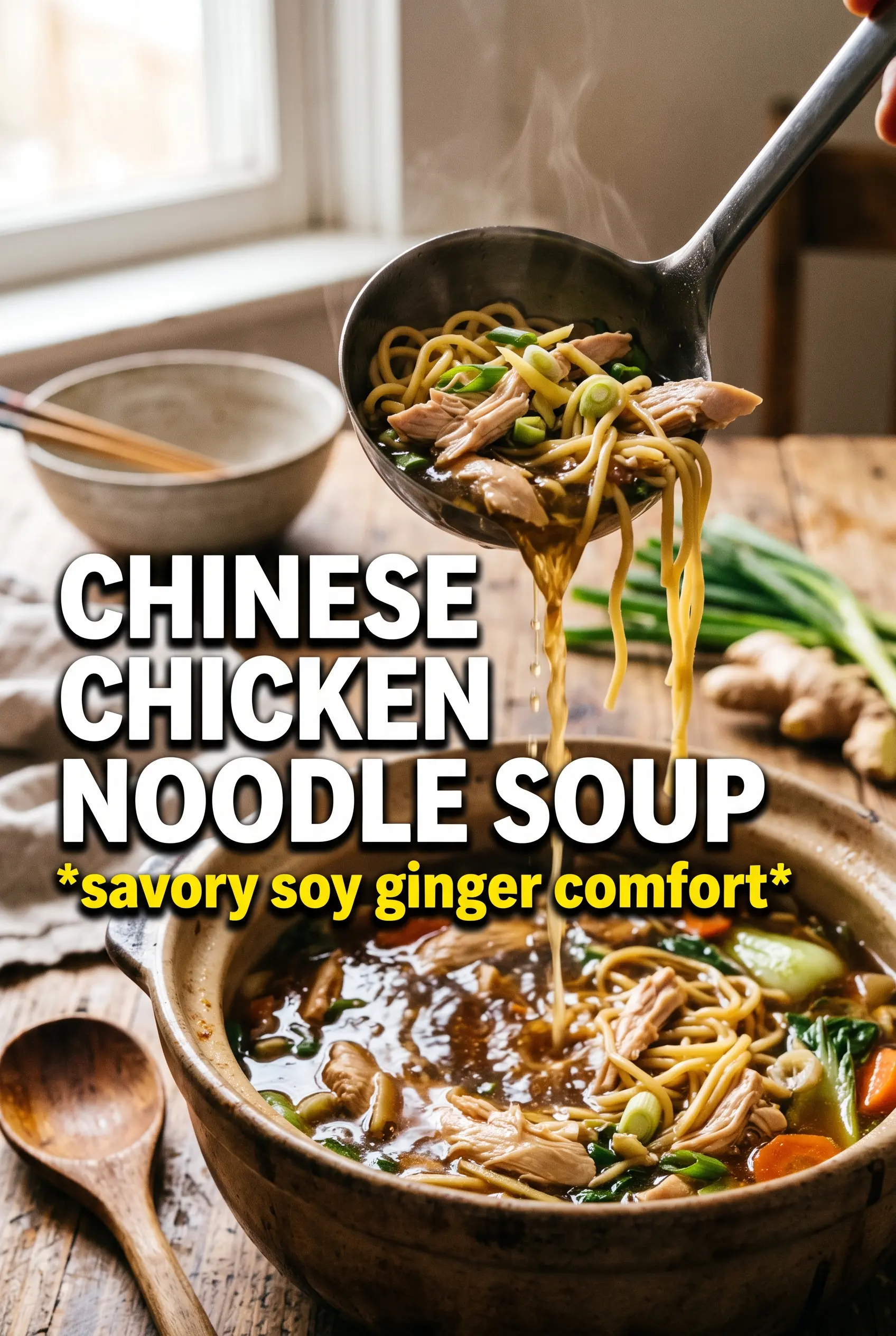
Chinese Chicken Noodle Soup
Ingredients
Equipment
Method
- Bring the chicken broth to a simmer in a large pot, then add the minced garlic and grated ginger and simmer for 5 minutes, keeping the surface lightly bubbling.
- Stir in the soy sauce, sesame oil, and rice vinegar, then taste and adjust seasoning until balanced.
- Add the sliced chicken and shiitake mushrooms to the broth and simmer for 10-12 minutes, until the chicken is just cooked through and opaque at the thickest pieces.
- Cook the thin Chinese noodles or rice noodles separately according to package directions, then drain and divide evenly into serving bowls, keeping the noodles springy and not overcooked.
- Add the chopped bok choy to the broth and cook for 3 minutes, until wilted but still bright green.
- Ladle the hot soup over the noodles and season with white pepper and salt to taste, so the broth immediately warms the noodles.
- Garnish each bowl with sliced green onions, cilantro, and a drizzle of chili oil for serving.