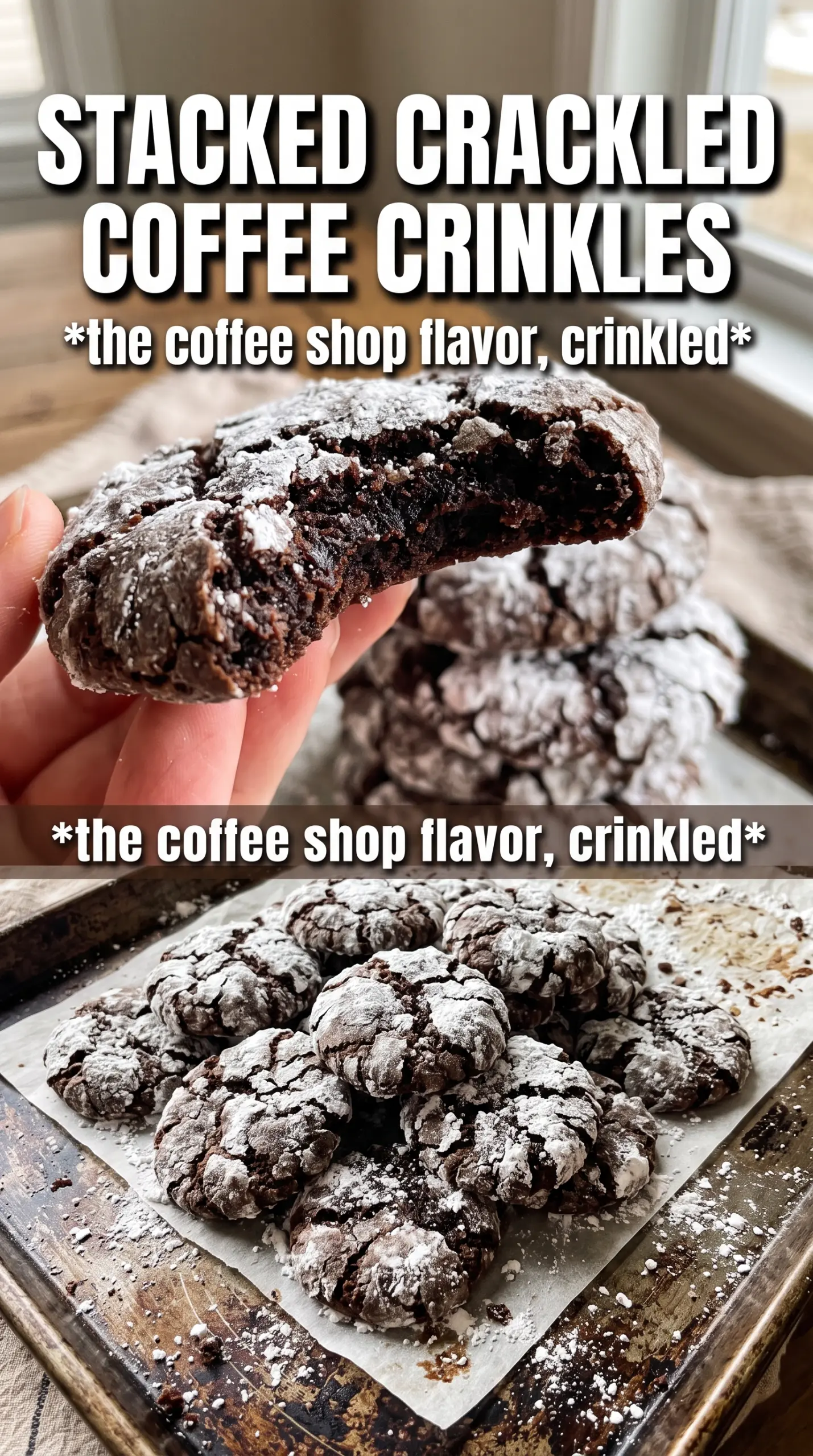
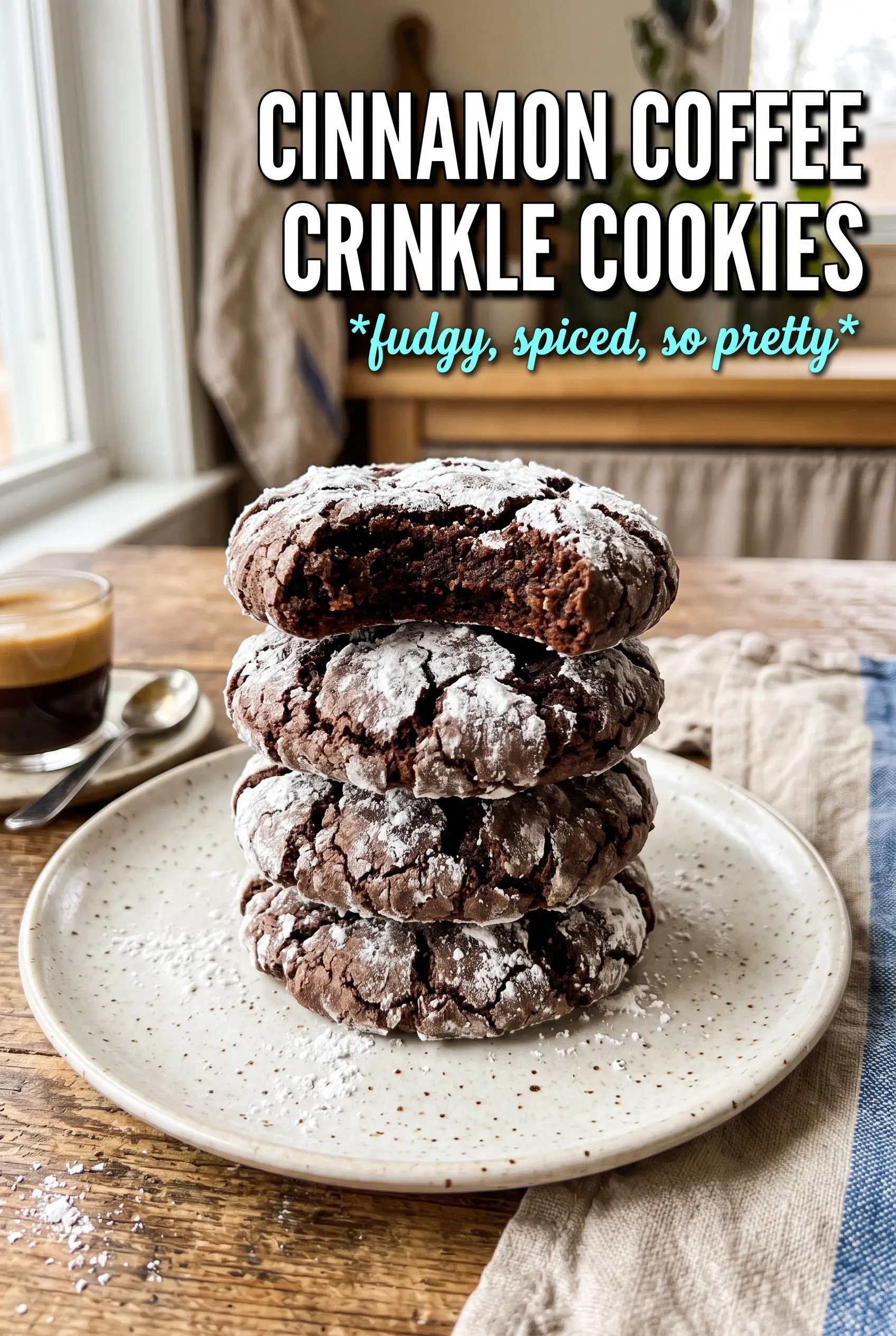
Deeply crinkled cinnamon coffee crinkle cookies bake up with a thin, crackly sugar shell and a soft, brownie-like center that smells like espresso and warm spice the minute they hit the oven. The powdered sugar coating gives them that classic snowy finish, but the real payoff is underneath: a rich cocoa-like bitterness from the coffee, a brown-sugar chew, and enough cinnamon to keep every bite warm and round.
The trick here is balance. Melted butter gives the dough that dense, fudgy texture, while chilling keeps the cookies from spreading before the coating can do its job. Rolling the dough in granulated sugar first helps the powdered sugar cling, which is what creates those dramatic white cracks instead of a dusty finish that disappears after baking. The espresso powder doesn’t make these taste like a cup of coffee; it deepens the chocolate-adjacent notes and makes the cinnamon taste bigger.
Below you’ll find the timing that keeps the centers soft, a few smart swaps, and the one step that matters most if you want those moody crinkles to show up clearly.
The dough chilled up beautifully and the powdered sugar stayed in those deep cracks instead of melting away. I baked mine right at 11 minutes and the centers stayed soft for days.
Save these cinnamon coffee crinkle cookies for the days when you want a soft center, bold espresso notes, and those deep powdered sugar cracks.
The Chill Time That Creates the Cracks Instead of Flat Cookies
Crinkle cookies only look dramatic when the dough is cold enough to hold its shape long enough for the surface to set before the center finishes expanding. Skip that hour in the fridge and you’ll get softer, flatter cookies with less contrast between the dark dough and the sugar shell. The chill also firms up the melted butter, which keeps the dough scoopable instead of sticky in the oven.
The other thing that matters here is the coating order. Granulated sugar gives the powdered sugar something to grip, and that extra layer helps the cracks stay visible after baking. If you go straight from sticky dough to powdered sugar, the coating tends to melt into the surface instead of sitting on top.
What Each Ingredient Is Actually Doing in These Cookies
- Espresso powder — This is the ingredient that gives the cookies their deep coffee backbone without making the dough wet. Brewed coffee alone won’t do the same job, because you need concentrated flavor, not extra liquid.
- Melted butter — Melted butter makes the crumb denser and a little fudgy, which is what lets these cookies stay soft in the center. Softened butter would whip in more air and push them toward a cakier texture.
- Brown sugar — Brown sugar keeps the middle chewy and adds a caramel note that works with the espresso. You can swap in more granulated sugar in a pinch, but the cookies will taste flatter and bake up drier.
- Powdered sugar coating — This is what gives you the white cracked finish. Use plenty; a light dusting disappears fast and doesn’t give you that bakery-style contrast.
- Freshly brewed espresso or strong coffee — Just a tablespoon is enough to brighten the coffee flavor without loosening the dough. Let it cool first or it can make the eggs start to cook and make the batter grainy.
Building the Dough So It Bakes Thick and Crinkled
Mix the dry ingredients first
Whisk the flour, espresso powder, cinnamon, baking powder, and salt until the color looks even throughout. That keeps the espresso powder from clumping in one bite and the cinnamon from streaking through the dough. If you see dry pockets after adding the flour later, the cookies bake unevenly and the coating won’t sit right on top.
Make the sticky base
Whisk the melted butter with both sugars until the mixture looks glossy and a little grainy, then add the eggs, cooled coffee, and vanilla. The batter should look smooth and thick before the flour goes in. If the butter is hot enough to feel warm on your fingers, wait a few minutes; too much heat here can make the eggs seize and give you a greasy dough.
Fold, chill, and scoop
Add the dry mixture and fold just until no flour streaks remain. The dough will be soft and sticky, and that’s exactly what you want before chilling. After an hour in the fridge, it should be firm enough to scoop cleanly into 1 1/2 tablespoon portions without sticking to everything in sight.
Coat and bake for the crinkle
Roll each portion in granulated sugar, then bury it generously in the cinnamon powdered sugar mixture. Bake at 350°F just until the edges are set and the tops have split into deep crinkles, usually 10 to 12 minutes. Pull them when the centers still look slightly soft; if they look fully baked in the oven, they’ll come out dry once they cool.
How to Adapt These Cookies Without Losing the Crinkle
Dairy-Free Version
Use a plant-based butter stick with a similar fat content, not a tub spread. The texture will stay close, though the cookies may bake a touch flatter because dairy-free butter often softens faster at room temperature.
Caffeine-Light Version
Swap the espresso powder for an equal amount of instant decaf espresso or omit it and keep the cinnamon. The cookies will still be sweet and spiced, but they’ll lose some of that deep, grown-up coffee note that makes them stand out.
Gluten-Free Version
Use a good 1:1 gluten-free flour blend that includes xanthan gum. The dough may need an extra 10 to 15 minutes of chill time to firm up, but the sugar coating and short bake still give you a proper crinkle.
Make Them a Little More Coffee-Forward
Bump the espresso powder up by another 1/2 teaspoon if you want a stronger roast flavor. Don’t add more brewed coffee to chase that flavor; extra liquid makes the dough looser and softens the crinkle pattern.
Storage and Reheating
- Refrigerator: Store baked cookies in an airtight container for up to 5 days. They soften a little as they sit, but the centers stay chewy.
- Freezer: Freeze the portioned dough balls after coating them, then bake from frozen with 1 to 2 extra minutes. Baked cookies also freeze well, though the powdered sugar finish won’t stay as snowy.
- Reheating: Warm baked cookies for 6 to 8 seconds in the microwave if you want the centers soft again. Don’t overheat them or the sugar coating turns sticky and the edges dry out.
Questions I Get Asked About This Recipe
Cinnamon Coffee Crinkle Cookies
Ingredients
Equipment
Method
- In a mixing bowl, whisk all-purpose flour, espresso powder, cinnamon, baking powder, and salt until evenly combined. The mixture should look uniform with no cinnamon or espresso clumps.
- In a second bowl, whisk melted unsalted butter and granulated sugar with packed brown sugar until glossy. Whisk in eggs, then whisk in cooled espresso and vanilla extract until smooth.
- Add the flour mixture to the wet ingredients and fold until a sticky dough forms. Stop as soon as no dry streaks remain.
- Cover and refrigerate the dough for 1 hour. Chilling makes the dough easier to scoop and helps the crinkle pattern set.
- Preheat the oven to 350F and line baking sheets with parchment paper. Mix cinnamon into the powdered sugar coating in a bowl.
- Scoop dough into 1-1/2 tablespoon balls and roll first in granulated sugar. Then generously roll each ball in the powdered sugar-cinnamon mixture to coat thickly.
- Bake 10 to 12 minutes at 350F until the cookies are crinkled and set at the edges. Do not overbake, or the centers will dry out and the crinkle texture will lessen.