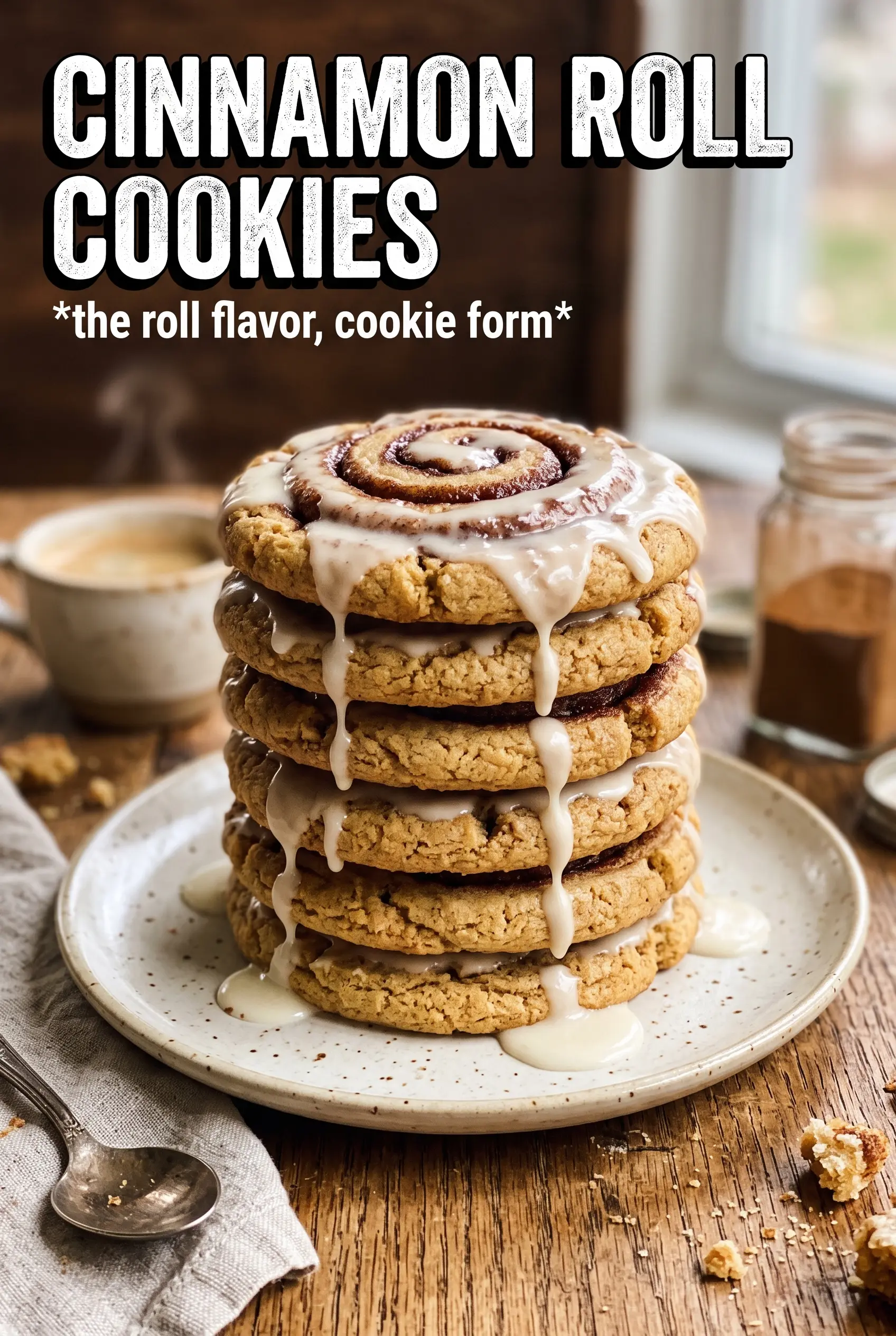
Cinnamon Roll Cookies bake up with the same warm swirl and buttery comfort of a bakery cinnamon roll, but in a form you can slice, bake, and stack on a tray without waiting for dough to rise. The cookie itself stays tender at the center with crisp edges, while the brown sugar-cinnamon spiral bakes into little ribbons that taste deep and caramelized instead of flat and dusty.
The trick is in the dough texture and the chill time. A softer dough is easier to roll thin, but it also needs a full rest in the fridge so the log firms up enough to slice cleanly. That’s what keeps the swirl from smearing and gives you those neat spirals that look as good as they taste. The cream cheese glaze finishes them the way a frosting glaze should — tangy, smooth, and just loose enough to drip over the warm cookies.
Below, you’ll find the best way to keep the filling from leaking, the one small step that makes slicing easier, and a few smart swaps if you need to work around what’s in your kitchen.
The swirl held beautifully after chilling, and the cream cheese glaze set into that perfect drizzly finish instead of sliding right off. My kids kept grabbing the cookie edges first because they stayed a little crisp while the centers were soft.
Like these cinnamon roll cookies? Save them to Pinterest for the days when you want that cinnamon-sugar swirl with a cream cheese glaze and no yeast dough.
The Chill Time That Keeps the Swirl Clean
Slice-and-bake cookies look simple until the spiral starts smearing. The filling softens fast, and if the dough log is under-chilled, the knife drags the cinnamon layer into the dough instead of cutting through it. That’s how you end up with muddy streaks instead of a crisp swirl.
This recipe works because the log gets firm enough to slice without squashing the shape. The butter in the filling stays pliable while you roll, then sets back up in the fridge. That firming step is what gives you those neat rounds with a defined center and a cookie edge that bakes evenly instead of oozing out on the pan.
- Don’t skip the parchment wrap. It helps the dough keep its round shape in the fridge and makes the log easier to unwrap without tearing the seam.
- Roll the dough evenly. A log that’s thick on one end and thin on the other bakes unevenly, and the thin side will overbake before the center catches up.
- Slice with a sharp knife. A dull blade presses the filling out. If the log feels sticky, chill it another 15 minutes before slicing.
What Each Layer Is Actually Doing Here

- All-purpose flour gives the cookies enough structure to hold a tight spiral. Cake flour makes them too fragile for clean slicing, and bread flour would turn them tougher than you want here.
- Butter shows up in both the dough and filling, and that’s what gives the cookies their rich, melt-in-your-mouth texture. Use real butter, not a spread, or the dough can turn greasy and the filling won’t set as neatly.
- Brown sugar and cinnamon make the swirl. Pack the brown sugar firmly so it forms a spreadable paste with the butter, which helps it cling to the dough instead of falling out during rolling.
- Cream cheese turns the glaze from plain sweetness into something with a little tang and body. If you need a thinner drizzle, add milk a teaspoon at a time until it ribbons off the spoon.
- Egg and vanilla round out the dough so it tastes like a cookie, not just a sugar carrier for the filling. The vanilla especially matters because the cinnamon is bold and can flatten without it.
Building the Dough, Rolling the Swirl, and Slicing Without Smearing
Whipping the base until it turns pale
Beat the butter and sugar until the mixture looks fluffy and a little lighter in color. That step traps air, which helps the cookies bake up tender instead of dense. Add the egg and vanilla only after the butter looks properly creamed, or the mixture stays heavy and the dough feels pasty.
Rolling a rectangle that bakes evenly
Divide the dough in half and roll each piece between parchment into a 10×8 rectangle. Try to keep the thickness even all the way across, because thin corners brown faster and can dry out before the centers set. If the dough cracks at the edges, let it sit for a minute or two so it softens just enough to roll cleanly.
Spreading the filling without pushing it out
Spread the softened butter first, then scatter the brown sugar and cinnamon over it. The butter acts like glue, so the filling stays in place when you roll. If the filling looks wet or runny, it’s too warm; chill it for a few minutes so it thickens back up before you continue.
Rolling tight, then chilling harder than you think
Roll from the long side and keep the log snug without squeezing so hard that the filling squeezes out the seam. Wrap the log in parchment and refrigerate for the full hour. If you slice too early, the rounds flatten and the spiral loses definition before it even reaches the oven.
Baking just until the edges wake up
Cut the chilled log into 1/2-inch rounds and bake at 350°F until the edges are just golden. The centers should still look slightly soft when you pull them out; they finish setting on the pan. Overbaking takes away the tender center and makes the cinnamon layer taste dry instead of caramelized.
Glazing while the cookies are still warm
Mix the cream cheese glaze until it’s smooth and spoonable, then drizzle it over the warm cookies. Warm cookies help the glaze settle into the ridges without melting off completely. If the cookies cool all the way first, the glaze sits on top instead of sinking into the swirl a little.
How to Tweak These Without Losing the Swirl
Dairy-Free Swap
Use a plant-based butter that’s meant for baking, then swap the cream cheese and milk for dairy-free versions with a similar texture. The cookies will still slice well, but the glaze may taste a little less tangy and a touch softer.
Gluten-Free Version
A 1:1 gluten-free flour blend can work here if it includes xanthan gum. The dough may be a little more delicate, so chill it thoroughly and use a very sharp knife for slicing. Expect a slightly more tender crumb and a less chewy bite.
Extra-Cinnamon Bakery Style
If you want a bolder swirl, add another teaspoon of cinnamon to the filling. The flavor gets deeper and warmer, but too much can make the filling dry and crumbly, so don’t overdo it unless you also add a little more butter.
Storage and Reheating
- Refrigerator: Store baked cookies in an airtight container for up to 4 days. The glaze softens the tops a little, but the cookies stay tender.
- Freezer: Freeze the unbaked sliced rounds on a tray, then pack them in a bag for up to 2 months. Bake straight from frozen, adding 1 to 2 minutes.
- Reheating: Warm baked cookies for 8 to 10 seconds in the microwave if you want the centers soft again. Longer heating melts the glaze and dries out the edges.
Questions I Get Asked About This Recipe
Cinnamon Roll Cookies
Ingredients
Equipment
Method
- Beat unsalted butter, softened and granulated sugar until fluffy. Add egg and vanilla extract, then beat until smooth.
- Fold in all-purpose flour, baking powder, and salt just until the dough comes together. Divide the dough in half.
- Roll each dough half into a 10x8 rectangle on parchment. Spread unsalted butter, softened over the rectangle.
- Sprinkle brown sugar, packed and cinnamon over the buttered dough. Press lightly so the cinnamon sugar adheres.
- Roll tightly from the long side into a log. Wrap in parchment and refrigerate 1 hour.
- Preheat the oven to 350°F. Slice the chilled logs into 1/2-inch rounds.
- Bake on a sheet pan for 10-12 minutes, until the edges are just golden. Let cool briefly, then drizzle cream cheese glaze over the warm cookies.
- Mix cream cheese, powdered sugar, milk, and vanilla until smooth enough to drizzle. Drizzle over the warm cookies right after baking.