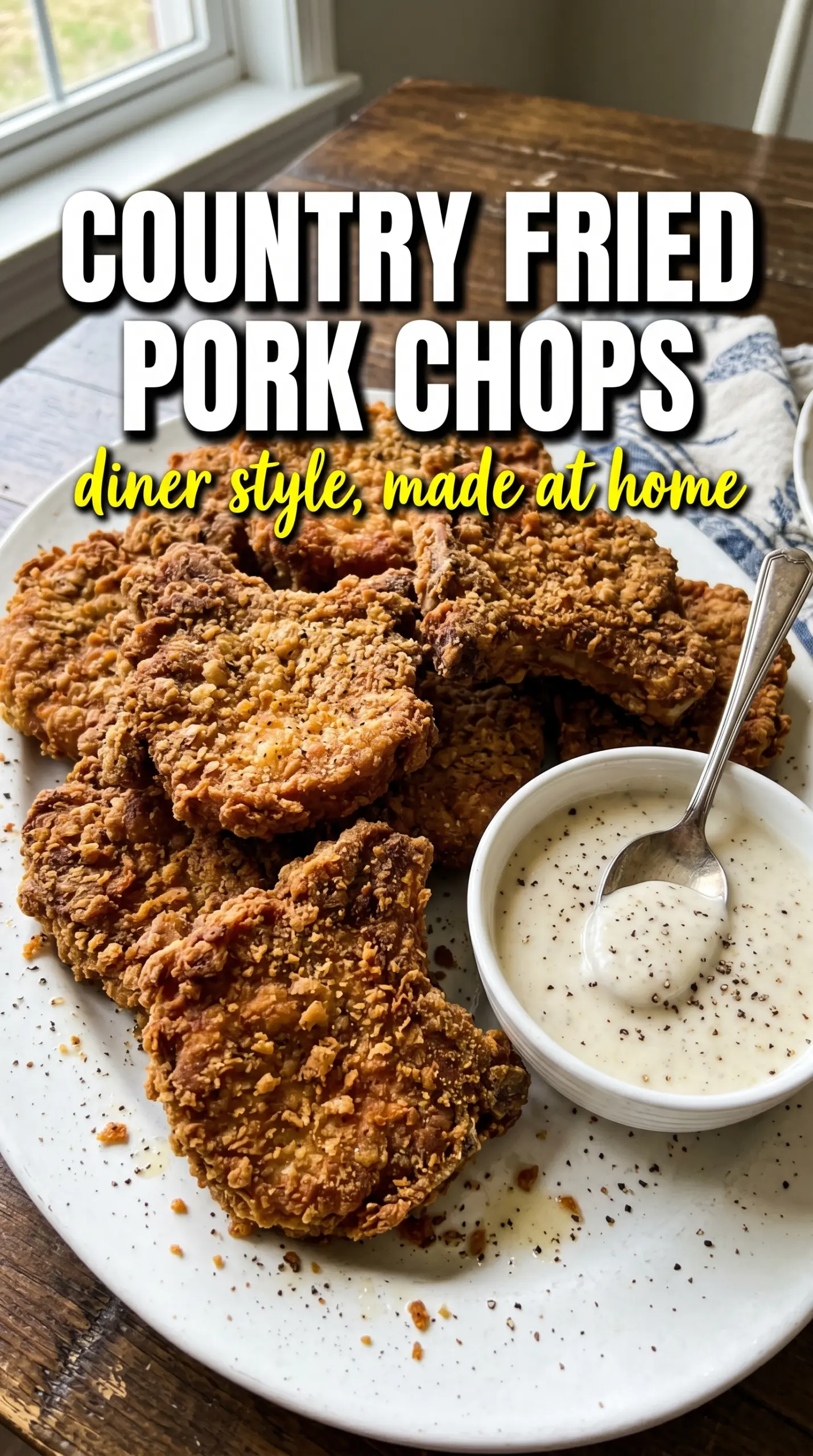
Country fried pork chops land on the plate with the kind of crunch that makes people pause before the first bite. The crust should be deeply browned and rough-edged, with a thin, seasoned coating that clings tight to the meat instead of slipping off in the skillet. When they’re done right, the pork stays juicy and the white gravy turns every crisp bite into something you want to drag through the sauce again and again.
The trick here is keeping the breading bold without making it heavy. Cornmeal gives the crust that Southern crackle, while flour keeps it cohesive enough to fry up evenly. Thin-cut chops cook fast, which matters because overcooked pork turns dry before the coating has time to brown properly. A quick dip in buttermilk and egg helps the flour mixture adhere, and pressing the breading on with your hands makes a better crust than a gentle toss ever will.
Below, I’ll show you how to keep the coating from falling off, how to get the gravy smooth from the same skillet drippings, and what to do if you only have boneless chops or need a gluten-free version.
The crust stayed attached all the way through frying, and the white gravy thickened up smooth with no lumps. I used thin pork chops like you suggested and they were cooked perfectly in just a few minutes per side.
Love that crunchy cornmeal crust and creamy white gravy? Save these country fried pork chops for the next time you want a skillet dinner with real Southern comfort.
The Reason the Crust Stays Crisp Instead of Going Soggy
The biggest mistake with country fried pork chops is treating the coating like a loose dusting. If the flour mixture isn’t pressed on firmly, it falls away in the oil and leaves you with patchy breading and greasy pan drippings. The egg-and-buttermilk dip gives the coating something to grab, and the cornmeal adds texture that stays crisp even after the gravy hits the plate.
Another place people lose the crust is temperature. Oil that’s too cool soaks into the breading, while oil that’s too hot browns the outside before the pork has a chance to cook through. Medium-high heat in a shallow layer of oil gives you that deep golden color in about 3 to 4 minutes per side without turning the meat dry.
- Thin-cut pork chops — These cook fast and stay tender. Thick chops need a longer, gentler cook and can burn the coating before the center is done.
- Cornmeal — This is what gives the crust its rough, crunchy edge. You can skip it, but the breading will taste more like standard fried pork than country fried pork.
- Buttermilk — It helps the coating cling and adds a little tang that balances the gravy. If you don’t have it, stir 1 teaspoon of lemon juice or vinegar into regular milk and let it sit for 5 minutes.
- Drippings for the gravy — Those browned bits and seasoned oil carry the flavor of the whole dish. Don’t wipe out the skillet before making the gravy, or it’ll taste flat.
What Each Ingredient Is Actually Doing in This Recipe
- Primary ingredient (the star) — Quality matters most. Choose the best you can find.
- Cooking medium (oil, butter, or broth) — This carries flavors and prevents dryness.
- Seasonings (salt, pepper, spices, herbs) — Layer flavors so nothing overpowers. Build depth gradually.
- Aromatics (garlic, onion, herbs) — Cook with fat to bloom flavors. Become the foundation.
- Supporting ingredients — Complement the main ingredient without overpowering it.
- Sauce or liquid (if applicable) — Brings flavors together. Balance richness with acid.
- Acid (lemon, vinegar, wine, or other) — Brightens and prevents flat-tasting results.
- Final finish (garnish, glaze, or sauce) — Prevents one-dimensional taste and adds visual appeal.
Building the Frying Pan So the Pork Stays Juicy
Seasoning the Breading
Mix the flour, cornmeal, garlic powder, smoked paprika, onion powder, salt, and pepper in a shallow dish so the seasoning is evenly distributed through the crust. If the seasoning sits only on the surface, the first side gets all the flavor and the second side tastes plain. The mixture should look a little sandy and evenly speckled, not clumpy.
Coating the Chops
Whisk the eggs with the buttermilk in one dish, then dip each chop so every surface is coated before it goes into the flour. Press the flour mixture on firmly with your fingers; that pressure matters. If the breading looks thick and shaggy, that’s a good sign. Let the coated chops sit for a minute or two while the oil heats so the crust hydrates slightly and sticks better.
Frying to Deep Golden
Add about 1/2 inch of oil to the skillet and heat it over medium-high until it shimmers. When a pinch of flour sizzles on contact, the oil is ready. Lay the chops in gently and don’t crowd the pan, or the temperature will drop and the crust will absorb oil instead of crisping. Fry until the breading is deep golden and the pork reaches 145°F in the center, then move it to paper towels while you make the gravy.
Turning the Drippings Into White Gravy
Pour off all but 3 tablespoons of drippings, then whisk in the flour and cook for about a minute to take away the raw taste. Slowly whisk in the milk so the gravy stays smooth; dumping it in too fast is how you get lumps. Simmer until it coats a spoon, then season with salt and pepper. If it seems thin at first, give it another minute. White gravy thickens as it heats and settles.
How to Adjust These Pork Chops for the Way You Cook
Make Them Gluten-Free
Swap the all-purpose flour for a 1:1 gluten-free flour blend and keep the cornmeal in place. The crust will still fry up crisp, though it may brown a little faster, so watch the skillet closely. If your blend is coarse, whisk it well before breading so the seasoning spreads evenly.
Use Boneless Pork Loin Chops
Boneless loin chops work well, but they’re usually thicker and leaner, so pound them to an even 1/2-inch thickness before breading. That keeps the cook time short and prevents dry edges. The crust may slip if the meat is damp, so pat the chops dry before the egg dip.
Skip the Gravy and Keep It Dairy-Free
The pork itself can be made dairy-free by swapping the buttermilk for unsweetened plain plant milk mixed with a teaspoon of vinegar. For the gravy, use a neutral oil or reserved frying oil instead of drippings, then whisk in the flour and milk alternative the same way. You’ll lose a little richness, but the crust still carries most of the flavor.
Storage and Reheating
- Refrigerator: Store the chops and gravy separately for up to 3 days. The crust softens in the fridge, which is normal.
- Freezer: The cooked pork chops freeze fairly well for up to 2 months, but the breading won’t stay as crisp. Freeze without gravy for the best texture.
- Reheating: Reheat the chops on a wire rack in a 375°F oven until hot and crisp again, usually 10 to 15 minutes. Warm the gravy slowly on the stove with a splash of milk, whisking as it heats so it stays smooth. Microwaving the chops makes the coating turn leathery.
Answers to the Questions Worth Asking

Country Fried Pork Chops with White Gravy
Ingredients
Equipment
Method
- Mix all-purpose flour, cornmeal, garlic powder, smoked paprika, onion powder, and salt and pepper in a shallow dish until evenly colored.
- Whisk eggs with buttermilk in a second dish to make a smooth coating.
- Dip each pork chop into the egg mixture, then coat in the seasoned flour; press firmly so the crust sticks.
- Heat 1/2 inch of oil in a skillet over medium-high heat until hot, then fry the chops 3–4 minutes per side until deep golden and cooked through, flipping once.
- Drain the chops on paper towels, and reserve 3 tablespoons of drippings for the gravy.
- Whisk 3 tablespoons flour into the reserved drippings over medium heat for 1 minute until smooth and lightly cooked.
- Slowly whisk in whole milk, then simmer until thick, seasoning with salt and pepper.
- Serve the thick white gravy over the crispy country fried pork chops immediately.