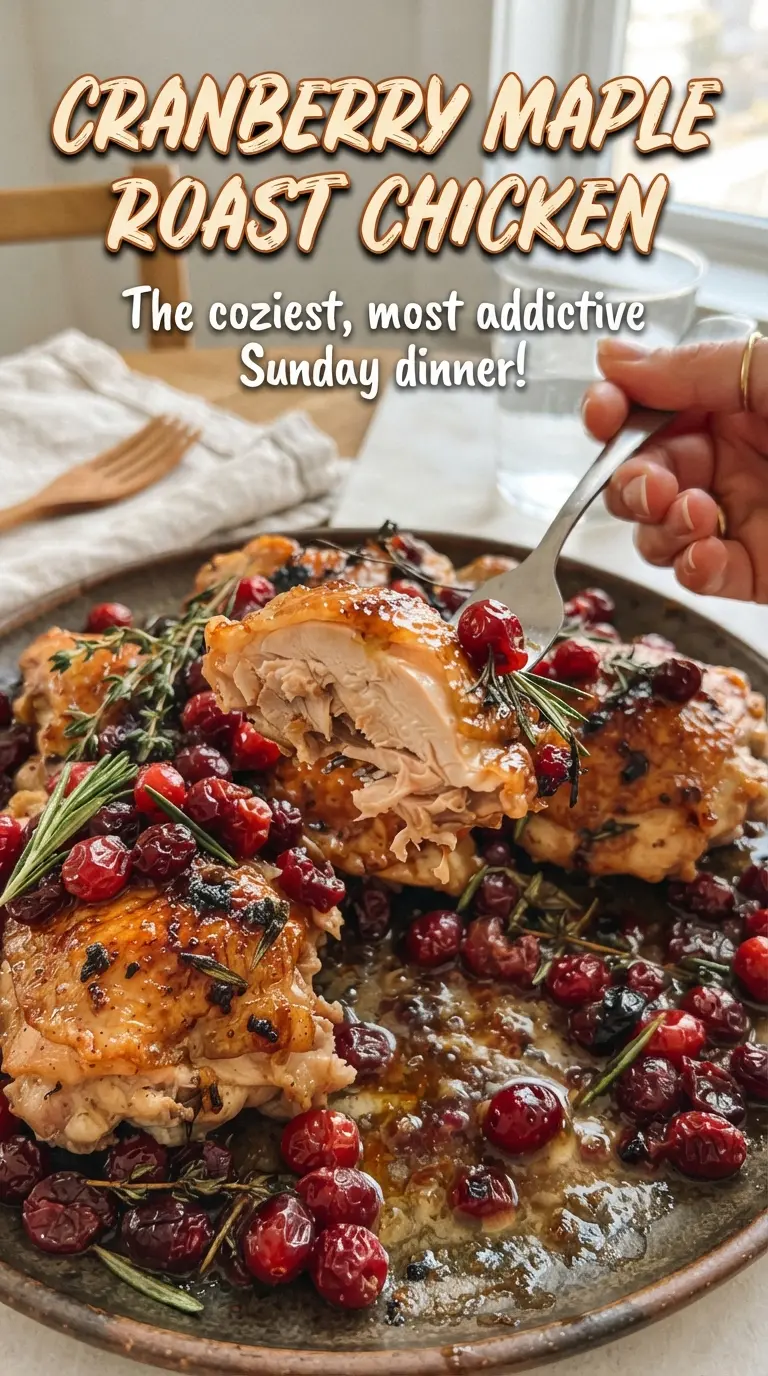
Cranberry maple roast chicken earns its place at the center of the table because the skin turns glossy and deeply browned while the fruit around it softens into a sharp-sweet sauce. The chicken stays juicy, the cranberries burst just enough to thicken the pan juices, and the whole pan smells like rosemary, orange, and roasted garlic by the time it comes out of the oven.
The trick is building layers of flavor without muddying the sauce. Butter and rosemary go under and over the skin so the chicken bastes itself as it roasts, while the orange and garlic in the cavity perfume the meat from the inside. The maple-Dijon glaze goes on late, not at the start, so it caramelizes instead of burning before the chicken is done.
Below you’ll find the timing that keeps the skin lacquered instead of sticky, plus a few smart swaps if you need to work with what’s in the kitchen. The pan sauce is worth paying attention to here; it’s what turns a simple roast chicken into dinner people remember.
The glaze thickened beautifully and the cranberries popped just enough to make the pan sauce taste bright, not jammy. I brushed the chicken at the end like you said and the skin came out sticky, glossy, and perfectly crisp.
Save this cranberry maple roast chicken for the kind of dinner where you want glossy skin, tart-sweet pan sauce, and one pan doing all the work.
The Part Most Roast Chickens Get Wrong: Adding the Glaze Too Early
The biggest mistake with a maple glaze is treating it like a marinade. Maple syrup can burn before a whole chicken is fully cooked, especially in a hot oven, and once it scorches it turns bitter fast. This recipe avoids that by roasting the chicken almost all the way first, then brushing on the glaze when the skin has already started to color and tighten.
That timing matters for the cranberries too. They need the second stage of roasting to burst and collapse into the broth, which gives you a pan sauce with body instead of thin red juice. The broth also keeps the bottom of the pan from turning sticky-sweet, so the sauce tastes balanced when you spoon it over the carved chicken.
- High-heat start — The 425F oven gives you fast browning and helps render the skin early. If you start too low, the chicken can steam before it ever really roasts.
- Butter under the skin — This bastes the breast from the inside and carries the rosemary flavor deeper than rubbing the outside alone ever will.
- Late glaze — Brushing the maple-Dijon mix on in the last stretch keeps it glossy instead of dark and bitter.
- Cranberries in the pan — They aren’t just garnish. They soften, burst, and turn the roasting juices into a bright sauce that cuts through the richness.
What Each Ingredient Is Really Doing in the Pan
- Whole chicken — A 5-pound bird cooks evenly at this timing and gives you enough fat and skin to stay juicy through the roast. Anything much larger needs a longer roast and more careful glazing so the exterior doesn’t overdo before the thighs are done.
- Butter and rosemary — The butter is what gives the skin that lacquered finish, and the rosemary keeps the maple from tasting flat. Softened butter spreads under the skin cleanly; cold butter will tear the skin and never coat as evenly.
- Orange and garlic — These perfume the meat from the cavity out. The orange is there for aroma, not juice, so don’t squeeze it into the pan or the sauce can turn overly sharp.
- Maple syrup and Dijon — Maple brings sweetness and shine, while Dijon keeps it from becoming one-note. If you swap the mustard, choose another smooth mustard; grainy mustard changes the texture of the glaze and won’t brush on as neatly.
- Cranberries — Fresh cranberries hold their shape long enough to roast, then burst at the right time. Frozen cranberries work in a pinch, but don’t thaw them first or they can soften too early and muddy the sauce.
- Chicken broth — This loosens the pan juices just enough to make spoonable sauce. Water works only in a backup situation; broth gives the final sauce a deeper savory base.
- Red onion — The wedges roast into sweet, silky pieces that balance the tart cranberries. Slice them too thin and they can burn before the chicken is done.
Roasting, Glazing, and Resting Without Losing the Skin
Season and Lift the Skin
Pat the chicken dry first. Moisture on the skin is the enemy of browning, and a wet bird will steam before it roasts. Season inside and out with salt and pepper, then work the softened butter mixed with rosemary under and over the skin. The goal is to coat the meat evenly without tearing the breast skin, which is thin and easy to rip if the butter is cold.
Build the Pan Bed
Stuff the cavity with the orange halves and garlic, then nestle the chicken in a roasting pan with the onion wedges around it. The onions should sit in a loose ring, not piled on top of one another, so they roast instead of steaming. This first stage is all about setting up airflow and letting the chicken skin take on color without getting crowded.
Roast Until the Skin Is Set
Roast for 50 minutes before adding the glaze. By then, the skin should be turning golden and starting to look taut, not pale and soft. If the chicken is still extremely light at that point, your oven may run cool; keep roasting until it has noticeable color before moving on, because the glaze needs that base browning to cling properly.
Glaze and Finish the Sauce
Whisk the maple syrup and Dijon together, brush on half, then add the cranberries and broth to the pan. Roast 25 to 30 minutes more, brushing with the remaining glaze once during that final stretch. The chicken is done when the thigh reaches 165F and the skin looks shiny and deeply bronze. If the glaze starts darkening too quickly, tent the breast loosely with foil for the last 10 minutes while the thighs finish cooking.
Rest Before Carving
Let the chicken rest for 15 minutes before carving. That pause keeps the juices in the meat instead of running straight onto the cutting board. Spoon the cranberry pan sauce over the carved chicken right before serving so the skin stays crisp at the table.
Three Ways to Make This Roast Chicken Work on Your Table
Dairy-Free Version
Use olive oil or a plant-based butter in place of the dairy butter. You’ll lose a little of the rich, rounded flavor that butter gives the skin, but the chicken will still roast up well and the rosemary will carry through the glaze.
No Fresh Cranberries
Frozen cranberries work without any other changes, and they’re the closest stand-in for the burst and tartness this pan sauce needs. Dried cranberries won’t give you the same sauce texture, so they’re not a true substitute here.
Smaller Chicken or Chicken Pieces
A smaller bird or bone-in pieces can be used, but the timing changes. Pieces will glaze faster and can finish before the cranberries fully burst, so watch the color closely and start checking temperature early to avoid drying out the breast meat.
Lower-Sugar Variation
Cut the maple syrup slightly and let the mustard do more of the balancing. The sauce will be less glossy and a little sharper, but it still roasts into a clean, savory-sweet finish that works well if you want less sweetness on the table.
Storage and Reheating
- Refrigerator: Store leftovers in an airtight container for up to 4 days. The skin won’t stay crisp, but the meat stays moist and the sauce gets even better after a night in the fridge.
- Freezer: The carved chicken and pan sauce freeze well for up to 2 months. Freeze in portions so you can thaw only what you need, and expect the cranberries to soften a bit more after reheating.
- Reheating: Reheat covered in a 325F oven with a splash of broth until warmed through. The common mistake is blasting it in the microwave, which dries the chicken and makes the glaze sticky instead of glossy.
Answers to the Questions Worth Asking
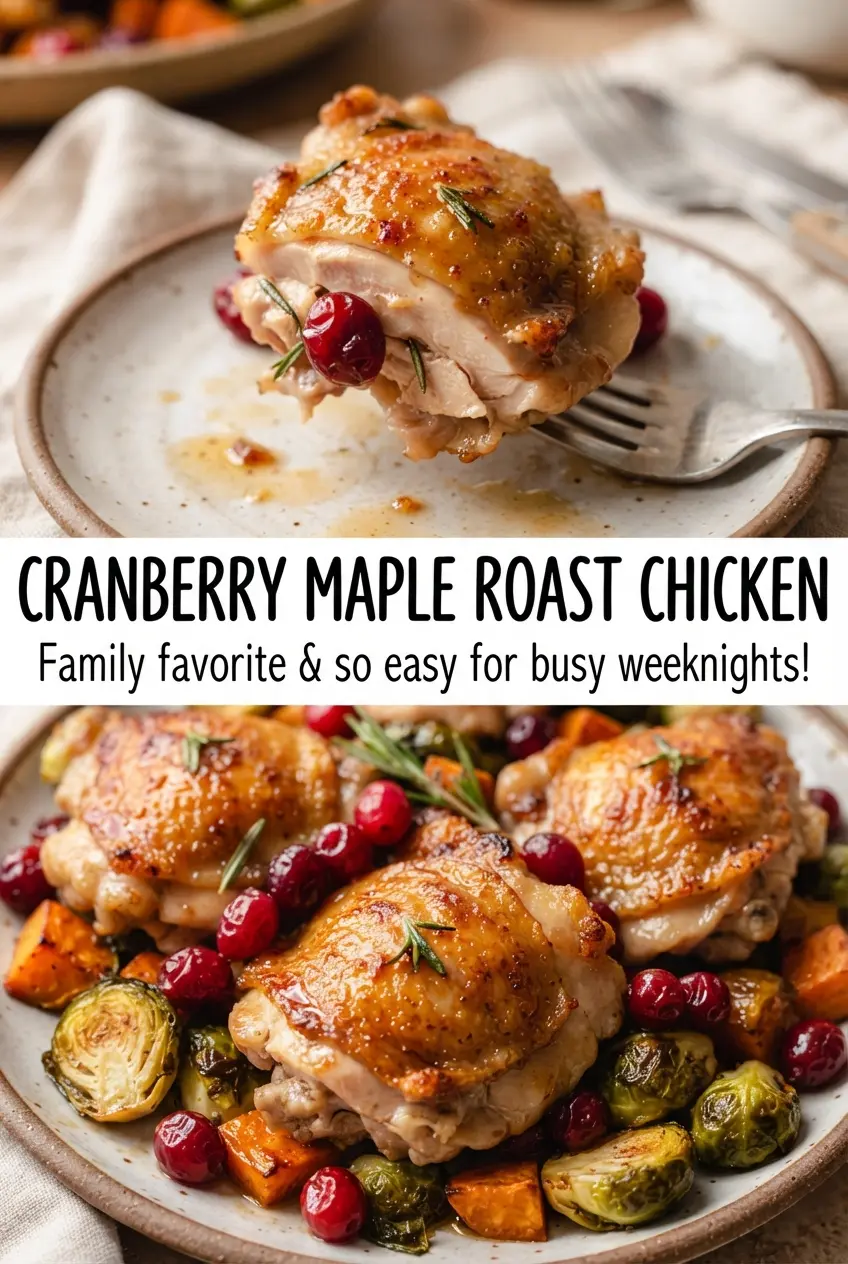
Cranberry Maple Roast Chicken
Ingredients
Equipment
Method
- Preheat the oven to 425°F. The oven should be fully hot before the chicken goes in.
- Pat the chicken dry and season inside and out with salt and black pepper. Rub the softened butter mixed with chopped rosemary under and over the skin for even coverage.
- Stuff the cavity with the orange halves and halved garlic. Set the chicken in a roasting pan with the red onion wedges around it.
- Roast for 50 minutes at 425°F. Look for the skin to turn deeply golden and start to crisp.
- Whisk maple syrup and Dijon mustard together. Brush half of the glaze over the chicken.
- Add the cranberries and chicken broth to the roasting pan. Spoon pan juices over the fruit if needed so everything heats evenly.
- Roast 25-30 minutes more at 425°F, brushing with the remaining glaze. Continue until the thigh reaches 165°F with clear juices.
- Rest the chicken for 15 minutes. Carve it and spoon the cranberry pan sauce over the top.