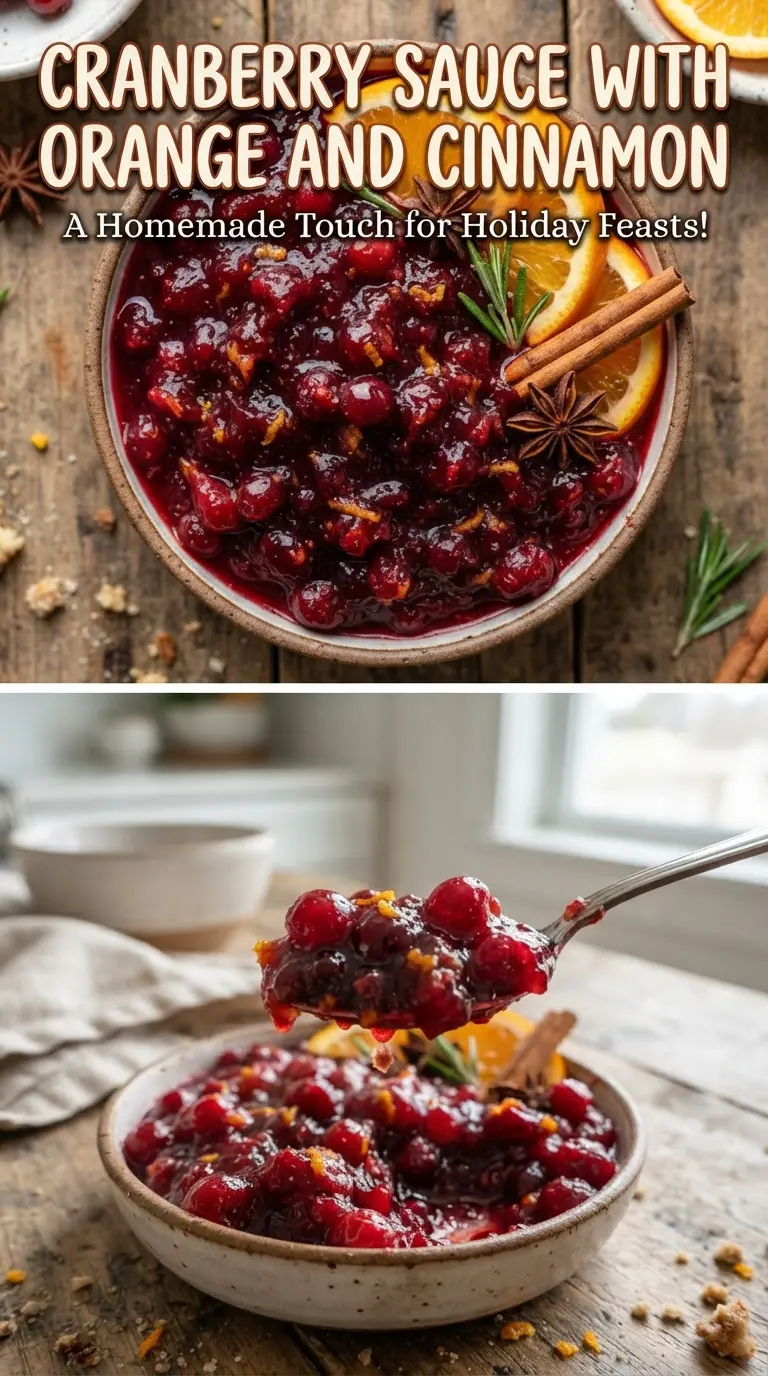
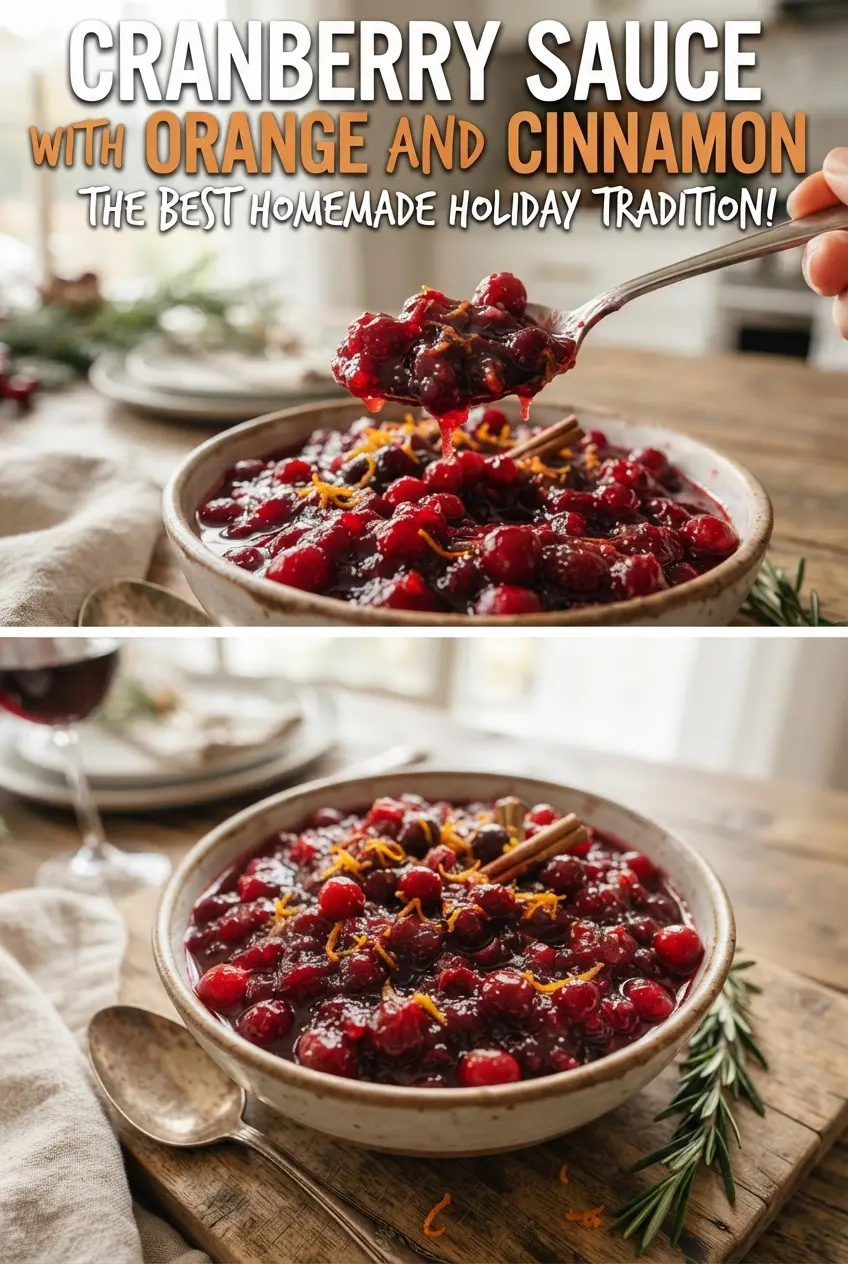
Thick, glossy cranberry sauce with orange and cinnamon has the kind of bright-tart balance that makes a plate feel finished. The berries break down into a spoonable jammy sauce, while orange juice and zest keep the sweetness from flattening out. It tastes familiar, but the cinnamon warms it just enough to make each bite feel deeper and cleaner at the same time.
This version works because the flavor is built in layers instead of dumped in all at once. The sauce starts with orange juice, water, sugar, and cinnamon sticks, so the sugar dissolves before the cranberries go in and the spice has time to steep. A pinch of ground cinnamon gives the sauce a more immediate warmth, and the zest goes in at the end so the orange stays fragrant instead of tasting cooked down.
Below, I’ve added the timing cues that matter most, plus a few swaps and storage notes so you can make it ahead without guessing.
The sauce thickened up beautifully as it cooled, and the orange really brightened the cranberries instead of making it taste like juice. I left the cinnamon sticks in until it was almost room temp and it had the perfect spiced finish.
Save this cranberry sauce with orange and cinnamon for the holidays or any dinner that needs a bright, make-ahead side.
The Part That Keeps Cranberry Sauce From Turning Watery
The biggest mistake with cranberry sauce is pulling it off the heat before the berries have fully burst and the liquid has had a chance to cook down. At that point it looks loose and syrupy, and people assume it needs more sugar. It usually needs a few more minutes instead. As the cranberries pop, their pectin thickens the sauce naturally, and that change happens fast once the mixture reaches a steady simmer.
Another thing that helps here is starting the base without the cranberries. The sugar has time to dissolve cleanly in the citrus and water, so you don’t end up with gritty sauce or raw-tasting sweetener at the bottom of the pan. The cinnamon sticks also need those first few minutes of simmering to open up; if they only go in at the end, the spice stays thin and flat.
- Fresh cranberries — Fresh berries give you the cleanest pop and the brightest tart flavor. Frozen cranberries work too; use them straight from frozen and expect the sauce to take an extra minute or two to come back to a simmer.
- Orange juice and zest — The juice softens the tartness, while the zest brings the perfume. Bottled juice can work in a pinch, but fresh orange juice tastes sharper and cleaner here, especially because the sauce doesn’t have many ingredients to hide behind.
- Cinnamon sticks — These steep flavor into the base without making the sauce dusty or heavy. Ground cinnamon adds a little warmth, but the sticks are what give the sauce that slow-building spice you notice on the second bite.
- Sugar — This recipe needs enough sugar to balance cranberry’s natural sharpness, but not so much that the sauce tastes jammy-sweet. If you cut it too far, the sauce can taste thin and aggressively tart once chilled.
What Each Ingredient Is Actually Doing in This Recipe
- Primary ingredient (the star) — Quality matters most. Choose the best you can find.
- Cooking medium (oil, butter, or broth) — This carries flavors and prevents dryness.
- Seasonings (salt, pepper, spices, herbs) — Layer flavors so nothing overpowers. Build depth gradually.
- Aromatics (garlic, onion, herbs) — Cook with fat to bloom flavors. Become the foundation.
- Supporting ingredients — Complement the main ingredient without overpowering it.
- Sauce or liquid (if applicable) — Brings flavors together. Balance richness with acid.
- Acid (lemon, vinegar, wine, or other) — Brightens and prevents flat-tasting results.
- Final finish (garnish, glaze, or sauce) — Prevents one-dimensional taste and adds visual appeal.
How to Build the Brightest, Thickest Sauce
Boiling the citrus base first
Combine the sugar, orange juice, water, cinnamon sticks, ground cinnamon, and salt in a saucepan and bring it to a full boil. You want the sugar fully dissolved before the cranberries go in, because undissolved sugar can cling to the bottom and make the final sauce taste uneven. Keep the heat high enough to see bubbles across the surface, not just around the edges.
Cooking the berries until they burst
Add the cranberries and let the mixture simmer for 10 to 12 minutes. You’ll hear the berries start to pop, and that sound is your cue that the sauce is thickening. Stir now and then, but don’t keep mashing everything; a few intact berries give the finished sauce better body and texture. If the mixture looks a little loose while hot, that’s normal — it tightens as it cools.
Finishing with zest and chilling
Take the pan off the heat and stir in the orange zest. That last-minute addition keeps the orange aroma bright instead of cooked out. Leave the cinnamon sticks in while the sauce cools so the spice keeps steeping, then remove them before chilling. Cold cranberry sauce is supposed to be spoonable, not pourable, so give it time in the refrigerator before you judge the final texture.
How to Adapt It When You Need a Different Finish
Less Sweet, Sharper Sauce
Drop the sugar to 1/2 cup if you like a more assertive cranberry bite. The sauce will taste brighter and less jam-like, but it won’t set quite as smoothly, so let it cool completely before deciding whether it needs another spoonful of sugar.
Using Frozen Cranberries
Frozen cranberries work without any special thawing. Add them straight to the simmering base and give the sauce an extra minute or two; once the berries start to pop, it behaves almost exactly like the fresh version.
Making It Ahead for a Crowd
This sauce is an ideal make-ahead side because the flavor gets smoother after a night in the fridge. Cook it fully, chill it in a covered container, and give it a stir before serving so the texture loosens up evenly.
Orange-Free Version
If you’re out of orange juice, use apple juice for a milder, rounder sauce. It loses some brightness, so add a little extra zest from another citrus if you have it, or the flavor can fall a little flat.
Storage and Reheating
- Refrigerator: Store in an airtight container for up to 10 days. It will thicken as it chills, so don’t worry if it seems soft when it first comes off the stove.
- Freezer: It freezes well for up to 2 months. Thaw it overnight in the refrigerator and stir after thawing, because the texture can loosen slightly as the juices separate.
- Reheating: Reheat gently over low heat just until loosened. High heat can make the sauce spatter and overcook the fruit, which turns the texture dull instead of glossy.
Answers to the Questions Worth Asking
Cranberry Sauce with Orange and Cinnamon
Ingredients
Equipment
Method
- Combine sugar, orange juice, water, cinnamon sticks, ground cinnamon, and salt in a saucepan and bring to a boil over high heat, stirring until sugar dissolves.
- Add fresh cranberries and return to a boil, then reduce to a simmer and cook for 10-12 minutes, stirring occasionally, until the berries burst and the mixture thickens slightly.
- Remove from heat and stir in orange zest until evenly distributed and fragrant.
- Leave the cinnamon sticks in the sauce as it cools to keep infusing, then remove them when the sauce is no longer hot.
- Chill before serving until thick and spoonable, about 1 hour or longer for best texture.