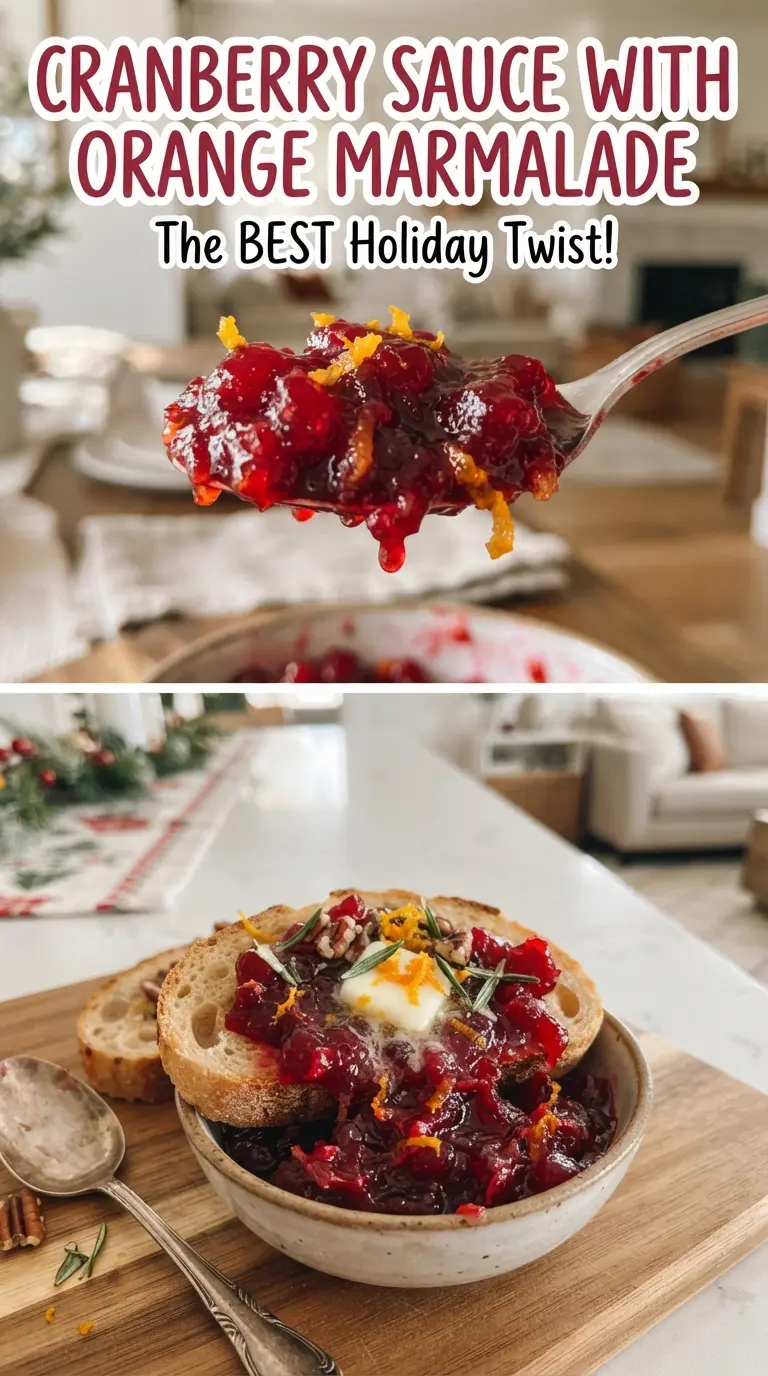
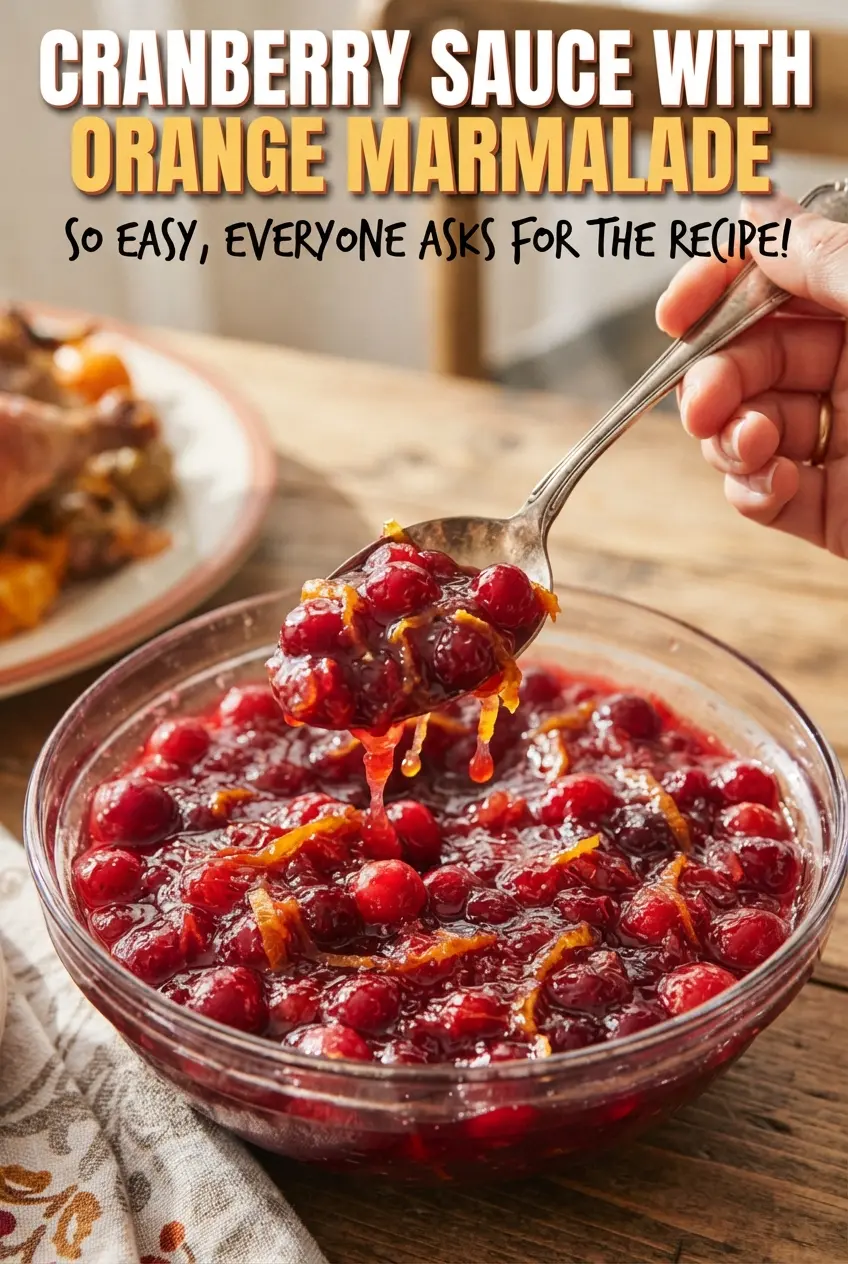
Glossy cranberry sauce with orange marmalade has a brighter, cleaner finish than the usual holiday version, with tart berries, citrus peel, and just enough sweetness to keep every spoonful balanced. It sets up with that soft, jammy texture that still holds a little shape on the plate, which is exactly what you want beside roast turkey, baked ham, or even spooned over leftover sandwiches.
The trick is treating the marmalade like a finishing ingredient instead of cooking it from the start. Cranberries need a full simmer to burst and thicken the base, but the marmalade goes in near the end so the peel stays lively and the sauce stays glossy instead of muddy. A little lemon juice sharpens the fruit, and the pinch of salt keeps the sweetness from flattening out.
Below, you’ll find the timing cue that tells you when the sauce is done, plus a few smart swaps if you’re working with a different citrus marmalade or need to make it ahead.
The marmalade gave it the prettiest gloss and the little bits of peel stayed bright instead of disappearing. It thickened up perfectly after chilling, and we kept sneaking spoonfuls straight from the fridge.
Save this cranberry sauce with orange marmalade for the holiday table — it’s the sweet-tart side that sets up glossy, bright, and spoonable every time.
The Part That Keeps Cranberry Sauce From Turning Flat
Cranberries need enough heat to burst and thicken the liquid around them, but they don’t want a hard boil for long. If you cook them aggressively the whole time, the sauce can turn dull and overly reduced before the sugar has a chance to melt cleanly. A steady simmer gives you intact flavor, better color, and a texture that lands somewhere between compote and soft jelly.
The other place people miss is the marmalade. It belongs at the end because it already has its own sugar and pectin, plus those little ribbons of peel that can go muddy if they cook too long. Stir it in after the berries have burst, then give the sauce just a few minutes more so it turns glossy and lightly spoonable.
- Cranberries — Fresh berries give the sharp pop that makes this sauce taste alive. Frozen cranberries work too; add them straight from frozen and expect the simmer to take a minute or two longer.
- Orange marmalade — This is the whole reason the sauce tastes layered instead of just sweet. Choose a marmalade with visible peel if you want that little burst of citrus texture.
- Lemon juice — It keeps the orange from taking over and sharpens the cranberry flavor. Bottled lemon juice works here if that’s what you have, but fresh juice tastes cleaner.
- Sugar — Granulated sugar is fine and dissolves cleanly in the boiling water. Brown sugar will make the sauce deeper and heavier, which changes the whole feel of the dish.
What Each Ingredient Is Actually Doing in This Recipe
- Primary ingredient (the star) — Quality matters most. Choose the best you can find.
- Cooking medium (oil, butter, or broth) — This carries flavors and prevents dryness.
- Seasonings (salt, pepper, spices, herbs) — Layer flavors so nothing overpowers. Build depth gradually.
- Aromatics (garlic, onion, herbs) — Cook with fat to bloom flavors. Become the foundation.
- Supporting ingredients — Complement the main ingredient without overpowering it.
- Sauce or liquid (if applicable) — Brings flavors together. Balance richness with acid.
- Acid (lemon, vinegar, wine, or other) — Brightens and prevents flat-tasting results.
- Final finish (garnish, glaze, or sauce) — Prevents one-dimensional taste and adds visual appeal.
Getting the Berries to Burst Without Cooking the Shine Out
Start with a clean syrup
Boil the sugar and water together first until the sugar disappears and the liquid looks clear. That base matters because it keeps the cranberries from sticking and gives them a head start on softening evenly. If you add the berries before the sugar dissolves, you can end up with a grainy bottom layer and uneven cooking.
Let the cranberries break on their own
Once the berries go in, drop the heat to a steady simmer and listen for the soft popping sound as they burst. Stir now and then, but don’t mash them unless you want a thicker, more rustic sauce. Ten minutes is usually enough; if the liquid still looks thin, keep going until most of the berries have split and the pan looks lightly syrupy around the edges.
Finish with marmalade, lemon, and salt
Stir in the marmalade, lemon juice, and salt once the berries have burst. The sauce should turn glossy almost right away, then tighten a little more as it cools. Let it bubble for just 2 to 3 minutes; if you boil it hard here, the citrus can lose its brightness and the sauce can take on a cooked, jammy heaviness.
Chill before judging the texture
Hot cranberry sauce always looks looser than it will when cold. Spoon it into a bowl, let it cool to room temperature, then refrigerate it until fully chilled. That rest is what gives you the final, spoonable set, so don’t decide it needs more simmering while it’s still warm.
What to Change When You Only Have Different Citrus or Need to Make It Ahead
Use raspberry or apricot marmalade
Raspberry marmalade makes the sauce a little deeper and redder, while apricot adds a softer, sweeter edge. Both work, but the orange version keeps the brightest citrus note and the most classic holiday balance.
Make it less sweet
Cut the sugar back by 2 to 3 tablespoons if you like a sharper sauce. The texture will still set, but the cranberry flavor will read tarter and less dessert-like, which works especially well next to rich meats.
Make it ahead for the holiday table
This sauce is better after it rests, so making it a day or two early is a smart move. The marmalade settles into the cranberry base as it chills, and the flavor gets rounder without losing its brightness.
Storage and Reheating
- Refrigerator: Keep covered for up to 1 week. It will thicken as it chills and loosen again slightly when served.
- Freezer: Freezes well for up to 2 months. Thaw overnight in the fridge and stir after thawing; the texture may look a little looser at first but usually comes right back.
- Reheating: Warm it gently over low heat or in short bursts in the microwave. High heat can make the sugar taste harsh and can push the sauce past that glossy, spoonable stage.
Answers to the Questions Worth Asking
Cranberry Sauce with Orange Marmalade
Ingredients
Equipment
Method
- Bring the sugar and water to a boil in a saucepan over medium-high heat, about 2–3 minutes, until the liquid looks clear and actively bubbling.
- Add the fresh cranberries and reduce to a simmer, maintaining a gentle bubble, then simmer for 10 minutes until the berries burst and the mixture thickens slightly.
- Stir in the orange marmalade, lemon juice, and salt, mixing until fully combined and streaked throughout the sauce.
- Simmer for 2–3 minutes, stirring occasionally, until the sauce turns glossy and looks slightly syrupy.
- Cool completely, then chill before serving so the sauce sets and becomes spoonable.