Thick, golden chicken stew is the kind of dinner that settles in and stays comforting all the way to the last spoonful. The broth turns silky without becoming heavy, the chicken stays tender, and the potatoes break down just enough to give the pot body while the carrots and celery keep their shape. It’s the sort of stew that tastes like it took all afternoon, even though the hands-on part is done fast.
The key is building flavor in layers instead of dumping everything into the pot at once. Browning the chicken first gives you those deep, savory bits on the bottom, and the flour gets cooked in before the broth goes in so the stew thickens smoothly instead of tasting pasty. Adding the cream near the end keeps it rich and clean-tasting, and the peas go in last so they stay bright and sweet.
Below, I’ve included the small details that matter most, from keeping the broth from turning cloudy to the best way to reheat leftovers without losing that creamy texture. If you’ve ever had a chicken stew come out thin, bland, or a little grainy, this version fixes those problems without making the process fussy.
The stew thickened up beautifully and the chicken stayed tender all the way through. I loved that the cream went in at the end instead of curdling, and the leftovers were even better the next day.
Save this creamy chicken stew for the nights when you want tender chicken, soft potatoes, and a broth that cooks down into a rich, spoon-coating finish.
The Reason the Broth Stays Thick Instead of Turning Watery
The biggest mistake in chicken stew is adding liquid too early and expecting the flour to fix everything later. It doesn’t. The flour needs to coat the vegetables and cook for a full minute before the broth goes in, otherwise the stew can taste raw and thin at the same time. Once the broth hits the pot, stir constantly at first so the starch disperses instead of clumping around the chicken or sinking to the bottom.
The other thing that matters here is heat control. A hard boil after the cream goes in can make the texture look broken or greasy, especially if the stew has reduced a lot. A steady simmer is enough to soften the potatoes and marry the flavors without pushing the dairy too far.
What Each Ingredient Is Actually Doing in the Pot

- Boneless chicken thighs — Thighs stay juicy through the full simmer and give the stew more depth than breast meat. If you swap in chicken breast, cut the simmer time back and pull it as soon as it’s cooked through, or it can turn dry.
- Chicken broth — This is the base of the stew, so use a broth you’d actually sip. A low-sodium version is the easiest to control because the stew reduces a little as it cooks.
- Heavy cream — Cream adds body and rounds out the broth at the end. Half-and-half can work in a pinch, but the finished stew will be thinner and a little less luxurious.
- Potatoes — They do two jobs: they turn tender and they help thicken the stew naturally as they simmer. Waxy potatoes hold their shape best, while russets break down more and make the broth even thicker.
- Flour, butter, and olive oil — The fat helps brown the chicken and carry the flour so the stew thickens smoothly. Don’t skip the butter-oil combination; butter gives flavor, while the oil keeps the butter from scorching too fast.
- Frozen peas — Add them at the very end so they stay bright and sweet. If they go in too early, they lose color and taste flat.
Building the Pot in the Right Order
Browning the chicken first
Season the chicken well before it hits the hot fat, then leave it alone long enough to develop a deep golden crust. If you crowd the pot, the pieces steam instead of brown, and you lose the savory foundation that makes the stew taste cooked all the way through. Pull the chicken out once it has color on both sides; it finishes later in the broth.
Softening the vegetables
Cook the onion, carrots, and celery in the same pot until the onion goes translucent and the edges of the vegetables start to pick up color from the bottom of the pan. That browned residue is part of the flavor, so keep stirring and scraping as the vegetables release their moisture. Garlic goes in only for the last minute; any longer and it can turn bitter.
Thickening before simmering
Stir the flour into the vegetables until it disappears into the fat and looks a little paste-like. That brief cooking time matters because it removes the raw flour taste and gives the broth a smoother texture later. Pour the broth in gradually while stirring so the base turns velvety instead of lumpy.
Finishing with cream and peas
Once the potatoes are tender, lower the heat before adding the cream. Stir until the broth turns pale and silky, then add the peas and let them warm through for just a few minutes. If the stew boils hard after the cream goes in, the texture can look greasy on the surface, so keep the simmer gentle.
How to Adapt This Stew Without Losing the Texture
Dairy-Free Version
Swap the butter for more olive oil and use full-fat coconut milk or an unsweetened oat cream at the end. Coconut milk adds richness but brings a faint sweetness, while oat cream keeps the flavor closer to the original. Keep the heat low when you add it so the texture stays smooth.
Gluten-Free Thickening
Replace the flour with a cornstarch slurry stirred in near the end, after the potatoes are tender. Cornstarch thickens quickly, so let the stew bubble for a minute or two to remove the raw starch taste. The finished broth will be glossy and a little lighter than the flour-based version.
Using Chicken Breast Instead
Chicken breast works if that’s what you have, but add it later so it doesn’t overcook. Brown it quickly, then return it to the pot only long enough to finish through the simmer. Breast meat gives a cleaner flavor, but it won’t stay as plush as thighs.
Storage and Reheating
- Refrigerator: Store for up to 4 days in a covered container. The stew thickens as it chills, especially around the potatoes.
- Freezer: It freezes well, but the potatoes can soften a bit after thawing. Cool completely before freezing and leave a little space at the top of the container.
- Reheating: Warm it gently on the stove over low heat, adding a splash of broth if needed. Don’t boil it hard or the cream can separate and the chicken can turn stringy.
Questions I Get Asked About This Stew
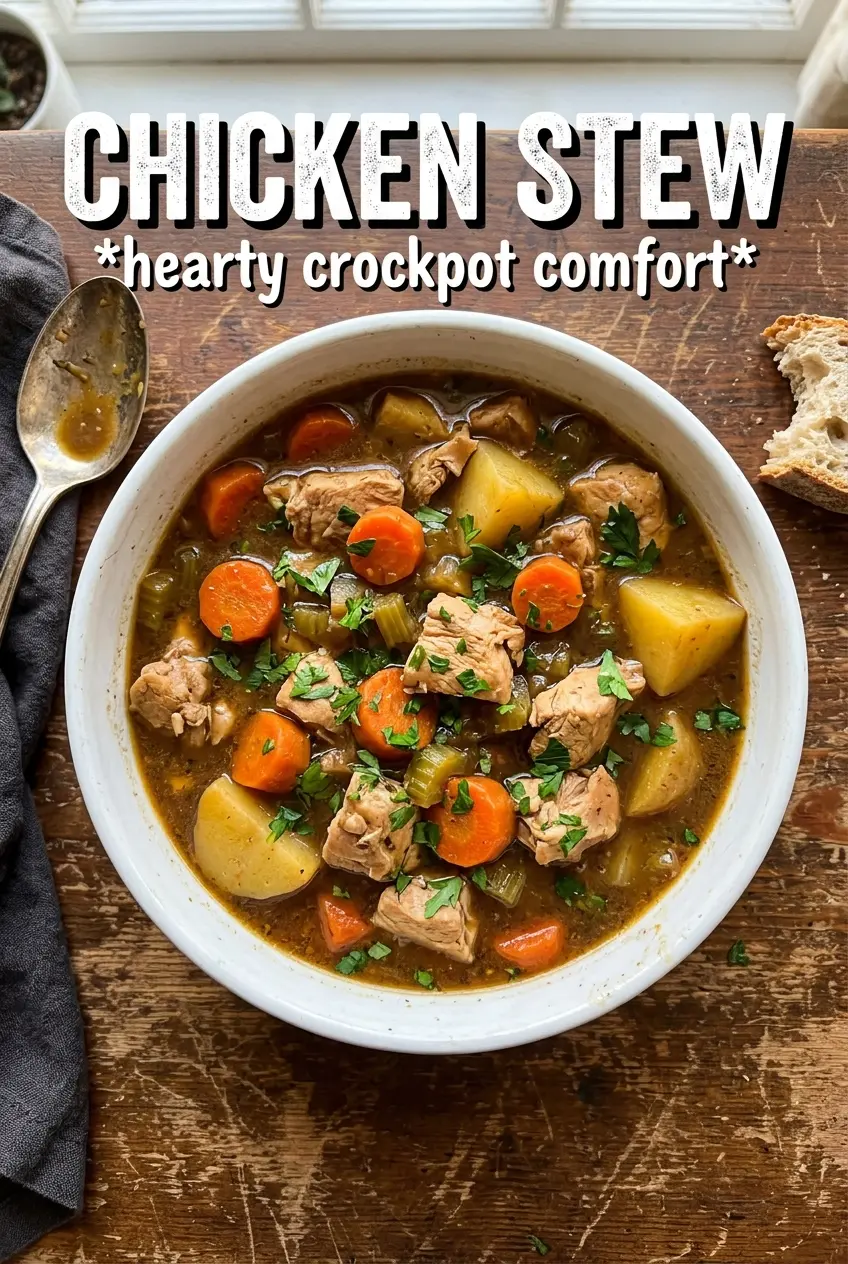
Chicken Stew
Ingredients
Equipment
Method
- Season the chicken thighs with salt and pepper, then brown in butter and olive oil in a Dutch oven over medium-high heat for 4 minutes per side. Remove to a plate.
- Sauté the onion, carrots, and celery in the pot for 5 minutes. Add the garlic and cook for 1 minute.
- Stir in the all-purpose flour and cook for 1 minute until absorbed.
- Gradually pour in the chicken broth while stirring constantly. Add the dried thyme, dried rosemary, and bay leaf, then return the chicken to the pot.
- Bring the mixture to a boil, reduce heat, and simmer for 20 minutes. Visual cue: the broth should bubble gently with a thickening texture.
- Add the potatoes and simmer for 15 more minutes until tender. Visual cue: a knife should slip in easily through the potato cubes.
- Stir in the heavy cream and frozen peas, then simmer for 5 minutes. Visual cue: the broth turns creamy and the peas brighten in color.
- Remove the bay leaf, then season with salt and pepper to taste and garnish with fresh parsley. Visual cue: parsley speckles the surface just before serving.