Creamy garlic chicken gnocchi soup lands in the bowl with a velvety broth, tender shreds of chicken, and those little potato gnocchi that turn pillowy instead of heavy when they’re cooked in the soup itself. The spinach melts down into the cream just enough to give the pot some color and balance, while the parmesan and garlic make every spoonful taste rich without turning muddy or overly thick.
What makes this version work is the order. The onion softens first, then the garlic gets just a short bloom so it stays sweet instead of harsh. The broth and cream simmer before the gnocchi go in, which keeps the dumplings from falling apart or soaking up too much liquid before they’re cooked. A little nutmeg is enough to round out the dairy and make the soup taste fuller without shouting for attention.
Below you’ll find the small details that matter most, from when to add the parmesan to how to keep the soup silky if you’re making it ahead. If you’ve ever had gnocchi soup turn gluey or bland, this version fixes both problems.
The gnocchi stayed tender and the broth thickened up beautifully without getting pasty. I used rotisserie chicken and it tasted like I’d simmered it all afternoon.
Love the silky broth, pillowy gnocchi, and garlic-parmesan finish in this soup? Save it to Pinterest for the nights when you want one pot and a bowl that eats like a full meal.
The Difference Between Silky Soup and a Heavy, Starchy Pot
The trap with gnocchi soup is letting the dumplings sit in a rolling boil for too long. Potato gnocchi release starch fast, and if the soup is too aggressive or you cook it past the float-and-finish stage, the broth turns thick in a chalky way instead of a creamy way. This recipe stays under control because the gnocchi only cook until they rise, then the chicken and spinach go in just long enough to warm through and wilt.
The other thing that matters is the dairy. Heavy cream can handle a gentle simmer, but it doesn’t like a hard boil, especially once parmesan enters the pot. Keep the heat moderate and stir after the cheese goes in so the soup stays smooth. If it ever looks like it’s tightening too much, a splash of broth loosens it without washing out the garlic and parmesan.
What Each Ingredient Is Doing in the Bowl

- Potato gnocchi — These are the texture anchor. Shelf-stable or refrigerated gnocchi both work, but use good-quality ones so they hold their shape instead of turning sticky. Don’t preboil them; they go straight into the soup and finish in the broth, which gives them a softer, more integrated texture.
- Heavy cream — This is what makes the broth taste lush and coats the back of a spoon. Half-and-half can work in a pinch, but the soup will be thinner and a little less stable when reheated. If you swap it, keep the heat lower than you think you need.
- Parmesan — Use freshly grated parmesan if you can. Pre-grated cheese often contains anti-caking agents that can make the soup grainy instead of smooth. Stir it in off the hottest part of the heat so it melts evenly.
- Chicken breast — Cooked shredded chicken keeps this fast and gives the soup a clean, mild base. Rotisserie chicken is the best shortcut here because it stays juicy and flavorful. If you’re cooking the chicken fresh, don’t overcook it; dry chicken gets stringy fast in a creamy soup.
- Garlic and onion — These build the base, so don’t rush them. The onion needs to turn soft and translucent before the broth goes in, and the garlic only needs a minute or two so it tastes sweet, not sharp. That short sauté is what keeps the soup from tasting flat.
- Nutmeg and Italian seasoning — Nutmeg is subtle but important. It gives the dairy depth without making the soup taste spiced. Italian seasoning brings the herb note, but don’t overdo it or the broth starts reading like pasta sauce instead of soup.
Building the Soup So the Dairy Stays Smooth
Softening the Onion and Garlic First
Melt the butter in a large pot, then cook the diced onion until it’s soft and glossy, not browned. Once the onion is ready, add the garlic and Italian seasoning and stir just until fragrant. If the garlic starts to take on color, the heat is too high and it will turn bitter in the final soup.
Creating the Creamy Broth
Pour in the chicken broth and bring it to a gentle simmer before adding the cream. That order helps the dairy blend into an already hot liquid instead of shocking it in a dry pan. Keep the heat low enough that the surface only gives you small bubbles; a boil can make the cream look broken or greasy.
Cooking the Gnocchi Without Overdoing It
Add the gnocchi and cook until they float and look slightly puffed, usually 3 to 4 minutes. That’s the window where they’re tender but still intact. If you leave them in much longer, they can swell and go gummy, especially as the soup sits.
Finishing With Chicken, Spinach, and Cheese
Stir in the shredded chicken and spinach just until the spinach wilts. Then pull the pot off the hottest part of the burner before adding parmesan and nutmeg so the cheese melts into the broth instead of clumping. Taste at the end and season with salt and pepper after the parmesan goes in, because the cheese adds a good amount of salt on its own.
How to Adjust This Soup Without Losing the Creamy Texture
Make It Dairy-Free
Use full-fat coconut milk or an unsweetened dairy-free cooking cream instead of heavy cream, and skip the parmesan unless you have a good plant-based version that melts cleanly. The soup will still be rich, but the flavor shifts a little sweeter and less savory, so a heavier hand with garlic and black pepper helps balance it.
Use Rotisserie Chicken for a Faster Night
This is the easiest swap and the one I use most often. Add the shredded rotisserie chicken at the very end just to warm it through, since it’s already cooked and can dry out if it simmers too long. You’ll get a more savory, slightly richer soup because the roasted seasoning on the chicken carries into the broth.
Make It Gluten-Free
Use certified gluten-free gnocchi, since many regular versions contain wheat. The soup method doesn’t change at all, but gluten-free gnocchi can be a little more delicate, so stop cooking them as soon as they float and feel tender in the center.
Stretch It for a Bigger Crowd
Add an extra cup of broth and another handful of spinach if you want the soup to feed more people without feeling skimpy. Keep the cream and parmesan proportional so the broth still tastes balanced. If you add too much liquid without adjusting the seasoning, the soup turns thin and the garlic gets lost.
Storage and Reheating
- Refrigerator: Store in an airtight container for up to 3 days. The gnocchi will keep soaking up broth, so expect the soup to thicken.
- Freezer: It’s not my first choice for freezing because cream soups can separate and gnocchi turn mealy after thawing. If you must freeze it, do so without the gnocchi and add fresh gnocchi when reheating.
- Reheating: Warm it gently over low heat on the stovetop with a splash of broth to loosen it. Don’t boil it, or the cream can split and the gnocchi can turn too soft.
Answers to the Questions Worth Asking
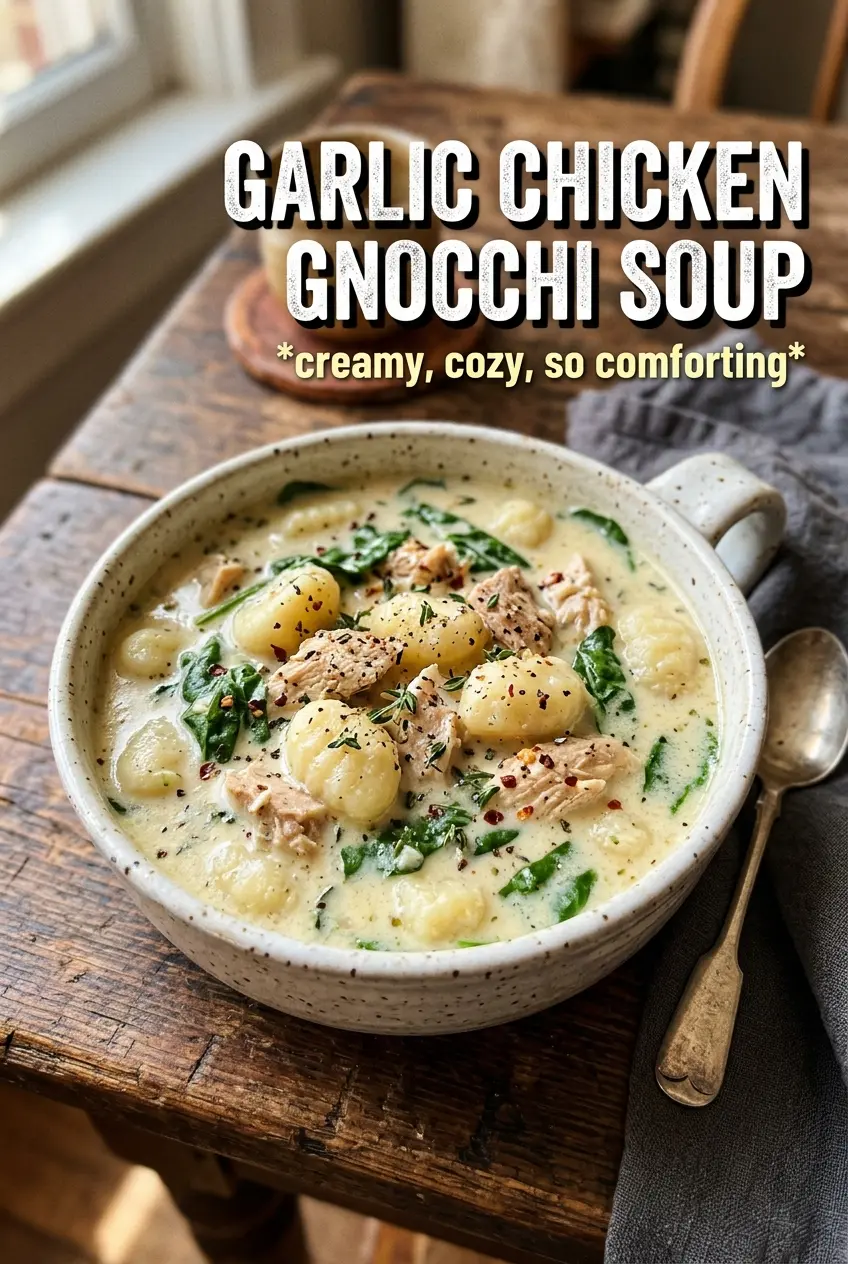
Creamy Garlic Chicken Gnocchi Soup
Ingredients
Equipment
Method
- Melt butter in a large pot over medium heat, then sauté the diced onion for 4 minutes until softened and translucent.
- Add minced garlic and Italian seasoning and cook for 2 minutes, stirring, until fragrant.
- Pour in the chicken broth and bring to a simmer, then stir in the heavy cream until smooth and combined.
- Add the potato gnocchi and simmer for 3-4 minutes, stirring gently, until the gnocchi float and are cooked through.
- Stir in the shredded chicken and baby spinach and cook for 2 minutes until the spinach wilts.
- Stir in the grated parmesan and nutmeg, then season with salt and pepper to taste.
- Ladle into bowls and top with extra parmesan and fresh basil to serve.