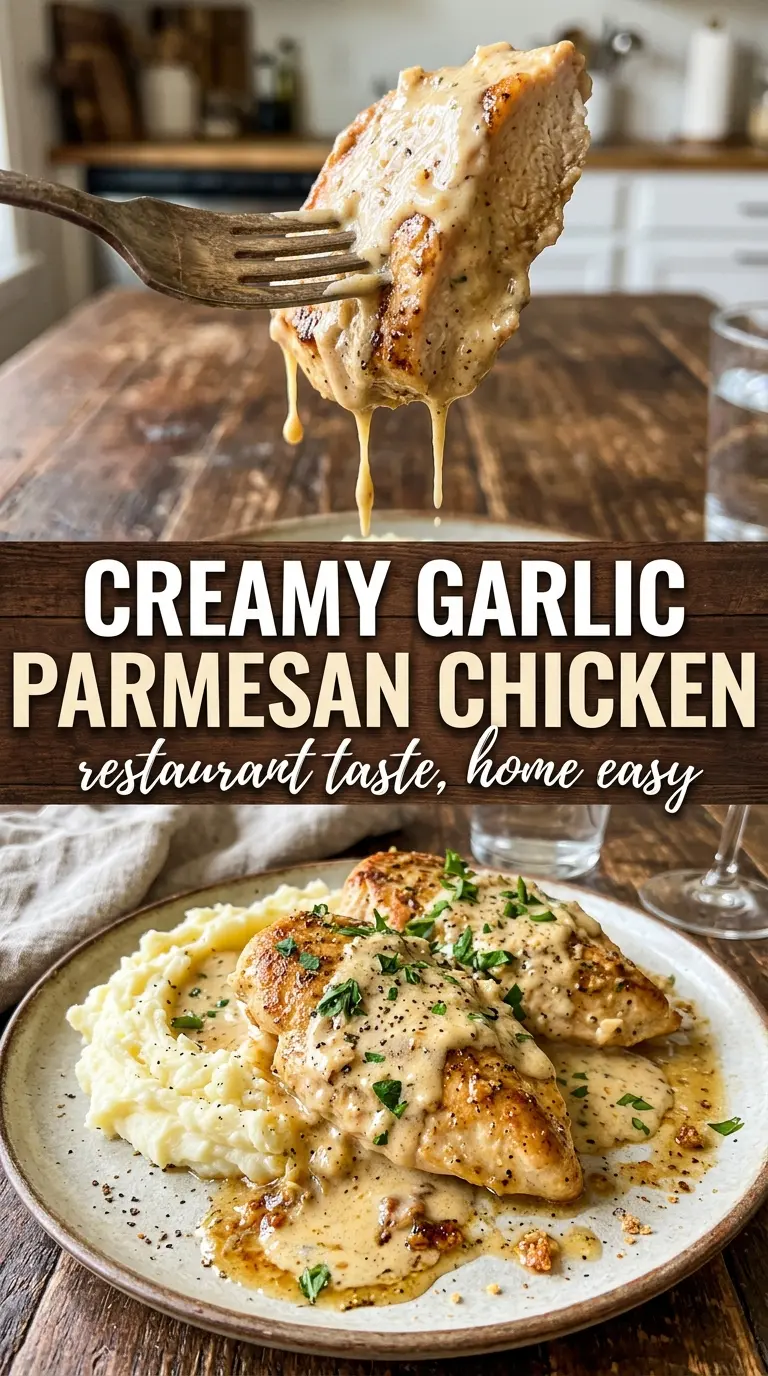
Golden seared chicken breasts tucked into a garlic Parmesan cream sauce earn their place on the dinner rotation fast. The sauce turns glossy and thick enough to cling to every bite, while the chicken stays juicy from a hard sear and a short finish in the pan. It tastes like something you’d order at a cozy Italian-American restaurant, but it comes together in one skillet with a short ingredient list.
The key is building flavor in layers. First, the chicken gets real color in hot oil instead of being steamed in the sauce. Then the garlic cooks just long enough to perfume the pan before the wine or broth lifts up the browned bits underneath. The cream, broth, and freshly grated Parmesan melt together into a sauce that thickens on its own as it simmers, without needing a flour paste or a heavy roux.
Below, I’ll walk through the small details that keep the sauce smooth and the chicken tender, plus a few smart ways to adapt it when you want to change the cut of chicken or make it work with what’s already in your kitchen.
The sauce thickened up beautifully and coated the chicken without feeling heavy. I used broth instead of wine and still got that rich garlic-Parmesan flavor my husband kept going back for.
Save this creamy garlic Parmesan chicken for a skillet dinner with a glossy sauce that clings to every bite.
The Difference Between a Silky Sauce and a Grainy One
Parmesan sauces go wrong when the cheese hits a pan that’s too hot or when the cheese is pre-shredded and coated with anti-caking starch. Freshly grated Parmesan melts more cleanly and gives the sauce its body without turning sandy. Keep the simmer gentle once the cream goes in; a hard boil can make the sauce separate before it has time to thicken properly.
- High heat at the start matters. The chicken needs real browning for flavor, so give it space in the pan and don’t move it around too soon.
- Deglazing is not optional. The wine or broth pulls up the browned bits from the skillet, and that’s where a lot of the savory depth comes from.
- Fresh Parmesan changes the texture. Pre-grated cheese can leave the sauce slightly chalky and less smooth.
- Low simmer, not a boil. The sauce should thicken to the point where it coats a spoon, not churn aggressively.
What Each Ingredient Is Doing in the Pan
- Chicken breasts — Boneless, skinless breasts give you a lean main that cooks quickly. If yours are thick, pound them to an even thickness so they finish at the same time the sauce is ready.
- Olive oil and butter — The oil handles the initial sear, while the butter adds richness when the garlic goes in. Using both gives you better browning than butter alone.
- Garlic — Fresh minced garlic is worth it here because it builds the sauce’s backbone. Cook it just until fragrant; once it browns, it turns bitter fast.
- White wine or chicken broth — Wine adds a brighter edge, while broth keeps the sauce mellow and pantry-friendly. Either one will deglaze the pan and help the sauce pick up flavor from the skillet.
- Heavy cream — This is what makes the sauce lush and stable. Half-and-half can work in a pinch, but the sauce will be thinner and a little more delicate.
- Freshly grated Parmesan — This is the ingredient that gives the sauce its saltiness and that slight nutty pull. Grate it yourself so it melts smoothly into the cream instead of clumping.
- Italian seasoning, thyme, and parsley — The dried seasoning seasons the sauce from within, while the fresh herbs brighten it right at the end. The herbs don’t just decorate the plate; they keep the sauce from tasting flat.
Building the Sauce So It Stays Glossy
Season and Sear the Chicken First
Season both sides of the chicken generously so the meat itself tastes seasoned, not just the sauce around it. Heat the oil until it shimmers, then lay the chicken in without crowding the skillet. If the pan is packed, the chicken steams and you lose that deep golden crust. Let it cook until it releases on its own and the surface turns brown, then flip and cook the second side.
Use the Fond, Not a Clean Pan
When the chicken comes out, leave the browned bits in the pan. That fond is concentrated flavor, and the butter, garlic, and liquid will pull it up into the sauce. Stir the garlic for only about a minute so it softens without browning. Once you add the wine or broth, the pan should sizzle and loosen immediately.
Finish the Cream Sauce Gently
After the cream, broth, Parmesan, and Italian seasoning go in, keep the heat at a steady simmer. The sauce should thicken gradually and look glossy, with small lazy bubbles around the edge. If it looks broken or grainy, the heat was too high or the cheese went in too fast. Pull the skillet off the burner for a minute and whisk until it comes back together.
Return the Chicken at the End
Slide the chicken back into the sauce only after it has thickened. Spoon the sauce over the top so the chicken warms through and picks up flavor without overcooking. You want the breasts to stay tender, not spend extra time boiling in the sauce. The finished sauce should coat the back of a spoon and settle in a smooth ribbon.
Three Ways to Adjust the Skillet Without Losing What Makes It Good
Use chicken thighs for a richer result
Boneless, skinless thighs work well here and stay especially juicy. They need a little extra time in the skillet, but the sauce and herb finish still work the same way. The flavor gets a touch deeper and the texture stays more forgiving if you’re nervous about drying out chicken breasts.
Make it gluten-free without changing the technique
This recipe is naturally gluten-free as long as your broth is certified gluten-free. The sauce gets its thickness from cream and Parmesan, not flour, so you don’t need a separate thickener. That keeps the texture silky instead of pasty.
Skip the wine and use broth only
Chicken broth gives you a milder, family-friendly version that still tastes rich once the Parmesan goes in. The sauce will be slightly less bright, so the garlic and herbs matter a little more. Let the broth reduce for a minute before adding the cream so the sauce doesn’t taste watered down.
Make it dairy-free only if you change the whole sauce idea
A straight dairy-free swap won’t give you the same sauce, because Parmesan and cream are the main texture builders here. If you need a dairy-free version, use a plain unsweetened plant cream and a dairy-free Parmesan-style alternative, then keep the heat low and expect a lighter, less glossy sauce. It will work, but it won’t have the same savory richness as the original.
Storage and Reheating
- Refrigerator: Store leftovers in an airtight container for up to 3 days. The sauce will thicken as it chills.
- Freezer: The chicken freezes okay, but the cream sauce can separate when thawed. If you freeze it, expect a less smooth texture and reheat it gently.
- Reheating: Warm it in a skillet over low heat with a splash of broth or cream, stirring often. High heat is the fastest way to make the sauce break, and microwaving too long can dry out the chicken.
Answers to the Questions Worth Asking

Creamy Garlic Parmesan Chicken
Ingredients
Equipment
Method
- Season the chicken breasts generously on both sides with salt, pepper, garlic powder, and smoked paprika.
- Heat olive oil in a large cast iron skillet over medium-high heat until shimmering.
- Sear chicken for 5-6 minutes per side until golden and internal temperature reaches 165°F; remove the chicken to a plate.
- Add butter and minced garlic to the same skillet and cook for 1 minute until fragrant.
- Deglaze with white wine and cook for 2 minutes, scraping up the browned bits from the pan.
- Stir in heavy cream, chicken broth, Parmesan cheese, and Italian seasoning, then simmer for 4-5 minutes until the sauce is thick and glossy.
- Return the chicken to the pan and spoon the sauce over each breast.
- Garnish with fresh thyme and parsley and serve, with the sauce visibly coating the chicken.