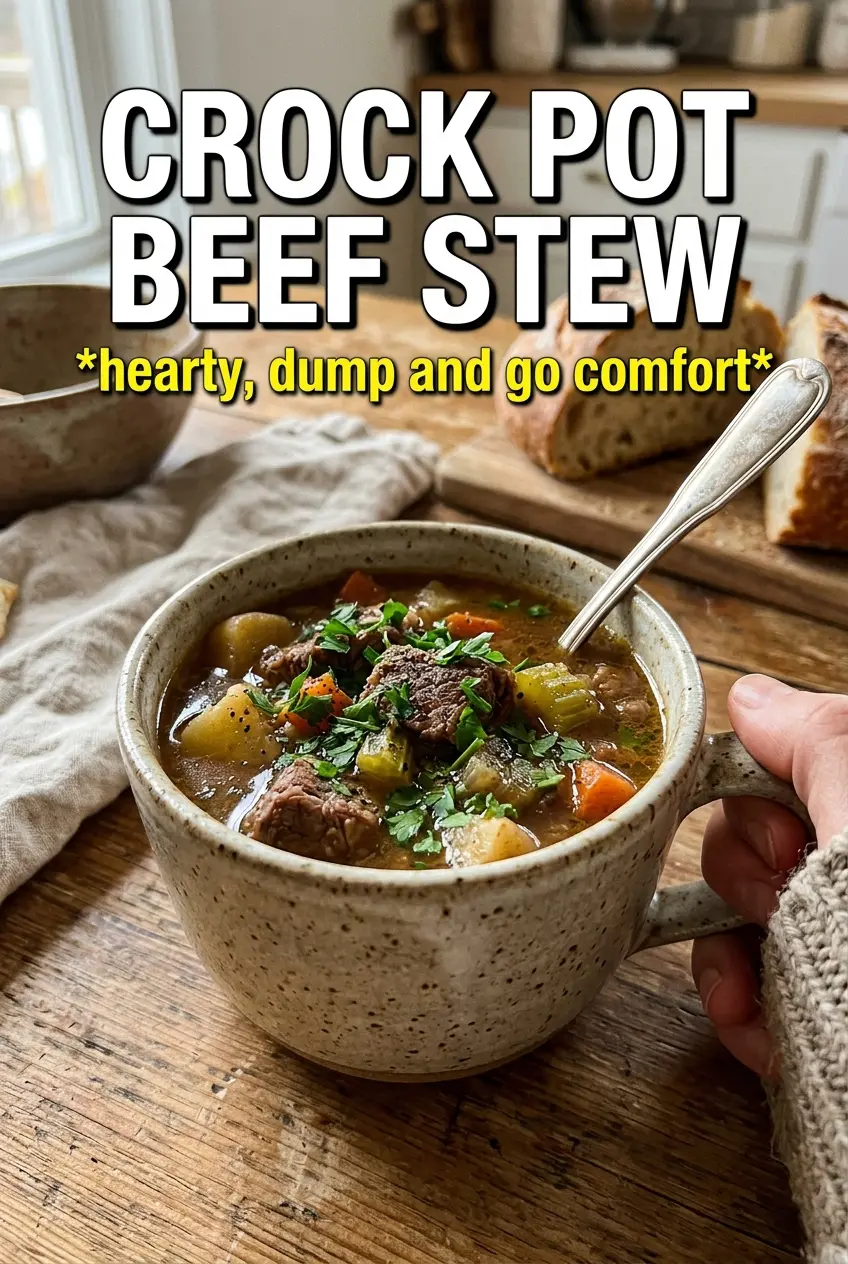
Deep, spoon-coating beef stew is one of those meals that earns its keep the minute the weather turns cold, but this crock pot version works because it doesn’t try to rush the meat. The beef turns tender enough to break apart with a spoon, the vegetables hold their shape, and the broth cooks down into something rich and savory instead of thin and muddy. It tastes like it had all day to come together, because it did.
The order matters here. The potatoes, carrots, celery, and onion go on the bottom so they stay nestled in the liquid and soften evenly, while the beef sits on top and slowly gives the stew its body. A little tomato paste deepens the broth, the Worcestershire adds backbone, and the red wine brings a roundness you can’t get from broth alone. If you skip the final cornstarch slurry, the stew will taste good but still read too thin on the spoon.
Below you’ll find the small details that keep the beef tender instead of stringy, plus a couple of practical swaps if you need to work with what you’ve got in the pantry.
The beef came out unbelievably tender, and the cornstarch slurry thickened the broth just enough without turning it gluey. I used the red wine, and the stew tasted even better the next day.
Save this Crock Pot Beef Stew for the nights when you want fall-apart beef, hearty vegetables, and a broth that finishes thick and rich.
The Part That Keeps the Beef Tender Instead of Drying Out
Beef stew gets tough when the heat is too aggressive or the meat sits above the liquid and cooks unevenly. A slow cooker fixes most of that, but the cut still matters: chuck has enough marbling and connective tissue to turn silky after hours of low heat. If you use a lean stew meat, you’ll get cubes that look fine for a while and then turn stringy before the broth has any real depth.
The other thing people miss is the finish. This stew doesn’t need flour at the start, where it can clump and make the broth pasty. The cornstarch slurry goes in at the end, after the beef is already tender, so it thickens the liquid without muddying the flavor or coating the vegetables in starch.
What Each Ingredient Is Actually Doing in the Pot

- Beef chuck — This is the cut that gives you the right texture after a long simmer. It has enough fat and connective tissue to go tender instead of dry. If you swap in a leaner cut, the stew will lose that soft, shreddable finish.
- Red wine or extra beef broth — Wine adds depth and a little acidity that brightens the broth. If you don’t want to use wine, extra broth still works, but the stew will taste a little flatter. If you do use wine, pick something dry and drinkable; the slow cooker won’t hide a harsh bottle.
- Tomato paste and diced tomatoes — Tomato paste gives the broth a darker, richer base, while diced tomatoes add body without turning this into a tomato stew. The paste needs to be stirred in well so it dissolves into the liquid instead of clinging to one spot.
- Worcestershire sauce — This is the quiet ingredient that makes the broth taste finished. It brings salt, tang, and a meaty depth that round out the beef. There isn’t a great substitute if you want the same savory backbone, though a little soy sauce can cover part of the same ground.
- Baby potatoes, carrots, celery, and onion — These hold the stew together and keep the pot from feeling like just beef in gravy. Cutting the carrots thick and leaving the potatoes halved helps them keep their shape through the long cook. Smaller pieces will soften faster and can break apart before the beef is ready.
How to Layer the Pot So the Stew Cooks Evenly
Build the Vegetable Bed First
Start with the potatoes, carrots, celery, and onion in the bottom of the slow cooker. That puts them closest to the heat and keeps them immersed in the liquid as it builds, which helps them soften without drying out. If you pile the beef underneath, the vegetables can sit above the broth and steam unevenly.
Let the Beef Sit on Top
Season the chuck well with salt and pepper, then nestle it over the vegetables before adding the liquids and aromatics. The beef doesn’t need to be browned for this version to work, but it does need space for the broth to move around it. A packed crock pot can leave some pieces tender and others still stubborn, so keep the chunks in a loose layer.
Finish With the Slurry, Not Earlier
Cook until the beef falls apart easily with a fork, then pull out the bay leaves before adding the cornstarch slurry. Stir it in and give the stew another 20 to 30 minutes on High so the broth turns glossy and thick. If you add the slurry too early, it can settle and lose its thickening power before the stew is done.
How to Adapt This for the Pantry You Actually Have
Skip the Wine Without Losing the Stew
Use the full amount of beef broth instead of wine. You’ll lose some of the depth and acidity, but the tomato paste and Worcestershire still give the broth enough backbone to taste full and savory.
Make It Gluten-Free
This stew is naturally close to gluten-free, but Worcestershire sauce can sometimes contain wheat, so check the label. Cornstarch is the right thickener here because it keeps the broth glossy without relying on flour.
Use Fresh Herbs If That’s What You Have
Fresh thyme and rosemary both work, but use about three times the amount of fresh thyme and a little less rosemary because fresh rosemary can take over fast. Strip the leaves off the stems and add them with the broth so they soften and infuse the pot.
Storage and Reheating
- Refrigerator: Store in an airtight container for up to 4 days. The broth will thicken as it chills.
- Freezer: Freezes well for up to 3 months. Cool completely first, then freeze in portions so the vegetables don’t get crushed when you thaw it.
- Reheating: Reheat gently on the stove over medium-low or in the microwave in short bursts, stirring between each one. Don’t boil it hard or the potatoes can break down and the beef can go stringy.
Answers to the Questions Worth Asking
Crock Pot Beef Stew
Ingredients
Equipment
Method
- Season the beef chuck generously with salt and pepper to coat all sides.
- Add the potatoes, carrots, celery, and onion to the bottom of a slow cooker.
- Nestle the beef on top, then add the garlic, beef broth, red wine (or extra beef broth), diced tomatoes, tomato paste, Worcestershire sauce, dried thyme, dried rosemary, and bay leaves.
- Cook on Low for 8-10 hours, or High for 4-5 hours, until the beef is fall-apart tender and the vegetables are soft.
- Remove the bay leaves from the stew, then stir the cornstarch slurry (cornstarch mixed with water) into the hot liquid.
- Cook on High for 20-30 minutes until the broth thickens to a stew-like consistency.
- Taste and season with additional salt and pepper as needed, then serve hot.