Fork-tender pork roast with dark, savory gravy is one of those meals that quietly takes over the dinner rotation because it asks so little and gives so much. The meat turns soft enough to slice or shred, and the gravy comes out rich and spoon-coating without needing a separate pan sauce or last-minute scramble at the stove.
The trick here is building flavor in layers. A quick sear gives the roast a browned crust and leaves fond in the skillet, which is where a lot of the depth comes from. The slow cooker does the rest of the work, but the onion soup mix, Worcestershire sauce, and cream of mushroom soup need that long, gentle cook time to melt together into something that tastes like it simmered all afternoon.
Below, I’ve included the small details that keep the pork from tasting flat, plus the best way to thicken the gravy at the end if you want it to cling to every bite.
The pork turned out unbelievably tender and the gravy thickened up perfectly after I added the cornstarch slurry. My husband kept asking for “just a little more sauce” on his plate.
Like this crock pot pork roast and gravy? Save it to Pinterest for a low-effort Sunday dinner with rich gravy and fork-tender pork.
The Sear That Gives This Gravy Real Depth
The biggest mistake with slow cooker pork roast is skipping the browning step and then wondering why the gravy tastes one-note. That quick sear does two jobs: it adds a browned crust to the meat and creates caramelized bits in the skillet that you can carry into the cooker. Those little browned bits matter more here than any single seasoning blend.
Another thing worth knowing: pork loin and pork shoulder behave differently. Loin slices cleanly and stays a little leaner, while shoulder shreds more easily and brings a richer, more forgiving texture. Either works, but shoulder gives you more insurance if the roast goes an extra half hour.
- Resting the seasoning on the meat for a few minutes helps the salt start working before it hits the pan, which gives you better flavor all the way through.
- The onion layer under the roast keeps the pork from sitting directly on the bottom of the slow cooker and adds sweetness as it softens.
- Low heat is the safer path if you want slices that stay intact. High heat is fine in a pinch, but it pushes the pork from tender to dry faster once the roast is done.
What Each Ingredient Is Actually Doing in This Gravy
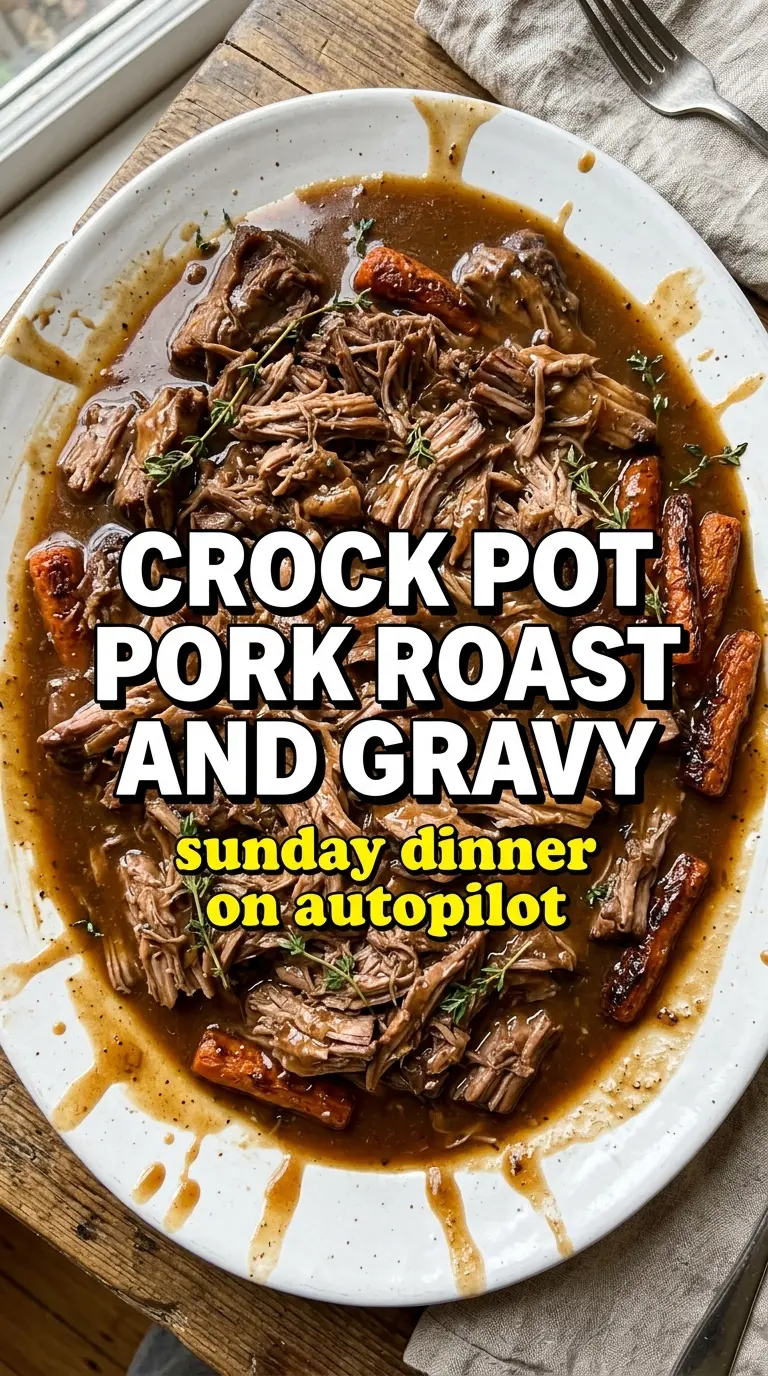
- Pork roast — A pork shoulder gives the loosest, most pull-apart texture, while pork loin slices a little neater and leans leaner. If you use loin, watch the cooking time closely so it stays juicy.
- Cream of mushroom soup — This is the body of the gravy. It brings thickness and a little built-in richness, and there isn’t a clean one-to-one substitute if you want the same cozy, spoonable texture.
- Beef broth — It deepens the gravy so it doesn’t taste like condensed soup straight from the can. Chicken broth works in a pinch, but the flavor will be lighter.
- Worcestershire sauce — This is the quiet ingredient that makes the gravy taste more finished. It adds savory tang and a little complexity without turning the dish into something that tastes sharp.
- Onion soup mix — This adds seasoning, salt, and onion flavor all at once. If you swap it out, you’ll need to rebuild that savory base with extra onion powder, salt, and a little beefy depth.
- Onion and garlic — Fresh aromatics soften under the roast and give the sauce a cooked-from-scratch backbone. Garlic powder alone won’t give you the same roundness.
Let the Slow Cooker Do the Work, Then Fix the Gravy at the End
Building the Base Under the Roast
Start with the onion and garlic in the bottom of the slow cooker, then set the seared pork on top. That bed of aromatics keeps the meat from scorching and gives the gravy a better starting point as the roast cooks. If you skip the sear or pile everything in cold without any layering, the finished sauce will still work, but it won’t have the same depth.
Mixing the Gravy Before It Goes In
Stir the soup, broth, Worcestershire sauce, and onion soup mix until the mixture looks smooth and loose enough to pour. You want the soup fully broken up before it hits the cooker, because clumps can hide at the edges and leave you with uneven seasoning. Pour it over the roast without stirring hard; the liquid will circulate on its own.
Cooking Until the Pork Gives Easily
Cook on Low for 8 to 9 hours for the most forgiving result. The pork is ready when a fork slides in with almost no resistance and the meat starts to separate at the edges. If you cook loin too long, it can dry out and get stringy, so start checking toward the end of the time window.
Thickening the Gravy Without Lumps
Pull the pork out first, then turn the cooker to High if you want a thicker sauce. Stir in the cornstarch slurry a little at a time and let the gravy bubble until it turns glossy and coats a spoon. If it looks thin at first, give it a few minutes; cornstarch needs heat to work, and rushing this part is how you end up with a chalky sauce.
Use pork shoulder for shredding, pork loin for neat slices
Shoulder gives you the softest, most forgiving texture and stands up best to a long cook. Pork loin stays a little leaner and slices cleanly, but it needs closer attention so it doesn’t dry out. Pick based on the texture you want on the plate.
Make it gluten-free with a soup swap
The onion soup mix and cream of mushroom soup are the two places gluten can sneak in. Use certified gluten-free versions of both, or replace the condensed soup with a homemade thickened broth base if you already have one you trust. The texture stays creamy, and the gravy still cooks down into something rich.
Skip the cornstarch if you want a looser gravy
The gravy is plenty spoonable straight from the slow cooker if you don’t need it extra thick. Leaving out the slurry gives you a thinner sauce that soaks into mashed potatoes or rice more easily. Add the thickener only after you taste the finished cooking liquid.
Add mushrooms or carrots for a fuller one-pot dinner
Sliced mushrooms and chunky carrots both work well here because they can handle the long cook time. Mushrooms deepen the gravy, while carrots add a little sweetness and turn the dish into a more complete meal without changing the method.
Storage and Reheating
- Refrigerator: Store the pork and gravy for up to 4 days. The gravy may thicken as it chills, which is normal.
- Freezer: It freezes well for up to 3 months. Cool it completely, then pack the pork and gravy together so the meat stays moist as it thaws.
- Reheating: Reheat gently on the stovetop or in the microwave with a splash of broth to loosen the gravy. Strong heat can make lean pork taste dry, so warm it slowly until it’s hot all the way through.
Answers to the Questions Worth Asking
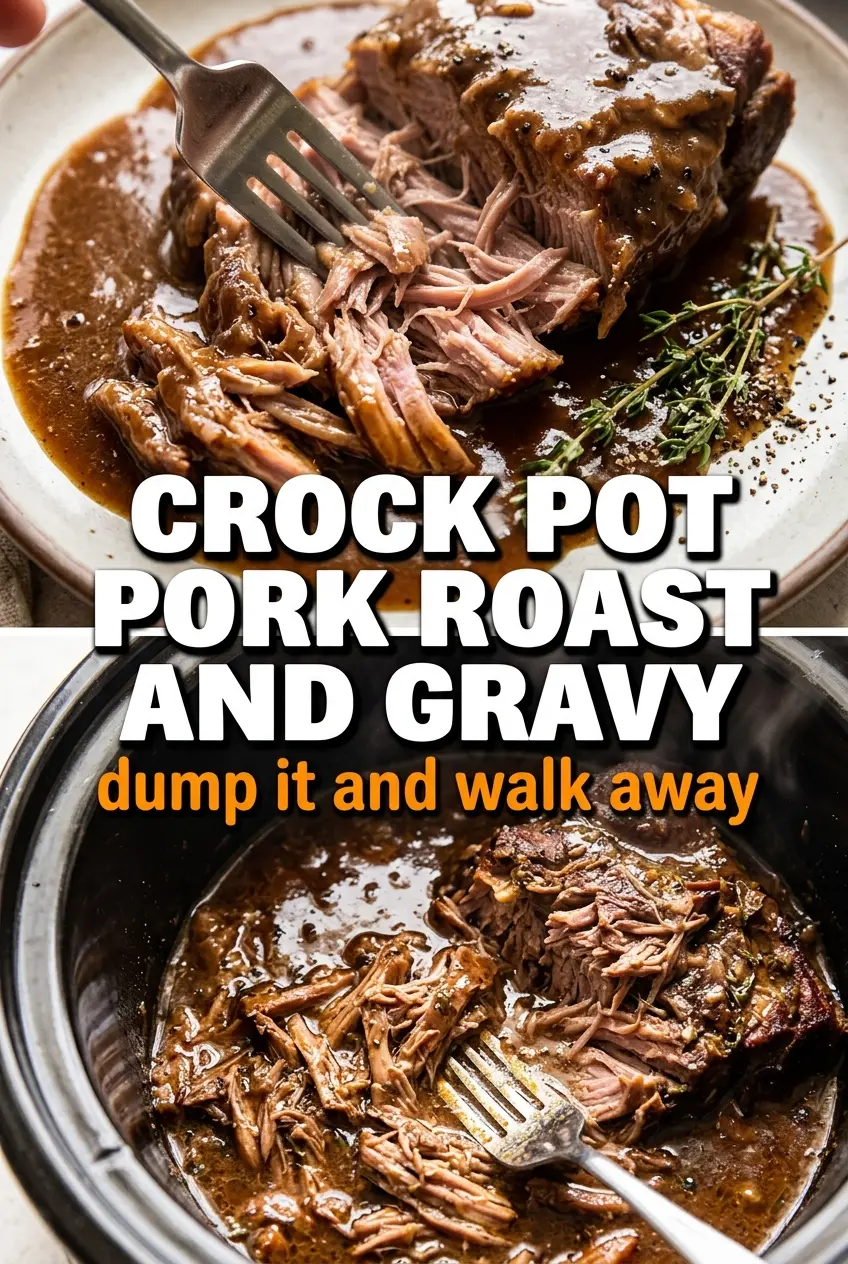
Crock Pot Pork Roast and Gravy
Ingredients
Equipment
Method
- Season the pork roast generously with salt, pepper, garlic powder, and onion powder. Heat oil in a skillet over medium-high and sear the pork on all sides until golden, using a steady turn for even browning.
- Add the diced onion and minced garlic to the bottom of the slow cooker. Mix the cream of mushroom soup, beef broth, Worcestershire sauce, and onion soup mix until smooth, then pour over the pork.
- Cover and cook on Low for 8–9 hours until the pork is tender and pulls apart easily. Alternatively cook on High for 4–5 hours for the same fork-tender result.
- Remove the pork and thicken the gravy on High if desired by stirring in the cornstarch slurry until smooth. Slice or shred the pork and serve smothered in the gravy.