Crockpot ravioli lasagna gives you all the comfort of a layered baked pasta without babysitting the oven. The ravioli turns tender in the sauce, the ricotta melts into the layers, and the top gets that bubbling mozzarella finish people always go after first. It’s the kind of slow cooker dinner that lands on the table looking like you worked a lot harder than you did.
What makes this version work is the way the sauce is built before it ever goes into the pot. Browning the beef first keeps the filling from tasting flat, and draining the diced tomatoes keeps the whole dish from turning watery. The ravioli does the heavy lifting here, so you don’t need to pre-boil anything or fuss with fragile noodles that tear apart before dinner.
Below, I’ll show you how to keep the layers from slipping into a soupy mess, what kind of ravioli holds up best, and the small resting step that makes serving a lot cleaner.
I used frozen cheese ravioli and expected it to get mushy, but it held its shape and the sauce was thick instead of watery. The ricotta pockets stayed creamy and my husband went back for seconds before I even sat down.
Save this crockpot ravioli lasagna for a layered, cheesy dinner that slices cleanly and cooks without boiling the pasta first.
The Layering Mistake That Turns This Into Soup
The biggest problem with slow cooker lasagna-style dishes is too much liquid in the pot. Ravioli releases moisture as it cooks, marinara loosens as it heats, and tomatoes can push the whole thing past saucy into soggy if you don’t start with a thicker base. That’s why the meat sauce here needs to be hearty before it goes in; it’s not just for flavor, it’s what keeps the ravioli from floating around in a thin broth.
Another detail that matters is the bottom layer. A thin smear of sauce on the crockpot keeps the ravioli from sticking, but it also gives the first layer enough moisture to soften evenly. Stack it too dry and the pasta edges can stay firm while the center overcooks later. Stack it too wet and the whole thing collapses when you serve it.
What Each Layer Is Doing in the Pot

- Ground beef or Italian sausage — This gives the sauce body and keeps the dish from tasting like jarred marinara stretched into a casserole. Sausage brings more seasoning right out of the gate; beef gives you a milder, meatier base. If you want to use sausage, choose bulk Italian sausage and drain it well after browning so the final sauce doesn’t turn greasy.
- Marinara sauce — A thicker jarred sauce works better than a thin, watery one because it needs to hold up for hours in the slow cooker. If the sauce you have looks loose, simmer it for a few minutes before layering. That small step pays off in cleaner scoops at the end.
- Diced tomatoes — Drain them. That’s the difference between a rich sauce and a watery one. The tomatoes add brightness and a little texture, but the extra liquid is the enemy here.
- Cheese ravioli — Frozen ravioli works especially well because it holds its shape during the long cook. Fresh ravioli can work too, but it softens faster, so stick closer to the shorter end of the cooking time. Don’t thaw the frozen pasta first; it goes in straight from the freezer.
- Ricotta, mozzarella, and Parmesan — Ricotta gives you the creamy pockets that make this taste like lasagna instead of just pasta and meat sauce. Mozzarella melts into those stretchy layers everyone expects, and Parmesan adds the salty edge that keeps the whole dish from tasting one-note. Whole-milk ricotta gives the best texture, but part-skim will still work if that’s what you’ve got.
Building the Pot So the Pasta Stays Tender, Not Mushy
Start with a thick, seasoned sauce
Brown the meat first, then mix it with the marinara, drained tomatoes, and seasonings before anything goes into the slow cooker. The sauce should look spoonable, not soupy. If it’s thin in the pan, it’ll only get looser as the ravioli cooks.
Layer without packing it down
Spread a thin layer of sauce on the bottom, add ravioli in a single layer, then dollop with ricotta and scatter the cheeses. Repeat until you run out, but don’t press the layers down hard. Tight packing blocks steam circulation and can leave some ravioli undercooked while other spots go soft.
Cook until the center is hot and the edges are bubbling
On low, this usually takes 4 to 5 hours; on high, 2 to 2.5 hours. The ravioli should be tender all the way through, and the cheese should look fully melted with bubbling edges. If you keep cooking after that point, the pasta starts to lose its shape and the sauce can thicken past the point of easy serving.
Let it rest before scooping
Ten minutes off the heat makes a bigger difference than people expect. The layers settle, the cheese firms up just enough, and you get clean portions instead of a runny scoop. Fresh basil goes on at the end so it stays bright instead of sinking into the sauce.
How to Adapt This for Different Kitchens and Different Eatters
Use Italian sausage for a richer, more seasoned sauce
Italian sausage gives the lasagna a deeper, built-in seasoning that beef alone doesn’t have. Mild sausage keeps it family-friendly; hot sausage adds a little heat without changing the structure of the dish. Either way, brown and drain it well so the sauce stays balanced.
Make it gluten-free with gluten-free ravioli
This swap works as long as the gluten-free ravioli is sturdy enough for slow cooking. Keep the same layering and cook until the ravioli is tender, but check a little earlier because some gluten-free pasta softens faster than regular pasta. The sauce and cheese need no other changes.
Go meatless without losing the lasagna feel
Skip the beef and use a thicker marinara, then add sautéed mushrooms or spinach for more body. Without the meat, the sauce tastes lighter, so Parmesan matters even more for depth. You’ll still get the same layered comfort, just with a softer, more tomato-forward finish.
Storage and Reheating
- Refrigerator: Store leftovers covered for up to 4 days. The pasta will absorb more sauce as it sits, so the texture gets a little tighter the next day.
- Freezer: It freezes well in portions. Cool completely, wrap tightly, and freeze for up to 2 months. Thaw overnight in the fridge before reheating so the center warms evenly.
- Reheating: Reheat covered in the oven at 350°F until hot, or use the microwave in short bursts with a splash of extra sauce. The common mistake is blasting it too long, which turns the ravioli rubbery before the middle is warm.
Questions I Get Asked About This Recipe
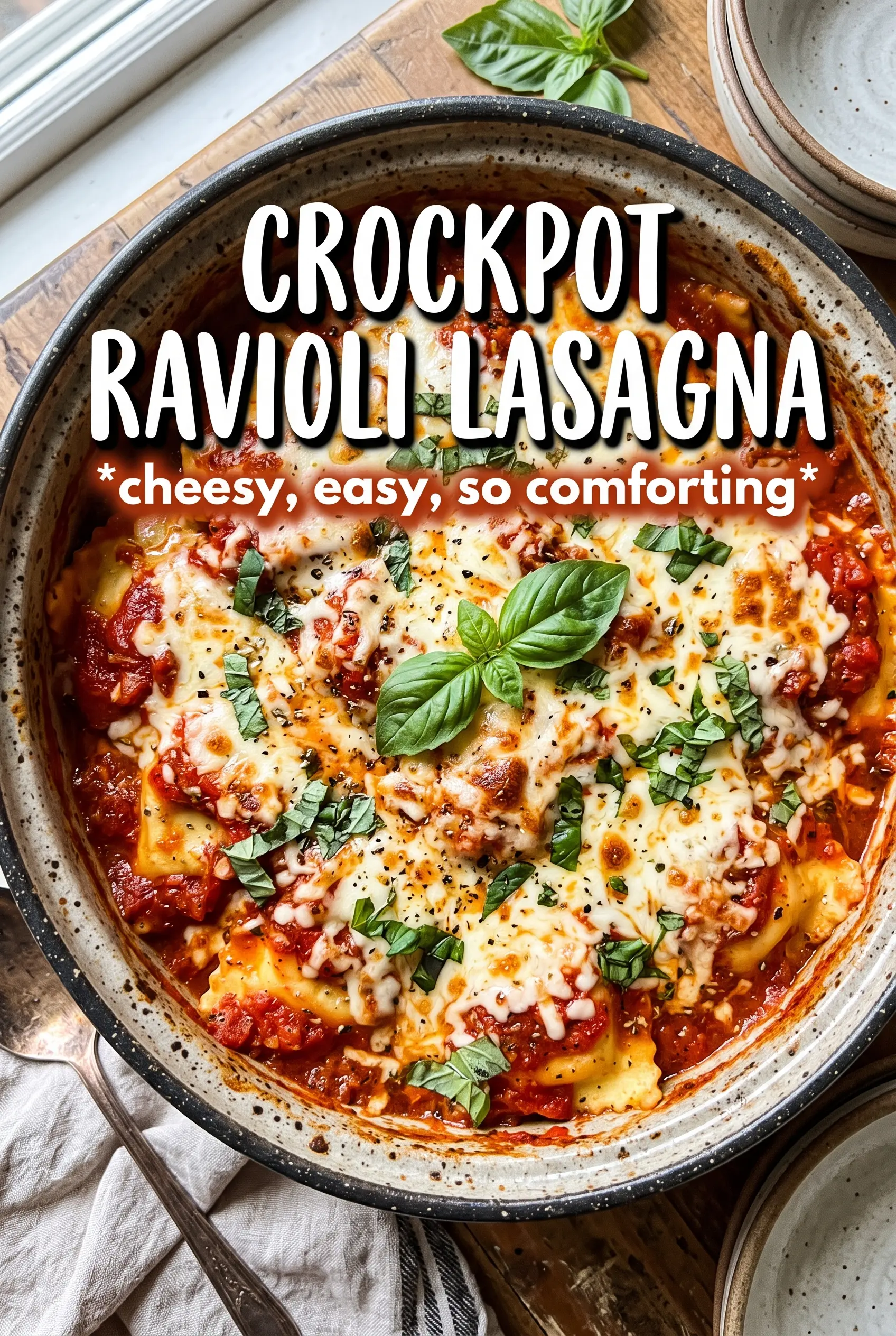
Crockpot Ravioli Lasagna
Ingredients
Equipment
Method
- Mix browned ground beef or Italian sausage with marinara sauce, drained diced tomatoes, Italian seasoning, garlic powder, onion powder, salt, and black pepper until evenly combined. Taste once and adjust seasoning if needed.
- Spread a thin layer of the meat sauce in the bottom of the slow cooker to coat the base. This helps the ravioli steam-cook without sticking.
- Add a single layer of frozen or fresh cheese ravioli on top of the sauce, keeping pieces snug and flat. Avoid overlapping too much so the centers heat through.
- Dollop ricotta cheese over the ravioli and sprinkle with mozzarella and Parmesan. Aim for even coverage so every ravioli pocket gets cheese.
- Repeat layers of meat sauce, ravioli, ricotta, and cheese until all ingredients are used, finishing with a generous layer of cheese on top. Keep the final top layer thick for a melty finish.
- Cook on LOW for 4–5 hours (or HIGH for 2–2.5 hours) until the ravioli is cooked through and the cheese is fully melted and bubbling at the edges. Check once in the final hour to confirm doneness.
- Let the crockpot ravioli lasagna rest for 10 minutes before serving. This sets the layers so it lifts more cleanly.
- Garnish with fresh basil right before serving. Sprinkle lightly over the hot top layer for a fresh finish.