Caramelized Cuban mojo marinated pork comes out with crisp, bronzed edges and a juicy, pull-apart center that tastes like garlic, citrus, and slow heat all worked together in the best way. The long roast does the heavy lifting here, but the marinade is what gives every shred that bright, savory punch that keeps you going back for another bite.
The trick is giving the pork enough time in the mojo for the salt, acid, and garlic to work into the surface and the scored cuts. Orange juice softens the sharpness of the lime, olive oil helps the spices cling, and the final uncovered roast is what builds that lacquered crust instead of a pale, steamed exterior. Cut that last stretch short and you miss the whole point.
Below, I’ve included the parts that matter most: how to keep the citrus marinade balanced, what temperature actually gives you shreddable pork, and a few smart swaps if you need to stretch this recipe or work with what’s already in your kitchen.
The mojo soaked in beautifully and the pork shredded with almost no effort. That last uncovered roast gave me the caramelized crust I was hoping for, and the lime at the table kept it tasting fresh instead of heavy.
Pin this Cuban mojo marinated pork for the nights when you want crisp edges, juicy shreds, and bright citrus-garlic flavor in every bite.
The Citrus Marinade Needs Time to Penetrate, Not Just Coat
Mojo pork fails when the marinade sits on the surface and never gets a chance to work into the meat. Scoring the shoulder gives the garlic, citrus, and spices more places to settle, and the salt in the marinade starts seasoning the pork from the outside in. That matters with a cut this thick, because a shallow coating can taste fine on the crust but bland in the center.
The other piece people miss is the balance of acid and fat. Orange and lime bring brightness, but olive oil keeps the marinade from tasting harsh and helps the cumin and oregano cling evenly. If the citrus is the only thing doing the work, the pork can end up sharp instead of rounded and savory.
- Pork shoulder or butt — This cut has enough fat and connective tissue to stay juicy through a long roast. Leaner cuts dry out before they get properly shreddable.
- Fresh orange juice — This softens the lime and gives the mojo its signature sweetness. Bottled juice works in a pinch, but fresh tastes cleaner and less flat.
- Fresh lime juice — Lime gives the marinade its edge. If you need to substitute, use extra orange juice plus a smaller splash of vinegar, but the flavor will be less rounded.
- Garlic — Mince it fine or blend it smooth so it clings to the meat instead of burning in big bits. The raw garlic mellows during the roast and turns sweet and savory.
- Cumin, oregano, and smoked paprika — These build the warm backbone of the dish. Don’t skip the cumin; it’s what makes the pork taste distinctly Cuban instead of just citrusy.
- Cilantro — Stirred into the marinade at the end, it brightens the whole mixture. If you’re one of the people who tastes soap, leave it out and add extra herbs at the table instead.
What Each Ingredient Is Actually Doing in This Recipe

- Primary ingredient (the star) — Quality matters most. Choose the best you can find.
- Cooking medium (oil, butter, or broth) — This carries flavors and prevents dryness.
- Seasonings (salt, pepper, spices, herbs) — Layer flavors so nothing overpowers. Build depth gradually.
- Aromatics (garlic, onion, herbs) — Cook with fat to bloom flavors. Become the foundation.
- Supporting ingredients — Complement the main ingredient without overpowering it.
- Sauce or liquid (if applicable) — Brings flavors together. Balance richness with acid.
- Acid (lemon, vinegar, wine, or other) — Brightens and prevents flat-tasting results.
- Final finish (garnish, glaze, or sauce) — Prevents one-dimensional taste and adds visual appeal.
How to Roast It for Shreddable Pork and a Real Crust
Building the Mojo
Blend the marinade until the garlic is broken down and the mixture looks emulsified, not watery with floating bits. That smooth texture helps the seasoning coat the pork evenly and keeps the garlic from scorching in the pan. If you leave big chunks of garlic, they’ll sit on the surface and darken too quickly during the final roast.
Marinating the Shoulder
Score the pork all over with deep, shallow cuts, then pack it into the bag or roasting dish with the marinade. The cuts don’t need to be dramatic, but they do need to reach through the surface fat so the mojo can get in. Four hours is the minimum for real flavor; overnight gives you deeper seasoning and a better payoff after the long roast.
Slow Roasting Under Foil
Cover the pork tightly and roast at 325°F until the meat starts to loosen and the fat begins rendering. The foil traps steam, which sounds less glamorous than roasting, but it’s what turns a tough shoulder into tender meat. If the foil isn’t sealed well, the top dries before the inside has softened.
Caramelizing the Finish
Uncover the pork and keep roasting until the top turns deep golden and the internal temperature reaches about 190°F. That final stretch is where the surface darkens, the edges crisp, and the collagen fully breaks down for shredding. If you pull it at 165°F, it may be cooked through, but it won’t have that silky, pull-apart texture that makes this dish worth making.
Make It Spicier Without Losing the Mojo
Add a pinch of crushed red pepper or a small minced chile to the marinade. That gives the pork heat without changing the citrus-garlic backbone. Too much heat can overpower the orange and lime, so keep it in the background.
Dairy-Free and Naturally Gluten-Free Serving Ideas
The pork itself is naturally dairy-free and gluten-free, so the main thing is what you serve with it. Rice, beans, roasted potatoes, or warm corn tortillas all work well. Skip any bottled finishing sauces unless you’ve checked the label for hidden gluten.
Turn Leftovers Into Another Meal
Shredded leftovers work in sandwiches, bowls, or crispy skillet tacos. Splash in a spoonful of pan juices before reheating so the pork doesn’t dry out. The flavor gets even better the next day because the garlic and citrus settle into the meat.
Scaling Up for a Crowd
A second shoulder is fine as long as the pan isn’t overcrowded and the meat has room for the heat to circulate. If the pork pieces are stacked too tightly, the top steams and the bottom roasts unevenly. Use two pans if needed and rotate them once during the covered stage.
Storage and Reheating
- Refrigerator: Store leftovers for up to 4 days. The flavor deepens, and the pork stays moist if you keep it with a little of the pan juices.
- Freezer: It freezes well for up to 3 months. Portion it into bags with some juices so it thaws juicy instead of stringy and dry.
- Reheating: Reheat gently in a covered skillet over low heat or in the oven with a splash of juice or broth. High heat dries out shredded pork fast, so warm it slowly until just hot.
Answers to the Questions Worth Asking
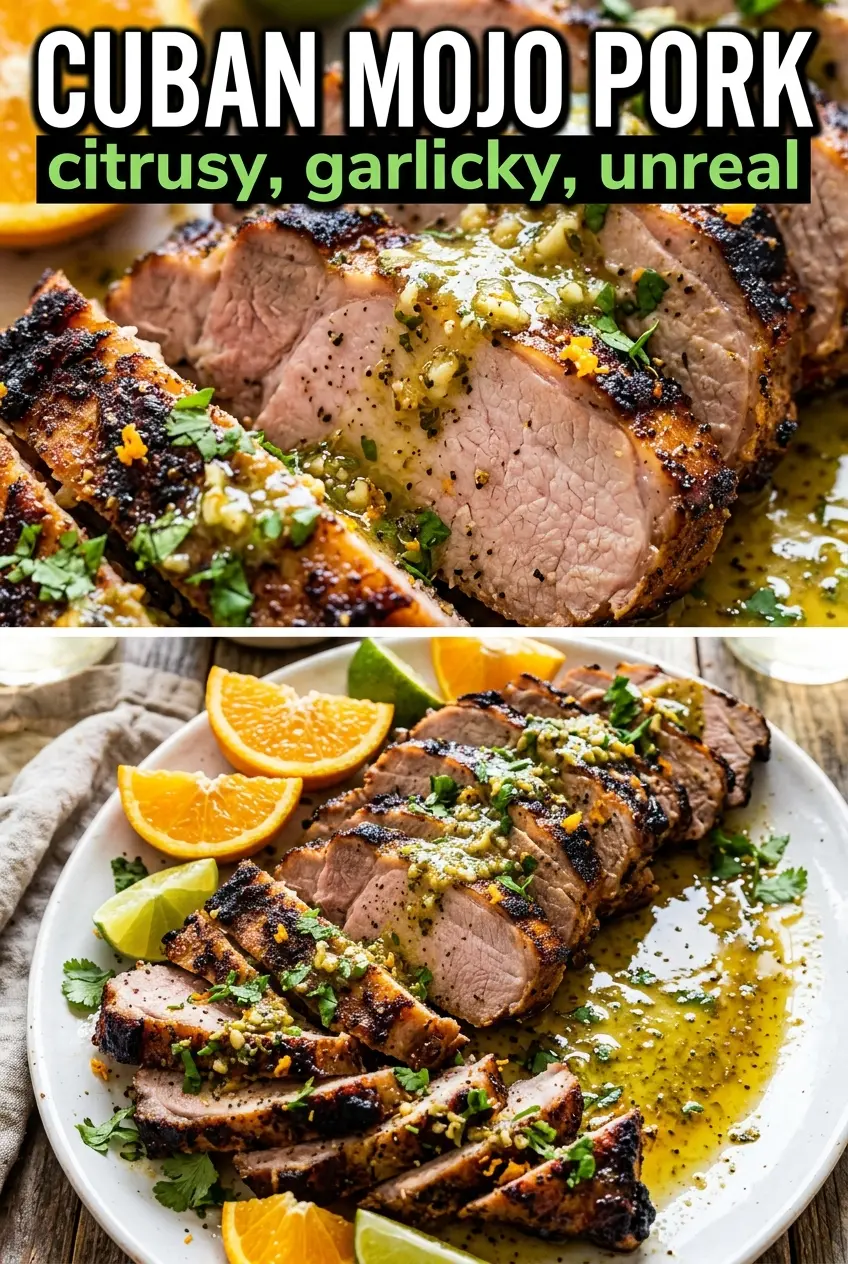
Cuban Mojo Marinated Pork
Ingredients
Equipment
Method
- Blend garlic, orange juice, lime juice, olive oil, cumin, dried oregano, smoked paprika, salt, and black pepper until smooth, then stir in chopped cilantro for a fragrant green-gold marinade.
- Score the pork shoulder all over with a sharp knife, place it in a zip-lock bag, pour marinade over, and refrigerate 4–8 hours or overnight so the flavors penetrate.
- Preheat the oven to 325°F while the pork is still chilled.
- Place pork in a roasting pan, pour marinade over, cover tightly with foil, and roast for 2.5 hours to tenderize.
- Uncover and roast 30–45 minutes more at 325°F until the outside is golden and caramelized and the internal temperature reaches 190°F.
- Rest the pork 15 minutes before shredding or slicing so the juices redistribute for a juicy interior.
- Serve with lime wedges and cilantro.