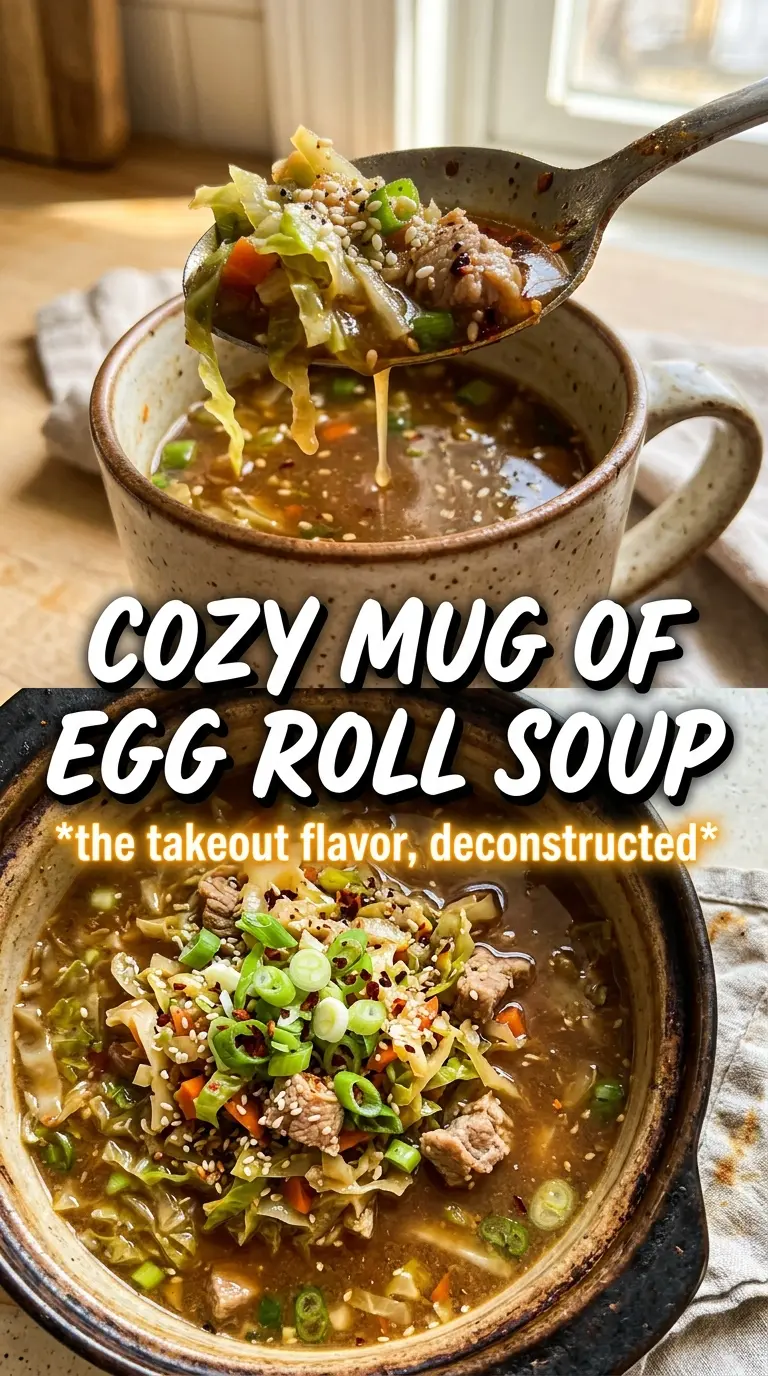
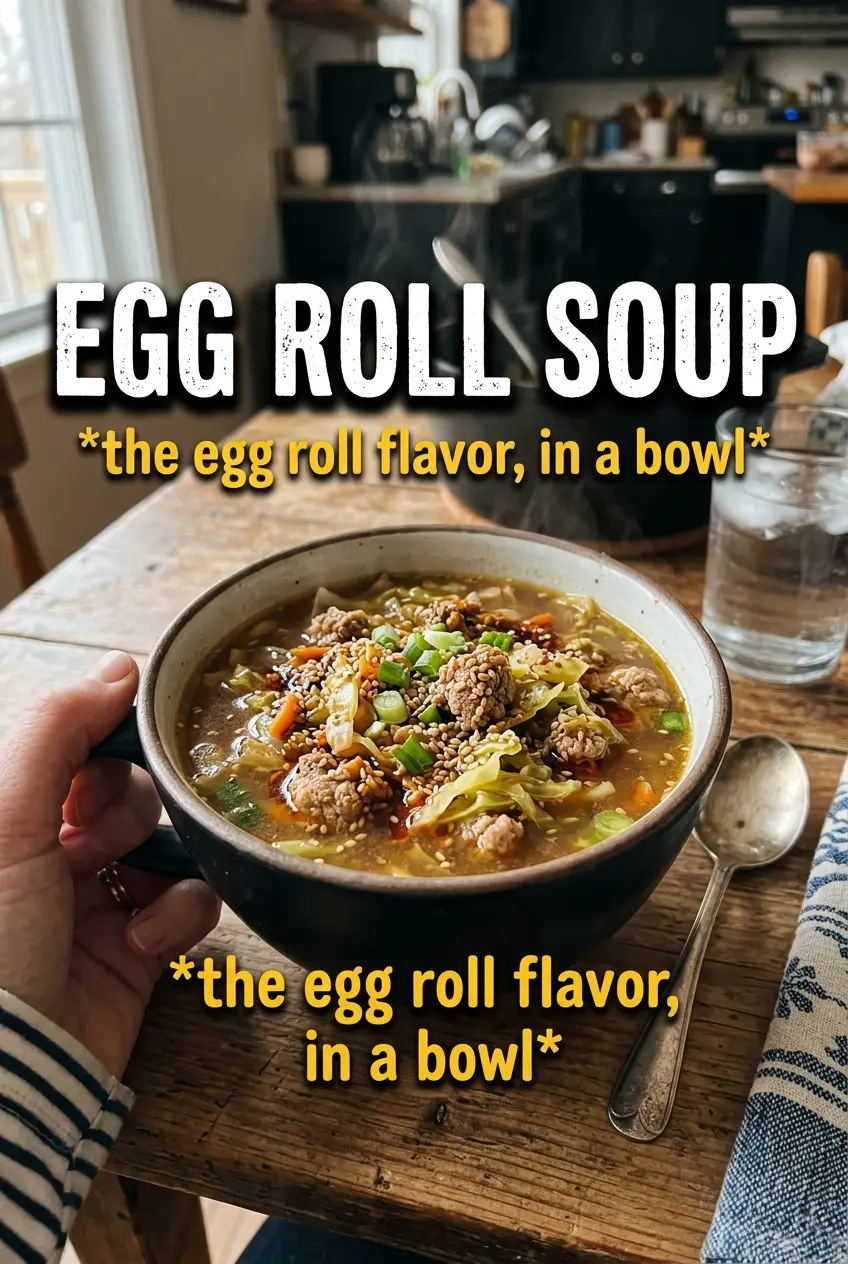
Egg roll soup tastes like the best part of takeout night, but lighter and easier to pull together in one pot. The broth carries that familiar ginger-soy aroma, the cabbage softens just enough to stay silky instead of mushy, and the ground pork gives every spoonful the savory depth you expect from the filling of a good egg roll. With crispy wonton strips on top, you get the crunch in contrast, which is what makes the bowl feel complete.
What makes this version work is the order. Browning the meat first builds flavor right at the bottom of the pot, and the broth goes in after the garlic and ginger have had a minute to wake up. The vegetables simmer only until they’re tender, because cabbage keeps cooking long after you think it’s done and can turn limp fast if you rush past the sweet spot.
Below, I’ve added the small details that matter most: how to keep the broth balanced, which ingredient swap changes the flavor the least, and what to do if you want the soup a little richer, spicier, or lighter.
The broth had that perfect ginger-soy balance, and the cabbage stayed tender without falling apart. I topped mine with extra wonton strips and my husband said it tasted like the filling from his favorite takeout egg rolls in soup form.
Love the savory ginger-soy broth and crispy wonton topping? Save this Egg Roll Soup for an easy one-pot dinner that tastes like takeout in a bowl.
The Cabbage Needs Time, Not Abandonment
Egg roll soup falls apart when the vegetables are treated like garnish instead of the main texture in the bowl. Cabbage needs enough simmering to soften and take on the broth, but not so much that it loses all structure. The difference between a good bowl and a dull one is usually those last few minutes on the stove.
The broth should stay lively, not heavy. If you overdo the simmer, the cabbage turns flat and the carrots disappear into the background. Keep the heat at a steady simmer after the broth goes in, then stop as soon as the vegetables are tender with a little bite left in the thicker stems.
- Ground pork or chicken — Pork gives you the most authentic takeout-style richness, but chicken keeps the soup lighter and still holds seasoning well. If you use chicken, don’t chase the same depth with extra soy; let the ginger, garlic, and sesame oil carry the flavor.
- Cabbage — Thin shreds cook fast and drink up the broth. Green cabbage is the standard, but napa cabbage works if you want a softer, silkier result. Just shorten the simmer a little because napa goes tender quicker.
- Sesame oil — This is the ingredient that makes the soup read as egg roll soup instead of generic pork-and-cabbage soup. Add it with the broth, not at the end, so it has time to perfume the whole pot.
- Rice vinegar — A small amount keeps the broth from tasting one-note. If you leave it out, the soup can feel heavier than it should. Add it near the broth stage so the acidity blends instead of sitting on top.
What Each Ingredient Is Actually Doing in This Recipe
- Primary ingredient (the star) — Quality matters most. Choose the best you can find.
- Cooking medium (oil, butter, or broth) — This carries flavors and prevents dryness.
- Seasonings (salt, pepper, spices, herbs) — Layer flavors so nothing overpowers. Build depth gradually.
- Aromatics (garlic, onion, herbs) — Cook with fat to bloom flavors. Become the foundation.
- Supporting ingredients — Complement the main ingredient without overpowering it.
- Sauce or liquid (if applicable) — Brings flavors together. Balance richness with acid.
- Acid (lemon, vinegar, wine, or other) — Brightens and prevents flat-tasting results.
- Final finish (garnish, glaze, or sauce) — Prevents one-dimensional taste and adds visual appeal.
Building the Broth Before the Vegetables Go Soft
Brown the meat until it leaves fond behind
Cook the pork or chicken over medium-high heat until it’s no longer pink and you see browned bits sticking to the bottom of the pot. That fond is flavor, and it matters more here than getting every piece deeply caramelized. If the pan looks wet, keep cooking until the moisture evaporates and the meat starts to sizzle again.
Wake up the garlic and ginger
Stir in the garlic and ginger and cook just until fragrant, about a minute or two. You want the sharp raw edge to soften, not the garlic to color hard. If it browns too fast, the soup can pick up a bitter note, so keep the heat moderate and move quickly to the broth.
Simmer the vegetables until they turn silky
Add the broth, soy sauce, sesame oil, rice vinegar, and sriracha, then bring the pot to a boil before lowering it to a steady simmer. Add the cabbage and carrots and cook until the cabbage is tender and the carrots are just cooked through, usually 8 to 10 minutes. If you simmer too hard, the broth can turn cloudy and the vegetables can go mushy before they taste fully seasoned.
Finish with the fresh green onion bite
Stir in the green onions at the end so they stay bright and a little crisp. Taste the broth before serving and adjust with salt and pepper only after the soup has had a chance to simmer, because soy sauce brings its own salt. Top each bowl with wonton strips and sesame seeds right before eating so they keep their crunch.
How to Change the Bowl Without Losing the Point
Swap in ground chicken for a lighter bowl
Ground chicken works well if you want a leaner soup, and it still absorbs the ginger and soy nicely. You lose a little richness, so the sesame oil matters more. Let the chicken brown a bit before adding the aromatics so the broth still has a savory base.
Make it gluten-free with a clean swap
Use tamari or a certified gluten-free soy sauce in place of standard soy sauce. The flavor stays close, but some brands are a touch less salty, so taste the broth near the end and adjust with a little extra if needed. Skip the wonton strips or use a gluten-free crunchy topping if you want the whole bowl to stay gluten-free.
Turn up the heat without wrecking the broth
Add a little extra sriracha or a pinch of red pepper flakes with the broth, not at the end. That gives the heat time to blend into the soup instead of tasting sharp and separate. If you want a gentler spice level, keep the sriracha in the pot and serve extra at the table.
Storage and Reheating
- Refrigerator: Store in an airtight container for up to 4 days. The cabbage softens a little more as it sits, but the flavor gets better by the next day.
- Freezer: It freezes well without the wonton strips. Cool completely, portion into containers, and freeze for up to 3 months. Freeze the toppings separately so they stay crisp.
- Reheating: Warm it gently on the stove over medium-low heat until hot. Don’t boil it hard or the cabbage will break down too much and the broth can taste muddled.
Questions I Get Asked About This Recipe
Egg Roll Soup
Ingredients
Equipment
Method
- Heat 2 tablespoons vegetable oil in a large pot over medium-high heat, then brown the ground pork (or chicken) while breaking it up. Drain excess fat.
- Add the minced garlic and grated ginger and cook 1-2 minutes until fragrant.
- Add chicken broth, soy sauce, sesame oil, rice vinegar, and sriracha, then bring the mixture to a boil. The surface should roll with steady bubbles.
- Add the shredded cabbage and carrots, then simmer 8-10 minutes until the vegetables are tender. You should see gentle bubbling throughout.
- Stir in the sliced green onions and season with salt and pepper to taste.
- Ladle the soup into bowls and top with crispy wonton strips, sesame seeds, and extra green onions for serving.