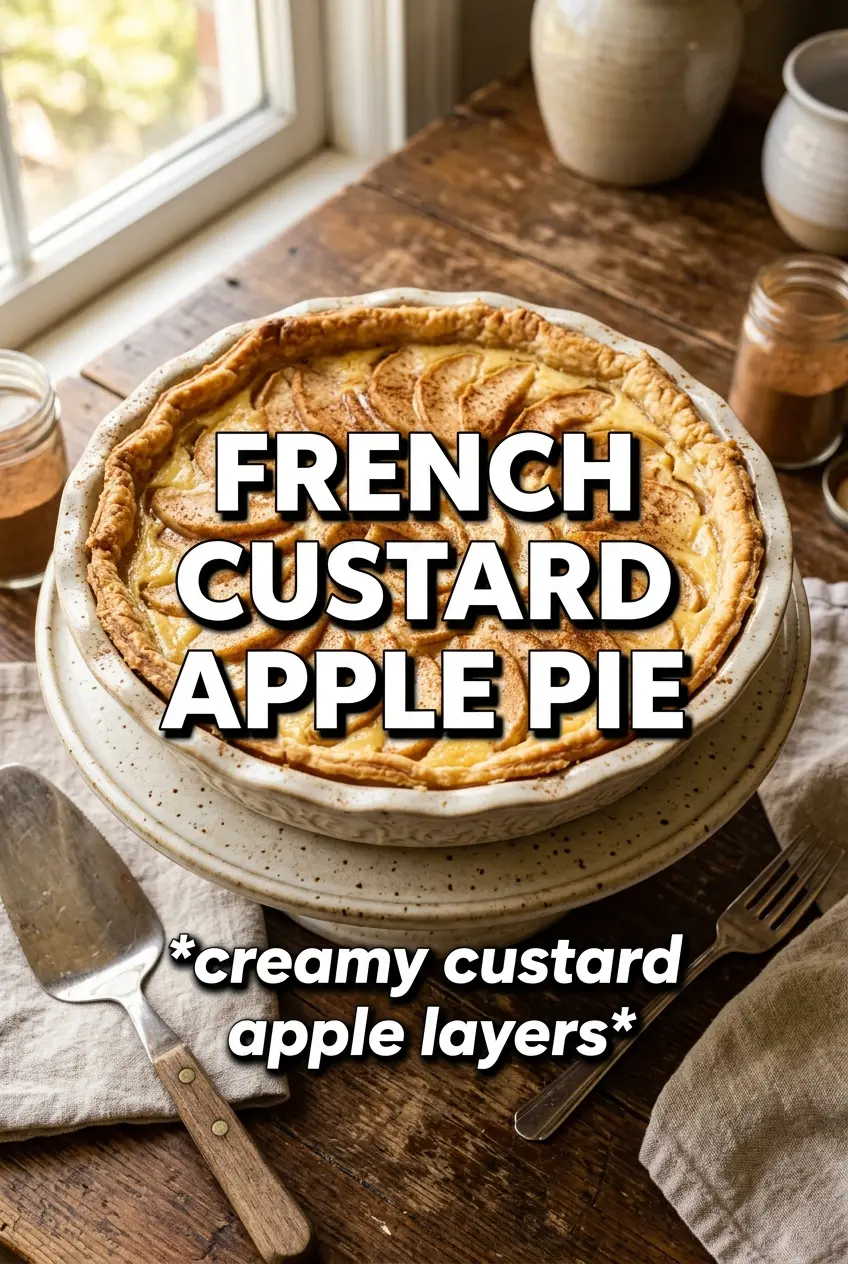
French custard apple pie lands somewhere between a classic apple pie and a silky baked custard, and that’s exactly why it earns a spot on repeat. The apples stay distinct and tender instead of collapsing into mush, while the custard sets around them into a sliceable, creamy filling with a lightly browned top. You get flaky crust at the base, soft fruit in the middle, and just enough spice to keep every bite interesting.
The trick is in the balance. The apples are arranged before the custard goes in, so they keep their shape and don’t sink into a dense layer. A small amount of flour in the custard helps it bake up cleanly without turning eggy or loose, and the heavy cream gives the filling that lush, French-style texture you notice as soon as the pie cools and slices well. If you’ve ever had custard pies split, weeping fruit, or a soggy bottom crust, the notes below will help you dodge those problems.
The custard baked up silky and set cleanly, and the apples stayed in those pretty layers instead of sinking. I let it cool for 30 minutes like you said, and the slices came out neat with the best texture.
Save this French custard apple pie for the dessert nights when you want flaky crust, layered apples, and a creamy baked filling in one slice.
The Reason This Pie Stays Creamy Instead of Sliding Apart
Custard pies fail for two main reasons: the filling gets overmixed and foamy, or it bakes too fast and turns grainy before it has time to set. This version stays steady because the custard is whisked just until smooth, then poured gently over the apples so it flows into the gaps instead of burying the fruit. The flour gives the custard a little structure, which matters here more than it would in a plain custard tart.
The other piece that matters is temperature and time. A 375°F oven is hot enough to set the filling and color the top without scorching the crust, but the pie still needs the full bake so the center firms up. If you pull it too early, the middle will wobble like liquid when you slice it. You want a gentle jiggle in the very center, not a slosh.
- Apples — Use a firm baking apple so the slices keep their shape. A soft apple breaks down before the custard finishes, which leaves you with apple puree under the top layer.
- Heavy cream — This is what gives the filling that rich, smooth set. Milk can work in a pinch, but the pie will bake up thinner and less luxurious.
- Flour — Just two tablespoons is enough to stabilize the custard without making it pasty. Don’t skip it unless you’re intentionally making a softer, looser filling.
- Calvados — Optional, but it adds a quiet apple-brandy note that deepens the filling. If you leave it out, the pie still works; it just tastes a little more straightforward.
What Each Ingredient Is Actually Doing in This Recipe
- Primary ingredient (the star) — Quality matters most. Choose the best you can find.
- Cooking medium (oil, butter, or broth) — This carries flavors and prevents dryness.
- Seasonings (salt, pepper, spices, herbs) — Layer flavors so nothing overpowers. Build depth gradually.
- Aromatics (garlic, onion, herbs) — Cook with fat to bloom flavors. Become the foundation.
- Supporting ingredients — Complement the main ingredient without overpowering it.
- Sauce or liquid (if applicable) — Brings flavors together. Balance richness with acid.
- Acid (lemon, vinegar, wine, or other) — Brightens and prevents flat-tasting results.
- Final finish (garnish, glaze, or sauce) — Prevents one-dimensional taste and adds visual appeal.
Building the Layers So the Apples Stay Visible
Setting the Crust and the Apple Pattern
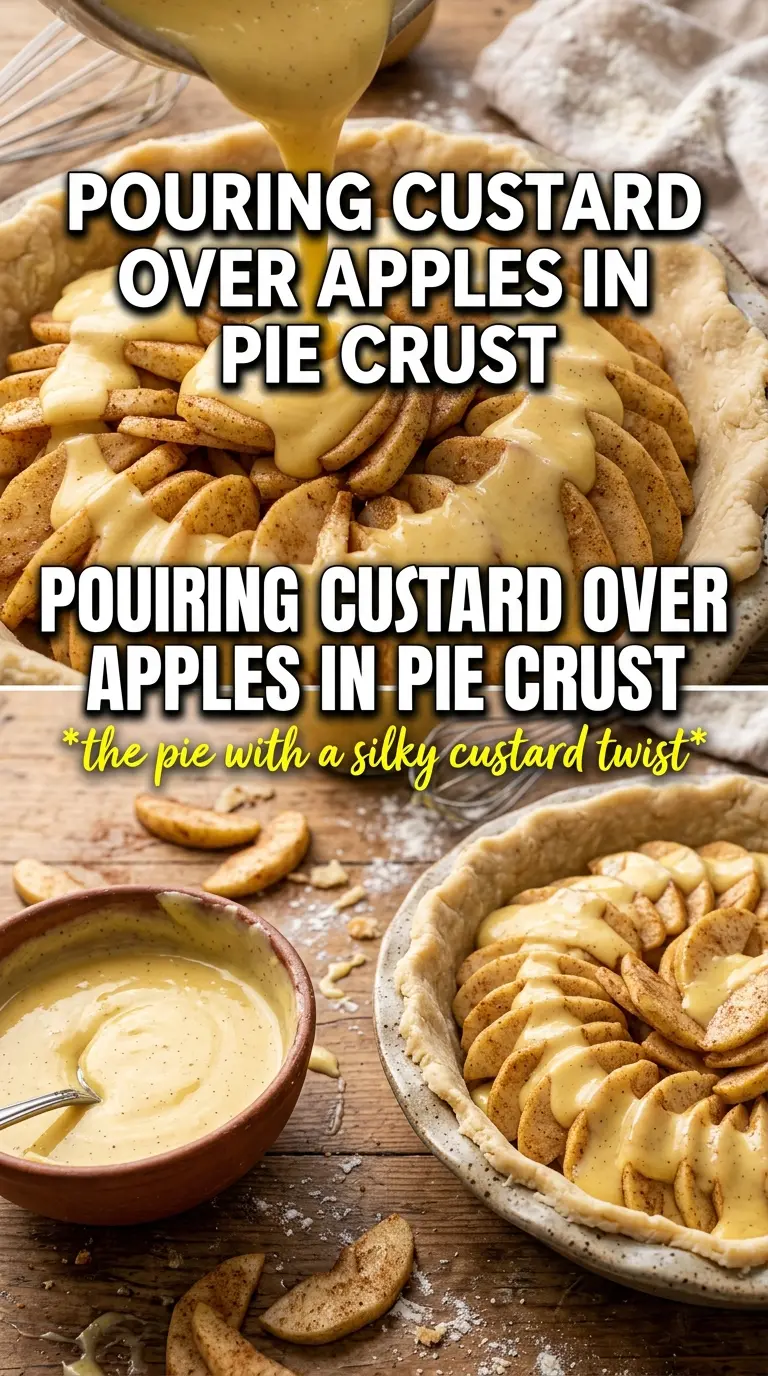
Fit the pie crust into the dish and crimp the edges before you touch the filling. Once the apples go in, arrange them in overlapping circles so there are enough gaps for the custard to move through. If the slices are packed too tightly, the custard sits on top instead of baking through the fruit, and the slice ends up uneven.
Mixing the Custard Without Beating in Air
Whisk the eggs, cream, sugar, flour, vanilla, spices, and brandy just until the mixture looks smooth and uniform. Stop as soon as the flour disappears. Too much whisking traps air, and that can give the custard a puffy top that collapses as it cools. A calm, glossy mixture bakes more cleanly.
Baking Until the Center Has Set
Pour the custard over the apples and let it settle into the spaces between the slices. Sprinkle the cinnamon sugar over the top, then bake until the top is golden and the center gives only a slight wobble when you nudge the pan. If the crust starts darkening too quickly, shield the edges loosely with foil during the last part of the bake. Cool the pie for at least 30 minutes before slicing so the custard firms enough to hold its shape.
How to Adapt This Pie Without Losing the Custard Texture
Make it dairy-free with full-fat coconut cream
Use full-fat coconut cream in place of the heavy cream. The filling will still set, but it will pick up a subtle coconut note and a slightly softer texture. Thin coconut milk won’t give you the same body, so stay with the thick stuff from the top of the can.
Use a gluten-free crust and swap the flour
A gluten-free pie crust works well here, and you can replace the flour in the custard with a tablespoon of cornstarch. The texture will be a touch lighter and less classic, but it still slices cleanly once cooled.
Swap the apples based on what bakes best
Tart, firm apples give the best contrast against the sweet custard, but any baking apple with enough structure will work. If your apples are very sweet, use the optional brandy and a little extra cinnamon to keep the flavor balanced.
Make it ahead for easier slicing
Bake the pie earlier in the day, let it cool fully, and serve it at room temperature. Custard pies slice best when they’ve had time to set, and this one actually benefits from that rest more than from rushing it out of the oven.
Storage and Reheating
- Refrigerator: Store covered for up to 3 days. The custard will firm up a bit more in the fridge, which actually helps with clean slices.
- Freezer: I don’t recommend freezing this pie. Custard tends to weep and turn grainy after thawing, and the apple layer loses its fresh texture.
- Reheating: Serve slices cold or let them sit at room temperature. If you want to warm them, use a low oven for a few minutes; the mistake is microwaving too long, which softens the crust and can make the custard separate.
Questions I Get Asked About This Recipe
French Custard Apple Pie
Ingredients
Equipment
Method
- Preheat the oven to 375F. Fit the pie crust into a 9-inch pie dish and crimp the edges for a sealed rim.
- Arrange the sliced apples overlapping in the crust in concentric circles. Keep the slices evenly spaced so the custard can fill around them.
- Whisk the eggs, heavy cream, granulated sugar, all-purpose flour, vanilla extract, cinnamon, nutmeg, and apple brandy or calvados if using until smooth. Make sure there are no flour lumps for a silky set.
- Pour the custard mixture over the apples so it fills around and between the slices. Pour slowly to help custard seep into the gaps between apple layers.
- Sprinkle the cinnamon sugar topping over the surface. Aim for an even dusting so the top browns uniformly.
- Bake for 50-55 minutes at 375F until the custard is set and the top is golden. The center should look set, not jiggly.
- Cool the pie for 30 minutes, then dust with powdered sugar before serving. Cooling helps the custard firm up for clean slices.