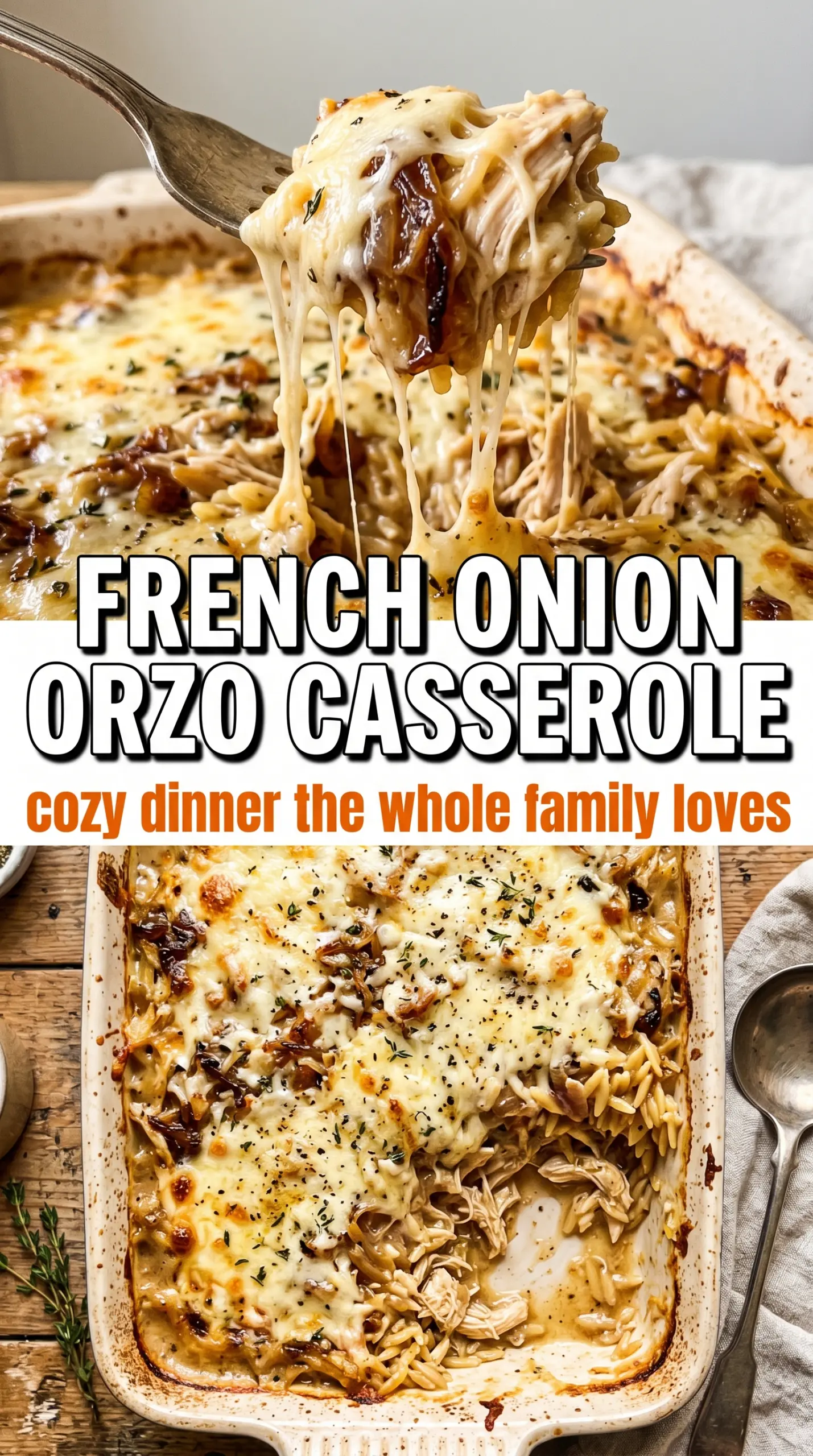
French onion chicken orzo casserole hits that sweet spot between cozy and practical: deeply caramelized onions, tender chicken, and orzo that cooks right in the pan until it turns creamy under a blanket of bubbling Gruyère. The top gets bronzed and a little crisp at the edges, while the spoonful underneath stays rich and savory without needing a separate sauce.
What makes this version work is patience with the onions and restraint with the liquid. The onions need time to turn sweet and dark before anything else goes in, and the orzo needs just enough broth to absorb as it bakes without turning soupy. The Worcestershire adds the kind of background savoriness French onion dishes need, especially once the cheese melts over the top.
Below, I’ll walk through the part that matters most: how to get the onions properly caramelized without rushing them, what the broths are doing in the casserole, and how to adapt it if you want a gluten-free or lighter version.
The onions cooked down beautifully and the orzo came out perfectly tender, not mushy. My husband kept sneaking bites straight from the skillet because the Gruyère topping browned up so well.
Save this French onion chicken orzo casserole for the nights when you want caramelized onions, melty Gruyère, and one skillet doing all the work.
The Onion Step That Keeps This Casserole from Tasting Flat
Caramelized onions are the backbone here, and rushing them is the fastest way to end up with a casserole that tastes like chicken and pasta instead of French onion anything. You want the onions soft, jammy, and a deep golden brown before the chicken goes in. That takes time, low heat, and a little patience with the spoon.
The other mistake is turning the heat up to hurry the process. High heat gives you scorched edges and raw centers, not sweet onions. Once they go in with the butter and oil, let them slowly collapse and deepen in color until they smell sweet and almost savory-sweet, with no sharp onion bite left.
- Yellow onions — These caramelize best because they have enough natural sugar to turn sweet without becoming fussy. Sweet onions can work, but they go softer faster and won’t give quite the same deep onion flavor.
- Gruyère — This is the cheese that gives the casserole its French onion character. It melts smoothly and browns into a nutty top; Swiss cheese is the closest backup if you can’t find Gruyère.
- Beef broth + chicken broth — The beef broth gives depth and that classic French onion taste, while the chicken broth keeps the dish from going too heavy. Using all chicken broth makes it milder; using all beef broth can push it too dark and intense.
- Orzo — Orzo cooks right in the pan and absorbs the broth, which is what makes the casserole cohesive. Don’t swap in a much larger pasta shape unless you also increase the liquid and baking time.
What Each Ingredient Is Actually Doing in This Recipe
- Primary ingredient (the star) — Quality matters most. Choose the best you can find.
- Cooking medium (oil, butter, or broth) — This carries flavors and prevents dryness.
- Seasonings (salt, pepper, spices, herbs) — Layer flavors so nothing overpowers. Build depth gradually.
- Aromatics (garlic, onion, herbs) — Cook with fat to bloom flavors. Become the foundation.
- Supporting ingredients — Complement the main ingredient without overpowering it.
- Sauce or liquid (if applicable) — Brings flavors together. Balance richness with acid.
- Acid (lemon, vinegar, wine, or other) — Brightens and prevents flat-tasting results.
- Final finish (garnish, glaze, or sauce) — Prevents one-dimensional taste and adds visual appeal.
Building the Casserole So the Orzo Cooks Up Creamy, Not Mushy
Slowly Sweetening the Onions
Melt the butter with the olive oil in a large oven-safe skillet and add the sliced onions with a pinch of salt. The salt helps draw out moisture so they soften instead of frying in place. Stir them every few minutes, but not constantly; you want contact with the pan so they can take on color. If they start sticking hard, add a splash of broth or water and keep going.
Searing the Chicken Before It Bakes
Push the onions to the side and sear the chicken pieces in the same skillet until the outside turns golden. You’re not cooking them through here, just building flavor and keeping the meat from tasting boiled later. If the pan looks crowded, work in batches; crowded chicken steams, and steamed chicken gives the whole dish a dull texture.
Letting the Orzo Drink the Broth
Once the garlic, orzo, broths, Worcestershire, and thyme go in, stir well and bring everything to a simmer before the skillet goes into the oven. The liquid should look loose at this stage; the orzo needs broth available to absorb as it bakes. If it looks dry before baking, add a splash more broth now, not after the cheese is on top.
Finishing Under the Cheese
Top the casserole with Gruyère and bake uncovered until the orzo is tender and the cheese is browned in spots and bubbling around the edges. Let it rest for 5 minutes before serving so the broth settles into the pasta. Skip the rest and the first scoop will look wetter than it really is.
How to Adapt This for a Lighter Plate or a Different Pantry
Gluten-Free Version
Use a gluten-free orzo if you can find one that holds its shape well, and check that your Worcestershire sauce is gluten-free. Some gluten-free pastas soften faster, so start checking a few minutes early and pull the dish as soon as the pasta is tender.
No Gruyère on Hand
Swiss cheese gives you the closest melt and mild nuttiness, while a mix of mozzarella and Parmesan will still brown well but taste less like classic French onion. If you use a softer cheese, add a little Parmesan on top for better browning and a sharper finish.
Chicken Thigh Swap
Boneless chicken thighs make the casserole richer and more forgiving if you tend to overcook chicken breast. Cut them the same size as the breast pieces and sear just until browned; the extra fat will carry the onion flavor nicely.
Make It Meatless
Skip the chicken and use extra broth plus sautéed mushrooms for a vegetarian version that still tastes deep and savory. Use all vegetable broth if you go this route, and add a little extra thyme because you lose some of the chicken’s background richness.
Storage and Reheating
- Refrigerator: Store covered for up to 4 days. The orzo will firm up as it chills, but the flavor gets even deeper.
- Freezer: It freezes well for up to 2 months, though the pasta will soften a bit after thawing. Cool completely, portion it into airtight containers, and thaw overnight in the fridge.
- Reheating: Reheat covered in the oven at 350°F with a splash of broth to loosen it up, or warm individual portions in the microwave. Don’t blast it on high heat straight from the fridge or the chicken can dry out before the center is hot.
Answers to the Questions Worth Asking
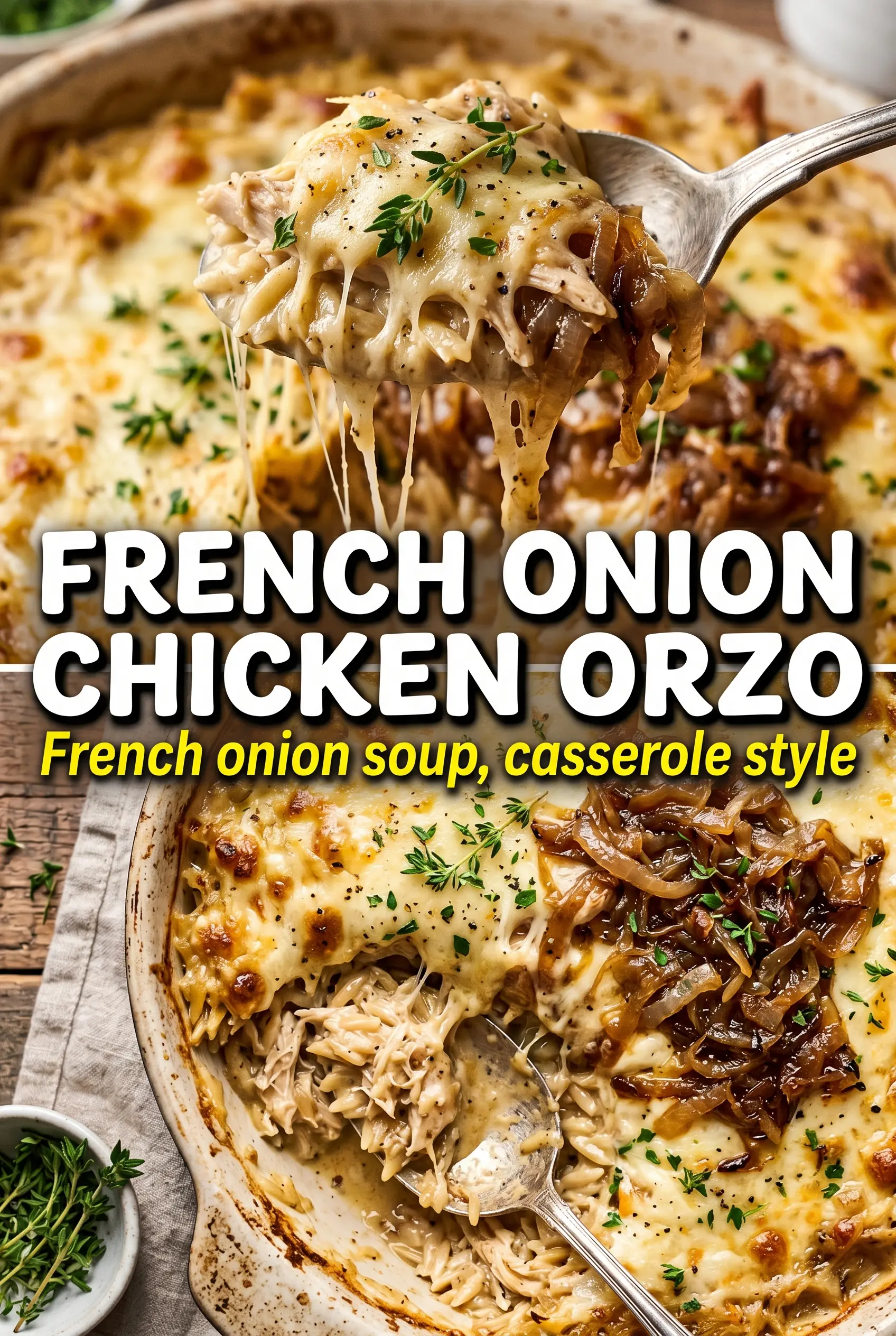
French Onion Chicken Orzo Casserole
Ingredients
Equipment
Method
- Melt butter with olive oil in a large oven-safe skillet over medium-low heat, then add sliced onions with a pinch of salt. Cook for 25–30 minutes, stirring occasionally, until deeply caramelized and dark golden.
- Preheat oven to 375°F. Push onions to the side, add chicken pieces, and sear for 2–3 minutes per side until golden.
- Add garlic, dry orzo pasta, beef broth, chicken broth, Worcestershire sauce, and fresh thyme leaves, then stir everything together and bring to a simmer. Cook until bubbling evenly across the skillet.
- Top evenly with shredded Gruyère cheese, then transfer the skillet to the oven and bake uncovered for 20–25 minutes at 375°F. Bake until the orzo is cooked and the cheese is golden and visibly bubbling.
- Let rest for 5 minutes before serving, so the casserole thickens slightly. You should see a calmer, set cheese top after resting.