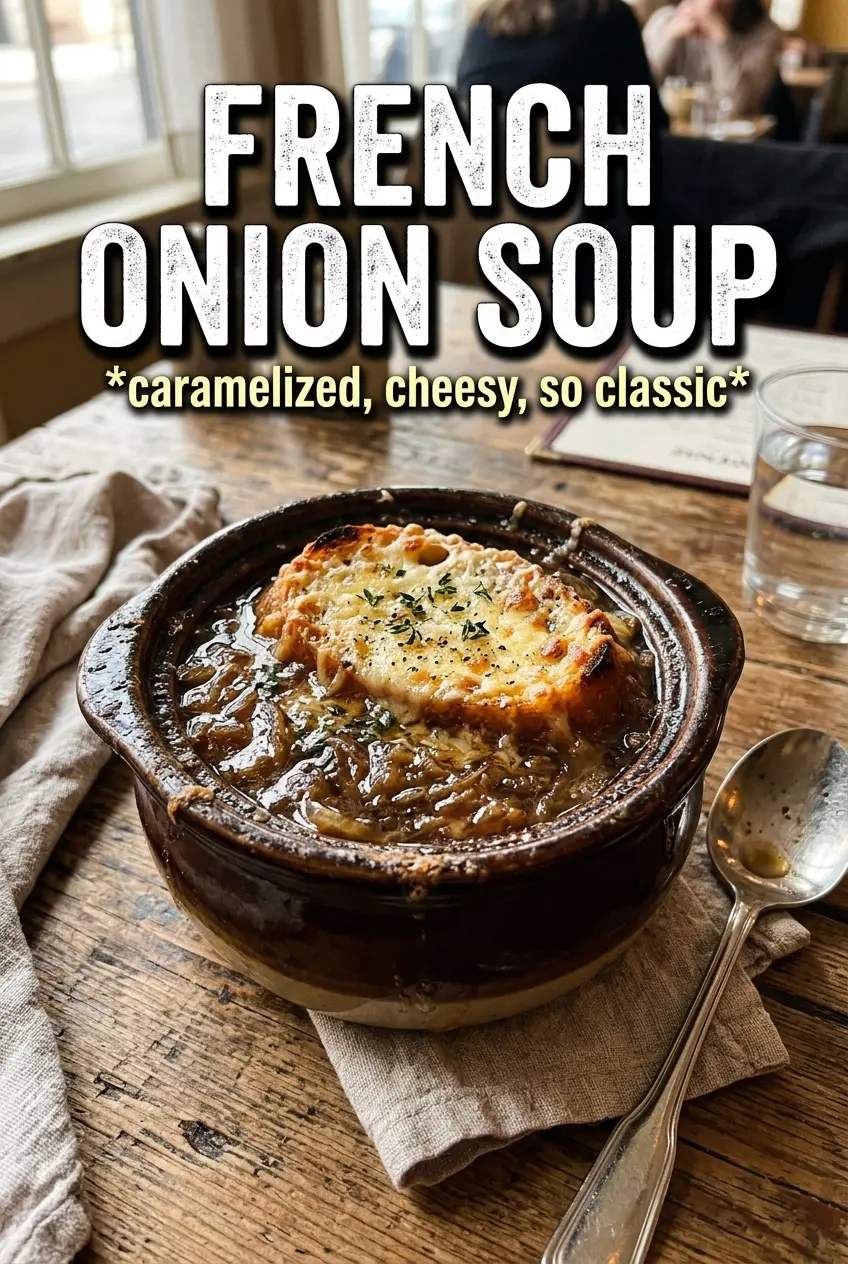
French onion soup earns its place on the table when the onions have cooked down into a deep, sweet tangle and the broth tastes like it spent all afternoon becoming itself. The best bowls have that contrast I always want from this dish: savory broth underneath, stretchy cheese on top, and bread that softens just enough without turning to mush before the first bite.
The part that matters most is the onion cook. You can't rush it if you want the flavor that makes this soup worth serving. A heavy pot, steady medium heat, and a little patience turn sharp raw onions into something dark, jammy, and deeply savory. The wine goes in after the onions are browned, and that deglazing step picks up every bit of flavor stuck to the pan.
Below, I've laid out the timing that keeps the onions from scorching, the cheese blend that gives you that glossy, bubbling top, and the small details that keep the soup from tasting flat or watery.
The onions took their time, but the broth ended up deep and rich, and the cheese crust browned beautifully under the broiler without getting greasy.
Save this French onion soup for the nights when you want a deeply caramelized broth and a bubbling Gruyere crust on top.
The Part People Rush: Turning Onions Deeply Sweet Without Burning Them
The whole bowl depends on the onions. If they stay pale, the soup tastes thin. If the heat is too high, they scorch before they soften, and you end up with bitterness instead of that mellow, almost jammy sweetness French onion soup needs. Give them time in a heavy pot and stir every 10 to 15 minutes, scraping the bottom as the fond builds. The color should move from pale gold to a deep brownish amber, and the onions should collapse into a soft mound instead of looking dry and stringy.
That slow cook does the heavy lifting. Butter gives flavor, olive oil keeps the butter from browning too fast, and the tiny bit of salt helps draw out moisture so the onions can cook down evenly. If the pot looks dry before the onions are ready, the heat is too high. Lower it and keep going; the sugar in the onions will take care of the color on its own.
What Each Ingredient Is Actually Doing in This Soup

- Yellow onions — These are the backbone of the soup because they caramelize into something sweet and savory without going mushy. White onions can work in a pinch, but they don't develop the same round flavor.
- Dry white wine or sherry — This is what loosens the browned bits from the pot and adds sharpness so the soup doesn't taste flat. Use a wine you'd actually drink; cooking wine tastes harsh here.
- Beef broth — Choose a broth with real body, since the onions are relatively delicate after so much cooking. If your broth tastes weak, the soup will taste weak no matter how well you caramelized the onions.
- Gruyere and parmesan — Gruyere gives the classic stretchy, nutty melt, while parmesan adds salt and a firmer browned top. If you swap in pre-shredded cheese, expect a less smooth melt because of the anti-caking agents.
- Baguette or French bread — Toast it first so it can hold up under the cheese and broth long enough to give you a proper spoonful. Soft bread turns soggy before the top has a chance to brown.
Building the Bowl So the Cheese Melts Before the Bread Collapses
Start with a steady onion base
Melt the butter with the olive oil over medium heat, then add the onions and salt. You want the onions to sizzle gently, not fry aggressively. Stir every 10 to 15 minutes and scrape up what clings to the bottom so those browned bits keep flavoring the pot instead of burning. If the onions are dark on the outside but still crunchy in the middle, the heat was too high and they need more time, not more liquid.
Deglaze and build the broth
Pour in the wine or sherry once the onions are deeply golden and the bottom of the pot has a browned film. Let it bubble for about 3 minutes so the sharp alcohol cooks off and the flavor concentrates. Add the broth, thyme, bay leaf, and Worcestershire sauce, then simmer long enough for the onions and broth to taste like one thing instead of separate parts. Pull out the thyme and bay leaf before seasoning, or you'll end up chasing flavors with too much salt.
Toast, top, and broil without overdoing it
Ladle the soup into oven-safe crocks and float the toasted bread on top before covering it with cheese. The bread should sit high enough to catch the melt, but not so high that it blocks the broiler from reaching the cheese. Broil just until the top is bubbling and spotted with deep golden brown; if you walk away for even a minute too long, the cheese can go from browned to bitter. The goal is a crust that stretches when you break into it, not a blackened lid.
How to Adapt This for a Different Table
Make It Vegetarian Without Losing Depth
Swap the beef broth for a strong vegetable broth and add a little extra Worcestershire if you use one that's vegetarian. The soup will be lighter, but the long onion caramelization still carries most of the flavor, so this version stays rich enough to feel complete.
Gluten-Free Bowls That Still Hold Together
Use a sturdy gluten-free baguette or toasted gluten-free country bread. The key is drying it out well before broiling so it can stay on top of the soup long enough to brown without dissolving into the broth.
Sherry for a Rounder, Sweeter Finish
If you want a softer, slightly sweeter edge, use dry sherry instead of white wine. It gives the broth a warmer finish, which plays nicely with the browned onions and Gruyere without making the soup taste sugary.
Storage and Reheating
- Refrigerator: Store the soup base without the bread and cheese for up to 4 days. The flavor gets even better, but the onions will continue to soften.
- Freezer: The broth and onions freeze well for up to 3 months. Freeze it before adding the bread and cheese, since those parts don't hold up once thawed.
- Reheating: Warm the soup gently on the stove, then assemble the crocks and broil fresh bread and cheese on top. If you reheat it too hard, the onions can break down and the broth can taste muddy.
Answers to the Questions Worth Asking
French Onion Soup
Ingredients
Equipment
Method
- Melt the butter with the olive oil in a large heavy pot over medium heat, then add the onions and 1/2 teaspoon salt until the onions start to soften and glisten.
- Cook the onions for 60-70 minutes over medium heat, stirring every 10-15 minutes, until deeply golden, jammy, and caramelized (visual cue: browned edges and a thick, sticky texture).
- Deglaze with the wine or sherry for 3 minutes, scraping up all browned bits so the fond dissolves into the onions.
- Add the beef broth, thyme, bay leaf, and Worcestershire sauce, then simmer for 20 minutes until fragrant and slightly reduced.
- Remove the thyme and bay leaf, then season the soup with salt and pepper to taste.
- Ladle the hot soup into oven-safe crocks and float the toasted baguette slices on top.
- Pile the Gruyère and parmesan over the bread, then broil for 3-4 minutes until melted, golden-brown, and bubbling (visual cue: bubbling cheese with browned spots).