Bright cranberry sauce with orange is one of those side dishes that changes the whole plate. The cranberries cook down into a glossy, tart-sweet sauce, then the fresh orange segments bring in little bursts of juice that keep each bite from tasting one-note. It lands somewhere between classic cranberry sauce and a fresh citrus relish, which is exactly why it keeps showing up next to holiday roasts, turkey sandwiches, and even spooned over yogurt the next morning.
The trick here is balancing the cook time. Cranberries need enough heat to burst and thicken the sauce, but the orange segments go in at the very end so they stay intact and bright instead of turning mushy. Fresh orange juice does more than add flavor; it gives the sauce enough liquid to simmer evenly without scorching the sugar at the bottom of the pan. A little zest stirred in off the heat keeps the citrus aroma sharp.
Below, I’ve added the details that matter most: when to pull the sauce off the burner, how to keep the orange pieces looking fresh, and what to change if you want a smoother cranberry sauce instead of a chunkier one.
The cranberries burst right on schedule, and the orange segments stayed bright instead of getting lost. It thickened up beautifully after chilling, and the citrus made it taste fresh instead of overly sweet.
Save this fresh cranberry orange sauce for a bright, tangy side that sets up perfectly after chilling.
The Part Most Cranberry Sauces Get Wrong
Cranberries don’t need a long simmer, but they do need enough time to burst fully and thicken the liquid around them. If you pull the pan too early, you get a thin, sharp sauce with a raw berry taste. If you cook it too long, the pectin breaks down and the sauce can turn jammy in a heavy, one-dimensional way instead of staying bright and lively.
The other place this recipe wins is timing the orange. Zest goes in after cooking so it keeps its oils and fragrance. The orange segments go in last, and only after the sauce has come off the heat, so they stay juicy and distinct instead of collapsing into the pot.
What Each Ingredient Is Actually Doing Here
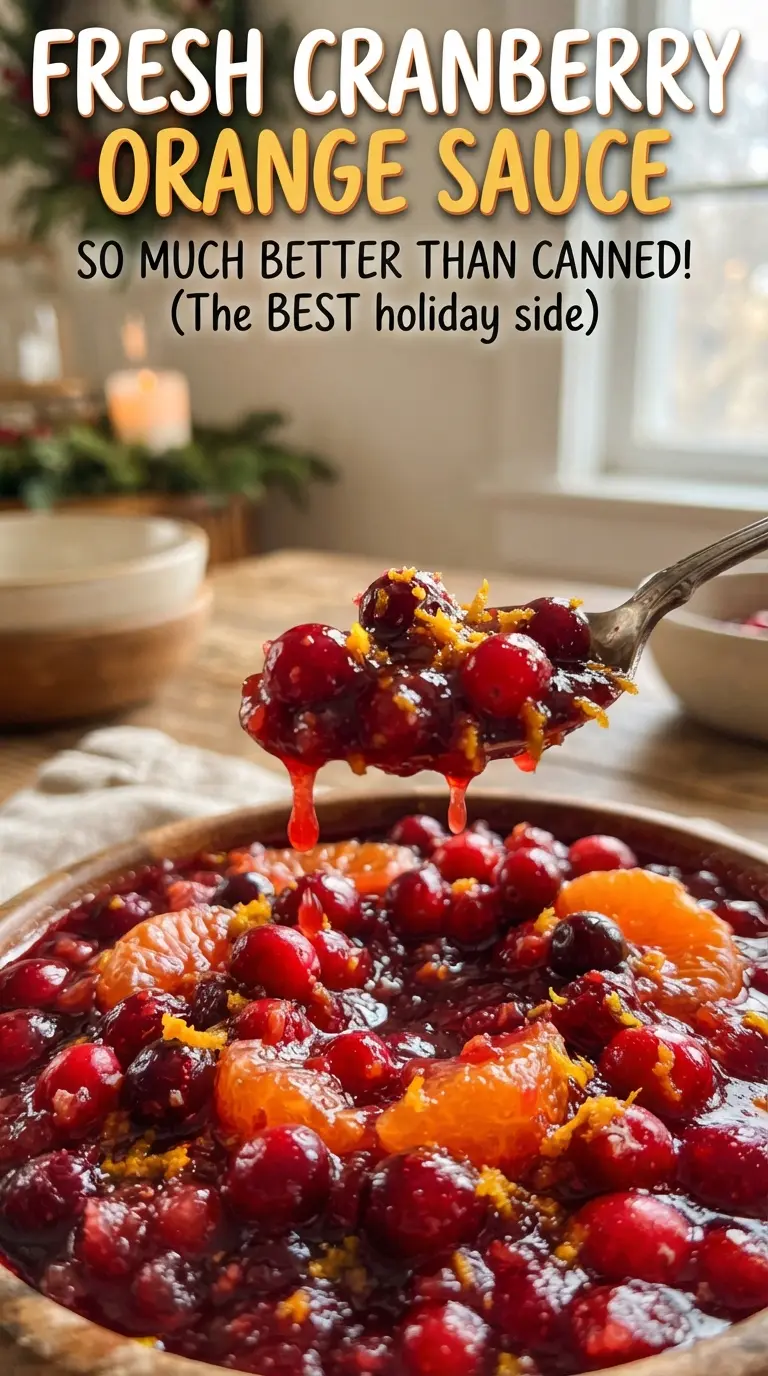
- Fresh cranberries — These bring the color, tartness, and natural pectin that thickens the sauce as it cools. Frozen cranberries also work straight from the freezer; don’t thaw them first or they’ll dump extra liquid into the pan.
- Fresh orange juice — This softens the cranberries’ sharp edge and gives the sauce a rounder citrus base than water ever could. Bottled juice works in a pinch, but fresh juice tastes cleaner and brighter.
- Sugar — It balances the cranberry tartness and helps the sauce glaze instead of tasting thin. You can reduce it a little if you like a sharper sauce, but cutting it too far makes the berries taste aggressive.
- Orange zest — This is where the strongest orange aroma lives. Stir it in off the heat so the oils stay vivid instead of fading in a hard boil.
- Orange segments — These add fresh texture and a juicy finish. Cut away the peel and as much pith as you can, then fold them in gently once the sauce has cooled a bit so they hold their shape.
Building the Sauce So the Orange Stays Bright
Starting the Syrup
Bring the sugar and orange juice to a boil in a saucepan, just until the sugar disappears and the liquid looks clear. That first boil matters because it gives the cranberries a hot, even base instead of letting them sit in gritty syrup. Use a saucepan with enough room for the berries to pop without bubbling over.
Cooking the Cranberries Through
Add the cranberries and a pinch of salt, then drop the heat to a steady simmer. You’ll hear the berries start to pop after a few minutes, and the liquid will move from watery to glossy as the pectin releases. Ten minutes is usually enough; if the sauce is still very loose, keep it going for a couple more minutes, but don’t chase a thick texture in the pot because it firms up a lot as it cools.
Finishing With Zest and Segments
Take the pan off the heat before you stir in the zest. That keeps the orange aroma sharp instead of cooked down. Let the sauce cool slightly before folding in the segmented orange pieces, using a gentle motion so they stay whole and don’t turn the whole batch cloudy.
Make it smoother
Cook the cranberries a minute or two longer, then mash them lightly with a spoon or potato masher before chilling. You’ll lose some of the fresh berry texture, but the sauce turns more spreadable and spoonable for sandwiches or cheese boards.
Lower-sugar version
Cut the sugar back to 1/2 cup if you like a sharper, more tart sauce. The texture will still set, but the finish will taste less jam-like and more like fresh cranberries with citrus.
Dairy-free and vegan as written
This recipe already fits both diets without any changes. The only thing to watch is the orange segments you choose to fold in; use fresh fruit rather than canned segments in syrup, which can make the sauce too soft and sweet.
Storage and Reheating
- Refrigerator: Store covered for up to 1 week. It thickens noticeably as it chills, which is exactly what you want.
- Freezer: It freezes well for up to 2 months. Cool completely, pack into a freezer-safe container, and leave a little room for expansion.
- Reheating: Warm gently over low heat or let it sit at room temperature until softened. Don’t boil it hard or the orange segments can break down and the sauce can loosen too much.
Questions I Get Asked About This Recipe
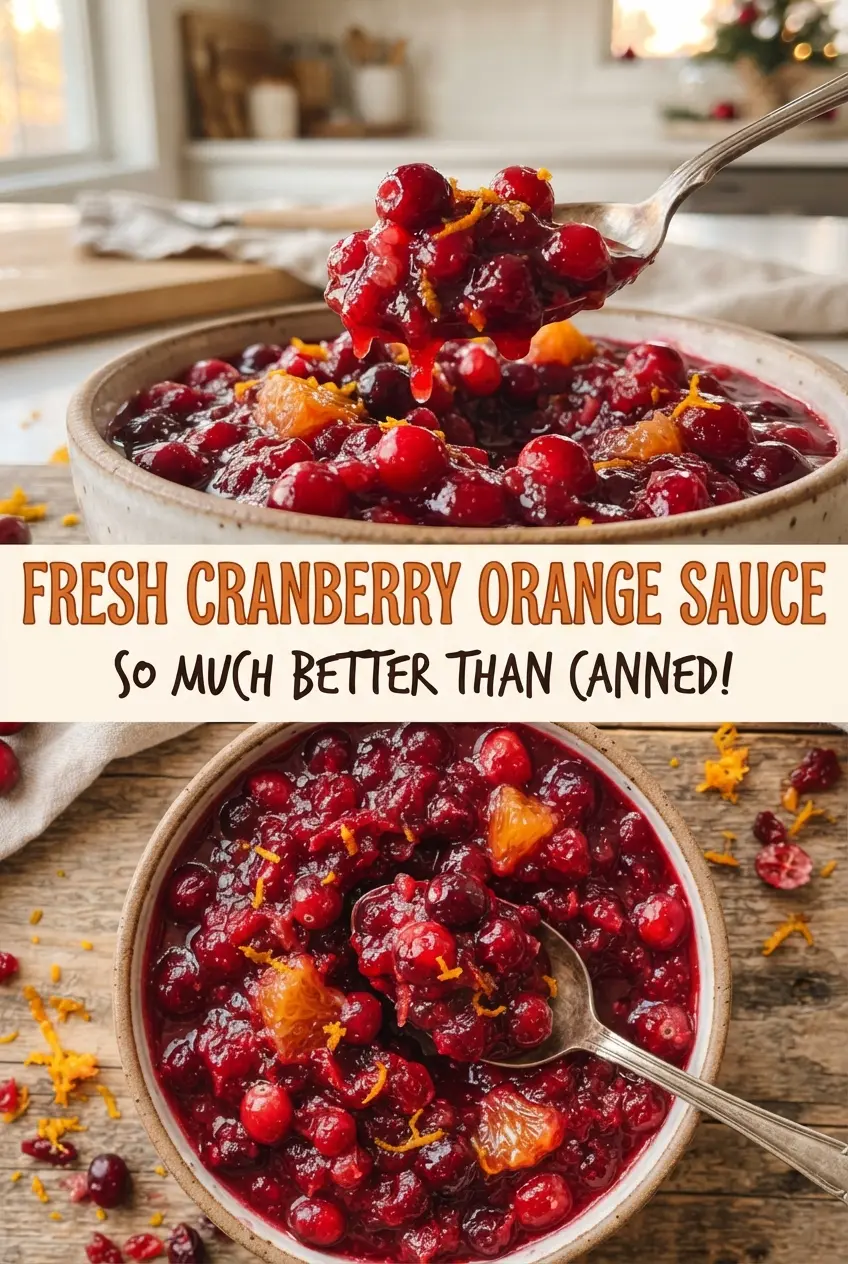
Fresh Cranberry Orange Sauce
Ingredients
Equipment
Method
- Bring sugar and fresh orange juice to a boil in a saucepan over medium-high heat. Continue until you see active bubbling across the surface.
- Add fresh cranberries and salt, then return to a simmer. Simmer 10 minutes, stirring occasionally, until most berries burst and the sauce looks thickened.
- Remove the saucepan from the heat and stir in orange zest. Let the sauce cool slightly so it won’t bruise the fruit.
- Gently fold in orange, peeled and segmented. Stop as soon as the segments are combined so they keep their shape.
- Chill the sauce until serving. Refrigerate for about 60 minutes for best flavor and a spoonable texture.