Soft bread rolls with a shiny garlic butter finish disappear fast because they hit every mark at once: fluffy inside, lightly golden outside, and rich enough to pull apart while they’re still warm. The garlic butter soaks into the tops instead of sitting on them, which gives each roll that savory, bakery-style finish without turning the crumb greasy.
The dough is built with warm milk, instant yeast, and a little sugar for a quick, reliable rise. Melted butter keeps the crumb tender, while the kneading time gives the rolls enough structure to puff up in the oven without getting dense. Brushing the garlic butter on while the rolls are hot is the part that matters most — that’s what lets the flavor sink into the cracks and edges.
Below you’ll find the little details that make these rolls work the way they should, plus a few ways to adapt them if you want to change the herbs, the pan, or the timing.
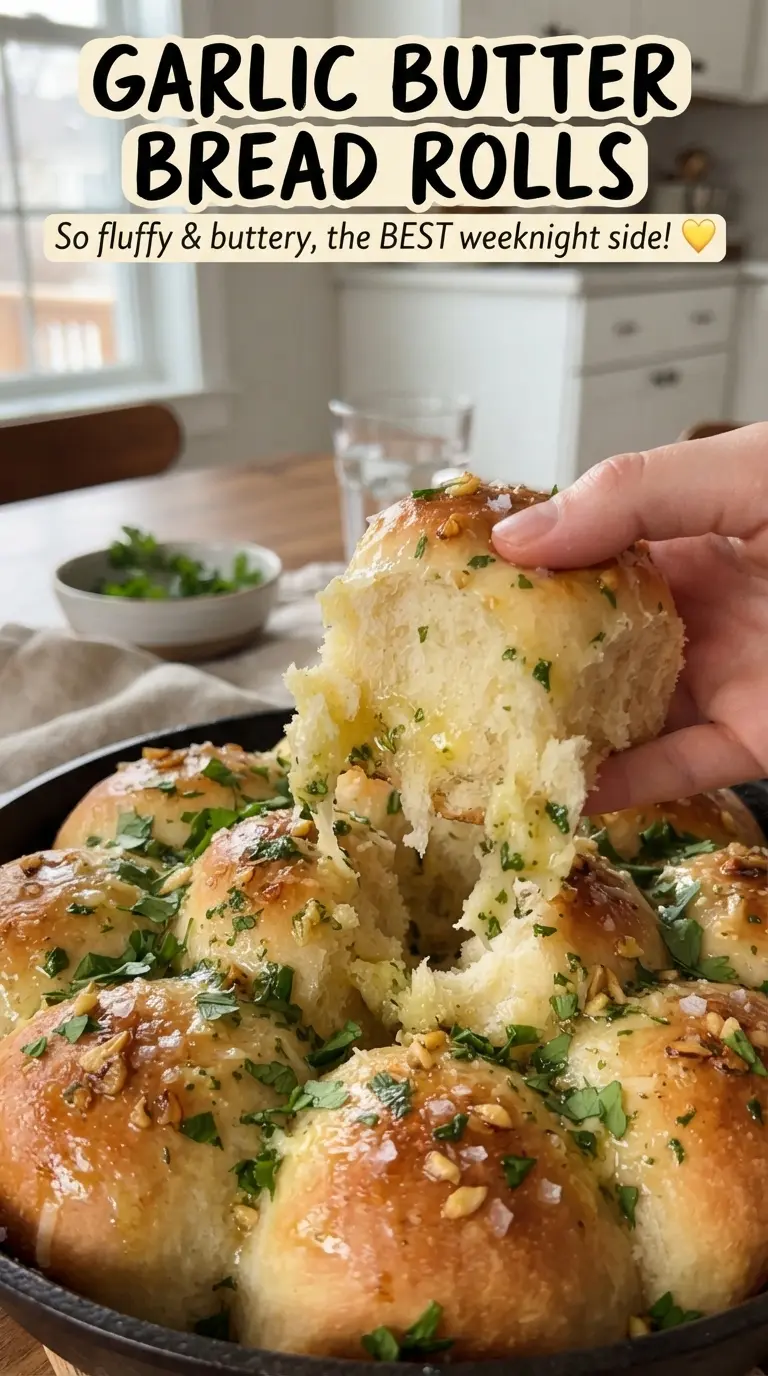
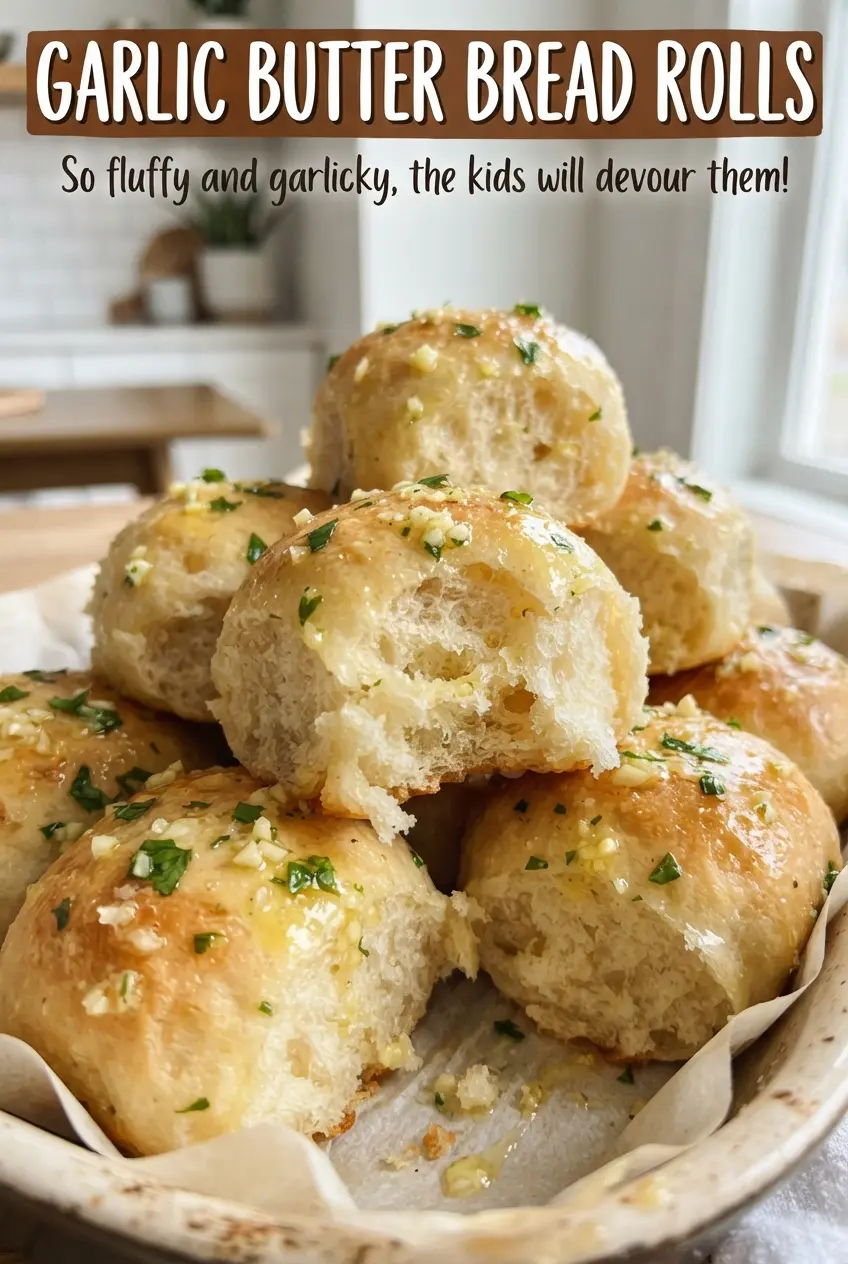
The rolls baked up pillowy and the garlic butter soaked right into the tops without making them soggy. I tore one open straight from the pan and the middle was fluffy all the way through.
These garlic butter bread rolls bake up fluffy and pull-apart tender, with the parsley butter sinking into every warm edge.
The Difference Between Puffy Rolls and Dense Dough
The biggest mistake with dinner rolls is rushing the rise or loading in too much flour. This dough should feel soft and a little tacky before the first rise. If it feels dry in the bowl, the rolls will bake up tight instead of airy.
The other place people run into trouble is the final bake. Pull these when the tops are deeply golden and the rolls sound slightly hollow when tapped. If you wait for them to look dark all over, they’ll lose that pillowy center that makes them worth serving warm.
- Warm milk — This gives the yeast a fast, steady start. Aim for warm, not hot; anything above about 115F can slow or damage the yeast.
- Instant yeast — It works directly with the dry ingredients and keeps the rise simple. Active dry yeast works too, but dissolve it in the warm milk first and give the dough a few extra minutes to rise.
- Melted butter — This keeps the crumb soft and gives the rolls a richer taste than oil. Let it cool slightly before adding it so it doesn’t scramble the egg.
- All-purpose flour — This is the right middle ground for structure and tenderness. Bread flour will make the rolls chewier and a little less delicate.
- Fresh garlic and parsley — Fresh is worth it here because the topping is brushed on at the end and never gets cooked down. Garlic powder works in a pinch, but it won’t taste as bright or fragrant.
What Each Ingredient Is Actually Doing in This Recipe
- Primary ingredient (the star) — Quality matters most. Choose the best you can find.
- Cooking medium (oil, butter, or broth) — This carries flavors and prevents dryness.
- Seasonings (salt, pepper, spices, herbs) — Layer flavors so nothing overpowers. Build depth gradually.
- Aromatics (garlic, onion, herbs) — Cook with fat to bloom flavors. Become the foundation.
- Supporting ingredients — Complement the main ingredient without overpowering it.
- Sauce or liquid (if applicable) — Brings flavors together. Balance richness with acid.
- Acid (lemon, vinegar, wine, or other) — Brightens and prevents flat-tasting results.
- Final finish (garnish, glaze, or sauce) — Prevents one-dimensional taste and adds visual appeal.
Building the Dough and Finishing With Garlic Butter
Waking Up the Yeast
Stir the warm milk, yeast, and sugar together and let it sit until foamy. That foam is your proof that the yeast is alive and working. If the mixture stays flat after five minutes, the milk was probably too hot or the yeast is old, and the rolls won’t rise properly.
Mixing and Kneading
Add the egg, melted butter, salt, and flour, then knead until the dough turns smooth and elastic. It should pull away from the bowl but still feel soft to the touch. If you keep adding flour until it feels firm right away, the rolls will bake up heavy instead of cloudlike.
The First Rise and Portioning
Cover the dough and let it rise until doubled, then divide it into 12 even pieces. Shape each piece into a tight ball so the rolls rise upward instead of spreading sideways in the pan. A greased 9×13-inch pan gives them enough room to puff and then lean into each other for soft, pull-apart sides.
Baking and Brushing Hot
Bake until the tops are golden brown and the rolls look set in the center. As soon as they come out, stir the garlic and parsley into the melted butter and brush it over the hot rolls generously. The heat opens the surface of the bread just enough to catch the butter, which is why the flavor lands so well instead of sliding off.
What to Change When You Want Different Rolls
Cheesy garlic rolls
Add a little finely grated Parmesan to the garlic butter or sprinkle it over the tops right after brushing. Parmesan gives you a saltier, more savory finish and a faint crispness on the surface, but too much can block the soft shine of the butter, so keep it light.
Dairy-free rolls
Use an unsweetened plant milk and a dairy-free butter alternative that melts cleanly. The texture will still be soft, but the flavor will be a little less rich, so don’t skip the garlic and parsley topping — that’s what keeps them tasting full and savory.
Herb swap for what’s in the fridge
Replace the parsley with chopped chives, dill, or a little rosemary. Chives keep the flavor mild, dill makes the rolls taste fresher, and rosemary leans stronger and more savory. If you use rosemary, chop it very finely so it doesn’t feel sharp on the bite.
Storage and Reheating
- Refrigerator: Store in an airtight container for up to 3 days. The rolls will lose a little softness in the fridge, so expect them to feel slightly firmer the next day.
- Freezer: Freeze baked rolls tightly wrapped for up to 2 months. Thaw at room temperature, then warm before serving; freezing before the garlic butter topping is added gives the best texture.
- Reheating: Warm covered in a 300F oven for 8 to 10 minutes, or microwave briefly with a damp paper towel. Don’t overheat them or the crumb turns dry fast.
Answers to the Questions Worth Asking
Garlic Butter Bread Rolls
Ingredients
Equipment
Method
- Whisk warm milk, instant yeast, and sugar together, then let sit 5 minutes until foamy.
- Add the egg, melted butter, salt, and all-purpose flour to the bowl and mix until a shaggy dough forms.
- Knead the dough 6-8 minutes until smooth and elastic.
- Cover the dough and let rise 1 hour until doubled in size.
- Divide the dough into 12 balls, place them in a greased 9x13-inch pan, cover, and rise 30 minutes until puffy.
- Preheat the oven to 375°F while the rolls rise.
- Bake for 18-20 minutes at 375°F until the rolls are golden brown.
- Stir melted butter with minced garlic and chopped parsley, then brush generously over the hot rolls.
- Sprinkle flaky sea salt over the rolls and serve warm.